Cerne Abbas

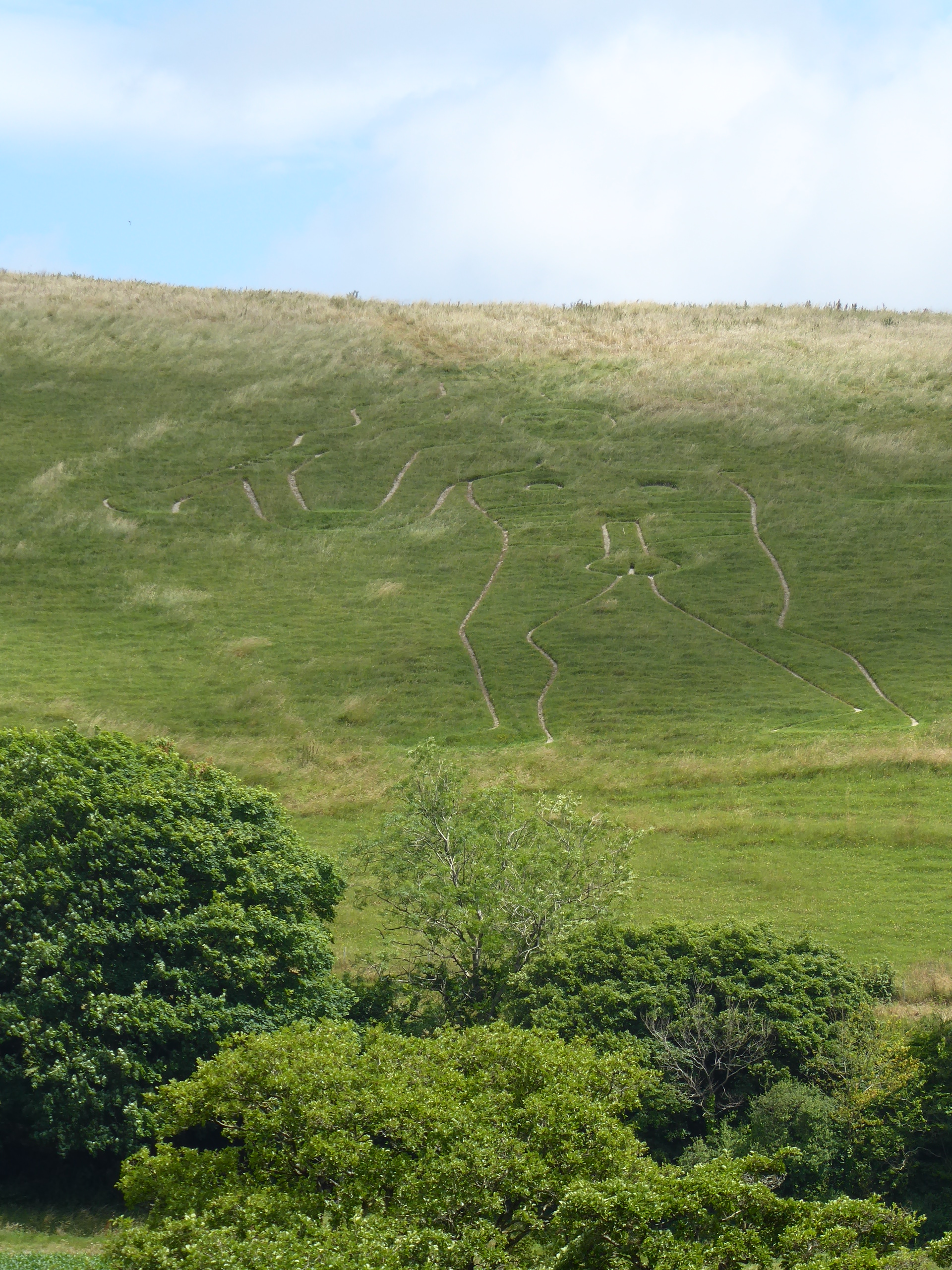
Cerne Abbas is perfectly positioned and very dinky. It even has a “sacred spring” complete with modern pagan offerings (not all biodegradable, which seems very unpagan). The Giant – a geoglyphe possibly 1,000 years old – is certainly gigantic, but his outlines have not been refreshed for several years and he is not as visible as you might think/hope.

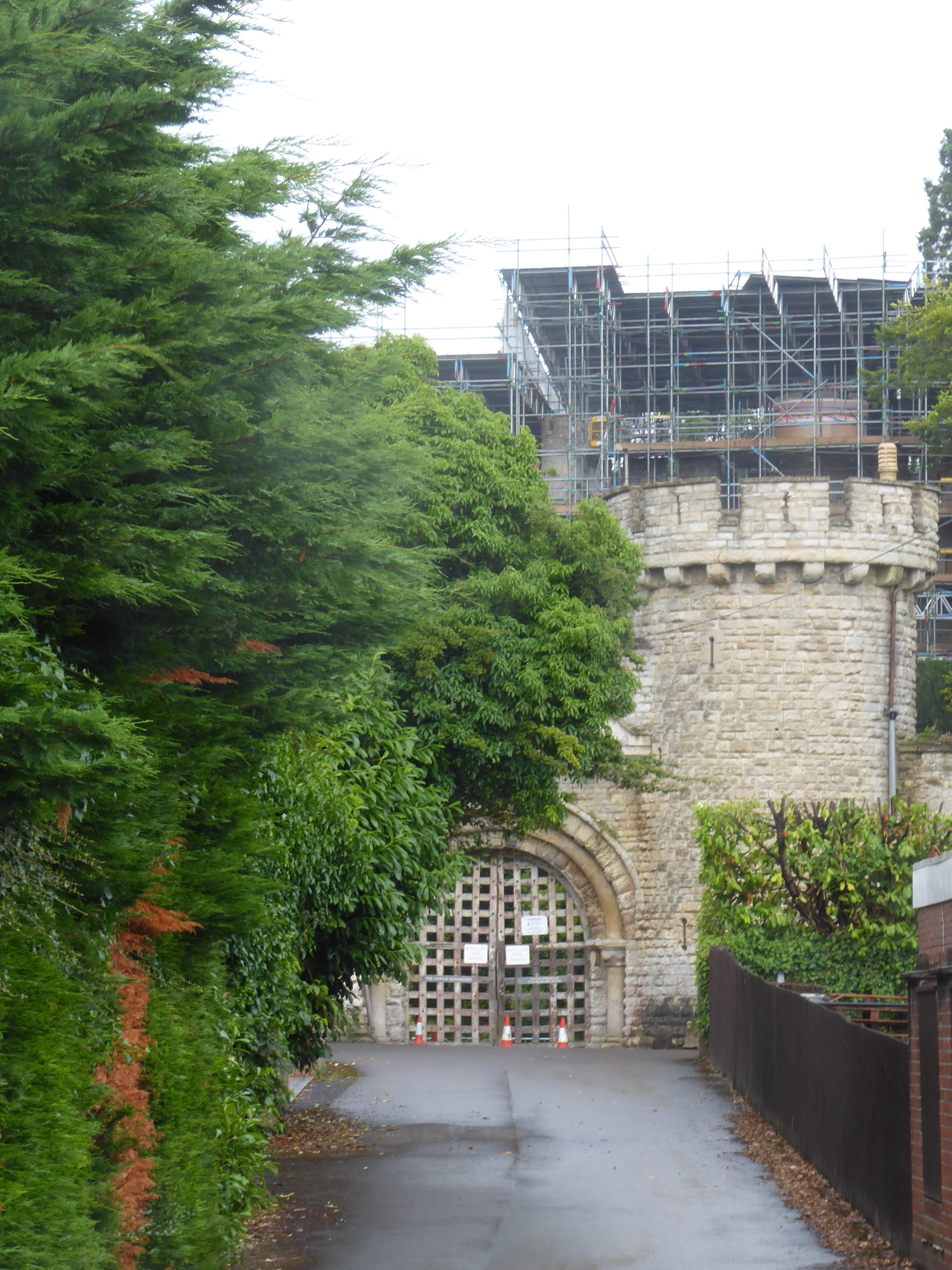
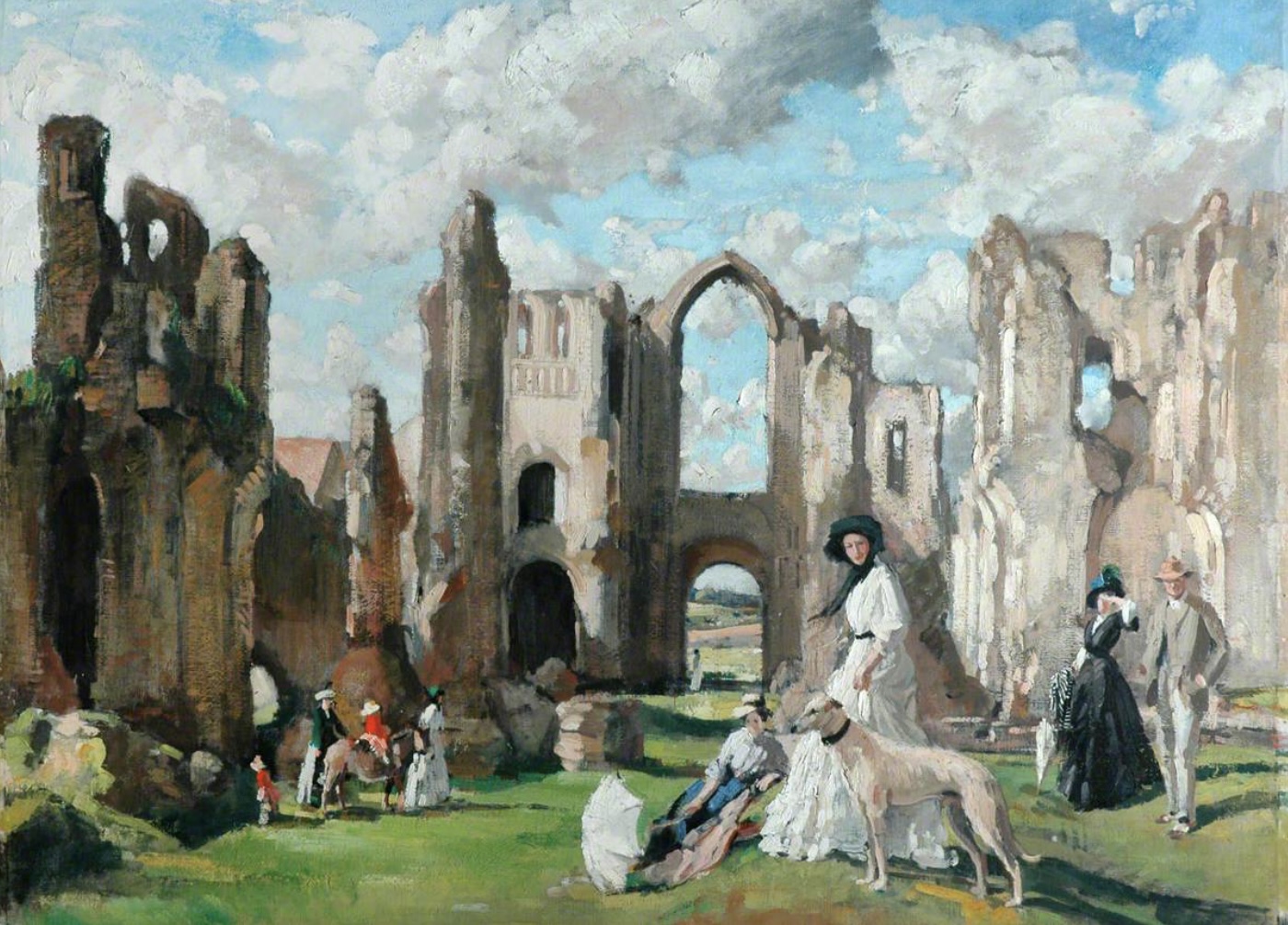
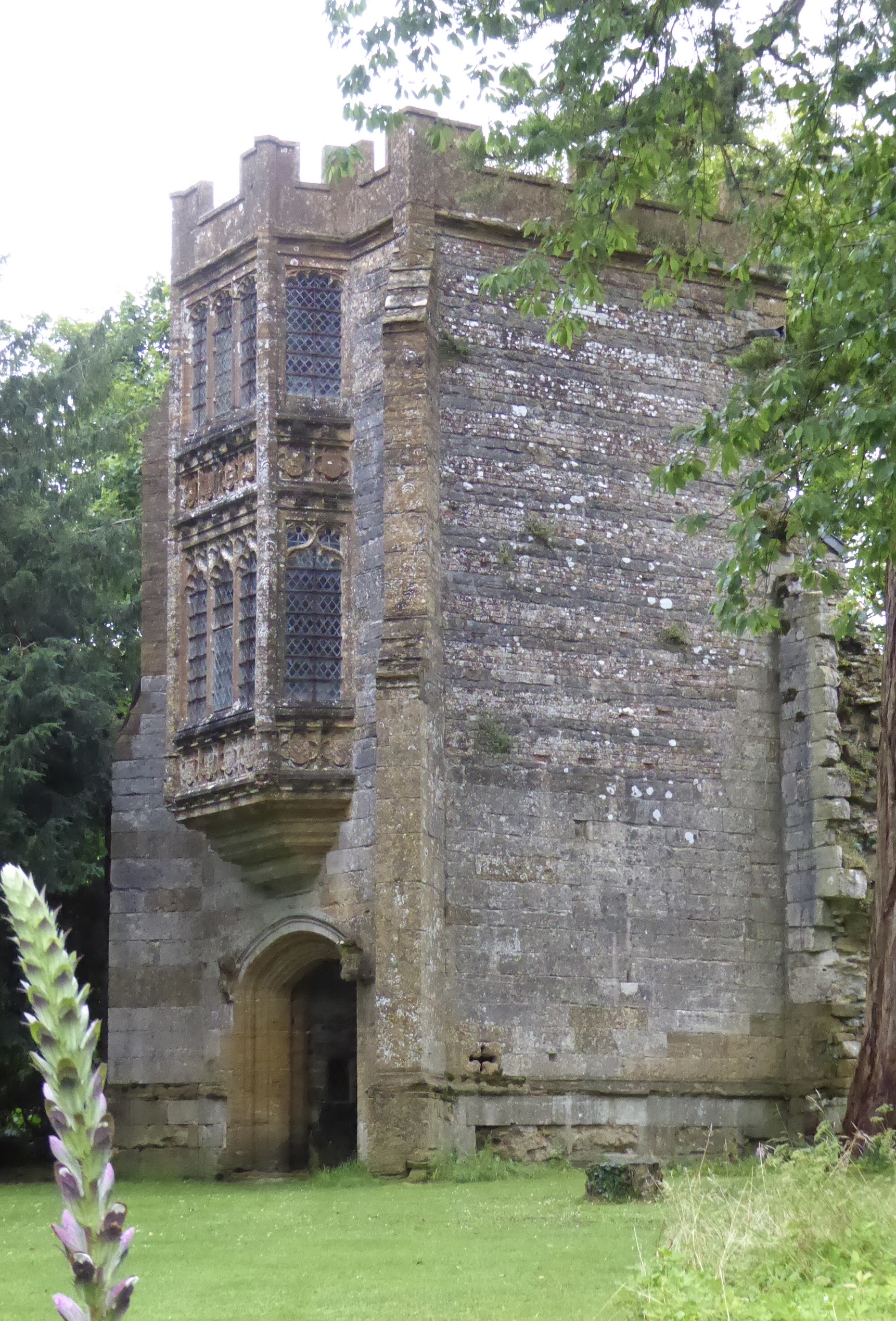
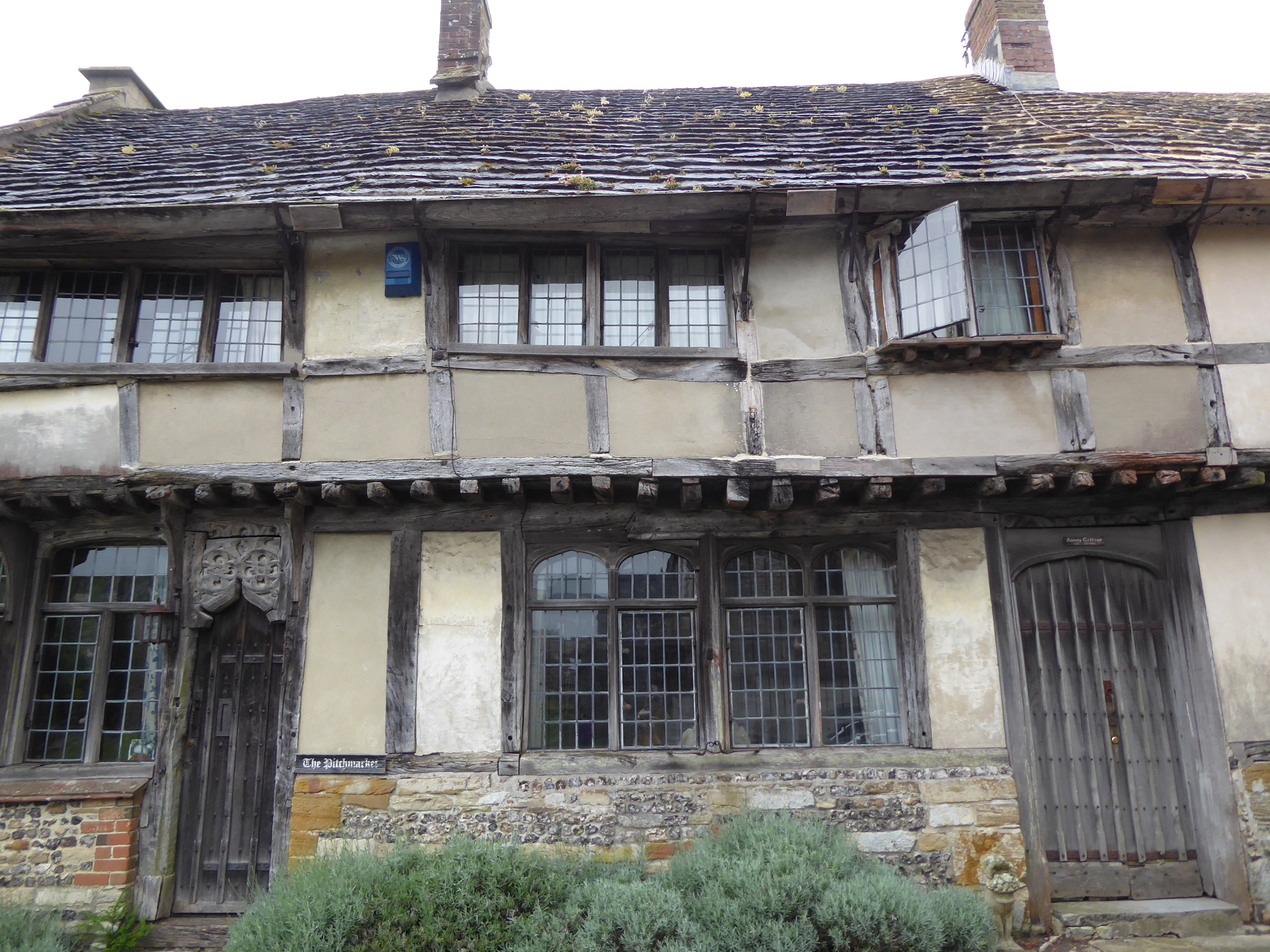
There was an abbey here; only the guest house and gatehouse survive, for the stones were very quickly sold off or repurposed after the dissolution so there are not even any outline foundations remaining. We stopped briefly at two digs beyond the cemetery; parts of the abbey and possibly an earlier Saxon site are being uncovered where they were not supposed to be, so local history guides will have to be rewritten. (Not holding too fast to theories or even knowledge was my take-away from this trip.)

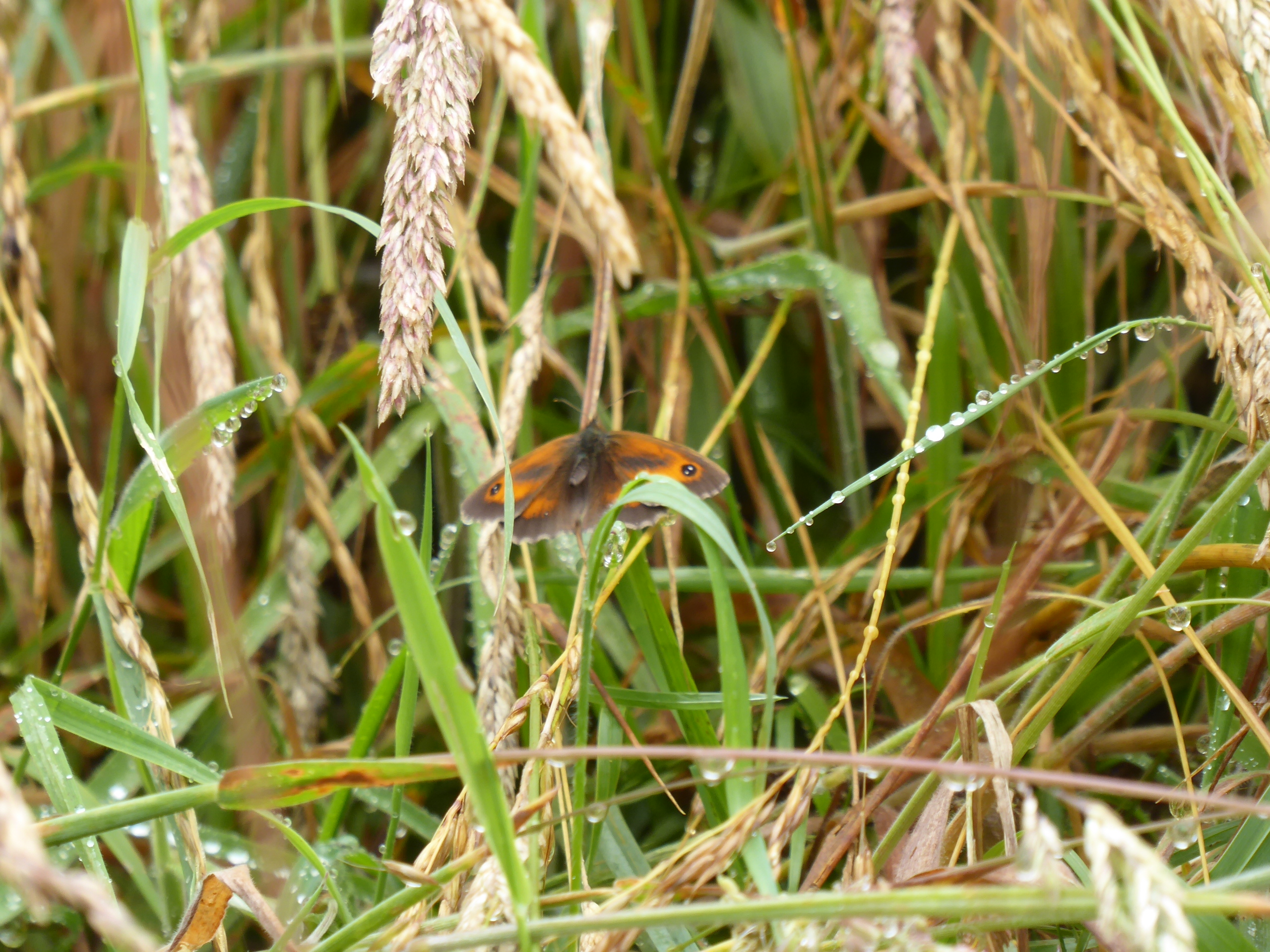
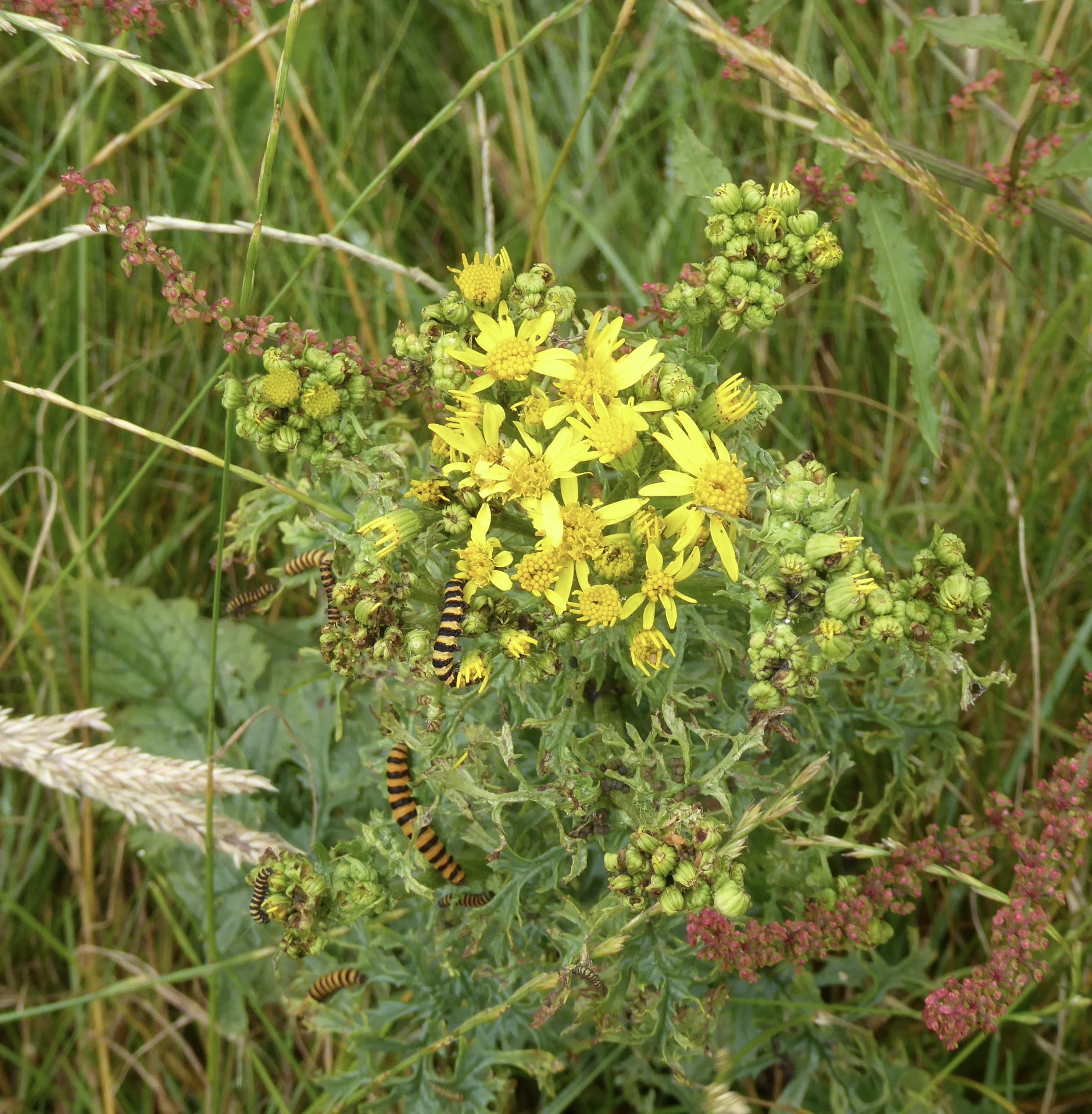
The Trendle is an Iron Age earthwork above the village and the Giant. Perhaps at that time the water table was much higher, so living on the exposed hill rather than the sheltered, boggy valley might have been preferable. It was impossible to discern anything among the long grass: we spotted gatekeepers and cinnabar moth caterpillars instead.

There are “lumps and bumps” everywhere in this area between Wiltshire and Dorset: long barrows, causeway enclosures, hill forts, mounds of earth whose purpose and secrets remain unknown. Some, once upon a time they would have been gleaming white with newly exposed chalk – but the Giant shows what happens when exposed for too long.
Devizes

Fifty-odd years ago Devizes was our stopping point on camping holiday trips to the West Country – only because it had public toilets. I think I had a flash of recognition as the bus came to an open green; for a moment I felt myself raising my sleepy nine-year-old head from the back seat of the Renault 4 to see where we were.

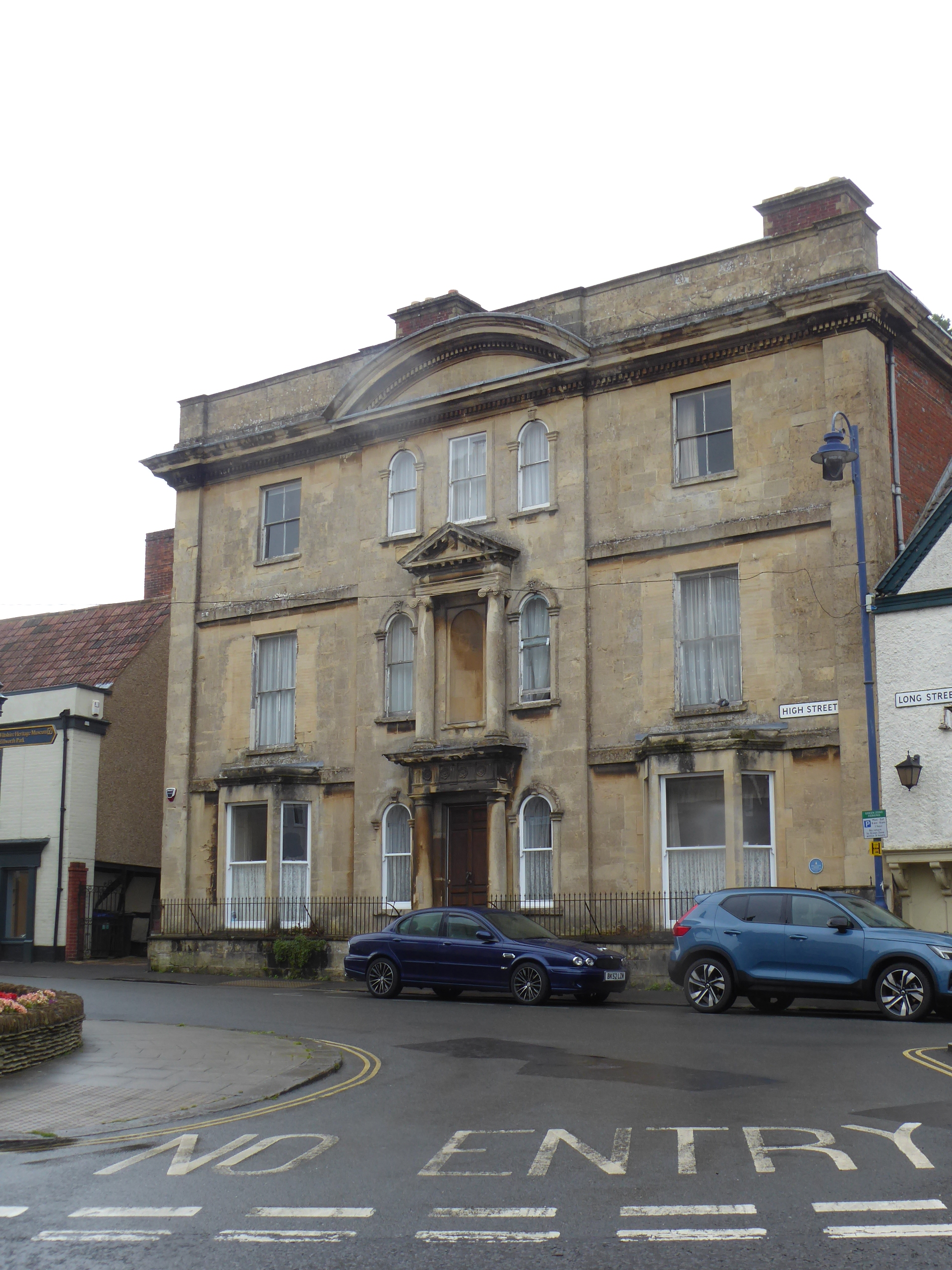
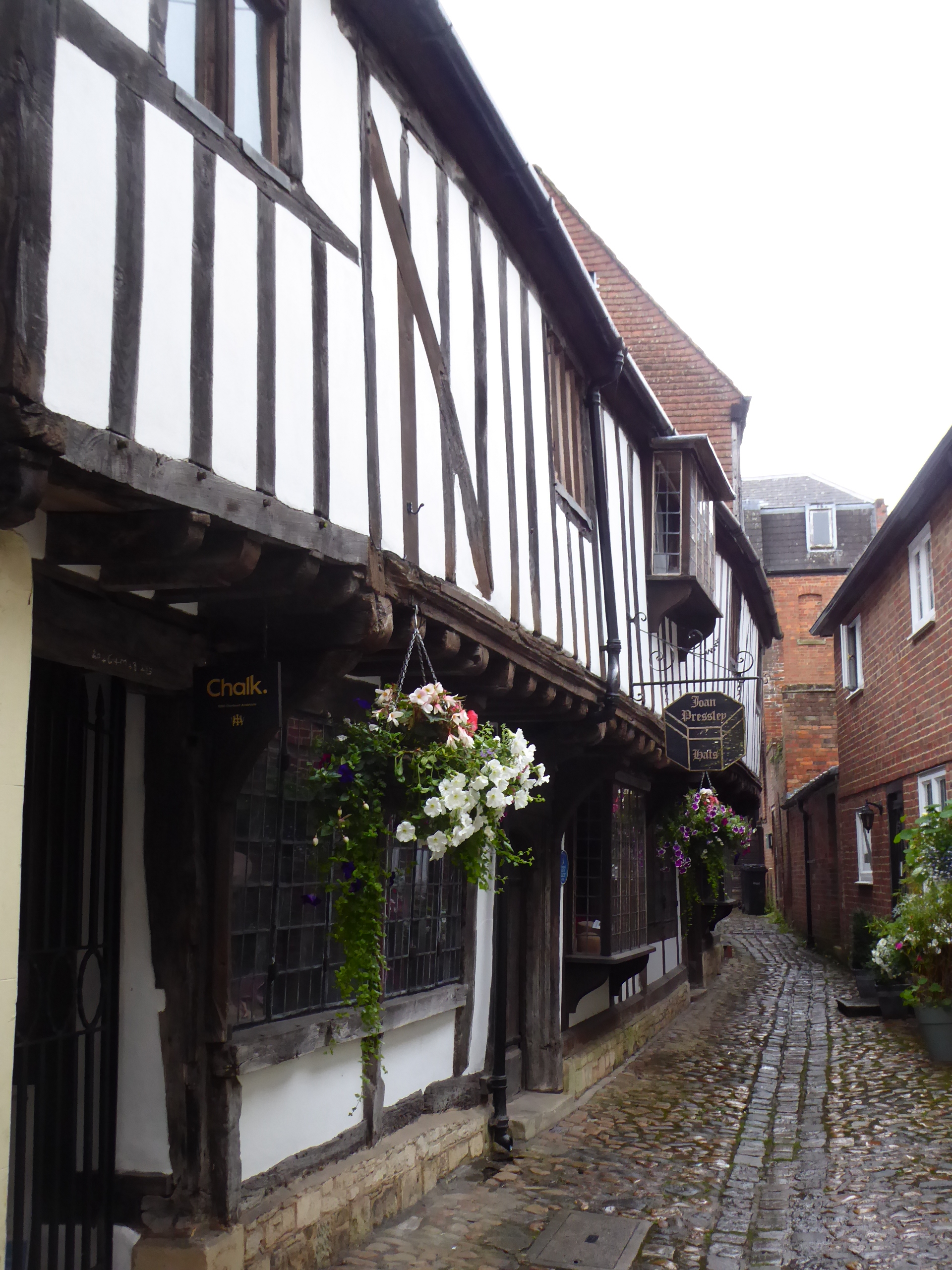
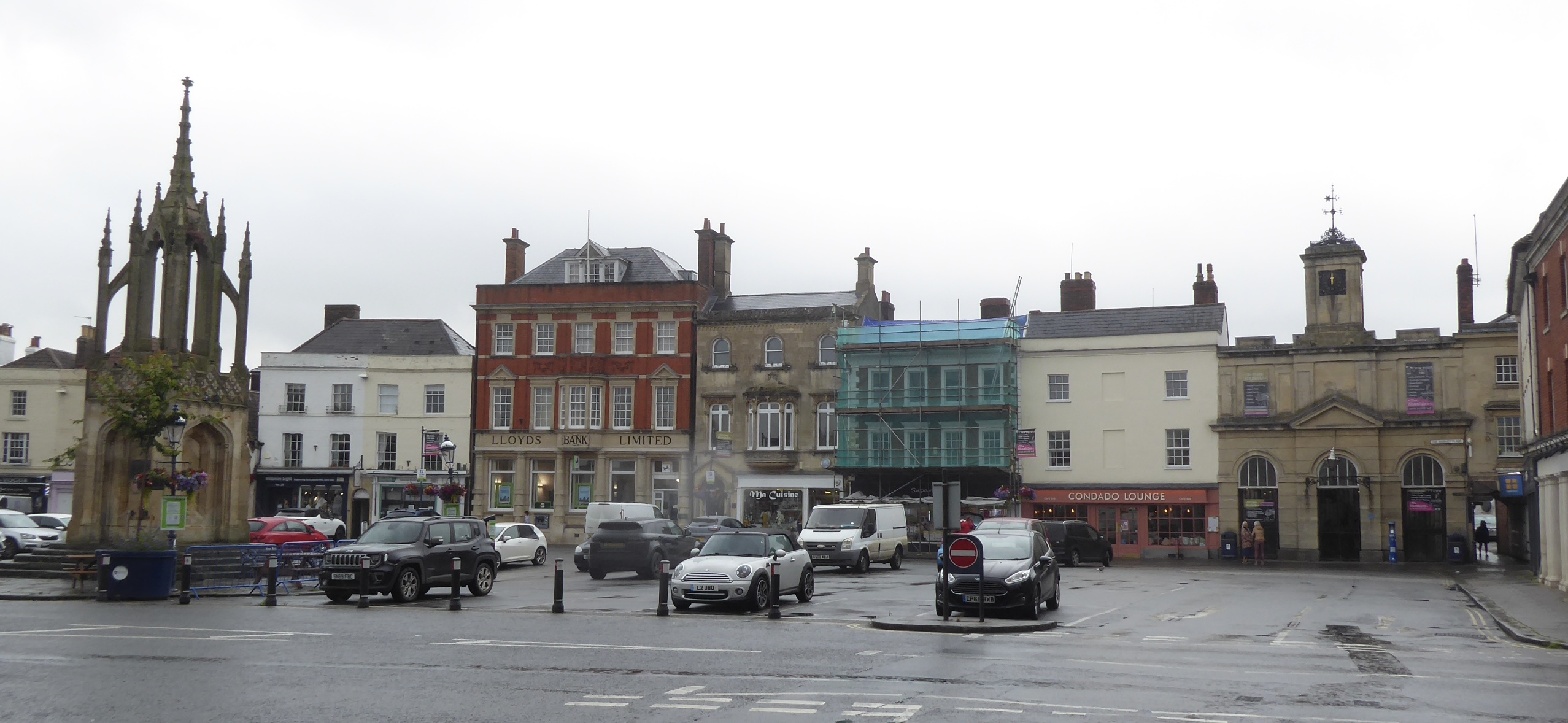
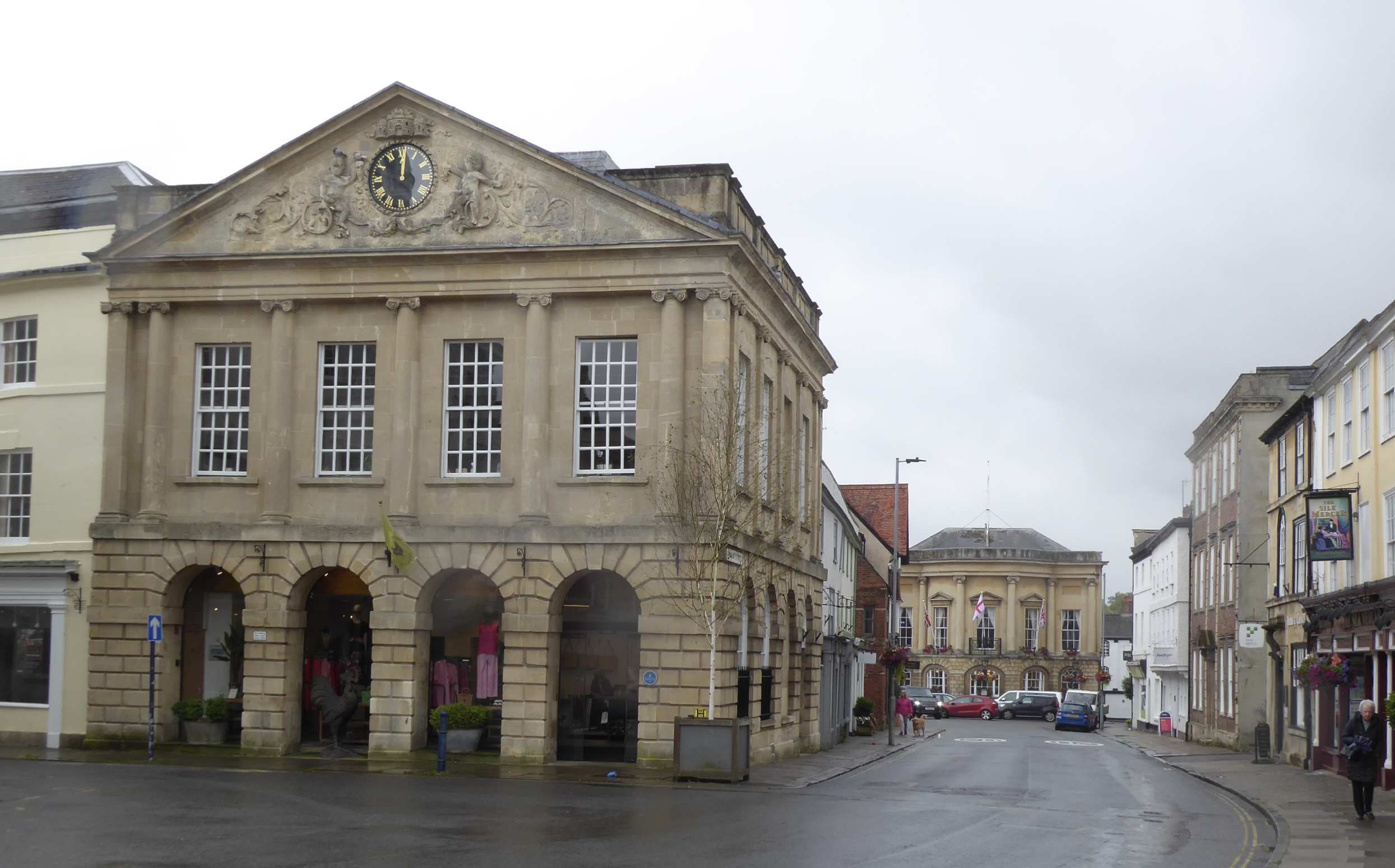
The bus from Swindon passed through Avebury, so from the upper deck I had a good view of the ripples of stones. Devizes itself – in 2024 rather than in a mist of childhood impressions – is handsome and a bit shabby. Time is nibbling away at its soft stone and the modern world is taking great bites out of it.

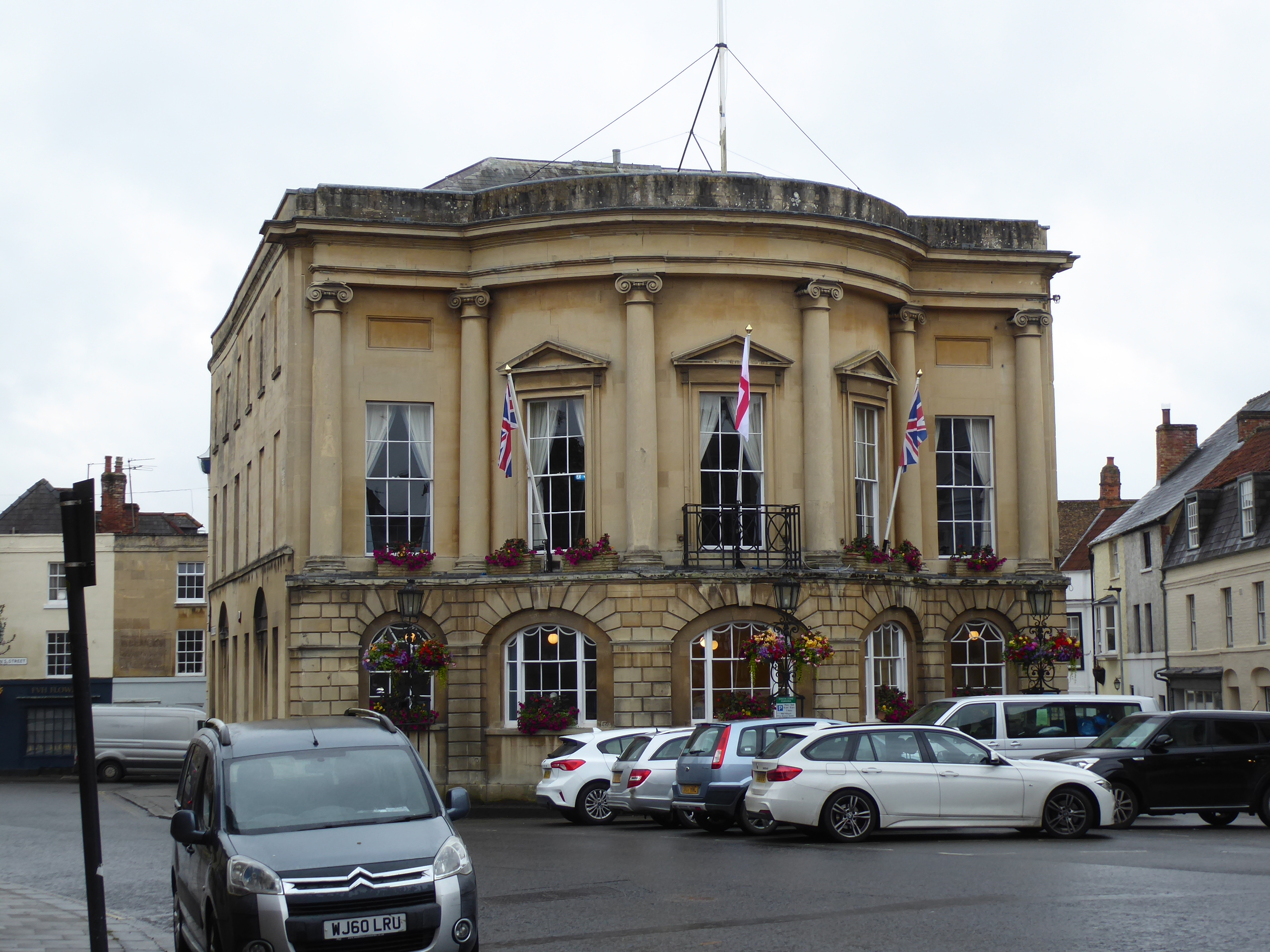
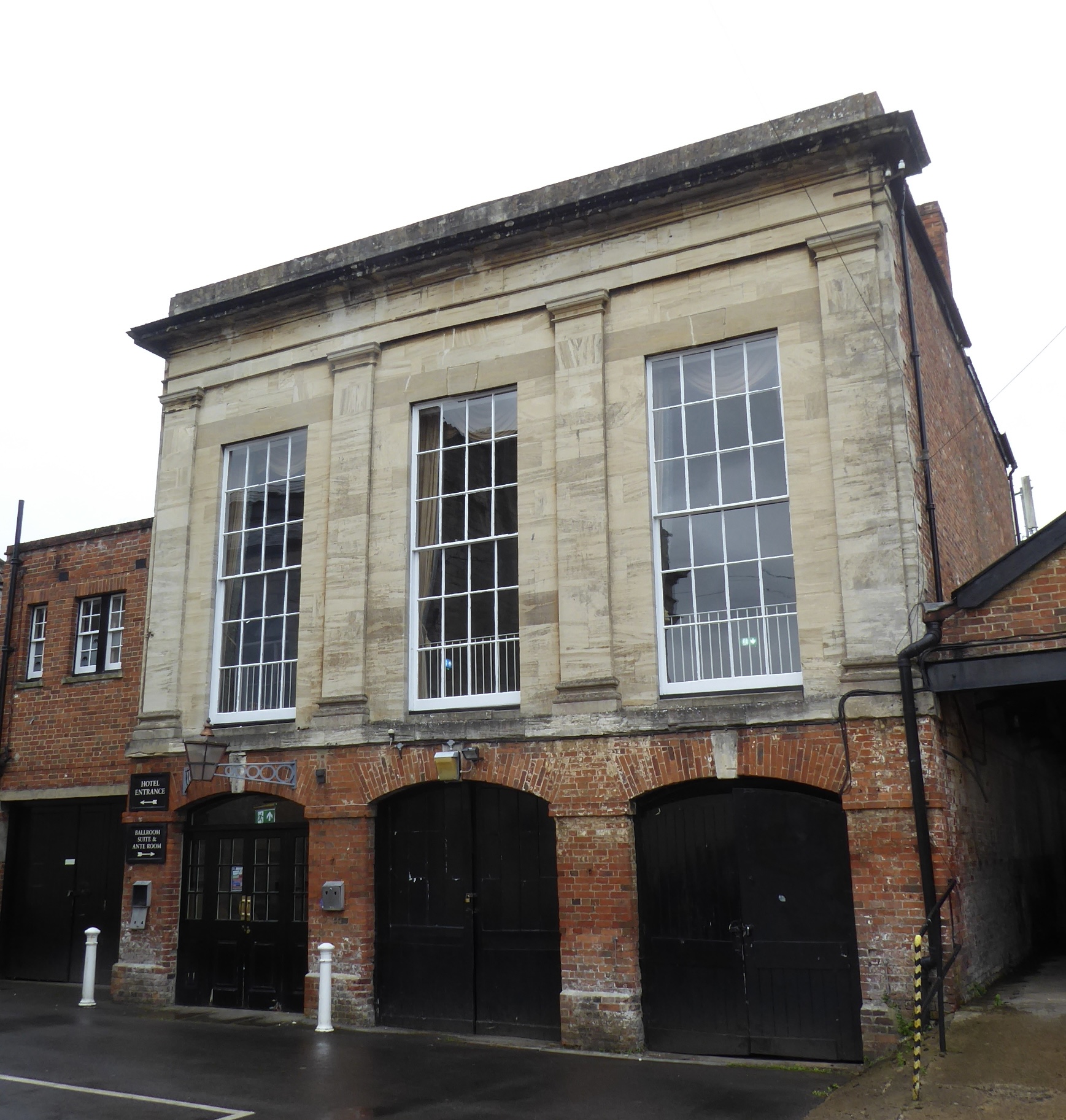
I am currently listening to a reading of ‘Cranford” on the radio; I had forgotten how delightfully gentle and kindly its tone is. Anyway, the hotel here has a wonderful extension at the back – a kind of Georgian assembly room – which immediately made me think of Cranford’s decaying assembly room, built on the coaching inn, where Signor Brunoni performs his magic show. (And where the old Cranford ladies momentarily relive past balls and assemblies as they re-enter it for the first time in decades.)

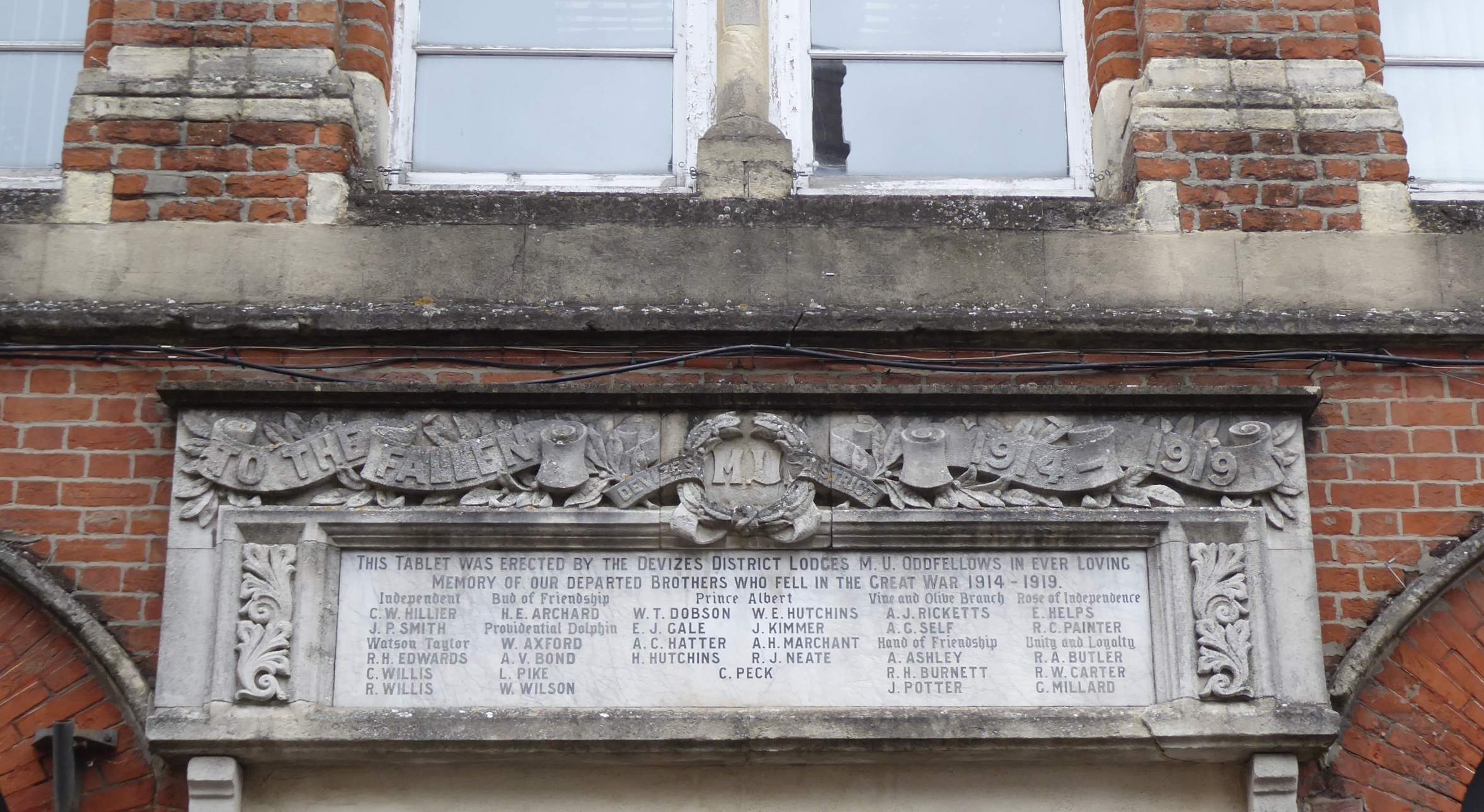
(“Providential Dolphin”? Some kind of masonic lodge . . . but “Providential Dolphin”!!)*

It’s intriguing to travel in parts of the country that I’m unacquainted with. To encounter the change in accent, geography, vernacular architecture. Also to find myself in unfamiliar territory: how are the trains formed, where is the bus station, how friendly are the natives? (The answer is generally “very”.) And also to discover the levelling-out similarities from one end of the country to the other.

Things to remember:

  • Discovery of fossilised skull of Taung Child (Australopithecus africanus) in South Africa in 1924 proposed as the “missing link” between apes and humans.
  • The (misleading) idea that humans developed bigger brains before becoming bipedal held sway until the 1960s.
  • All dates and divisions are very open to revision with new information and theories, but here goes:
  • Last common ancestor 7-4 million years ago.
  • 4-2 million years ago Australopithecus africanus (Lucy, found in the Rift Valley, with 40% of her skeleton).
  • 2m – 300,000 years ago modern humans developed. Homo habilis.
  • Homo erectus, 2m years ago, bipedal, bigger brain. Survived till ca 40,000 years ago. Did they have hunting and fire?
  • Palaeontologists have lots of bones that look different, but hard to say if they come from different species.
  • Homo heidelbergensis in UK 50,000 years ago? Ice Age, so land bridge to continental Europe.
  • Pits of bones found in caves in Atapuerca, Spain. Cannibalism?
  • Ca 35,000 years ago Neanderthals died out. Did they have language and art?
  • Denisovans discovered in 2010 in China, but no skulls yet.
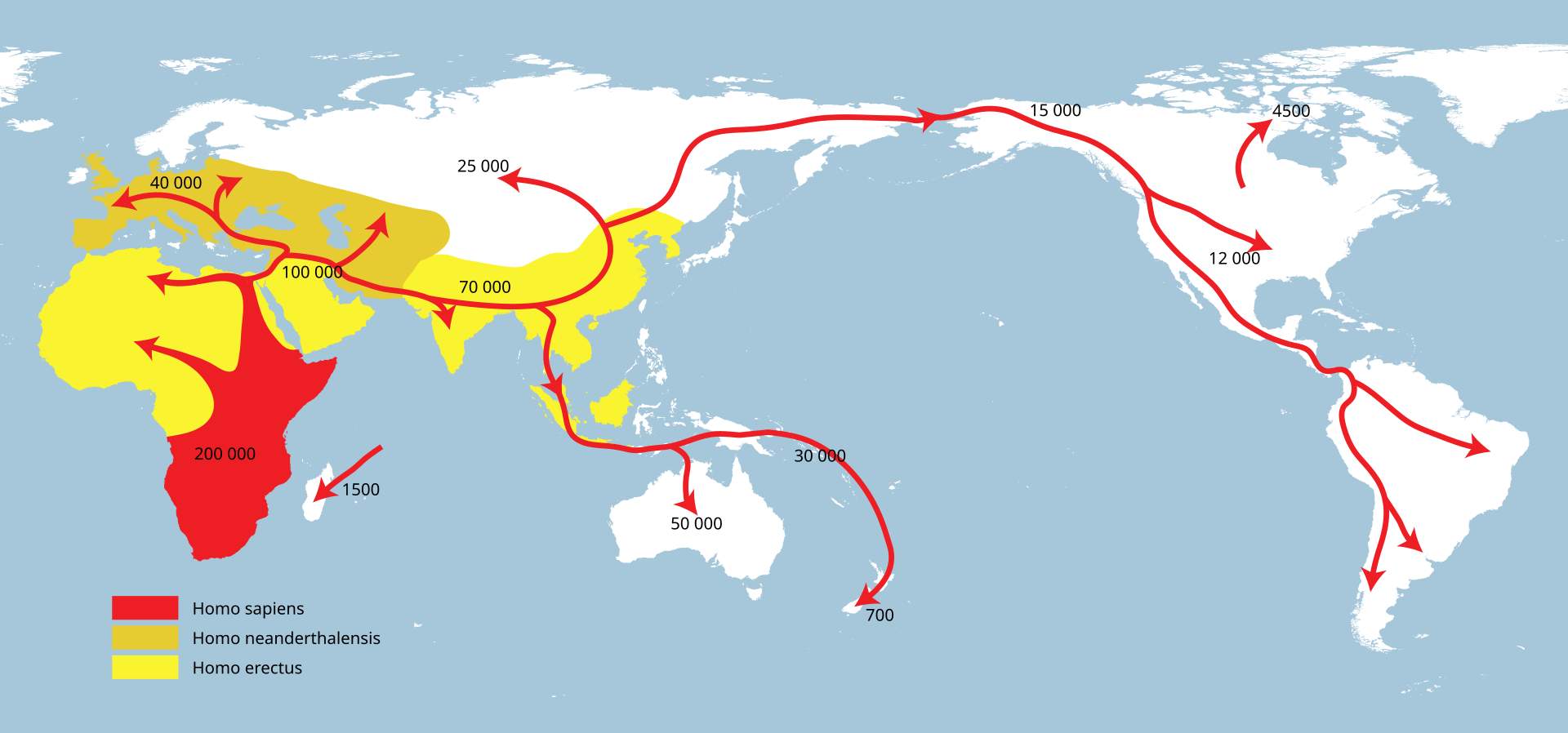
  • We were “us” 200,000-300,000 years ago and migrated from Aftica.
  • Indigenous Australians (arrived from SE Asia 50-65,000 years ago during last interglacial) have lots of Denisovan but no Neanderthal.
  • End of last Ice Age 12,000-11,000 years ago.

* Later I saw an inn in Devizes called the Dolphin.

Castlefield Viaduct Garden

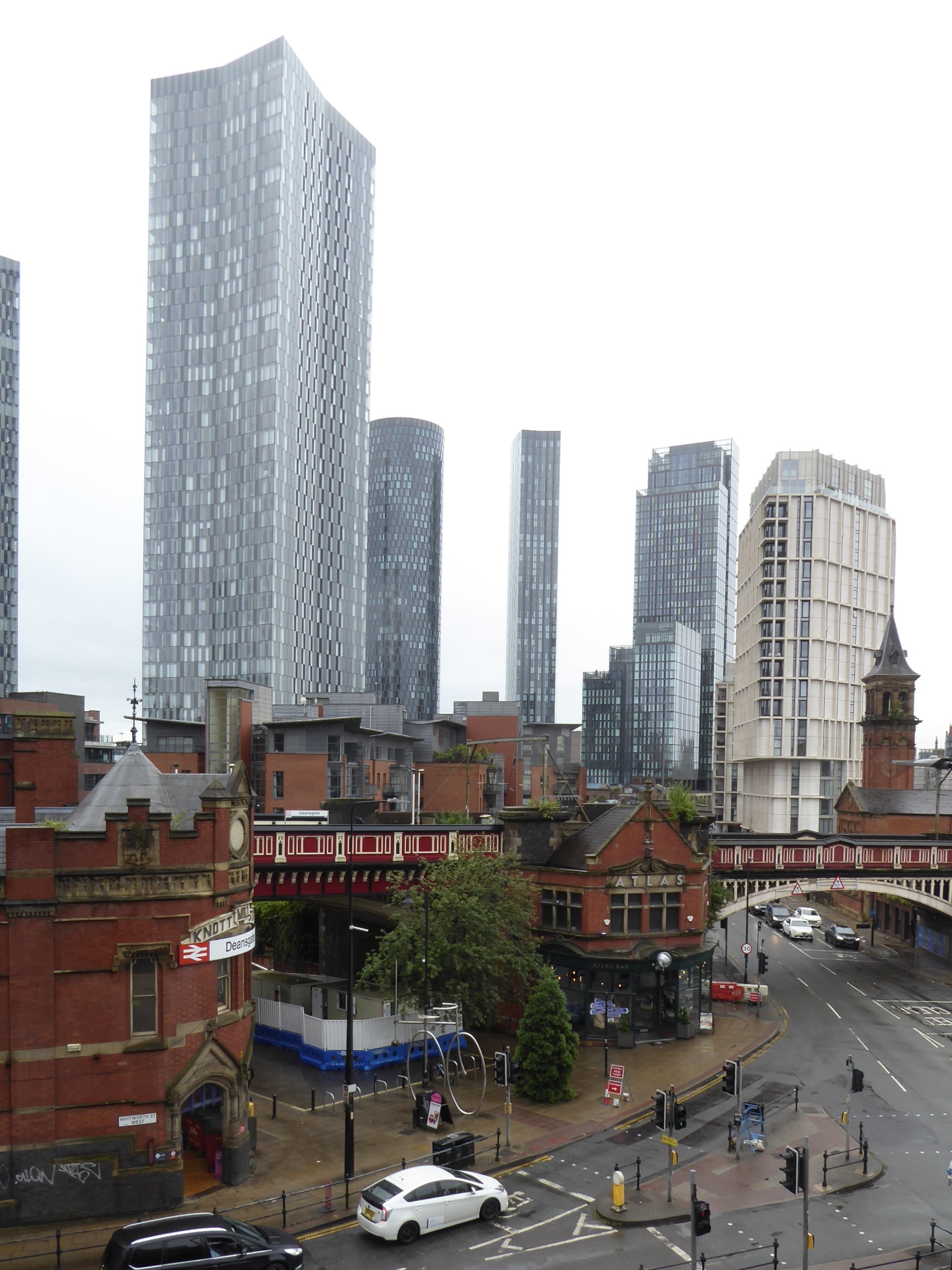
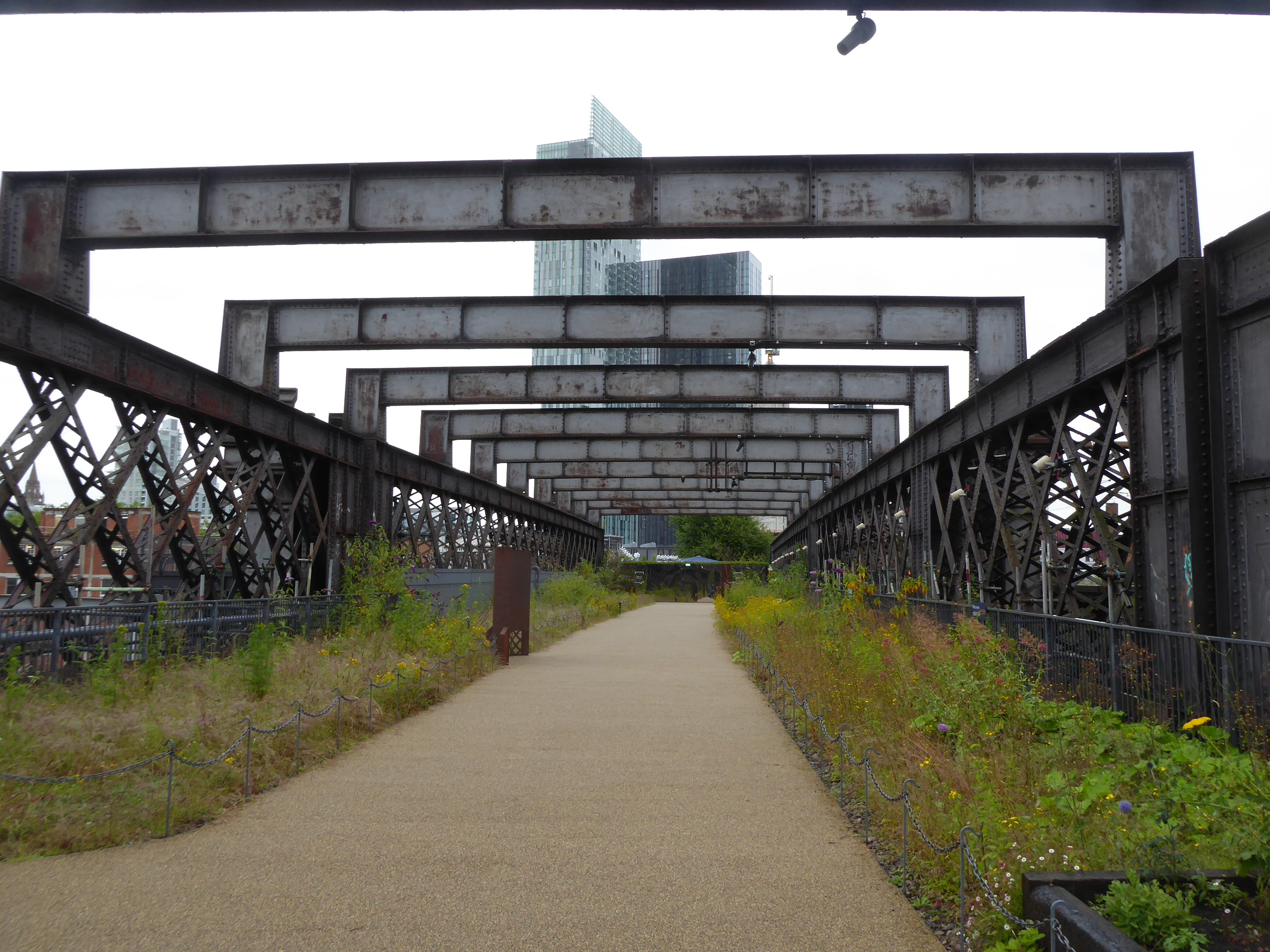
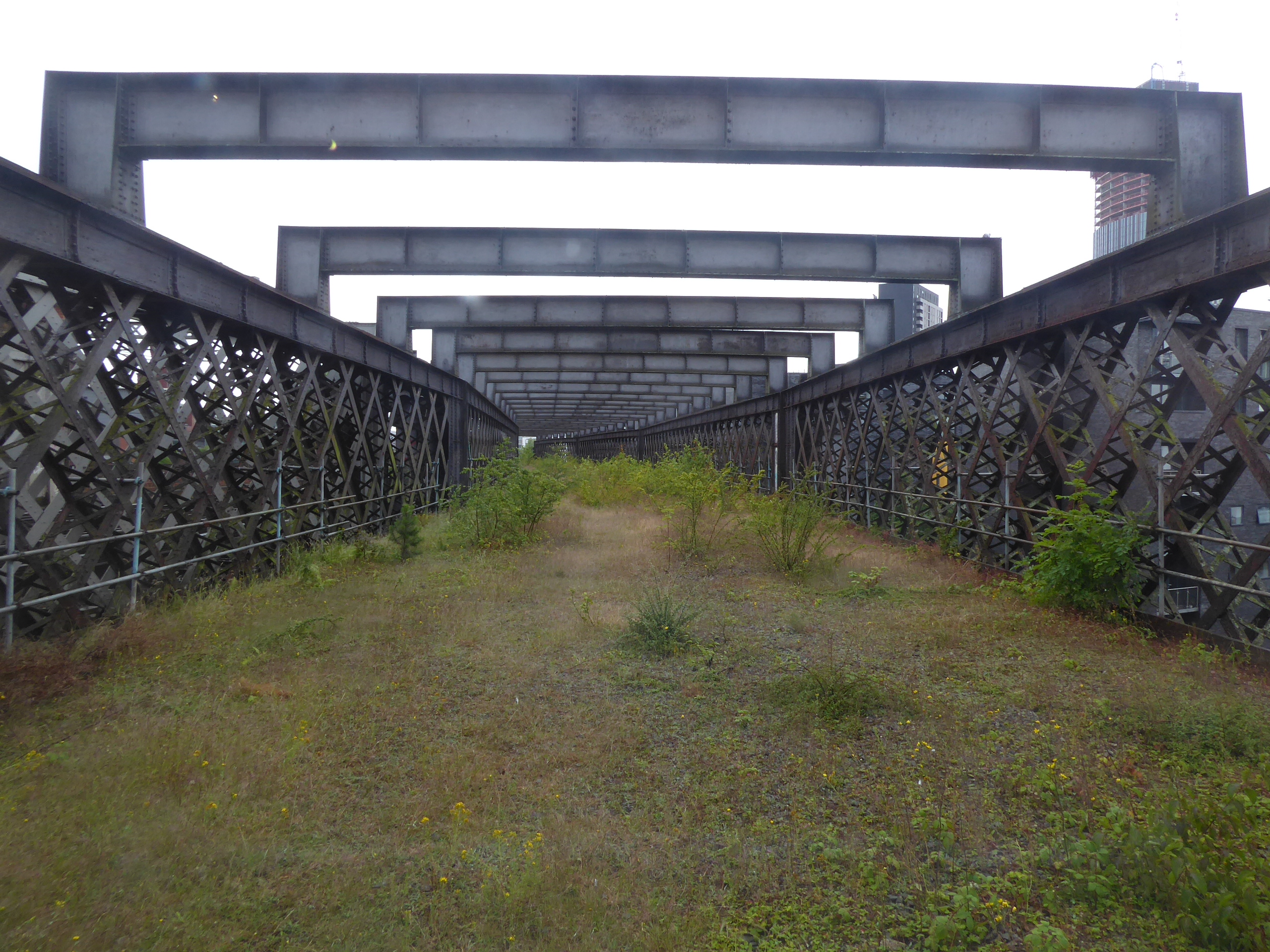
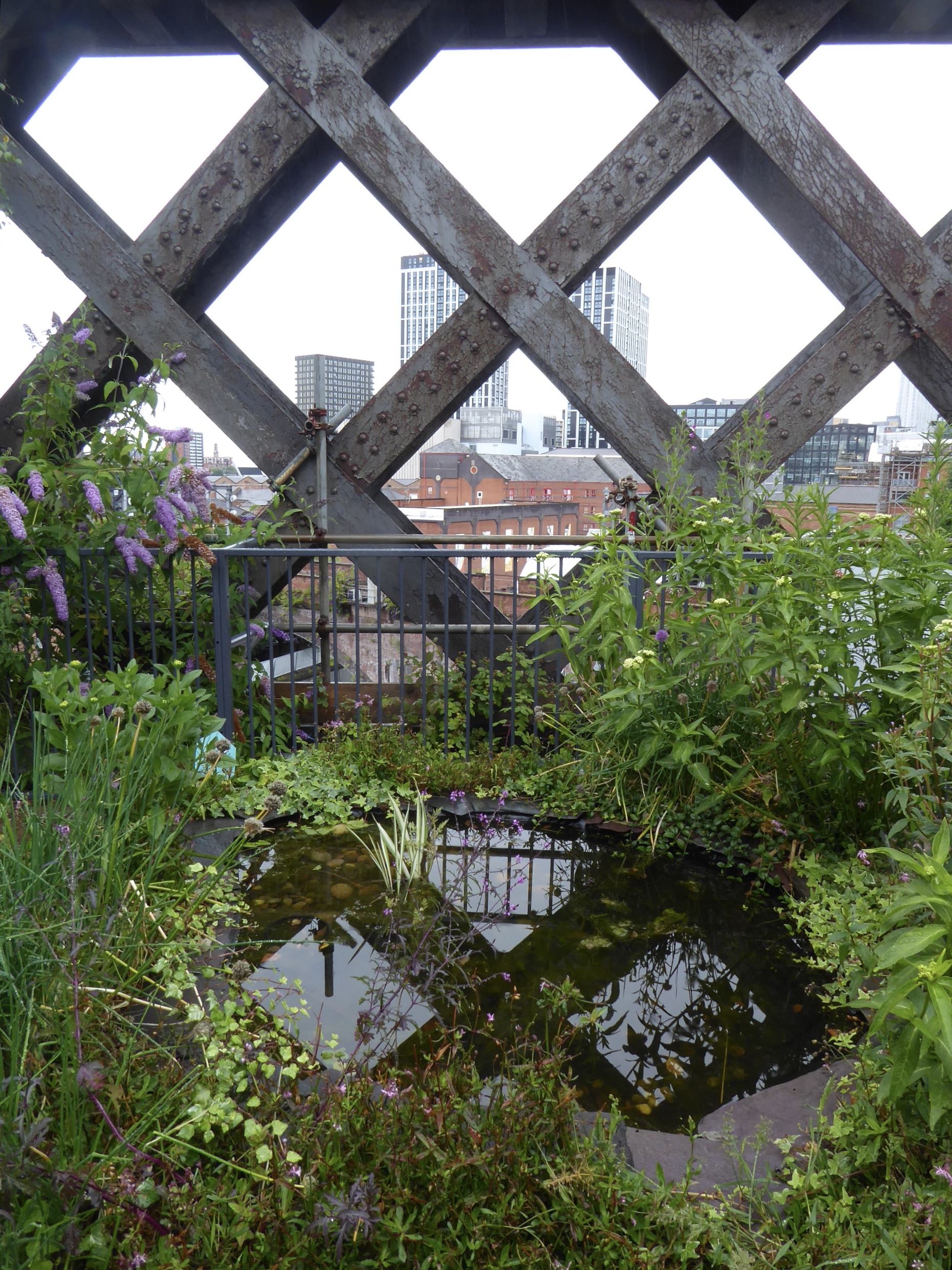
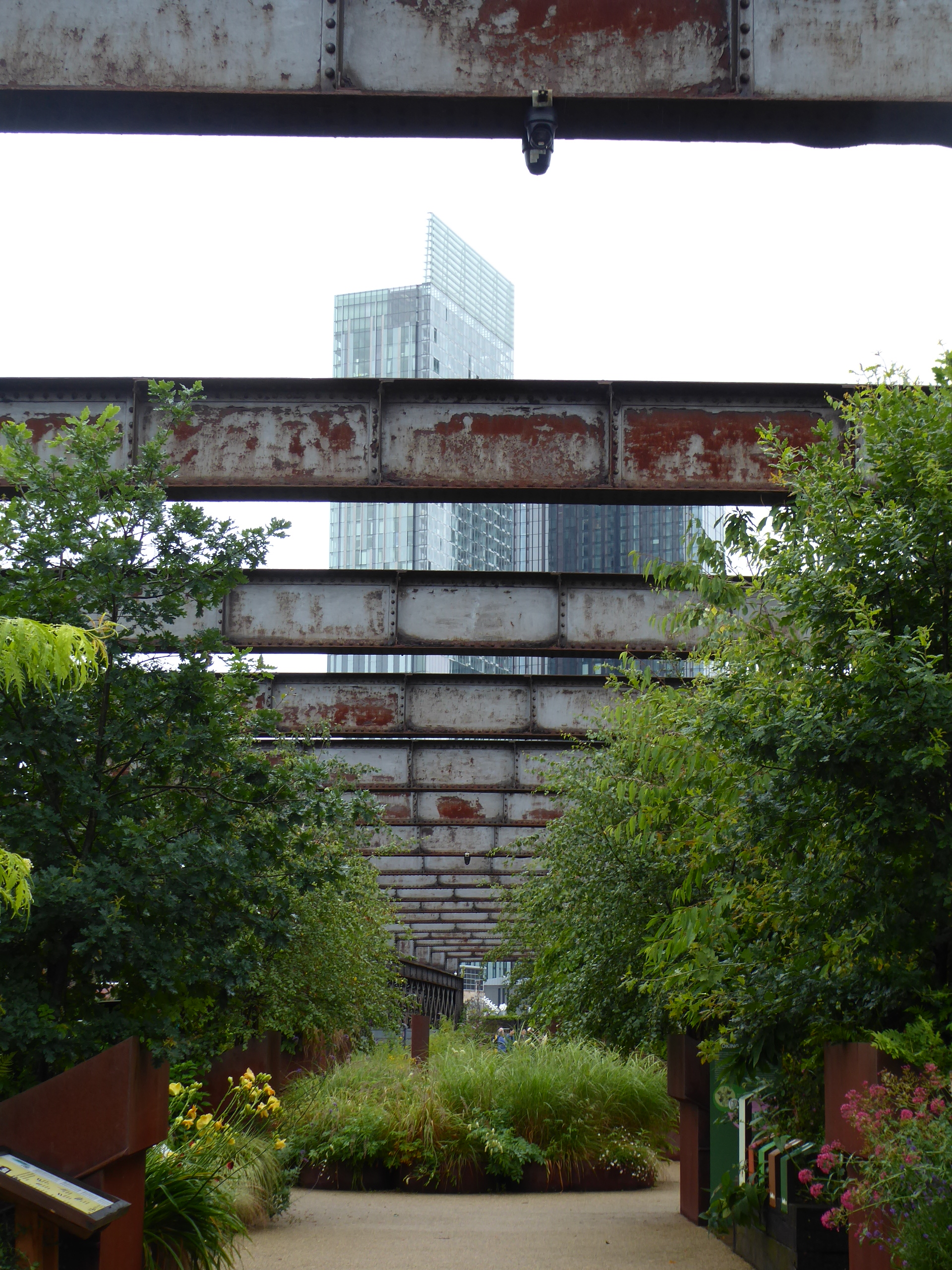
Just over the road from Deansgate station, this railway viaduct was opened in 1892 and closed in 1969. Part has been transformed into an elevated garden under the aegis of the National Trust (although I confess I liked the undeveloped part just as much). Since it was Manchester, it was raining lightly, but that didn’t spoil my delight in being in a garden above the ground.

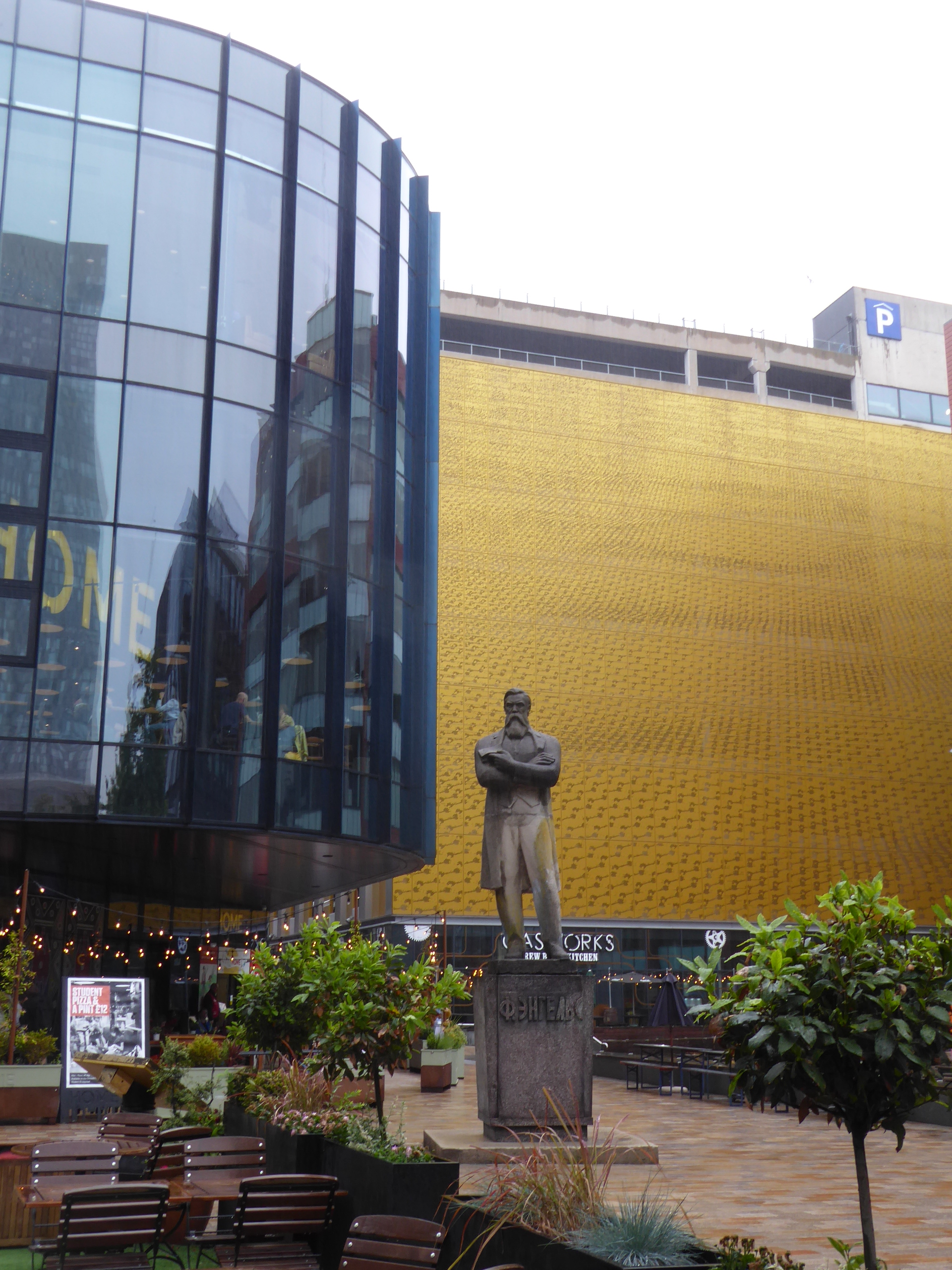
I also noticed, for the first time, the statue of Friedrich Engels outside Home in Tony Wilson Place. (Its original home was 1970s Ukraine.) My head reeled at the layers and course of history as I looked at it!

La Strada (1954)

Director Federico Fellini with Giulietta Masina, Anthony Quinn, Richard Basehart

I was introduced to this by the first session on Italian neo-realism and won over by Masina’s face and expressiveness. Simple-minded girl is sold to a travelling strongman by her poor mother (some money + one less mouth to feed = what else can you do?). You’re in deepest material poverty from the very beginning. Zampano is a brute: Gelsomina’s sister had been sold to him previously and had died. For a brief moment at the start it seemed as if Gelsomina’s quirkiness might survive, but it is beaten out of her.

It’s a road movie (the clue’s in the title): from the opening shots of Gelsomina’s home by the sea to a life on the road, a brief escape (where she first meets the tightrope-walking Fool) then recapture and an interlude with the circus. A night in a convent, where she rejects the chance to stay, and then life just gets worse. Although it’s “realistic” in terms of its setting (you feel the cold, the hunger, the fear), in structure it’s more of a fable. Life hovers between the convent and the circus, the sacred and the profane. Zampano is a strongman – heavy, earthbound, daily breaking the chain about his chest and daily fastening it up again. The Fool is as light as air – a sprite, a spirit who tells Gelsomina that everyone has a purpose in life, however small. Thus she is persuaded that her purpose is to stay with Zampano rather than escape from him. Inner conviction trumps survival.

It ends by the sea once again – which makes me think of “Dover Beach”, and “fishers of men”, and connotations of the unknown and the feminine, and the final scene of “La Dolce Vita”. And then I wonder what I am missing, not having been brought a Roman Catholic in mid-century Italy with ubiquitous images of Christ on the cross and saints being martyred in grisly ways. And all those tropes by male authors of a woman suffering meekly, usually at the hands of men: it was there in “Tokyo Story”, “The Red Shoes”, Mouchette, Nancy and many other of Charles Dickens’s women, Fantine, “Breaking the Waves”, Isabel Archer, etc etc. What is that all about?

Our views on the film were divided. I increasingly thought it was brilliant. Others found it simply depressing – also a very valid point of view.

York art gallery

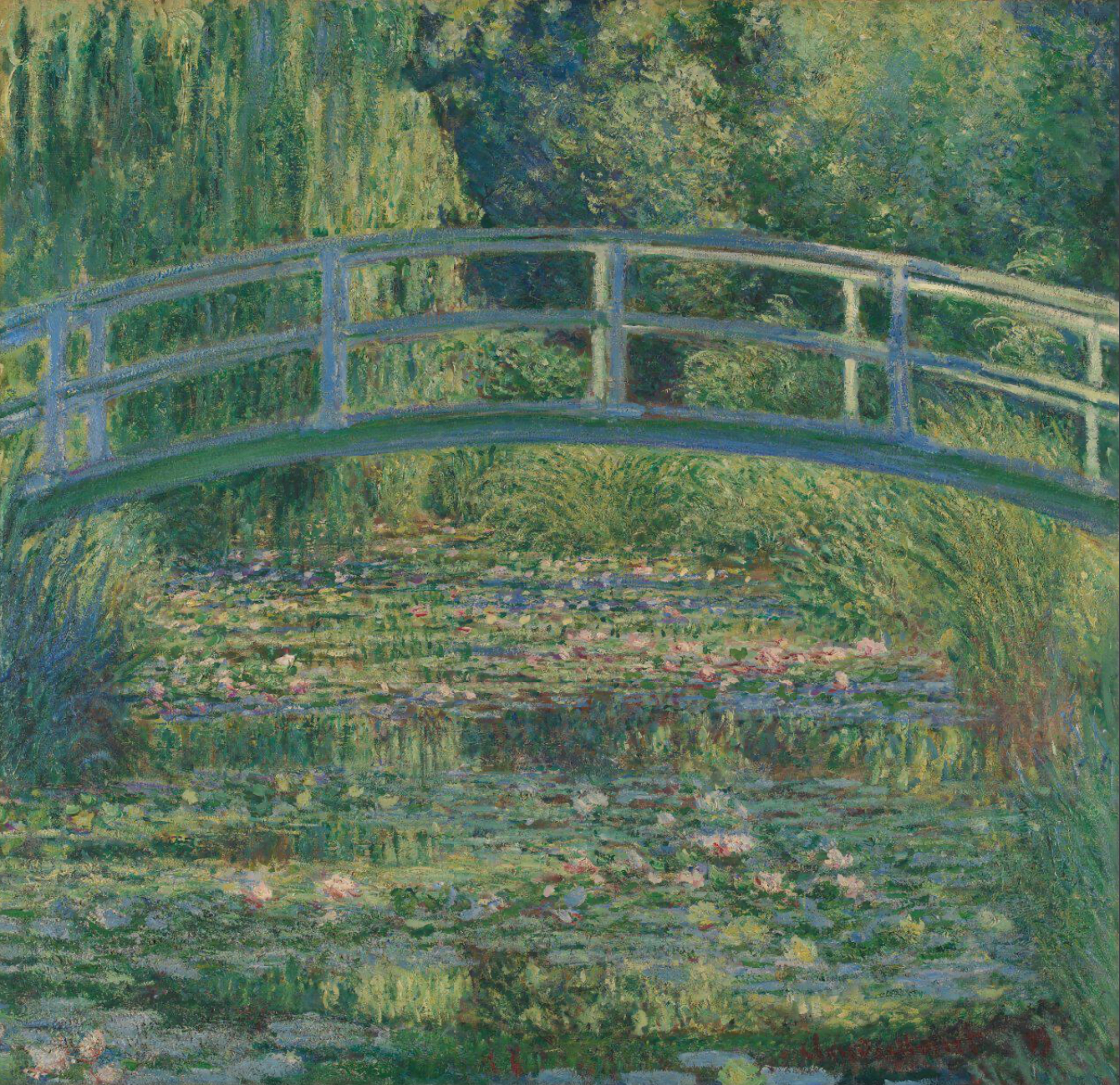
The National Gallery is currently lending some of its big names to smaller art galleries, so York has one of Monet’s lily ponds – and hence a hook on which to hang a whole exhibition. Firstly Monet’s precursors: plein air painting, Barbizon, Camille Corot, Théodore Rousseau, François Daubigny, Eugène Boudin, more Japanese woodblock prints (particularly influential in the practice of depicting the same scene under different light and weather conditions). Then those who, in turn, were influenced by Monet like Wynford Dewhurst (one work borrowed from Bradford!) and Thomas Meteyard.

It was great to see up close the blobs of paint that so beautifully represented the lilies; it overcame the sensation of familiarity that you can’t help but feel when seeing such a famous painting and made it exciting again.

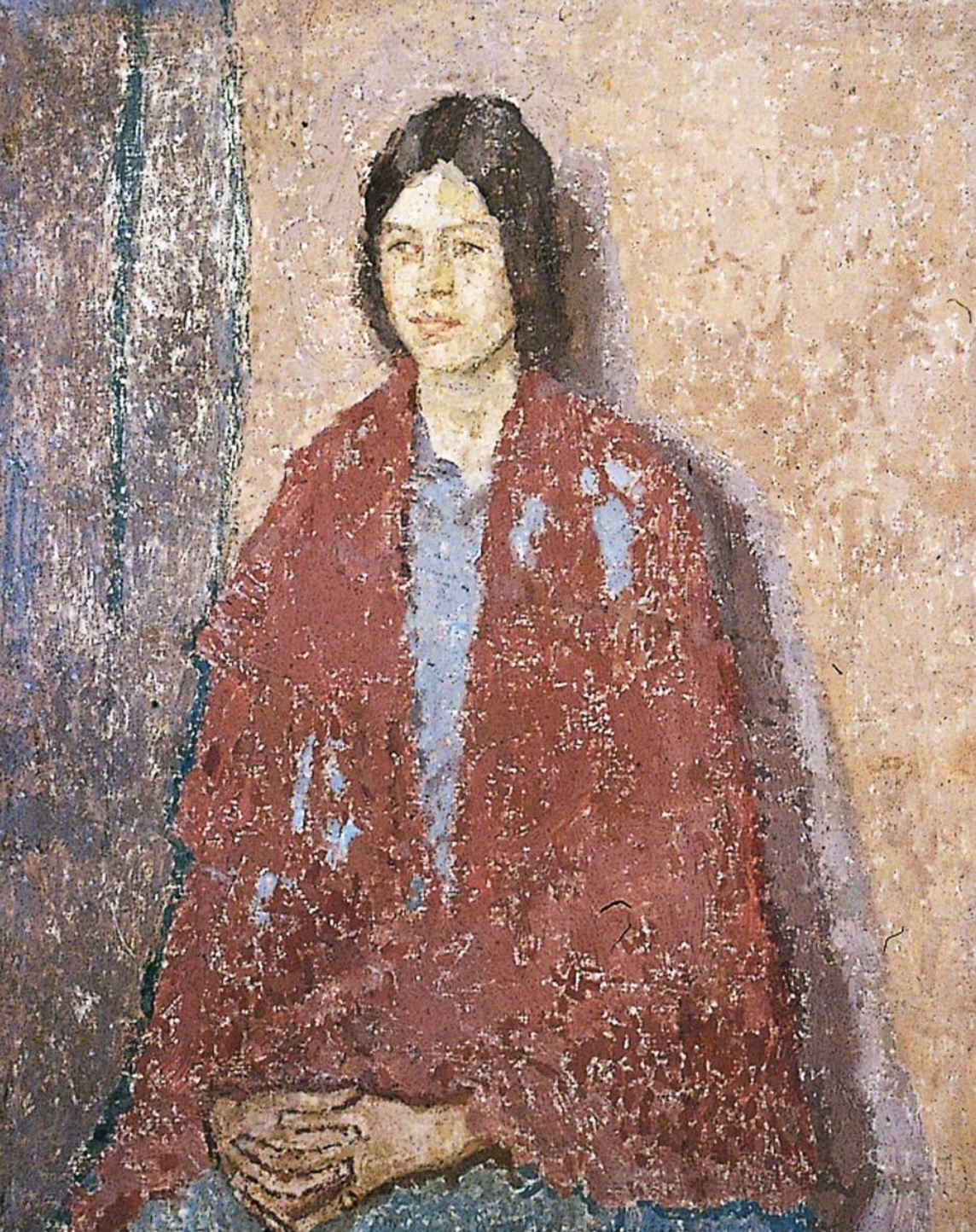
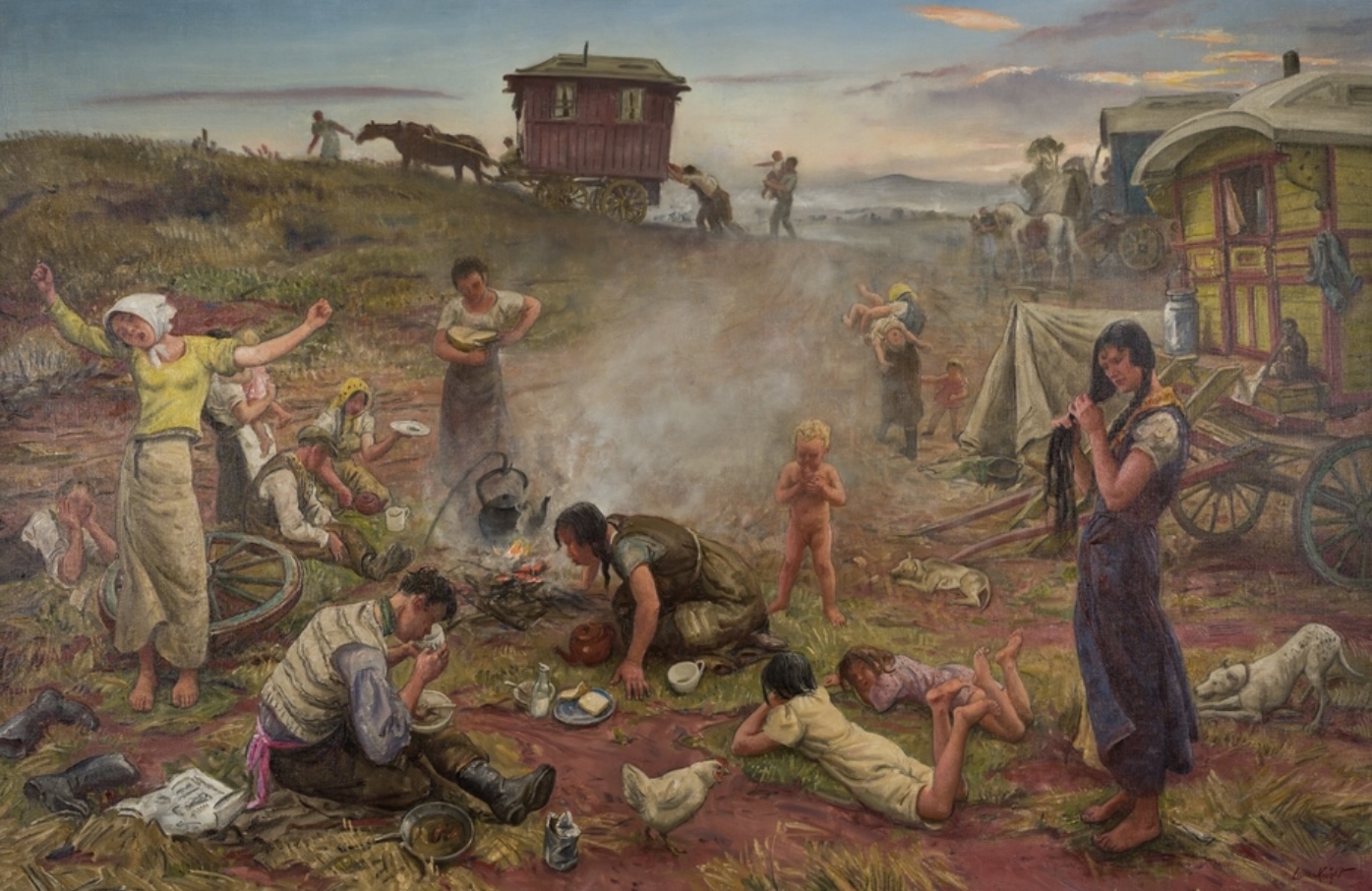
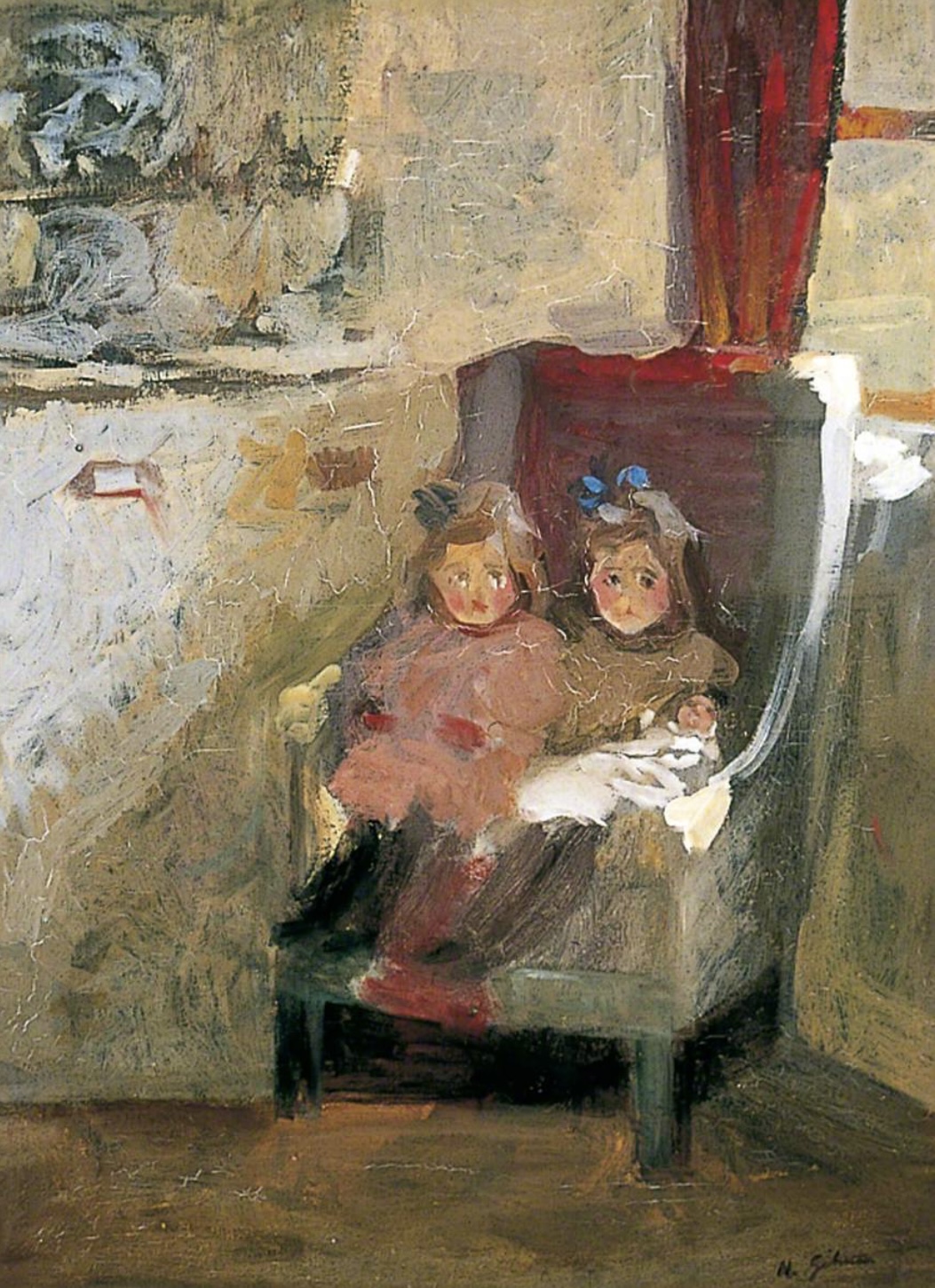
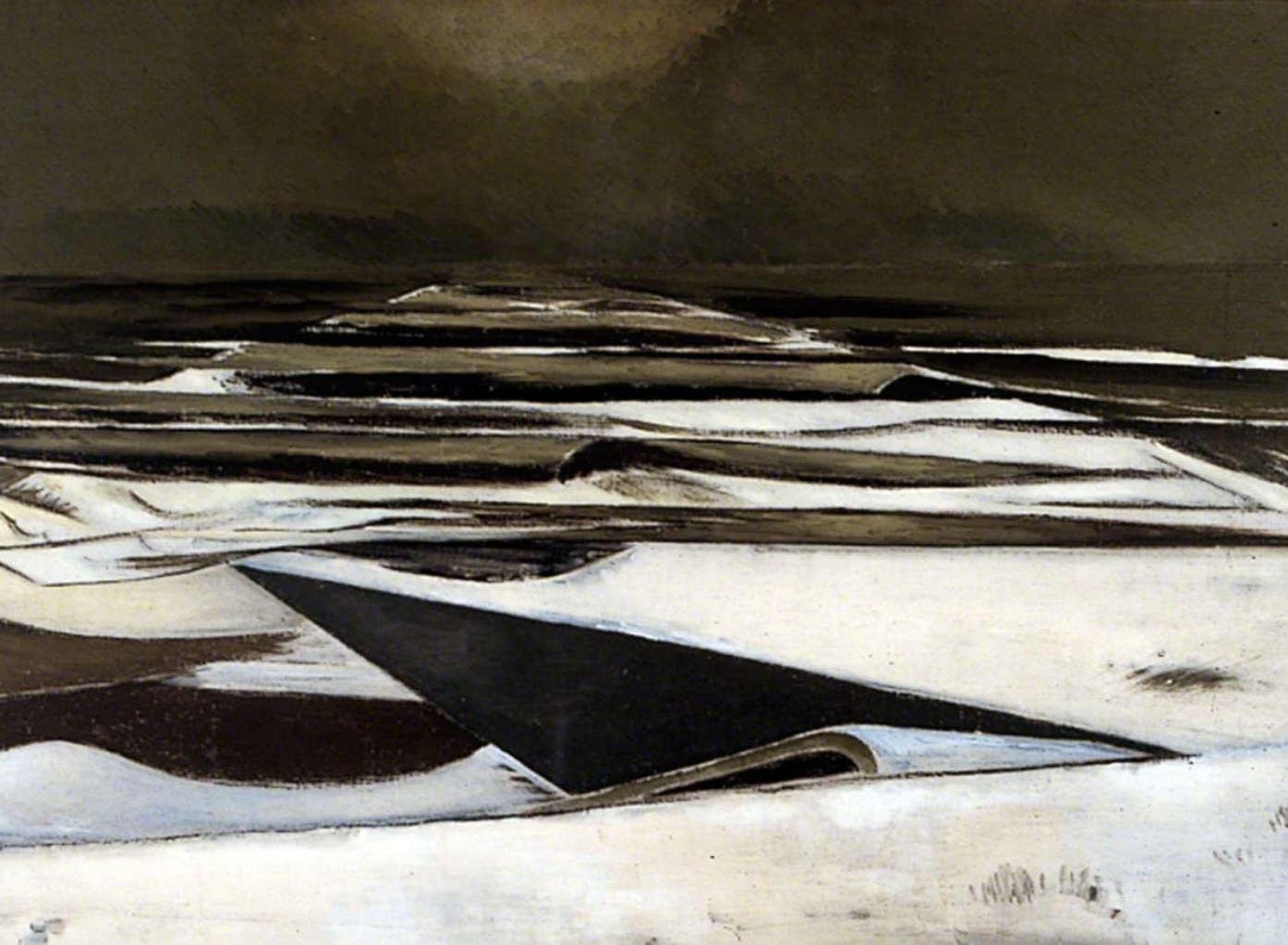
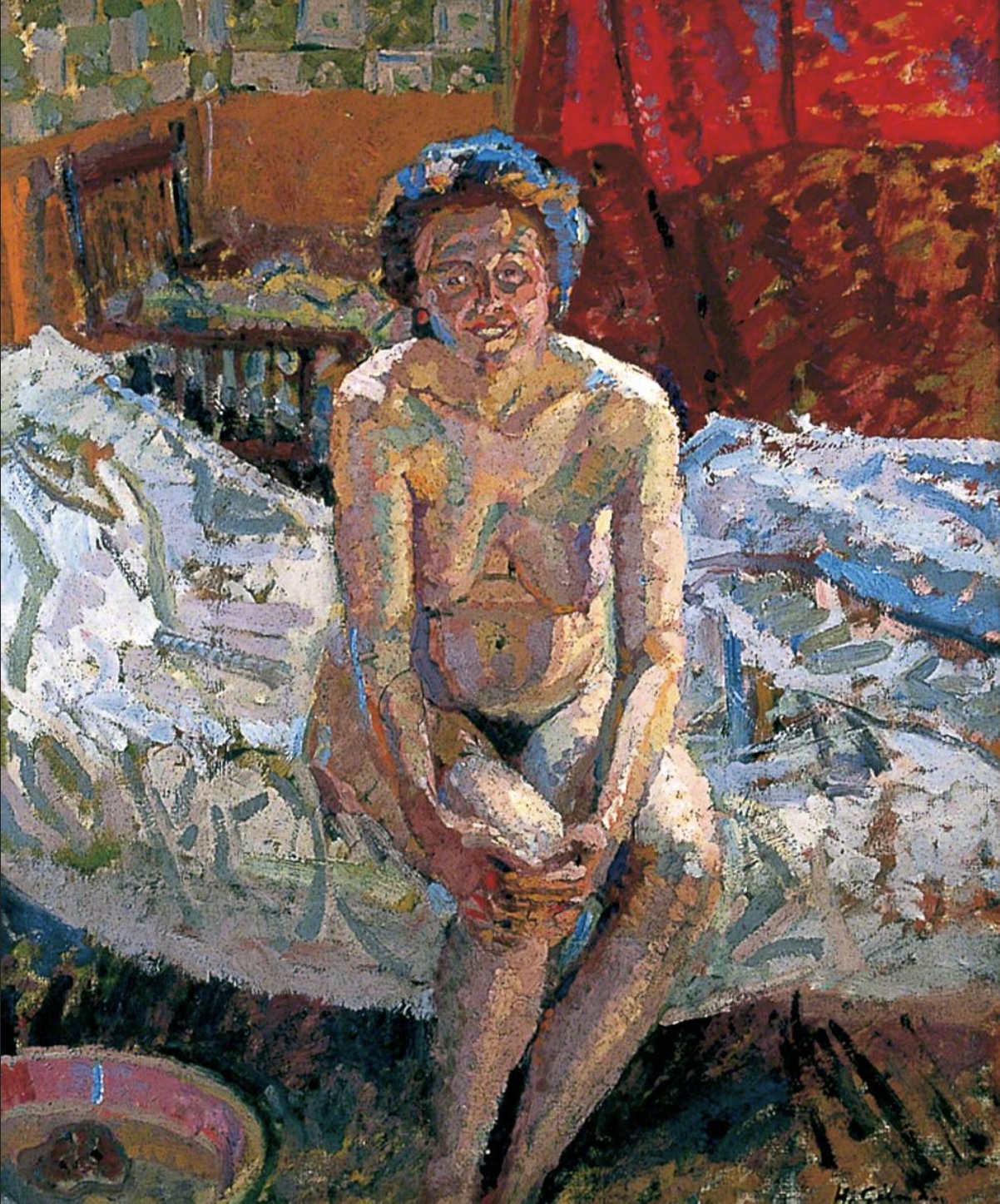
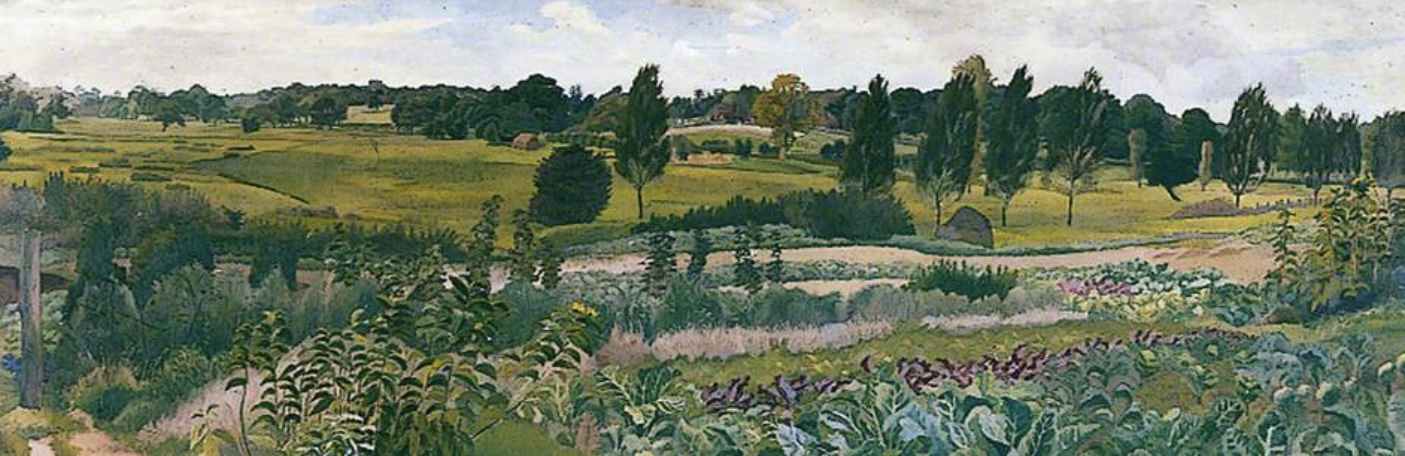
And then to the rest of the gallery, which taught me that I really don’t like the muddy tones of Walter Sickert and Harold Gilman* and I’ve had my fill for now of Gwen John’s stasis and meticulousness. Ethel Walker was there, along with Laura Knight, Paul Nash, Stanley Spencer and rather too many by local boy, William Etty, in a very pleasant gallery space.

* although the online reproductions are more colourful than the paintings on the wall.

Cartwright Hall

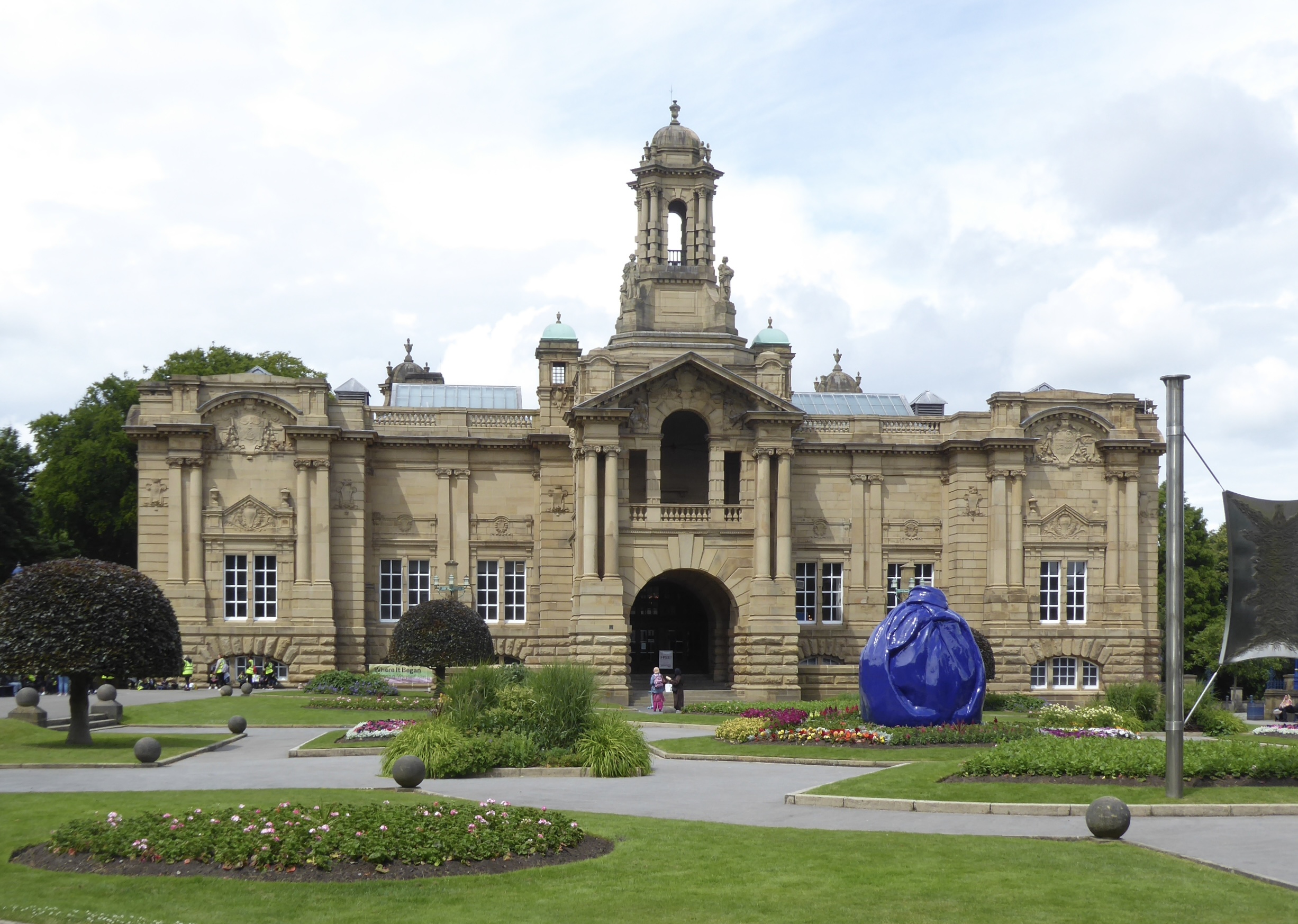
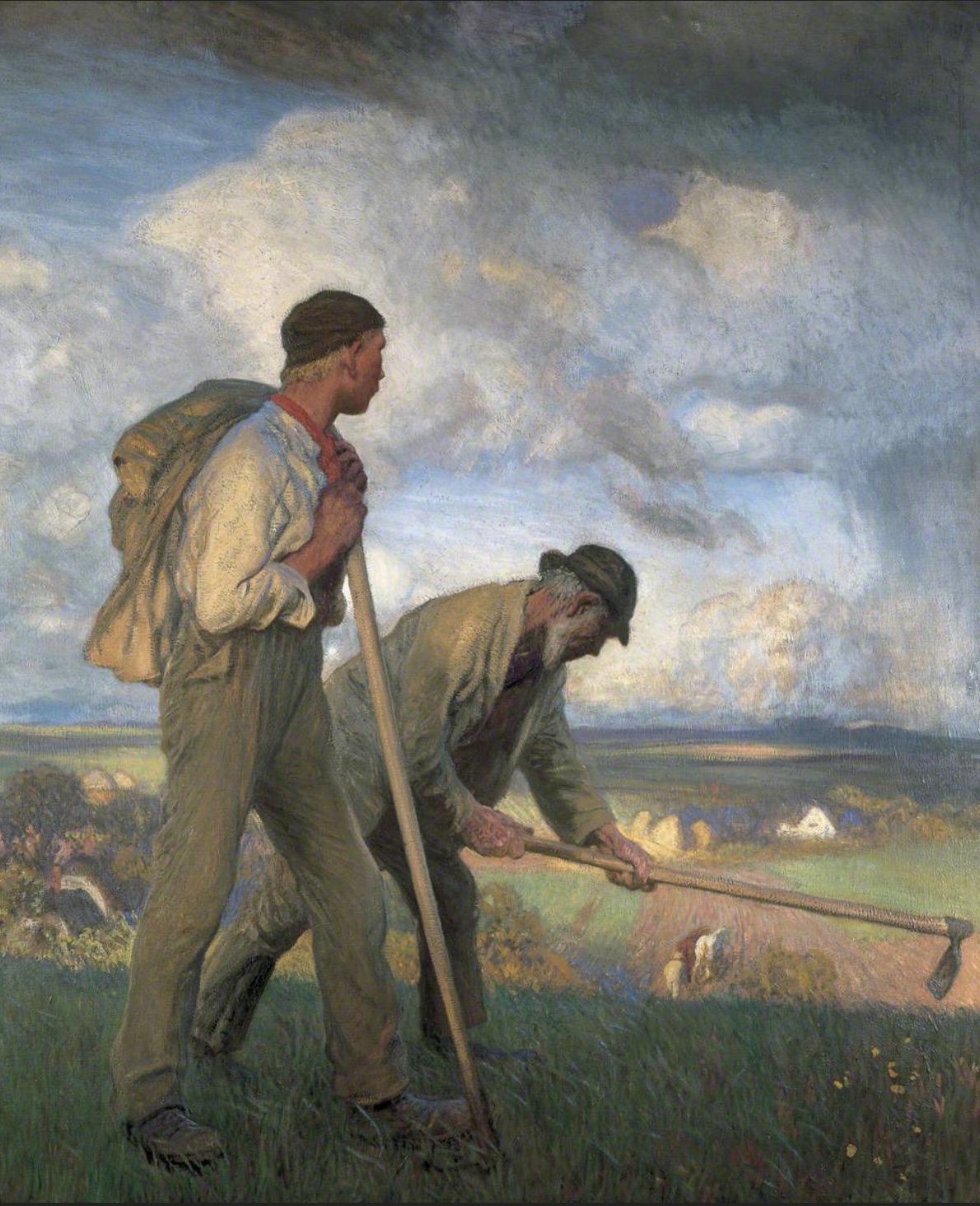
Bradford will be the 2025 City of Culture, so Cartwright Hall – in a lovely park in Frizinghall – is looking its best. It was built on land and money donated by a local textile manufacturer and is a mixture of “the usual suspects” (e.g. Clausen, Spencer, Hillier) and South Asian exhibits. At present there is an exhibition by Osman Yousefzada looking at migration, identity and community. Lots of wrapped objects, including the statue on the parterre in front, to echo the packages people make to carry around. I had a flashback to the mother in “Tokyo Story” making up and unpacking her little bundle.

Amongst the familiar (and sometimes rather dull) Victorian paintings there were little jolts to the eye like “Exodus Lahore” by Sylvat Aziz – more difficult to parse at first than, say, yet another massacre of the innocents, but that brought home to me the limits of my cultural grasp.

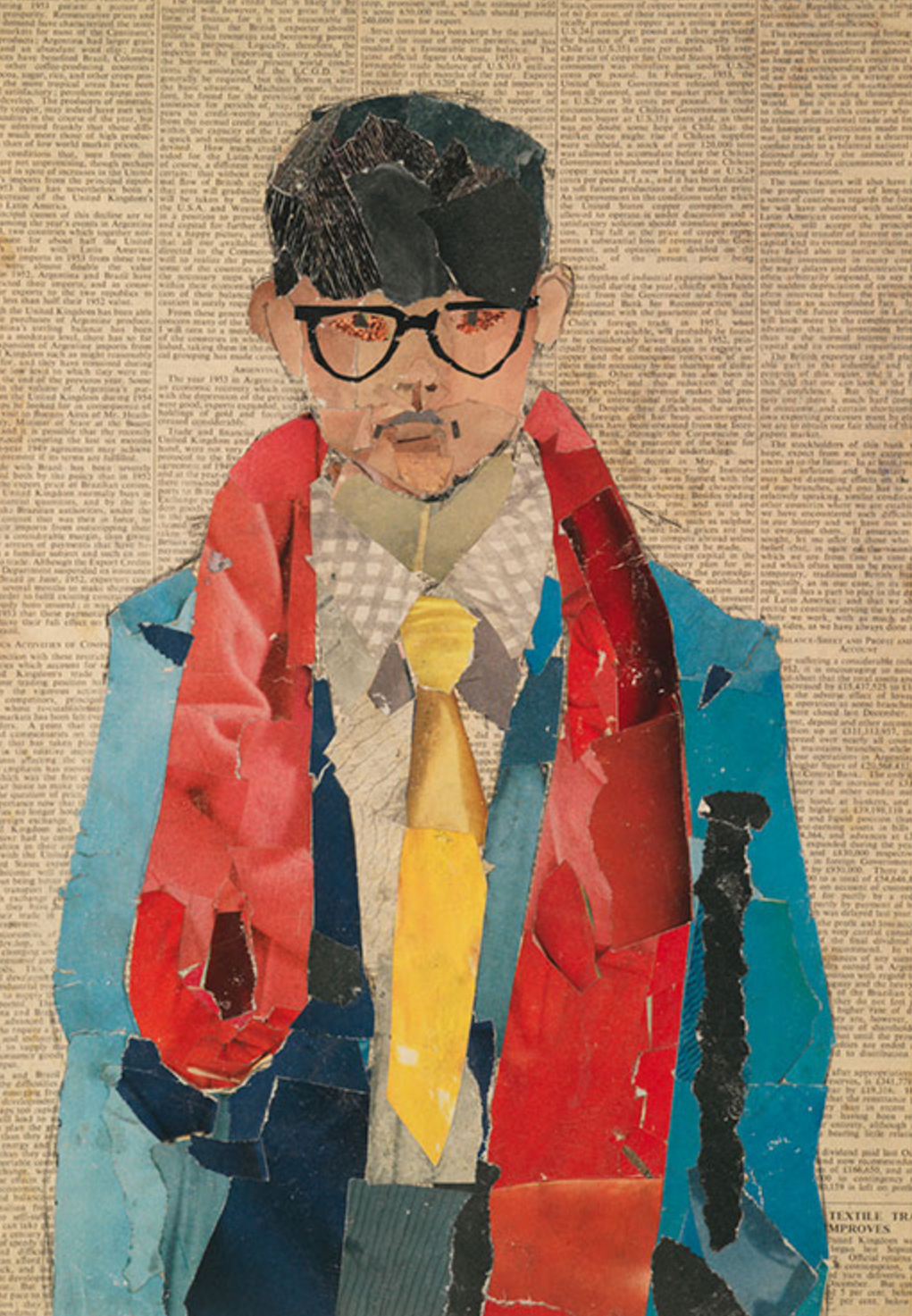
There was also a gallery of work by David Hockney. Once again I wandered round rather uninterested but was suddenly hooked by something – this time a delightful collage self-portrait that made me smile and embodied perfectly his unflagging creativity.

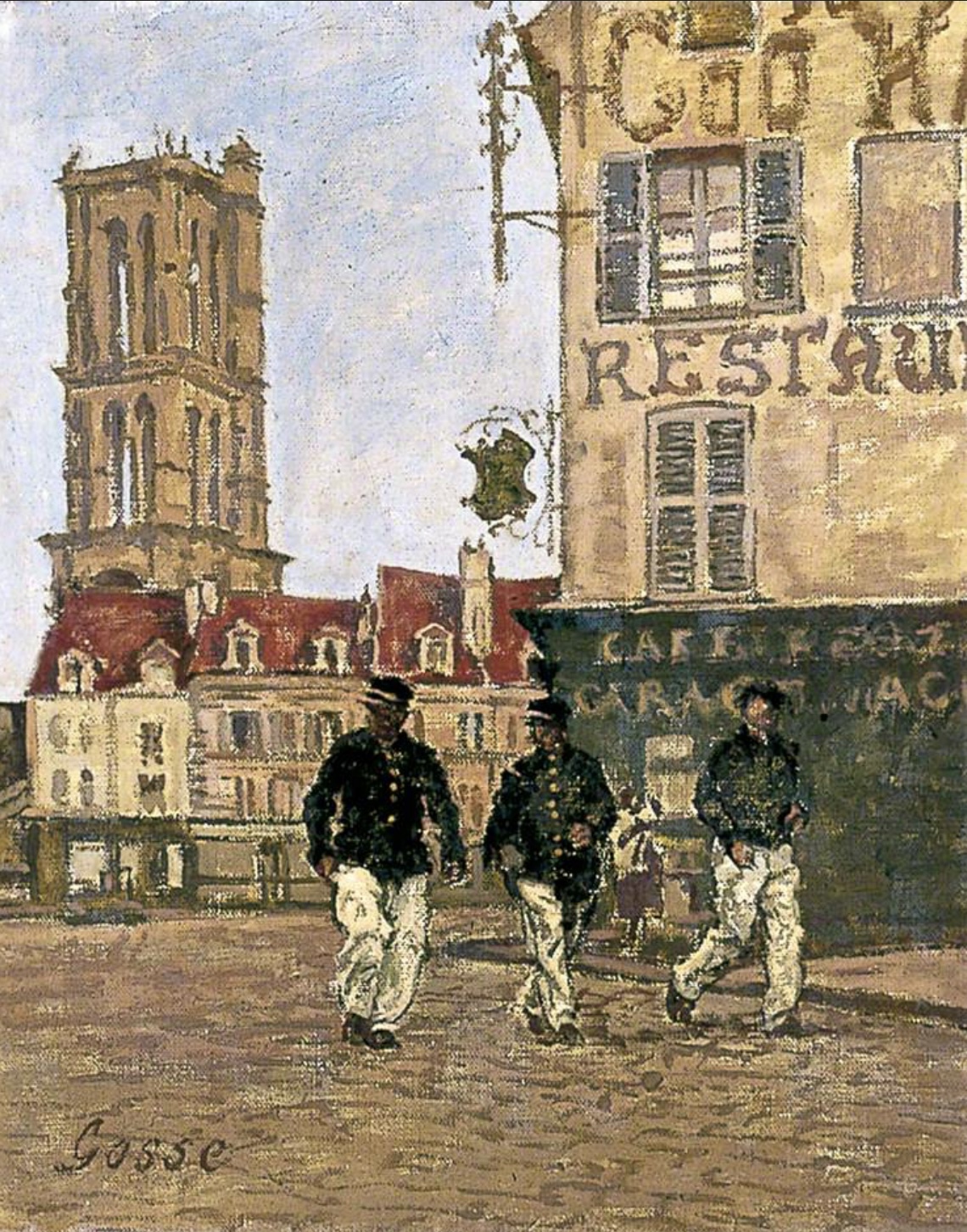
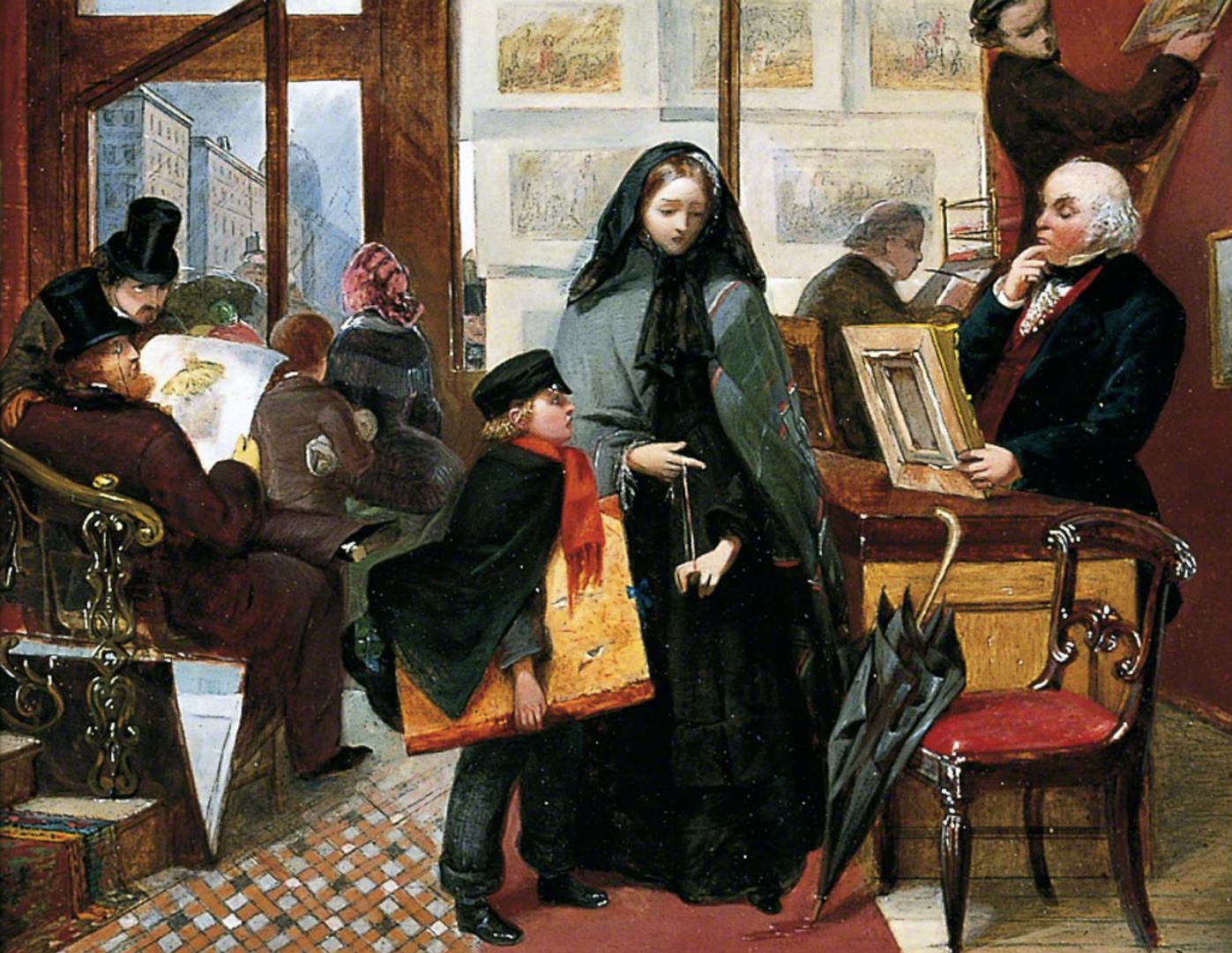
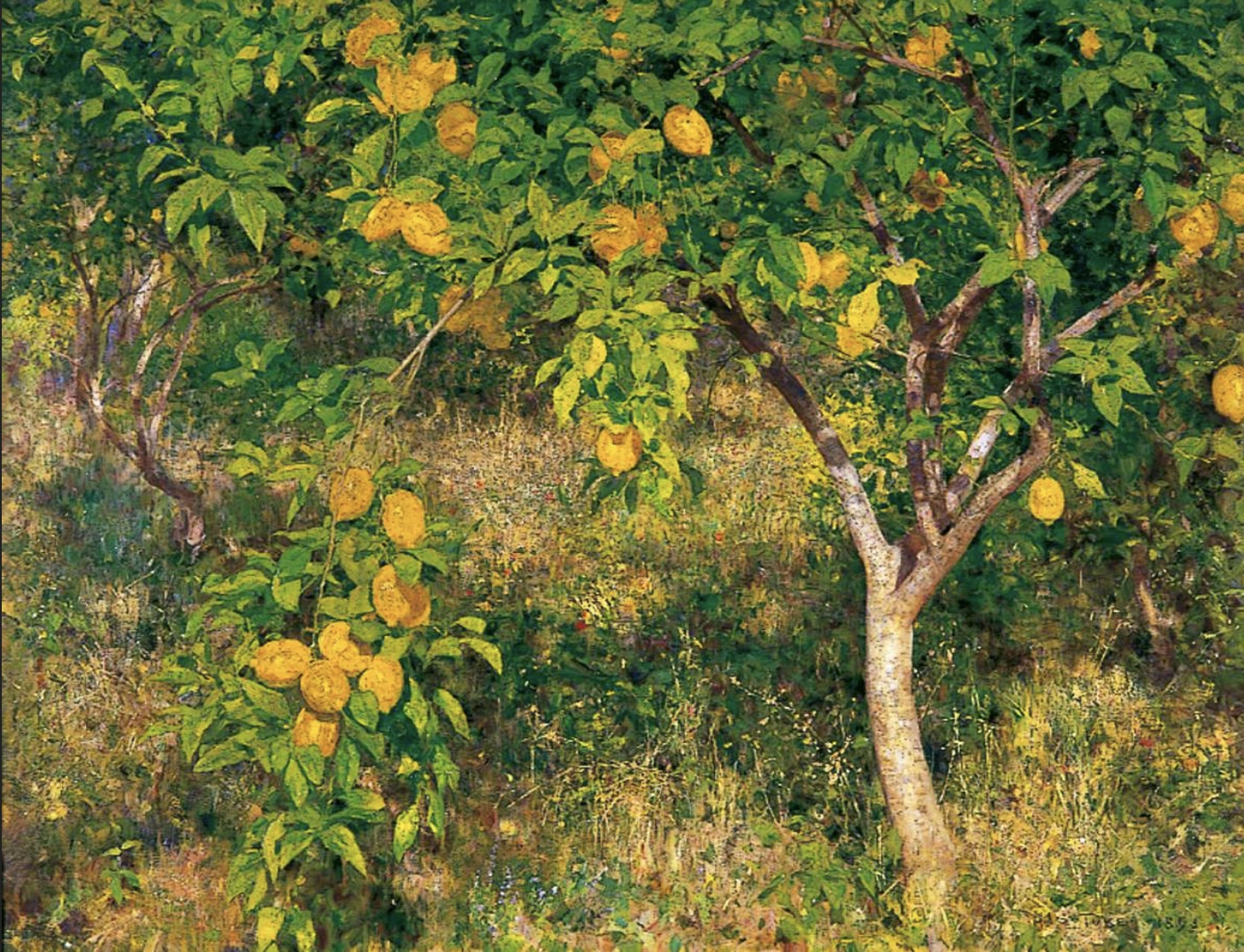
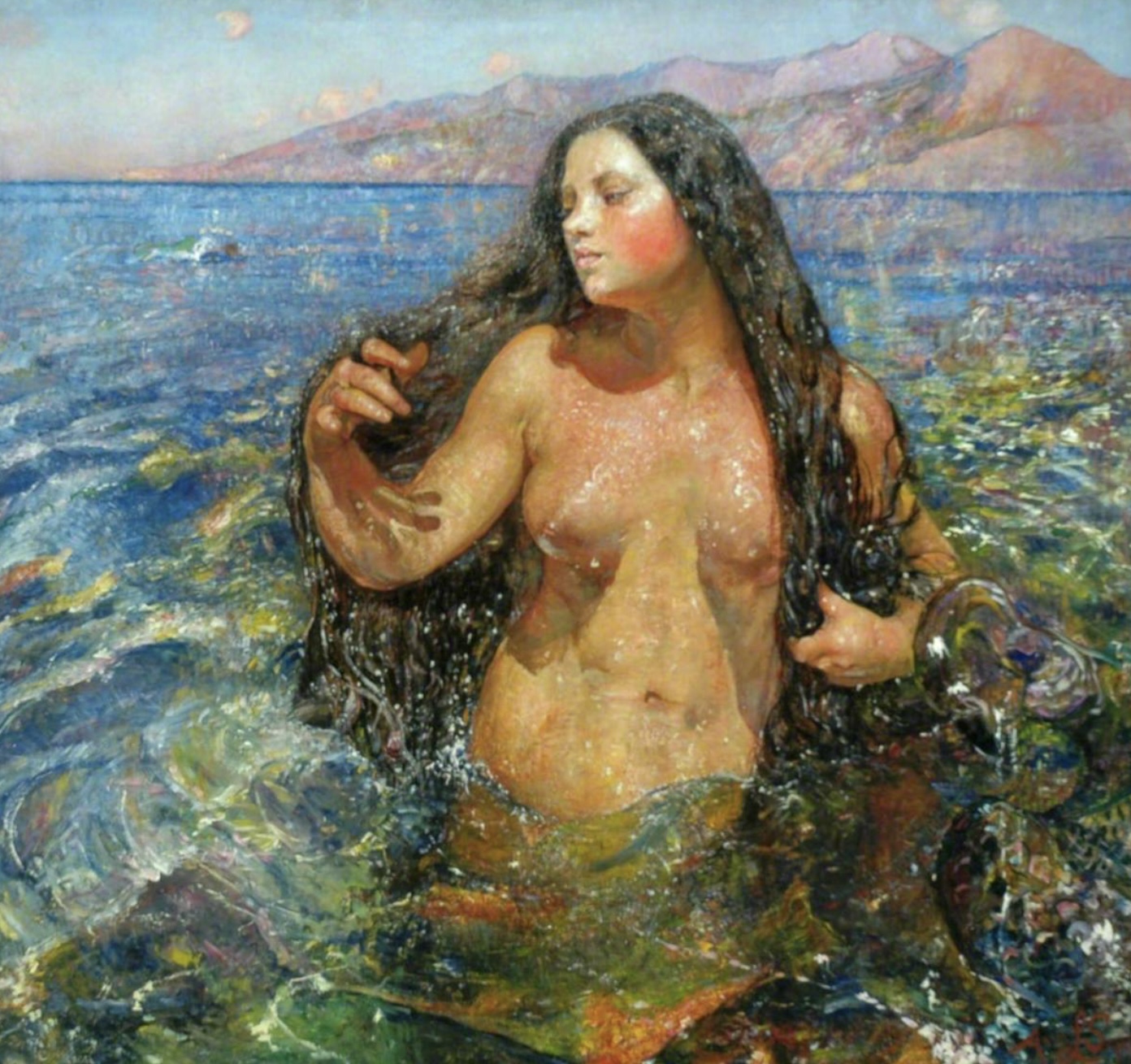
Flicking through the ArtUK website afterwards, I had a glimpse of the lending of artworks around galleries: I had seen the Connard last month in Southport, the Tuke last year in Newcastle and the Swynnerton either in Manchester or London.