
It finally filtered through to me mid-morning that there are regular direct trains between Saltburn and Bishop Auckland. Obviously I had seen the words “Bishop Auckland” on the departure boards before today, but they hadn’t penetrated through to whatever control room in my head plans my days and plots my course through life. So Bishop Auckland and a visit to the Spanish Gallery it was.
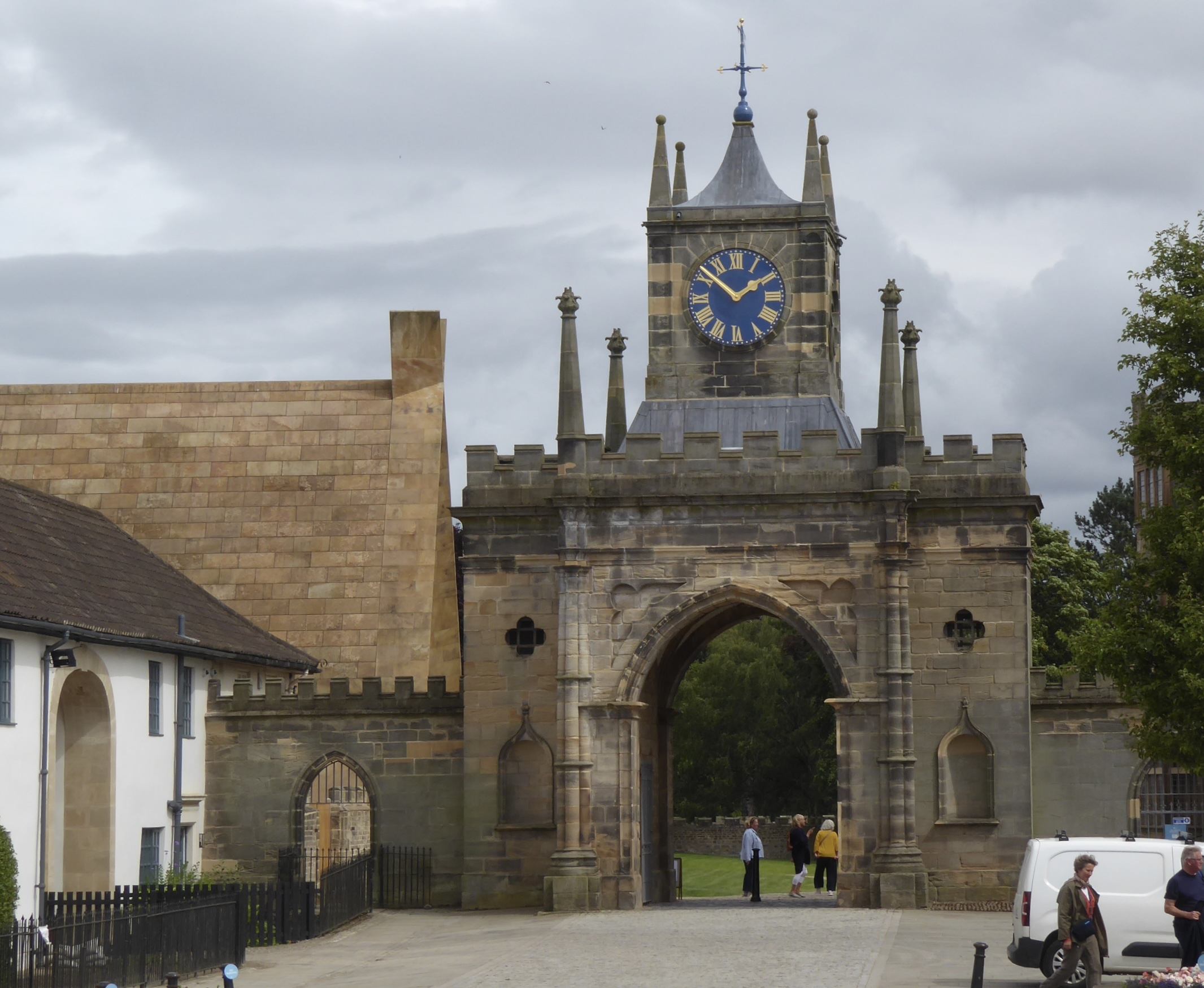
Flashing police lights at Newton Aycliffe reminded me of the street violence in recent days, and as I walked from Bishop Auckland station through the town I wondered if that town had suffered from it. No: the smashed windows at the empty Beales pre-date recent events. That’s just Bishop Auckland for you (sadly for BA). The occasional boarded-up windows and pulled-down shutters today, though, were different: the town has been on high alert for a couple of days and several businesses (including the Spanish Gallery) were closing early. All I saw were a couple of boys on bikes, obviously excited and buzzing with anticipation: anything to liven up the long school holidays. Otherwise people commented to each other how quiet it all was.
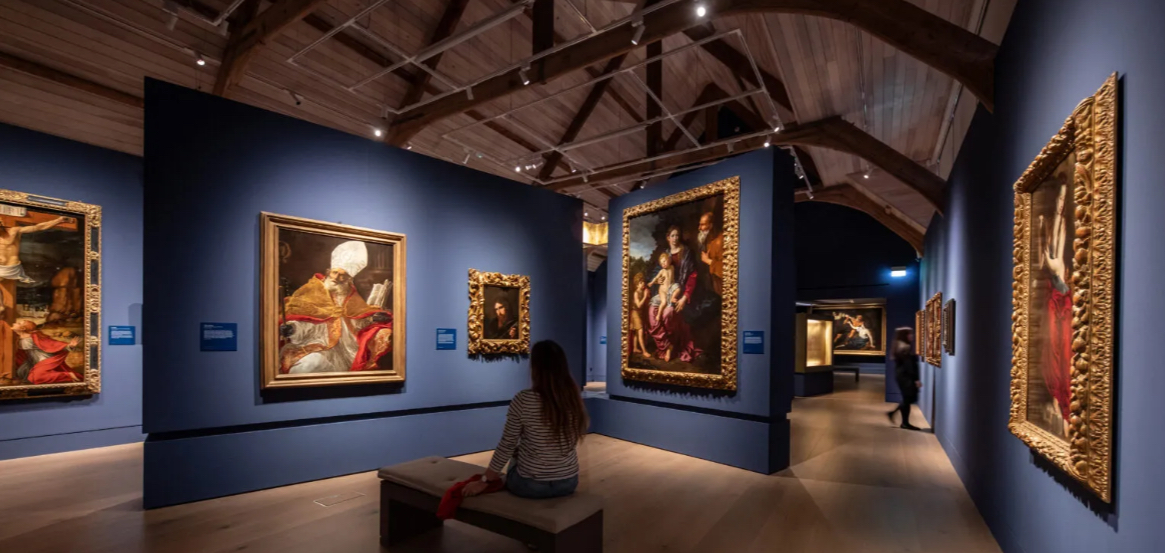
But to the Spanish Gallery. I know very little about Spanish art; my curiosity had been piqued by my recent visit to the John Singer Sargent exhibition and the information that he had been influenced by the sombre palette of Velasquez. There was in fact a painting by Sargent – a simple (but gruesome) image of a crucifixion. There was, inevitably, a lot of religious art which all blurred into one mass. My only takeaway was a quizzical thought about the many versions of a rather under-dressed penitent Magdalene. There’s an El Greco of Christ on the cross, most notable for the dizziness caused by looking at the background for too long. My first steal was attributed to a Frenchman long resident in Spain: Claude Vignon’s Saint Ambrose. (Not sure how secure that attribution is.) I also found out a little about Seville – a place I may be visiting in December – and its significance in Spanish art history.
The whole Bishop Auckland Project is the brainchild of one man: Jonathan Ruffer, unimaginably rich but committed to offloading some of his fortune in an inspiring way. (While writing all the labels for the gallery.) Since reading about the Pease family – and Henry Pease in particular who set the ball rolling on Saltburn as a holiday resort – I have been thinking about the mountains that one man can cause to be moved. Every town has some notable Victorian or Edwardian building or park provided by a local boy grown fat on local (and his own) industry. Bradford art gallery, Southport art gallery . . . so many donations by a successful man to his home town. Nowadays such things are generally done by committees, but occasionally – like here – one person can still make a difference (and not in an Elon Musk way). The difficulty is in regenerating and redirecting rather than creating on a blank canvas: reversing the path that leads to smashed windows in a derelict department store.

 Old Shoe Box