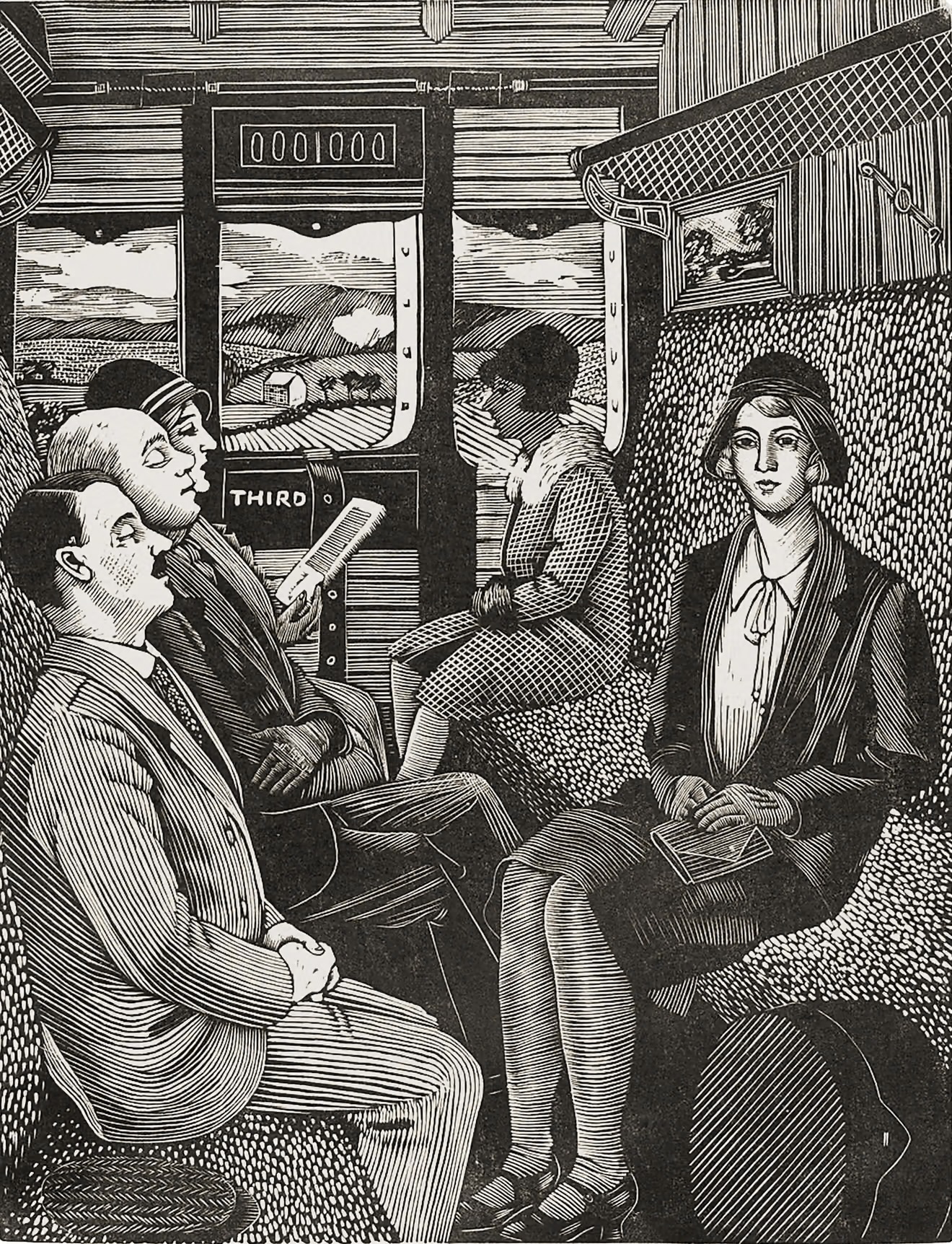
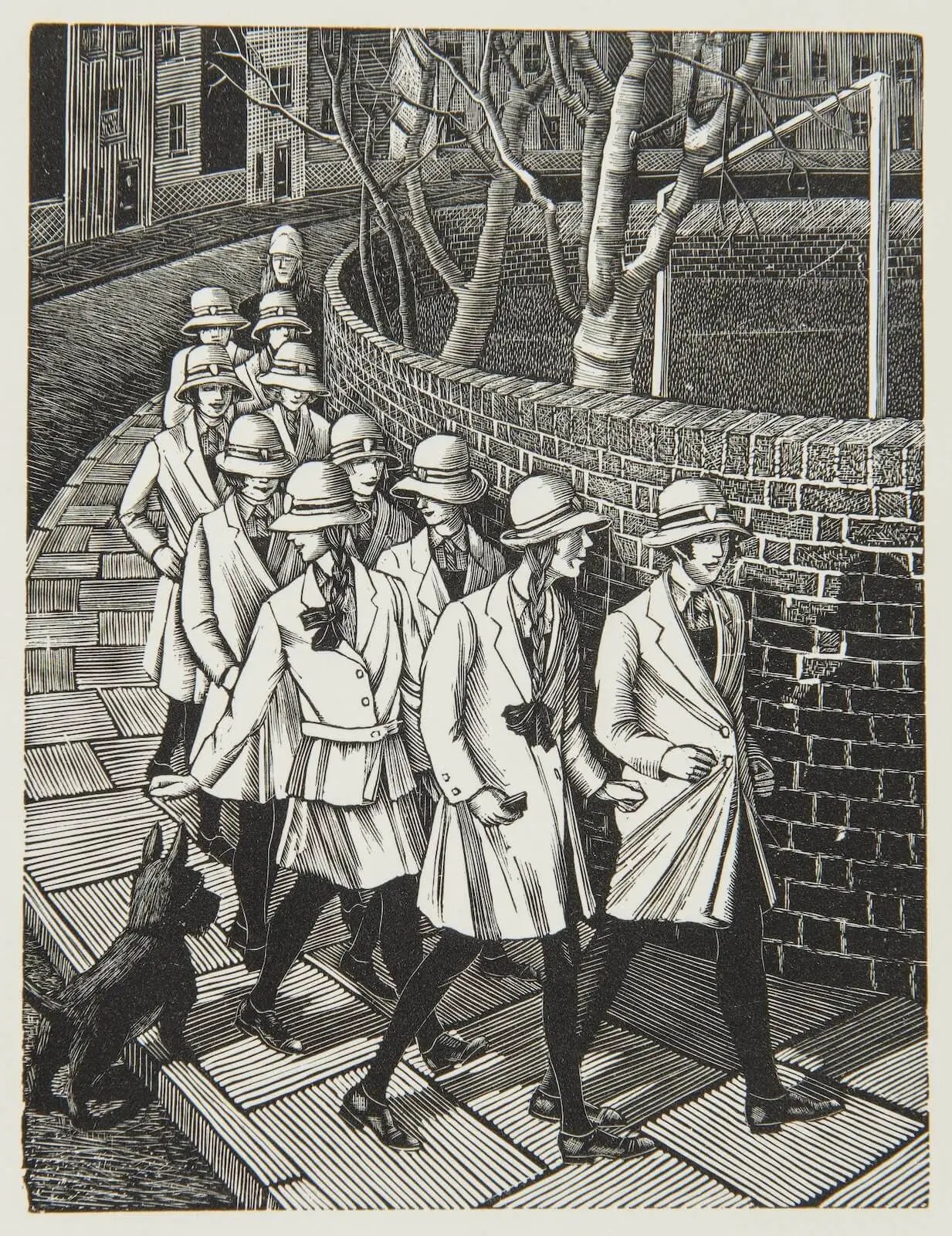
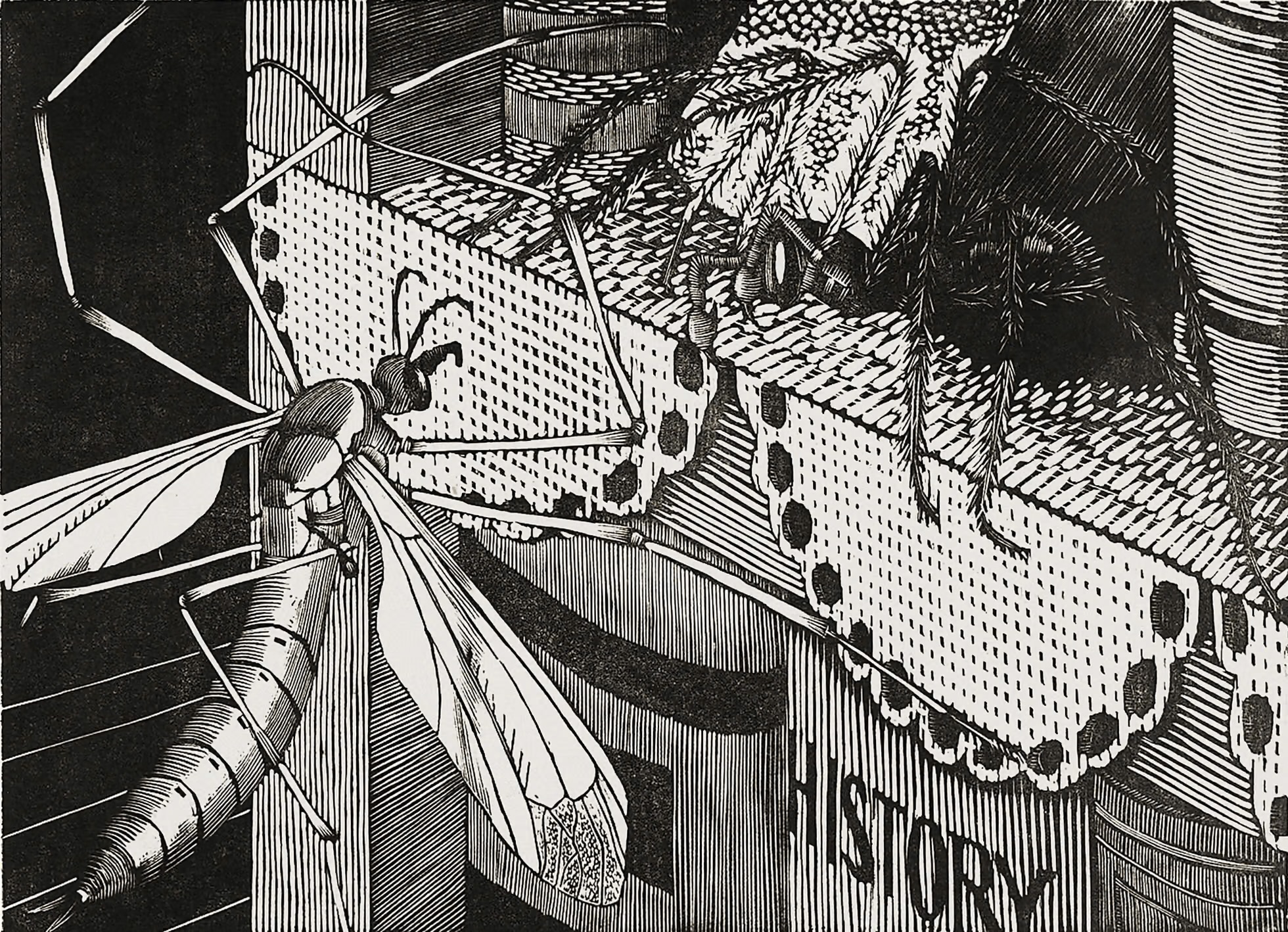
To Dulwich Picture Gallery for a delightful exhibition. Everything made me smile, despite the sadness of Garwood’s early death. Basic facts: her dates are 1908-51; she was married to Eric Ravilious, had three children and was widowed in 1942; she was treated for breast cancer in 1942, which later recurred and killed her shortly after her second marriage.
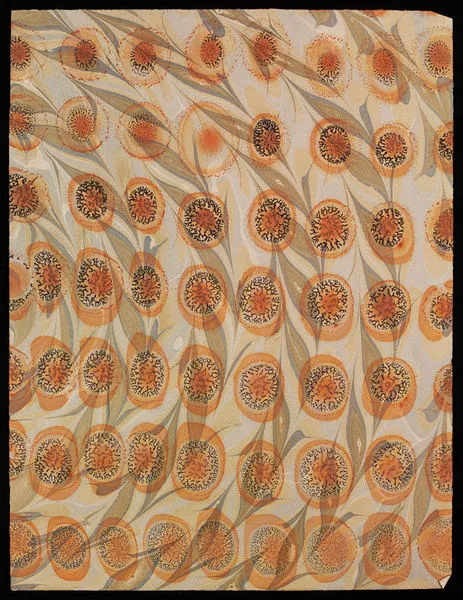
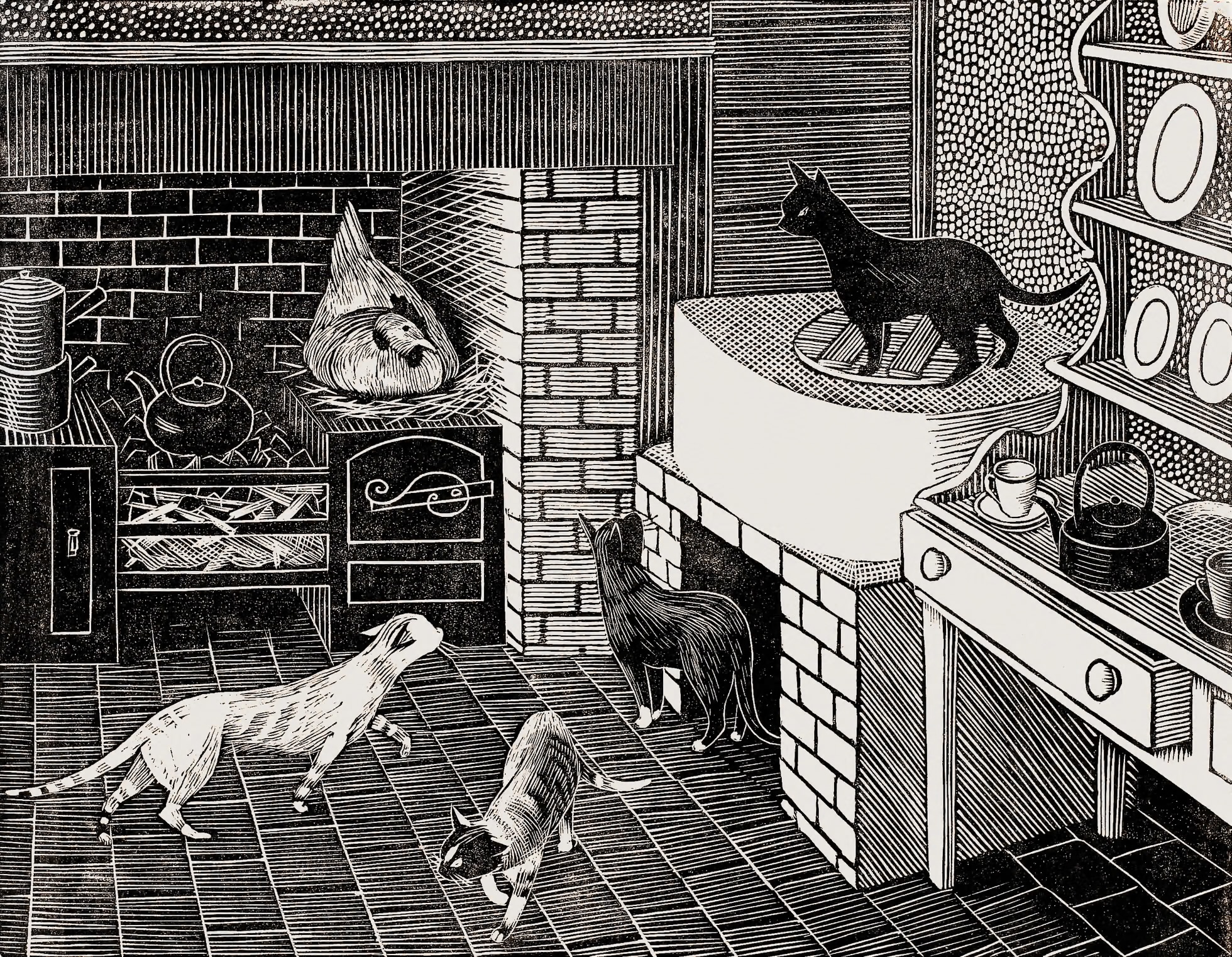
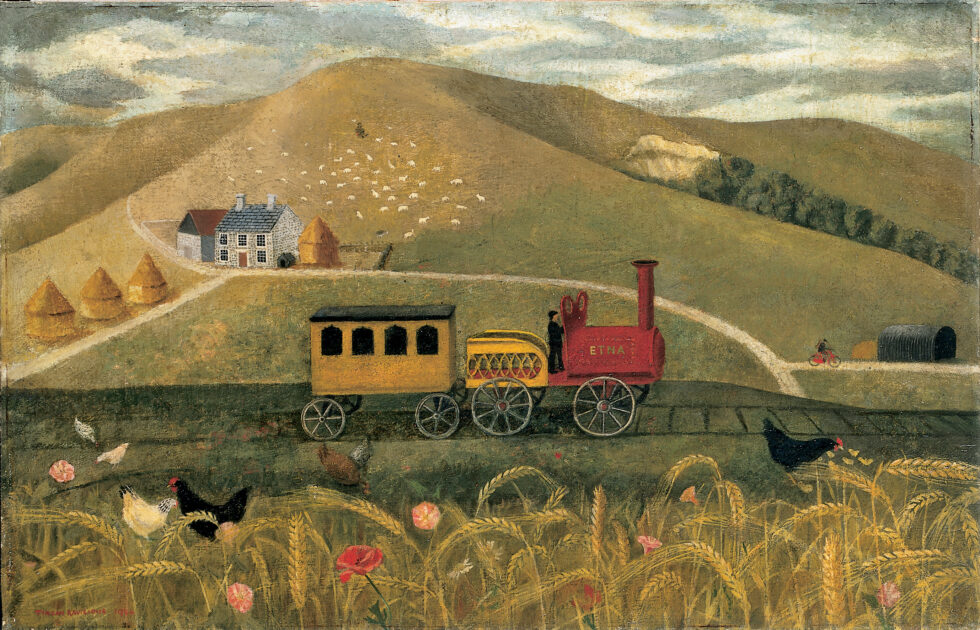
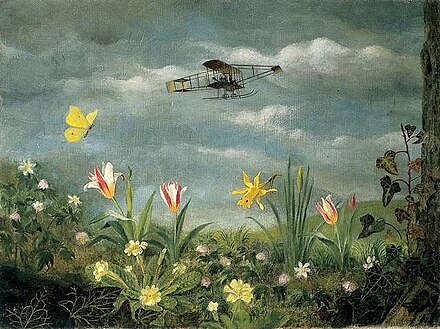
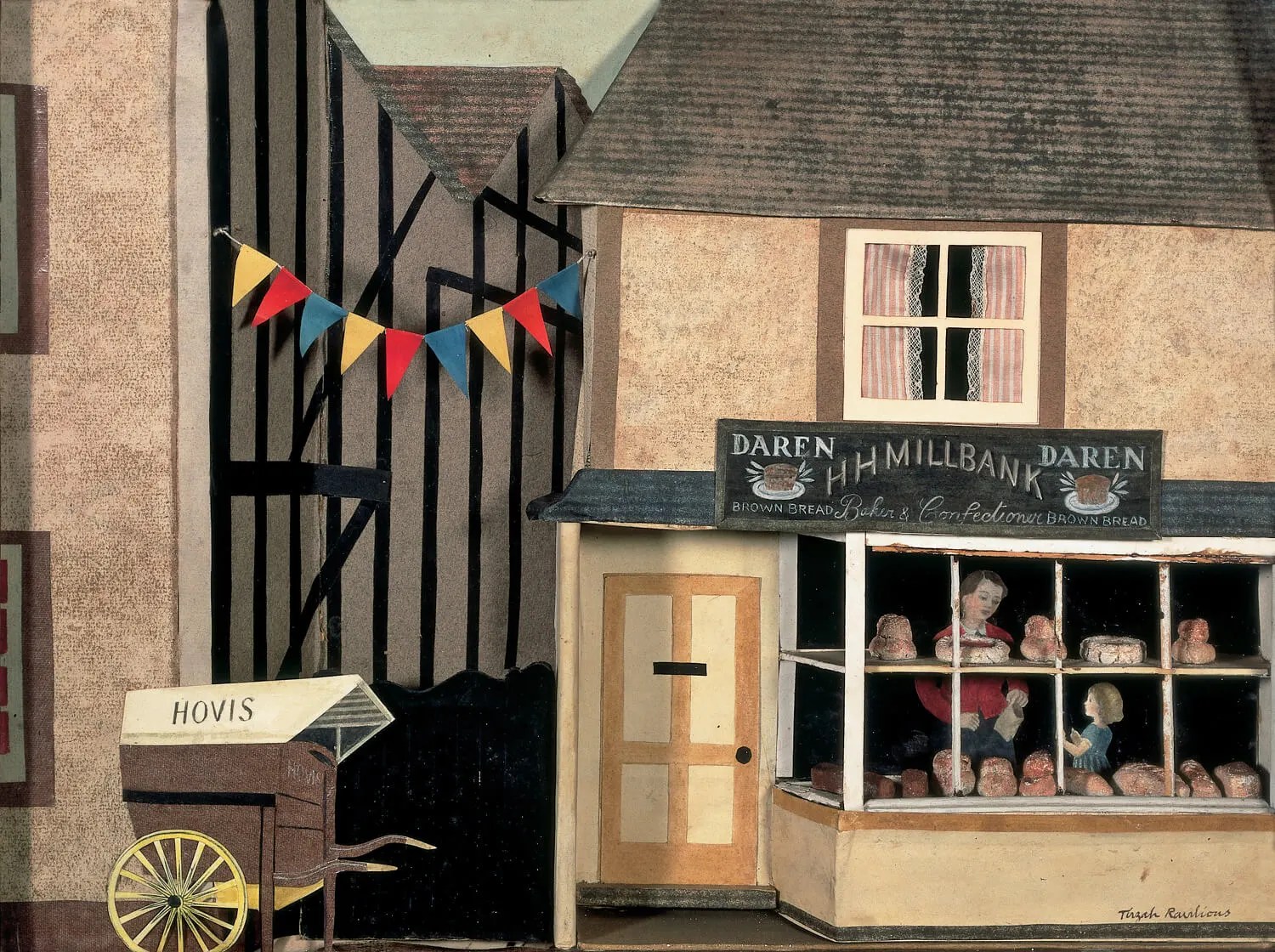
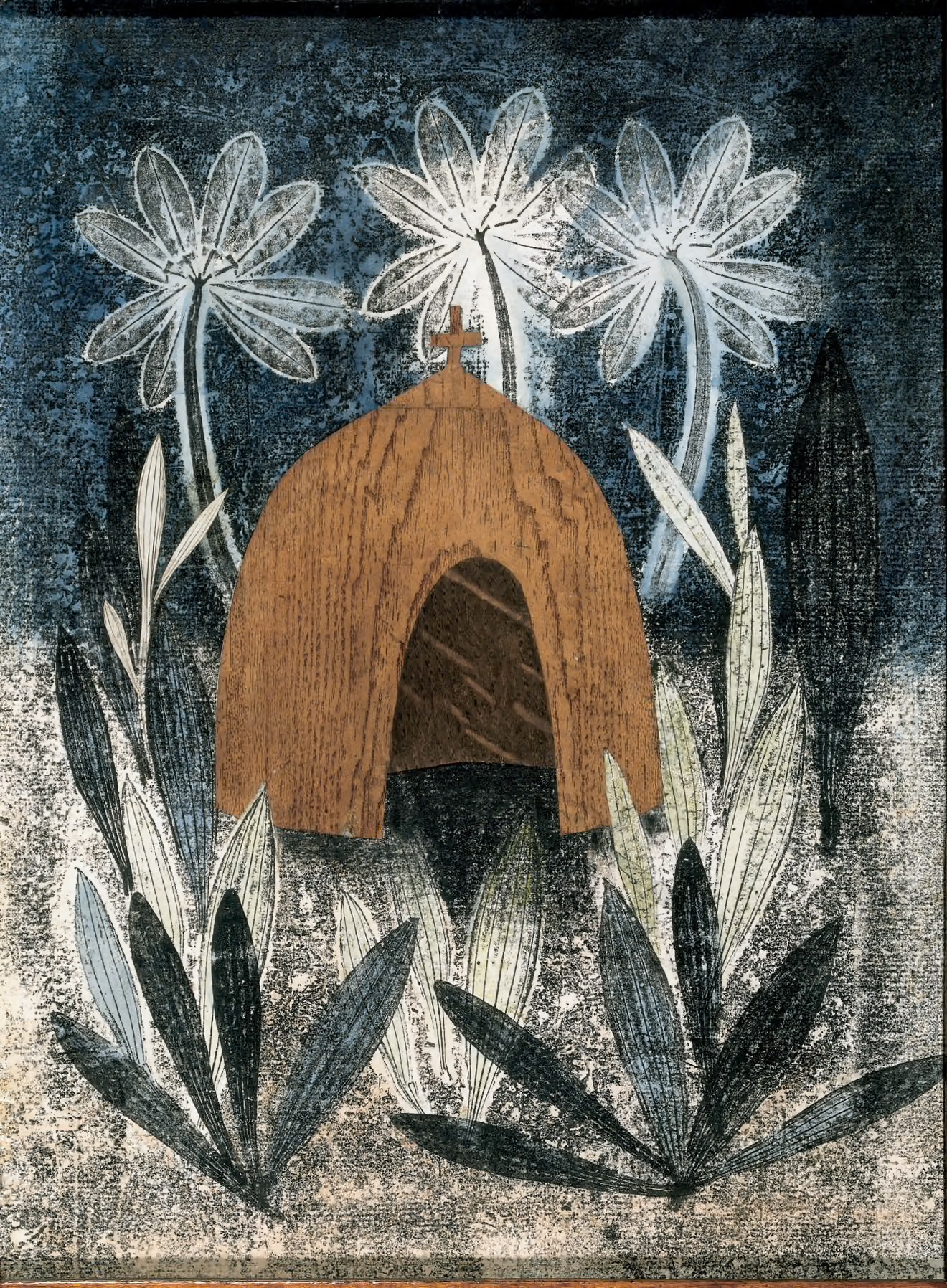
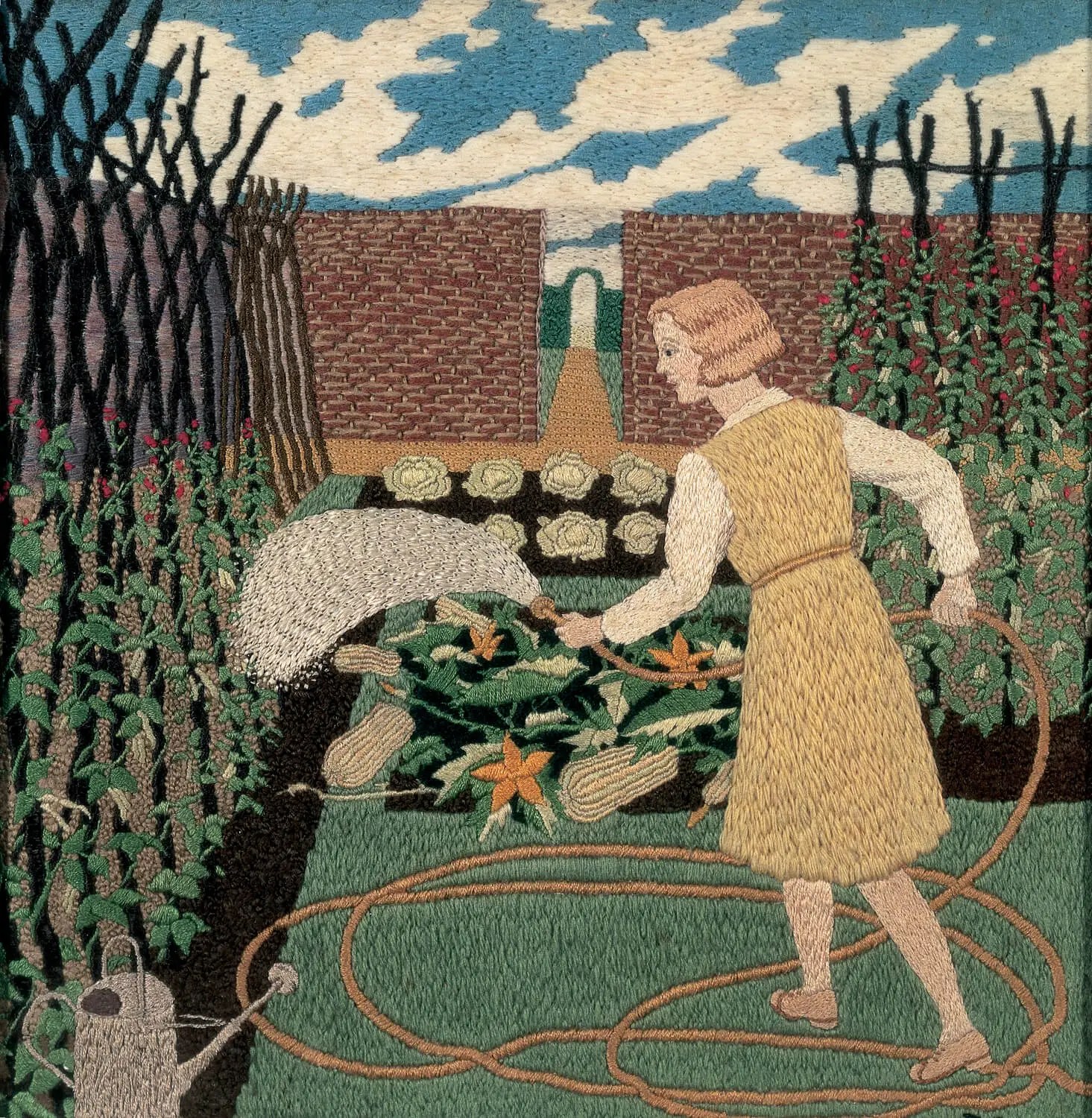
I liked everything: the early woodcuts, the marbled papers she made and sold to publishers and upmarket shops, the embroideries (reminiscent of Marian Stoll), the Camberwick Green shops and houses, and the later Max-Ernst-meets-Douanier-Rousseau oils. There were also some works by Ravilious – including a large watercolour of chalk land which, ironically, would have been my steal from the exhibition – which brought out Garwood’s focus on people and the traditional female spheres of home, children and neighbourhood. She made things for people – a quilt for a friend, items for sale, illustrations in letters – and, from her work, I came away with a very positive impression of the woman: generous, fun, kind, endlessly creative. In contrast, I have no particular sense of the personality of Ravilious (or Gerrit Dou or Rembrandt or any other of the male artists in the gallery). That says something about the curating of the exhibition – and rather more about making art when you are also tied to your roles of a wife, mother and housewife.
(Yes, I do realise that on the plus side the confines of her life meant that she didn’t have the freedom to become a war artist and to die on a mission over Iceland.)

 Old Shoe Box