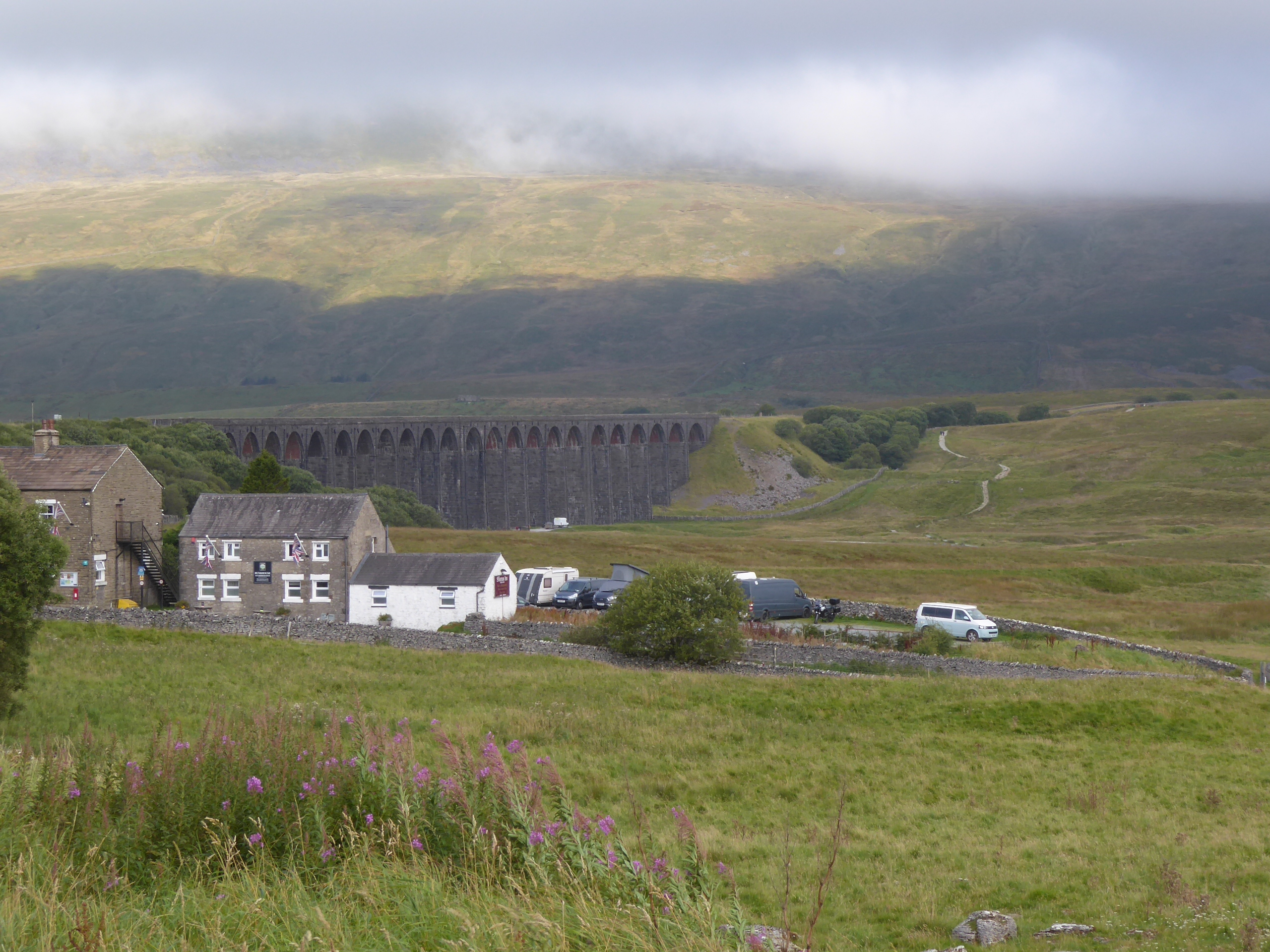
Ribblehead

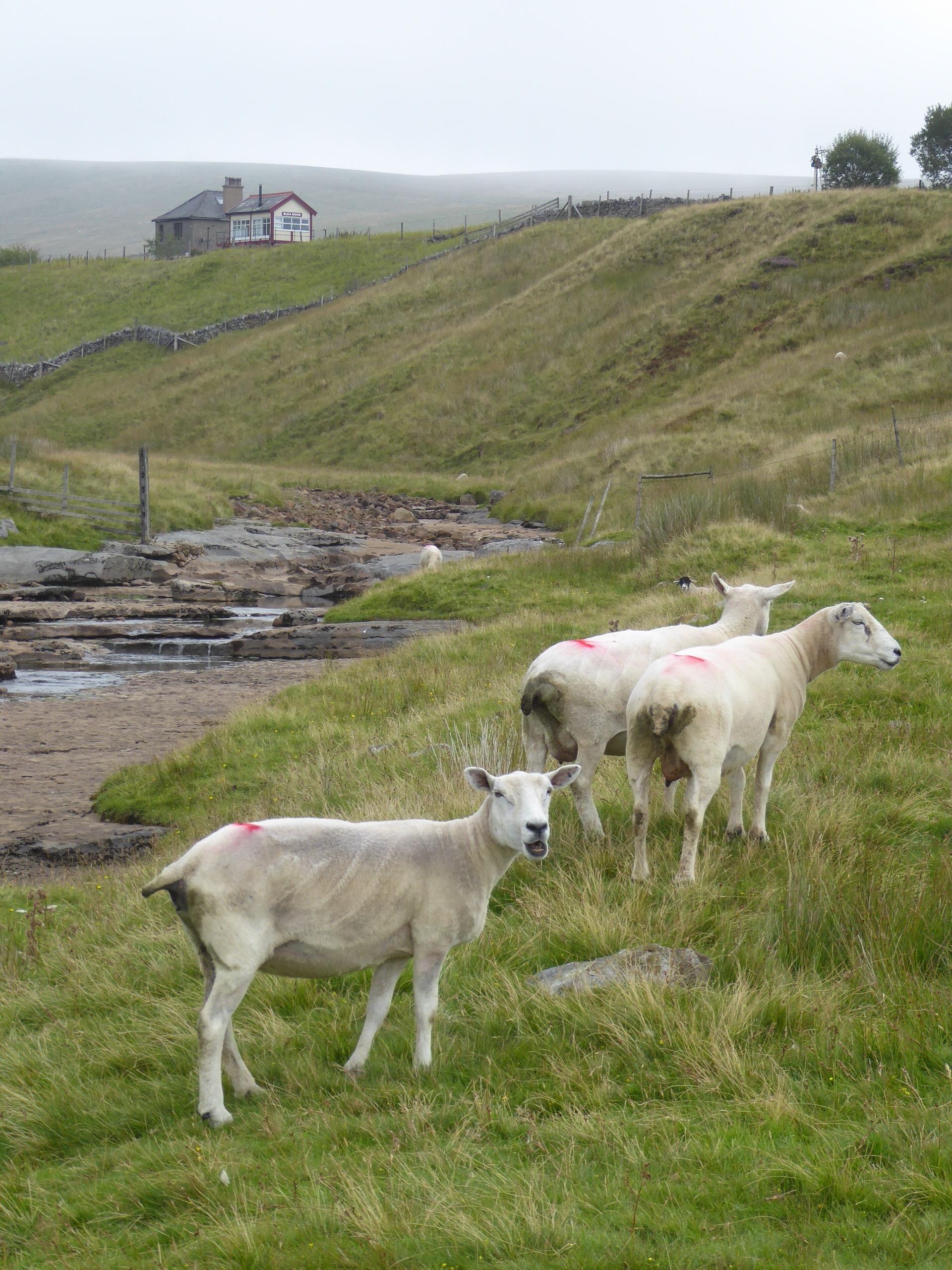
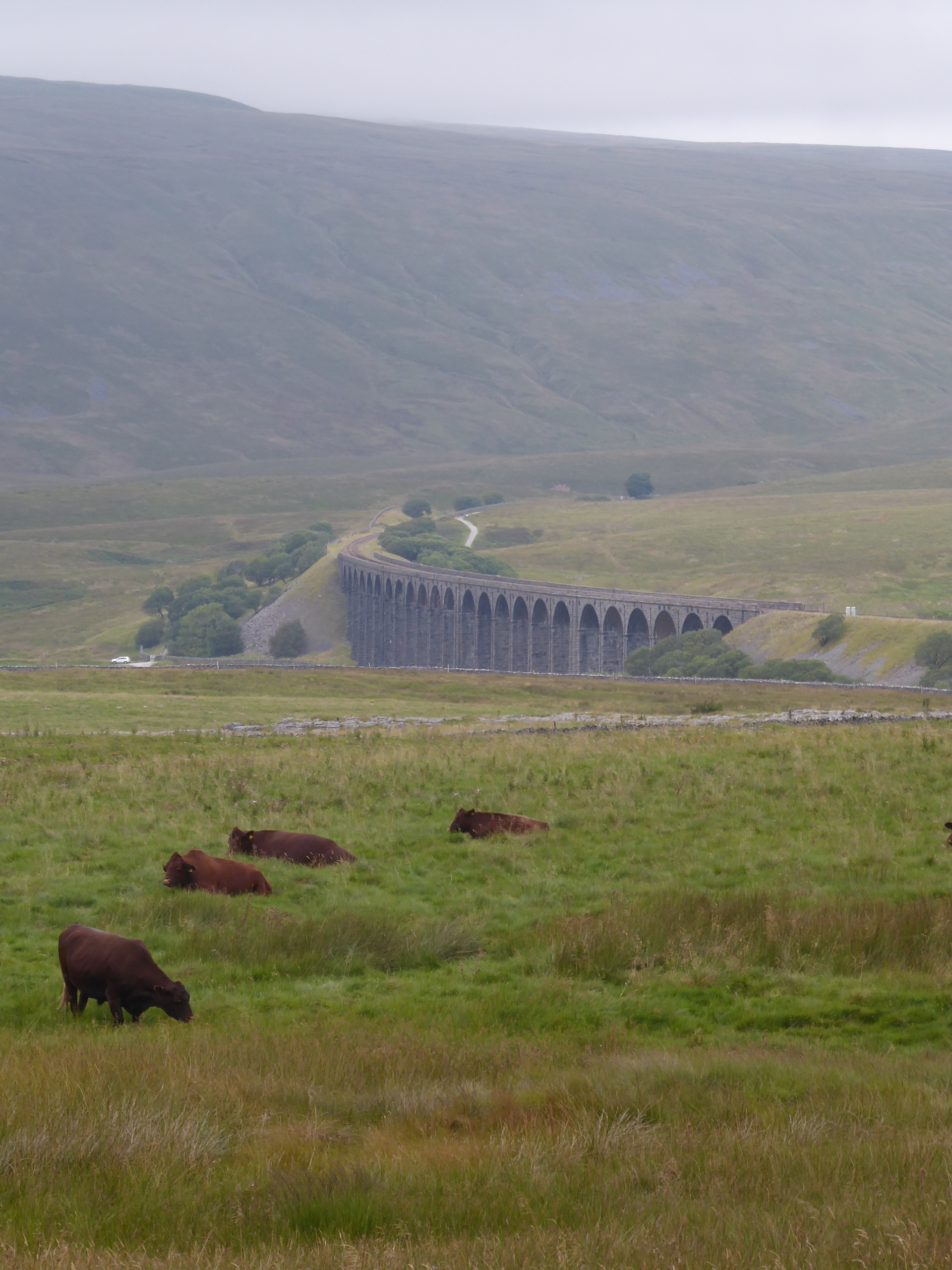
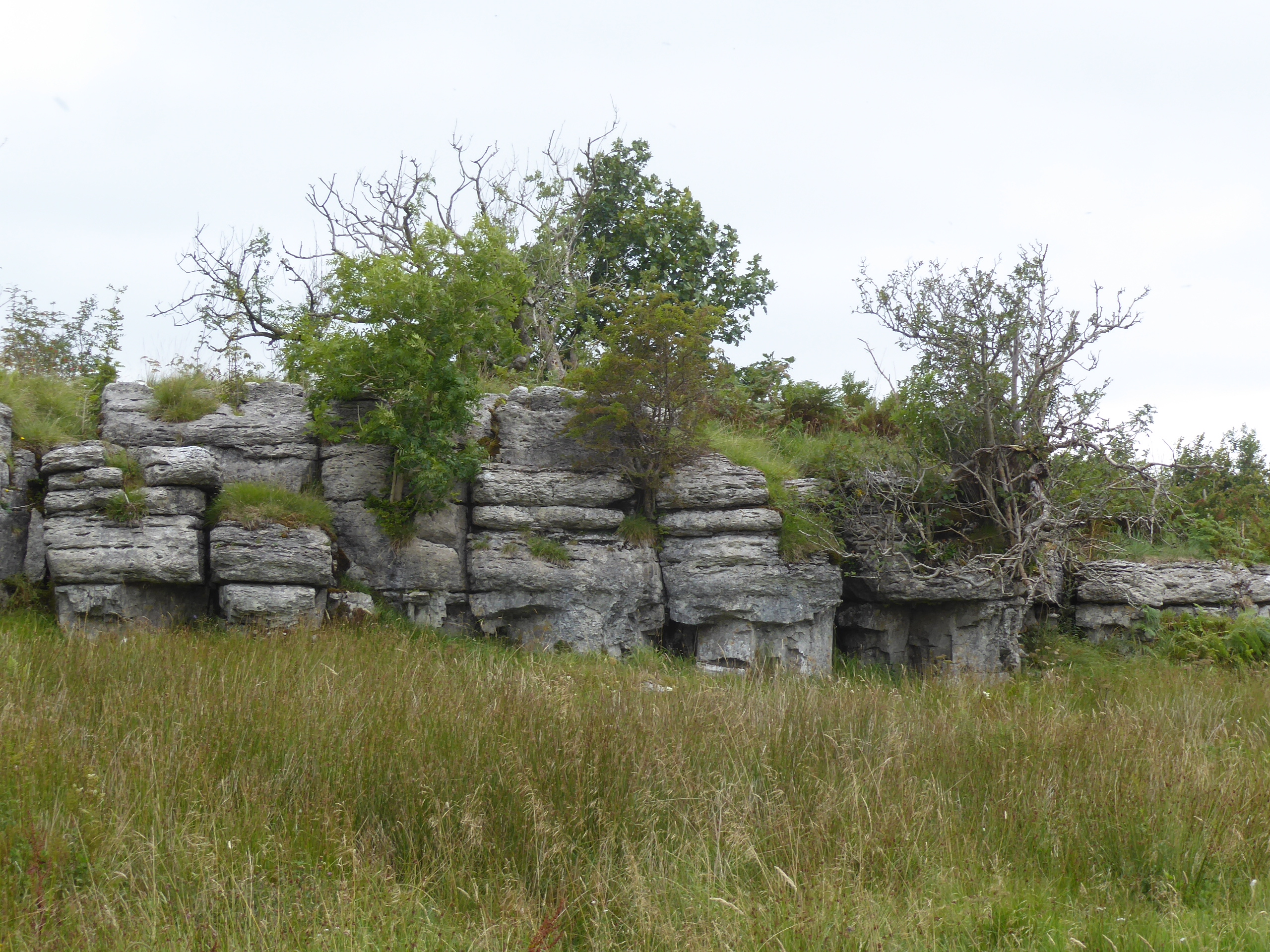
A enjoyable tour around the Ribblehead viaduct (built 1870-75). It was one of those walks where you cannot escape evidence of humans even though you seem to be miles from anywhere: not just the railway line but the denuded slopes, quarries and livestock. Not that I am complaining if it means passable paths.

Babette’s Feast (1987)

Director Gabriel Axel with Stéphane Audran, Birgitte Federspiel, Bodil Kjer

Somewhere remote on the Danish coast in the 19th century. A slight touch of a fairy tale about it: there’s a narrator, and if she doesn’t actually start the film with “Once upon a time . . .”, she certainly comes close. Mysterious visitors turn up on their doorstep, there is an almost magical feast, and heaven with its angels is the world beyond.

Two elderly pious sisters, named after Luther and Melanchthon, spend their days in devotion and good works. They are part of a dwindling congregation founded by their late father – all members now elderly and occasionally fractious. In their youth, one sister had been loved by a visiting soldier but he had been called away, and the other had taken singing lessons with a famous French baritone. There was a beautiful scene of them singing the seduction duet from Don Giovanni lovingly but chastely – her final lesson, by her choice. Years pass, they grow old: a Frenchwoman, Babette, fleeing the Franco-Prussian war seeks refuge with them, and she becomes their cook and housekeeper. More years pass, they grow older; Babette wins the lottery and insists on preparing a real French dinner for the congregation – plus, as last-minute additions, the soldier (now a famous general) and his aunt; they are now twelve at table. The sisters quail before the rich food and wine that arrives in their kitchen, fearing that the dinner will be sinfully indulgent and akin to a witches’ sabbath. They urge the congregation to eat and drink but not to mention the luxury of what is put before them.

And they don’t. Only the worldly general is conscious of the magnificence of the food and of Babette’s skill. Yet all of them are touched by the spirit of the feast, which feeds them physically and spiritually. The quarrelsome congregation – their faces now rosy-tinged – retrieve their love for each other, and the general’s old frustrated love is turned into spiritual contentment. Babette’s sublime feast is food for the soul.

What struck me about the film was its attitude towards religious faith. I’m so used to my secular little world and seeing religion only through a cultural lens: “real” religion is the source of wars; in real life and in fiction it is often allied to hypocrisy (Jimmy Swaggart, Uriah Heep); it sits uneasily with feminism or liberal social attitudes; it focuses on heaven rather than real life; it is a thwarting and limiting force in the expansive modern world where almost anything is possible. It brings to mind the baleful Christianity of St John Rivers or the Bishop in Fanny and Alexander. Even a thoroughly “good” character like Dorothea Brooke is led into unhappy confinement by her faith and her wish to follow its precepts. I’m exaggerating, of course – traditional religious faith may get outward respect but doesn’t normally get a good press. It is too restrictive for modern unreligious minds. But in Babette’s Feast the sisters’ faith is shown uncondescendingly; they feel no regret at (what I would see as) their choice of narrow, monotonous lives and missed love affairs; they really are content and as good as they appear. Art is presented as a quasi-spiritual experience – Babette’s feast or the baritone’s music – but it is one of the sisters who has the final word about heaven and angels. I suppose in that respect I too found the film of Babette’s Feast transformative (as well as enjoyable – did I mention that?): it made me reconsider how to think about the presentation of religion.

Around Lincoln

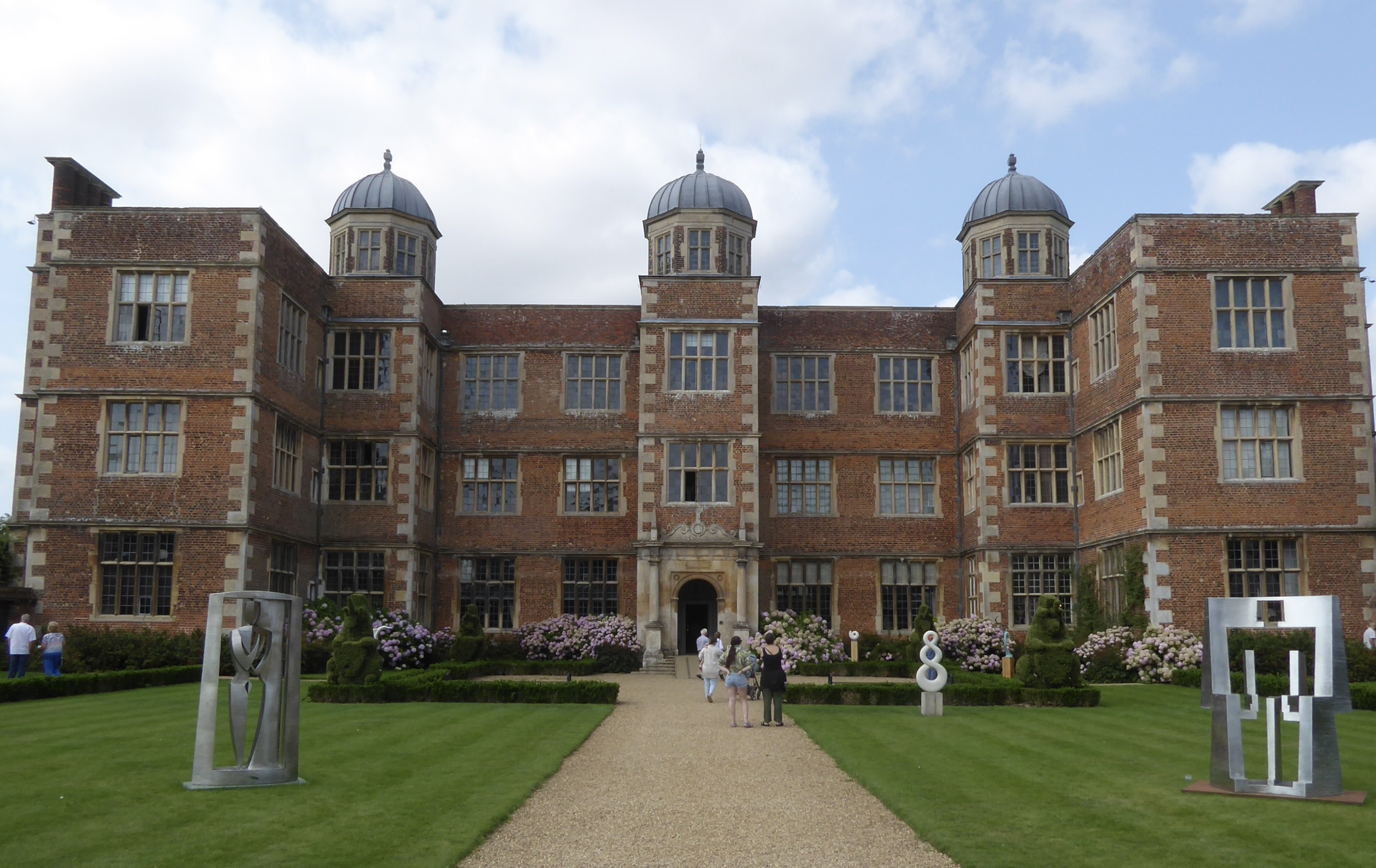
Usually I manage to find something that stops me in my tracks when visiting country houses. Just enough to overcome my latent cynicism that I am colluding in a family’s scheme to ensure that their sons and grandsons continue to go to Eton. It didn’t quite work with Doddington Hall. It’s certainly impressive and I liked the brickwork (the clay from nearby pits). It was designed by Robert Smythson (he of Hardwick Hall) at the end of the sixteenth century for Thomas Tailor, a Registrar to the Bishop of Lincoln. His wealth probably came partly from kickbacks and rake-offs – and he was able to build this showy place outside Lincoln with a view of the cathedral in the distance. My latent cynicism was offered a foothold . . .

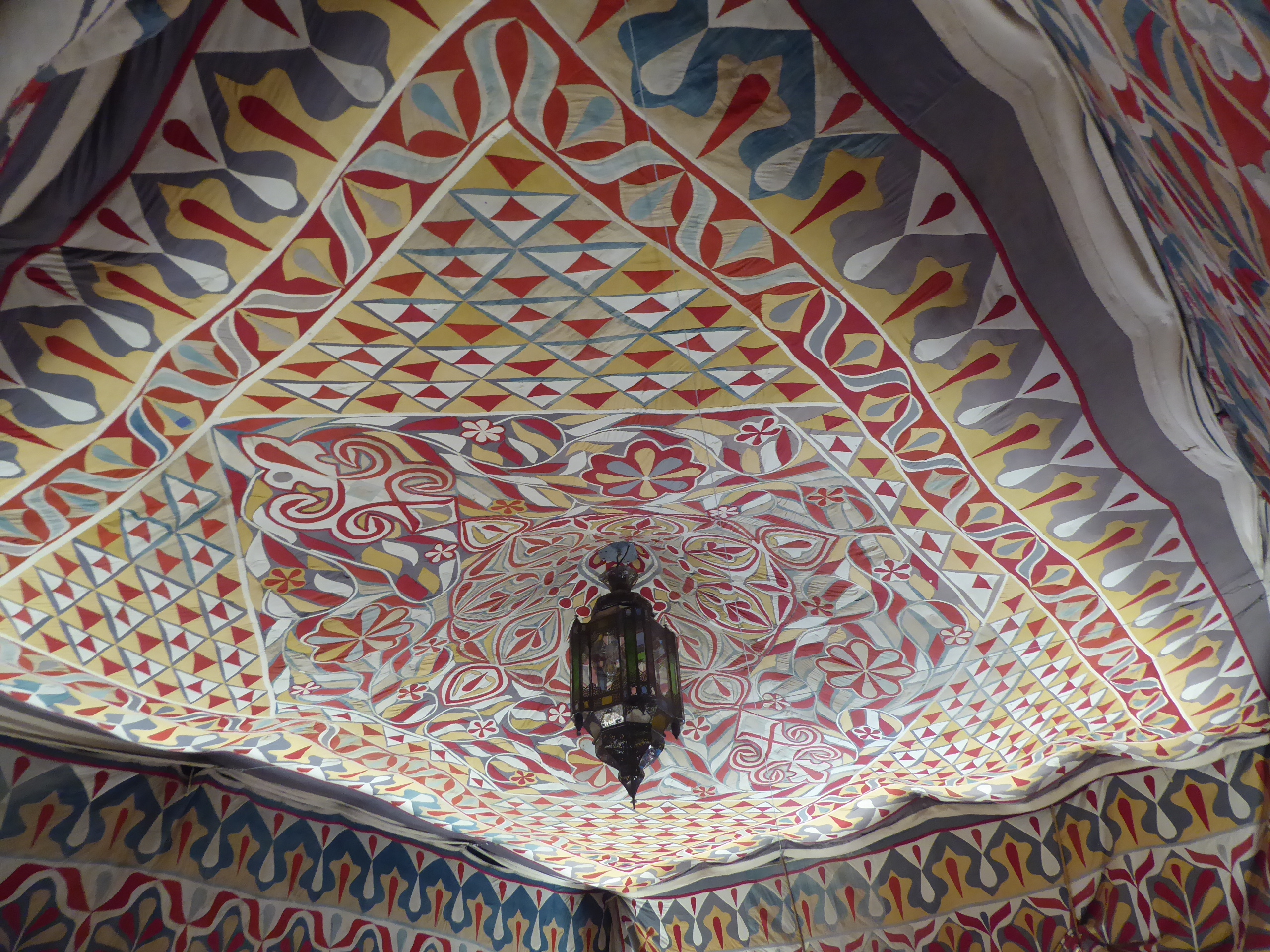
Outside was Tudor but inside was Georgian. There was a breast-plate and jerkin with the bullet-hole that killed someone in the Civil War at Gainsborough which we had been told to look out for. More attractive was a wonderful tent – more of a marquee: Egyptian-made, all by hand, appliqué, late 19th century and enormous. It used to be erected on the lawn outside . . . so Lawrence of Arabia meets Doddington Hall. It was rather shocking to think of something so painstakingly made being subjected to the vagaries of English weather – but I guess “riches” is not giving a damn about such things – the certainty that there will always be servants/craftsmen ready to make you another one. Fussing about damaging or repairing things is for little people. The house and grounds are their own little business, attracting lots of visitors and, presumably, providing lots of local employment. I preferred to hop over the wall and wander in the nearby wood to try out the Merlin app on bird calls.

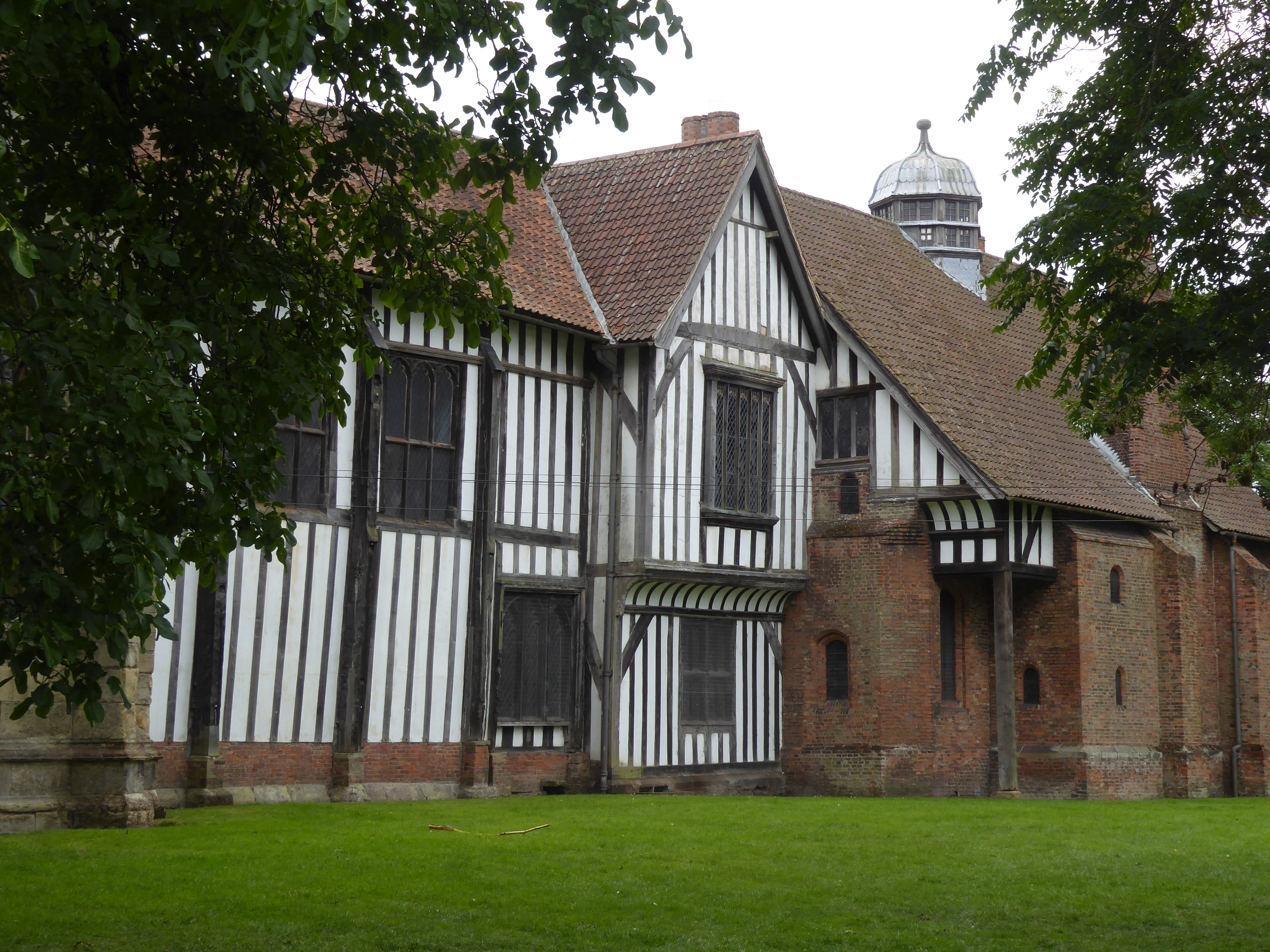
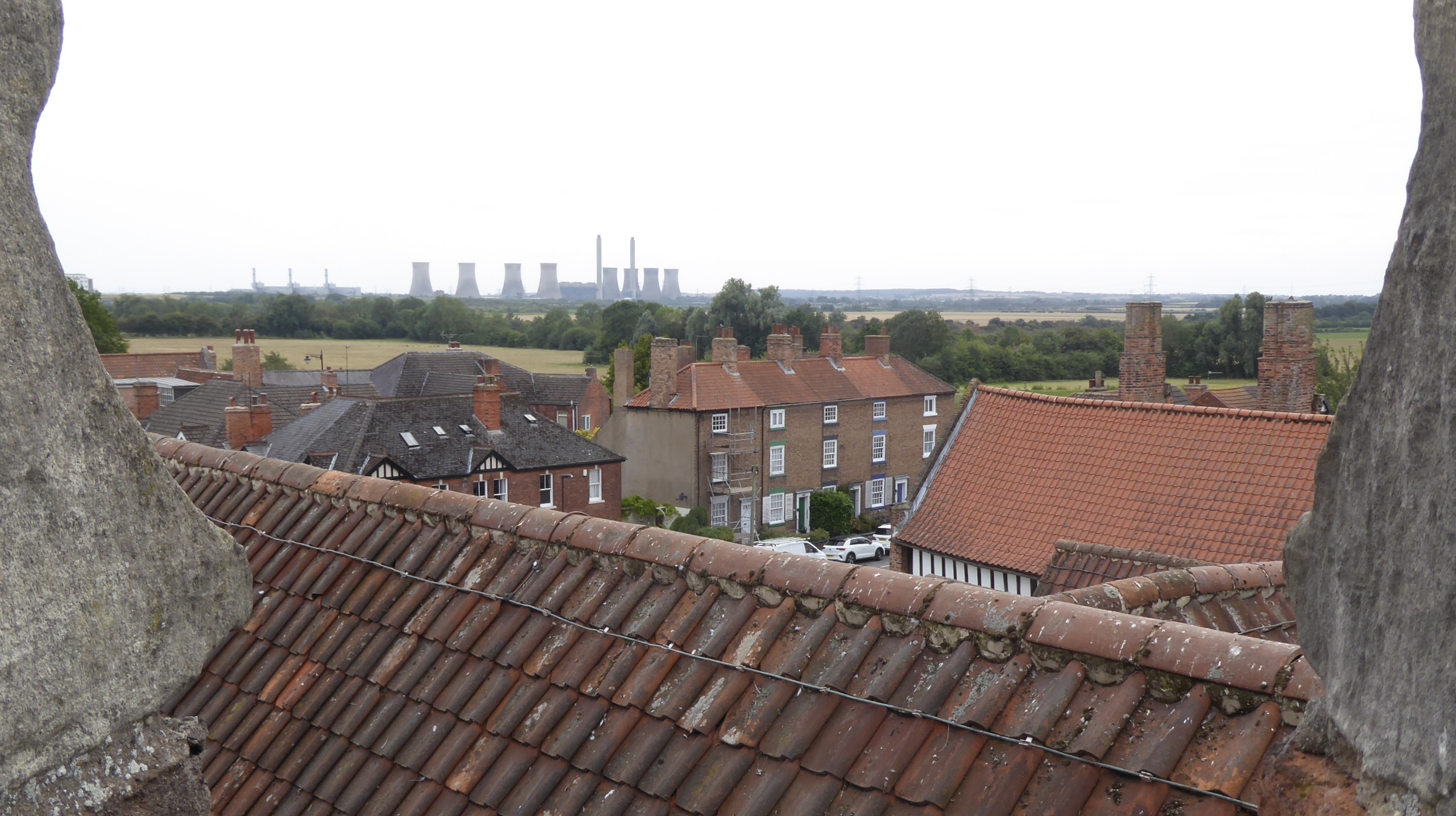
Gainsborough Old Hall was different. Founded by someone who wove his way unscathed through the War of the Roses, but later abandoned and put to commercial and municipal uses. No teazles on cushions, no corded ropes and hardly any “do not touch” notices. You wander at will, raiding the dressing-up rail and looking for apotropaic taper burn marks. I climbed up the tower and had a good view of Cottam cooling towers – destined to be demolished next week, according to Wikipedia. Not a word about them as they were outside our period – but they are as much a part of our heritage now as old family houses.

Lincoln day 2

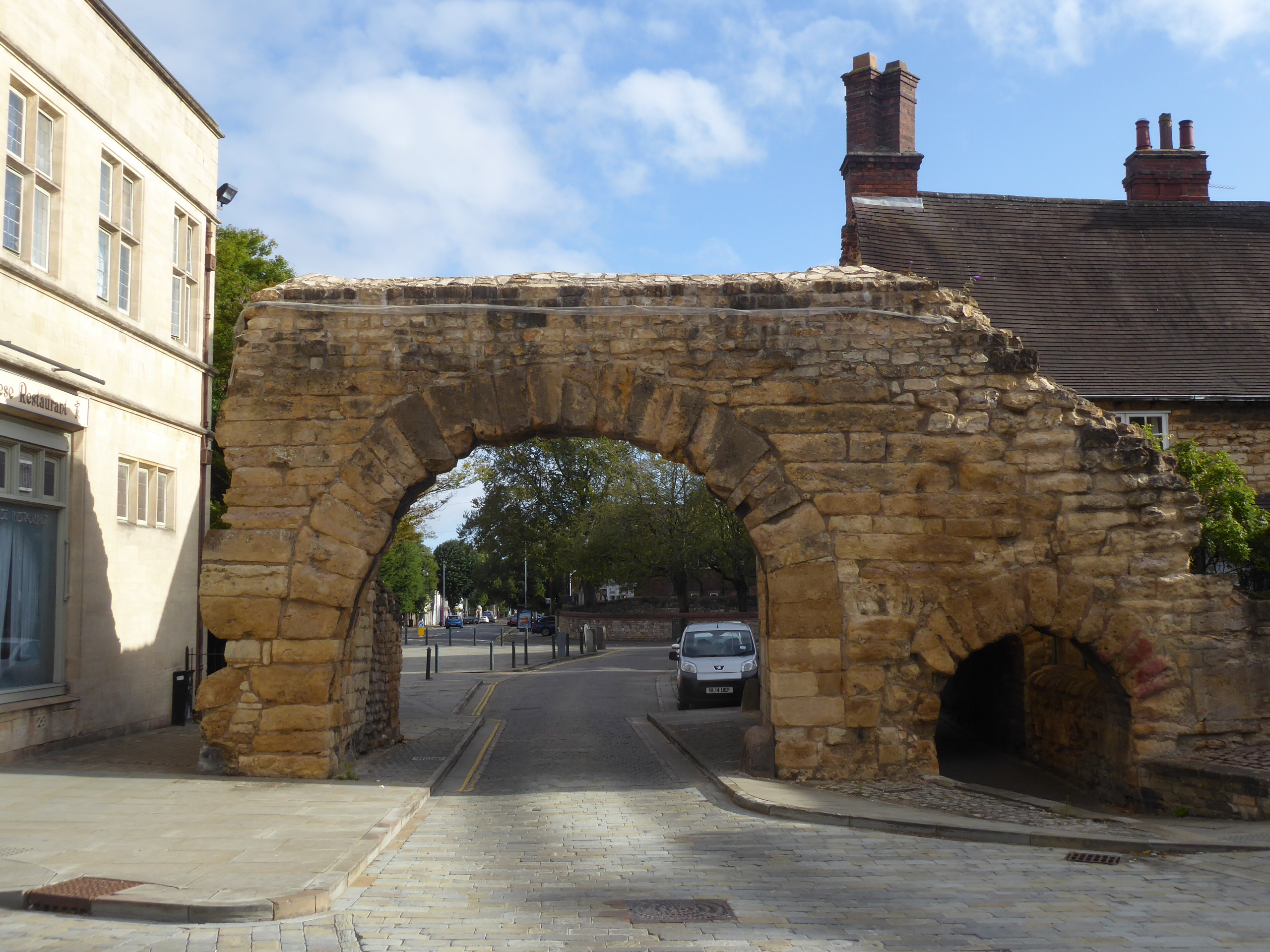
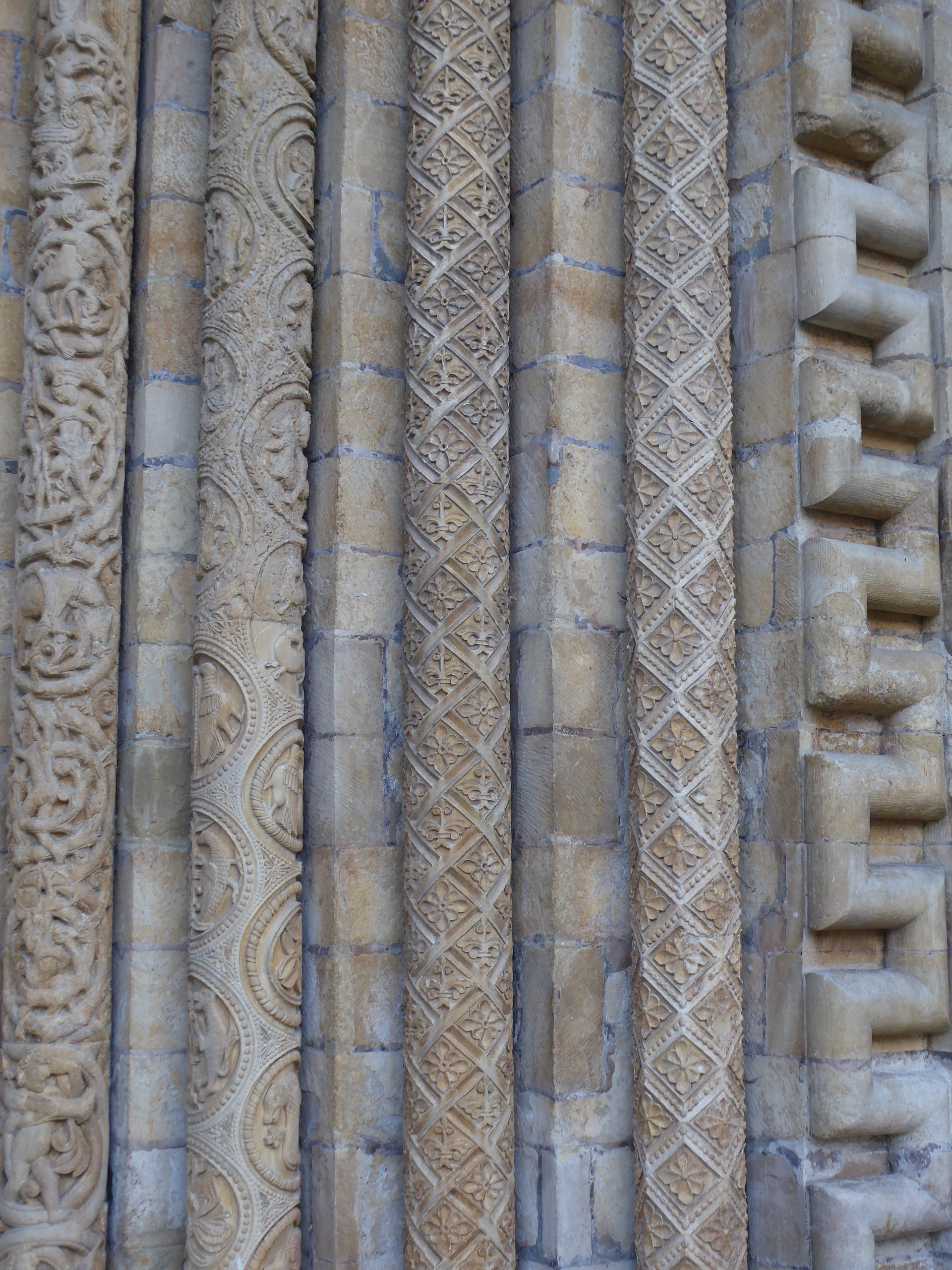
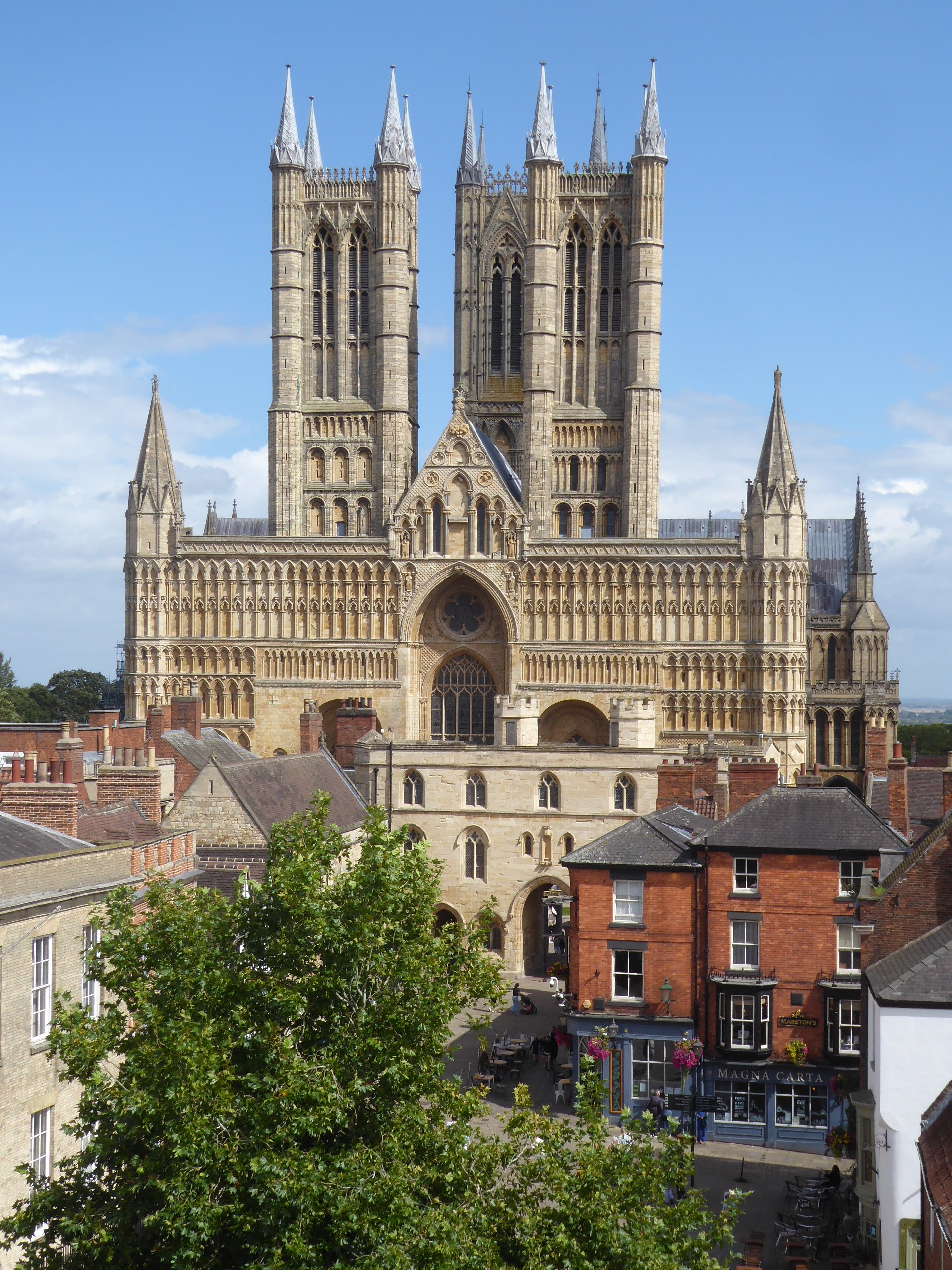
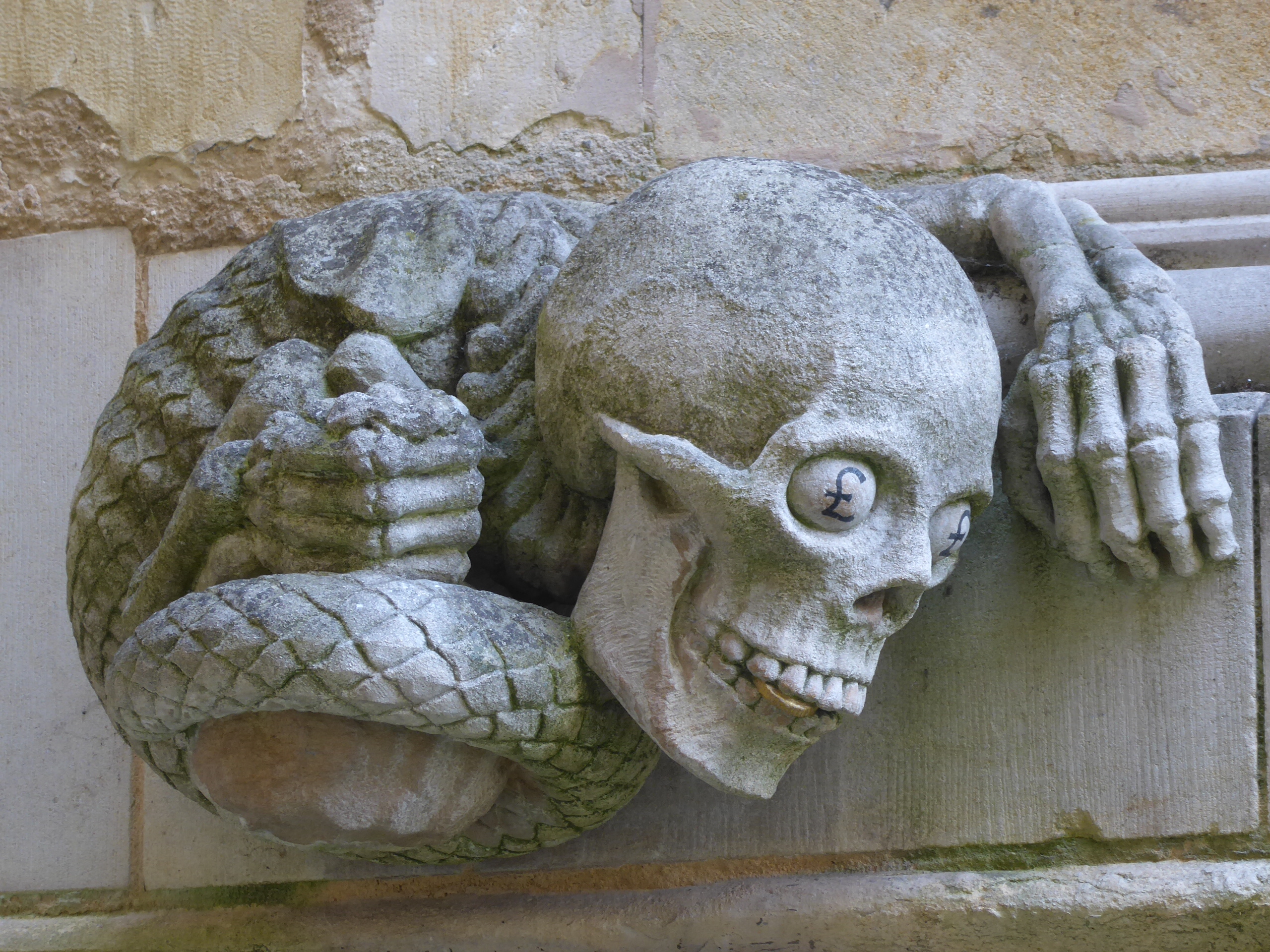
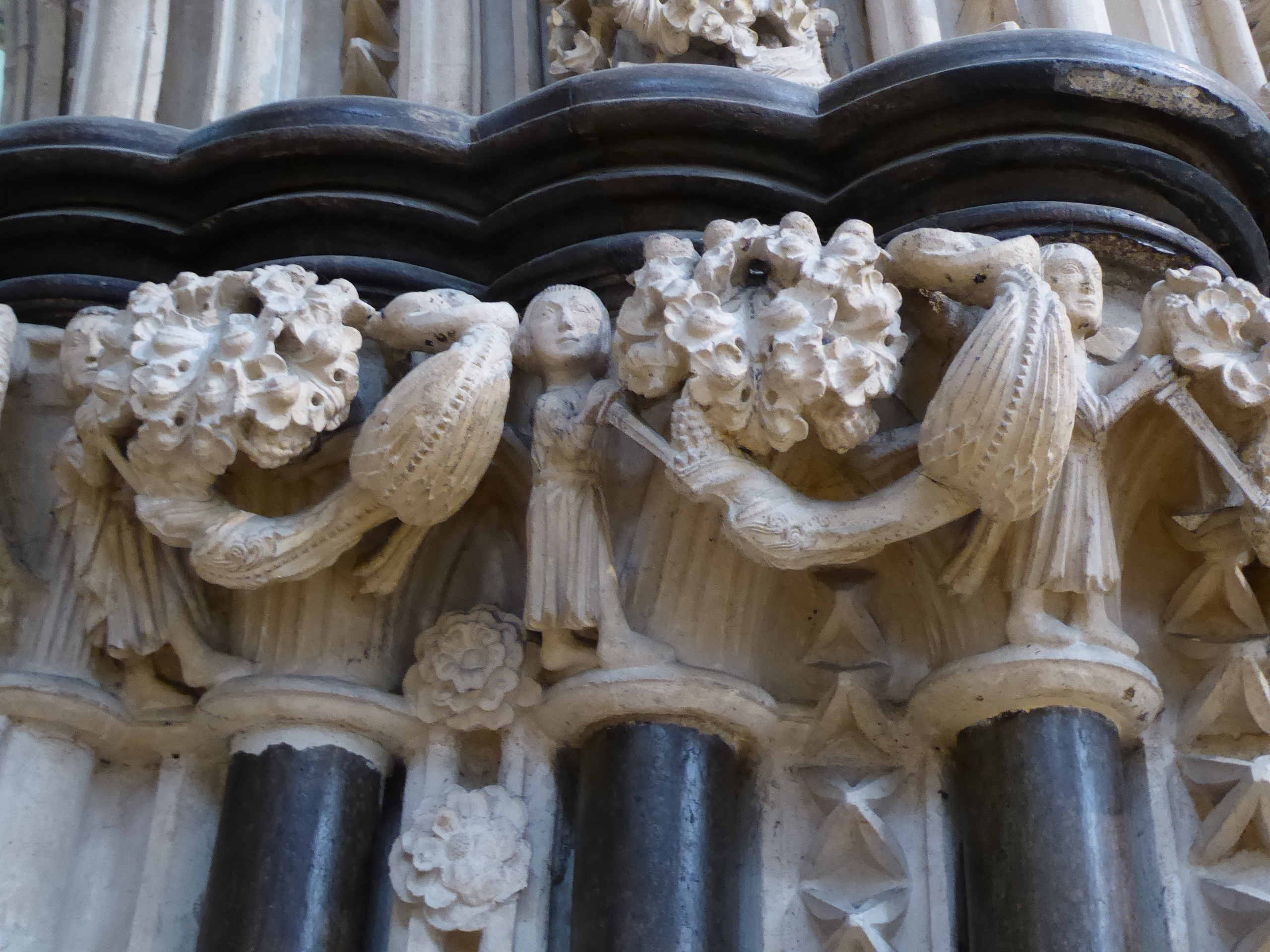
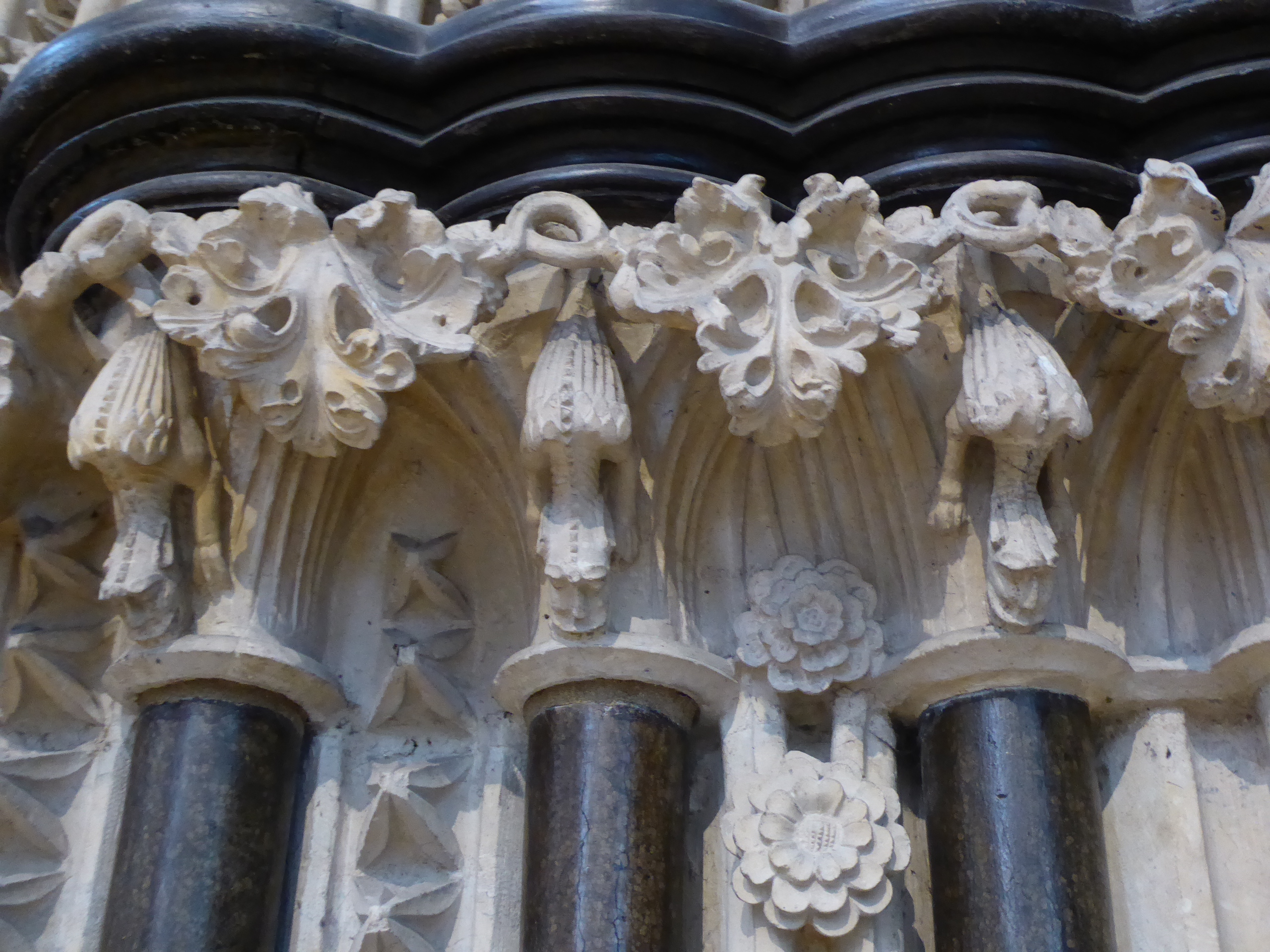
En route to buy a newspaper this morning, I came across the Roman arch – the northern exit from Lincoln on Ermine Street. Then the cathedral – magnificent west front. The best view of it was from the castle ramparts opposite. On the southern wall was a wonderful modern gargoyle clinging to the masonry – the root of all evil indeed. Inside there was a stone gateway dividing the chancel from the nave: the capitals seemed to be adorned with a fancy garland but, on closer inspection, you could see that on one side were men slaying dragons by sticking swords down their throats, and on the other side the dead dragons hanging up. Evil slain – in a grisly manner.

Then a visit to the Museum of Lincolnshire Life housed in an old barracks. As usual, there is always something of interest that springs up. Here a very early tank, a cart that made me think of my carter great-grandfather who became a railwayman, and a brown bess musket which reminded me of Barry Lyndon. Suddenly – remembering the battle scenes – I just had to know how quickly it could be reloaded. (Fortunately I was among people who knew the answer – two or three times a minute.) Afterwards the castle, with a great walk all the way round its ramparts. Inside is an old holding prison with a particularly repulsive chapel. There was a move in the mid-19th century to keep prisoners entirely separate to prevent any corruption being passed on. This extended even to the chapel, which was designed with so many tightly fitting screens and doors that each member of the (ahem) congregation was imprisoned in an individual wooden dock during the service. There is also an original 1215 Magna Carta – surprisingly small and completely indecipherable – and the later Charter of the Forest.

Lincoln

An earlier-than-intended start to outrun Storm Floris – which I did. Interesting to cross the Pennines by train from Manchester to Sheffield – such a tight route with so many tunnels. At New Mills I looked out for the Love Hearts factory but didn’t see it. I do hope it’s still there.

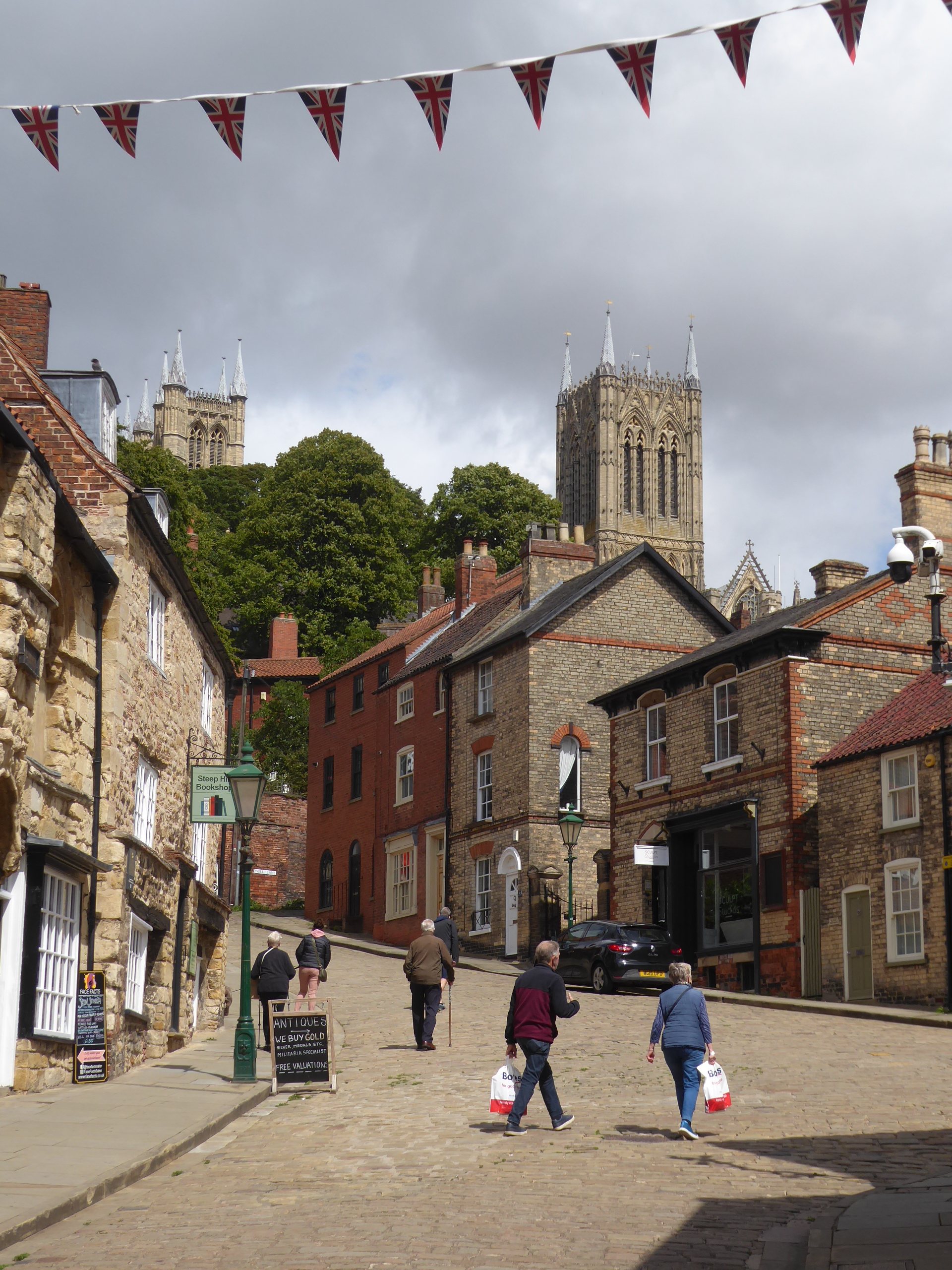
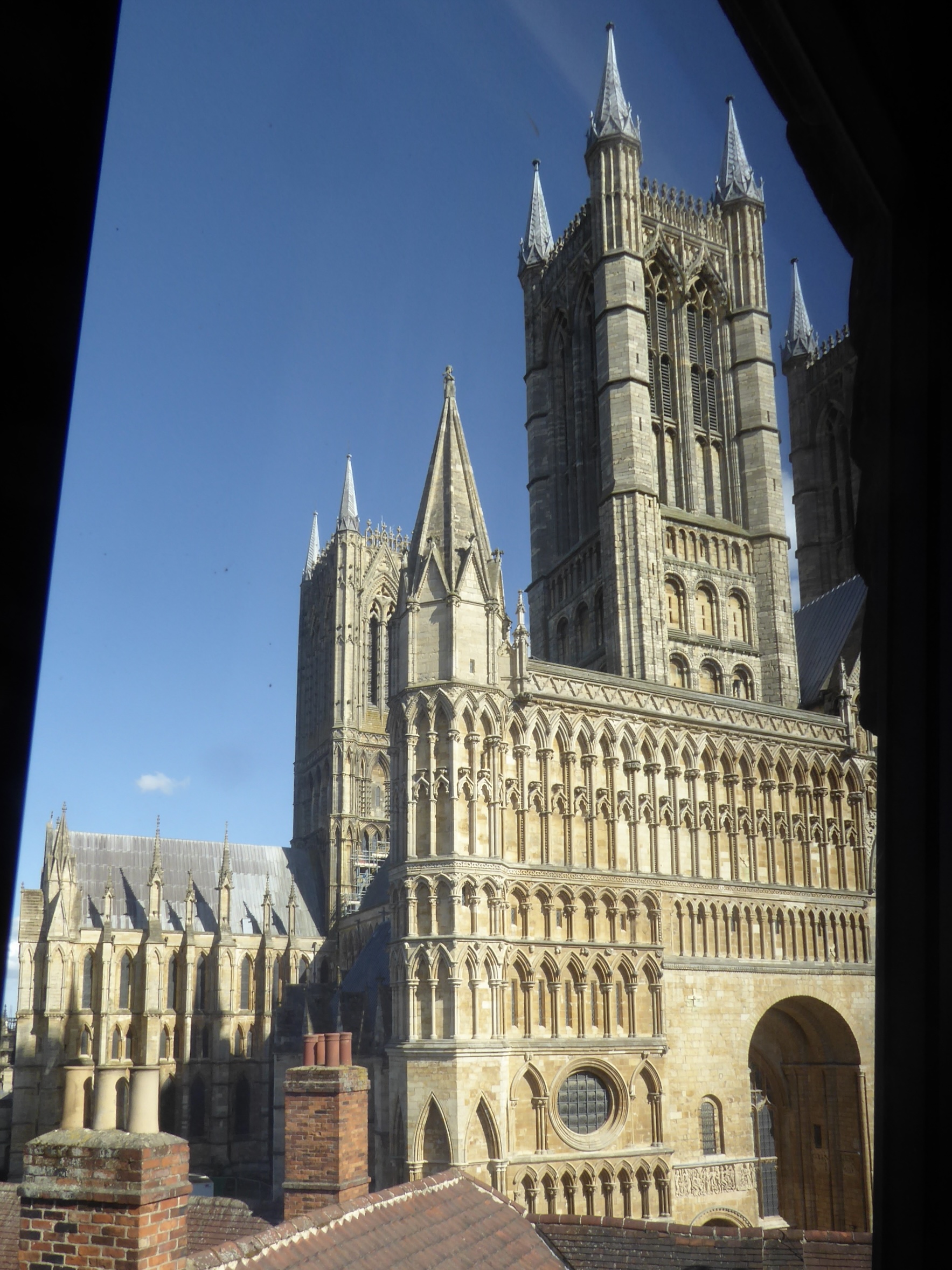
I visited Lincoln 40 years ago, on my way back from a cycling holiday in Norway. My memories are of cycling towards the city with the cathedral very visible on the top of the hill, and of a second-hand clothes shop on the steep hill. I’m not sure if the latter demonstrates my lack of seriousness or the way that memory works. Anyway, this time I shall lay down some different memories – starting with the view from my hotel room.

So, things I have already learned about Lincoln. It was once well-connected: a Roman city on the junction of Ermine Street (from London to York) and the Fosse Way. There’s a Roman arch still standing on the northern perimeter. The River Witham ran towards the Wash, and the Foss Dyke canal (possibly Roman, possibly medieval) connects Lincoln to the River Trent.

The cathedral was not just a way of the Normans imposing their authority but also a means of homogenising Christianity and bolstering papal rule. The castle – just opposite the cathedral at the top of the hill – has two mottes. St Hugh – attribute a swan – is the local saint. The tank was dreamt up in Lincoln – in this very hotel, apparently. Perhaps as a result of the local expertise in agricultural machinery. It had its cloth trade – how could I forget Robin Hood’s men clad in Lincoln green?

After the signing of the first Magna Carta in 1215, King John tried to renege on it. Rebel barons allied with Prince Louis of France to oust John, but he died anyway in 1216 and many barons turned coat, backed Henry III – still a child – and then had the task of getting rid of Louis and his French army. Louis’s northern forces were defeated at the Battle of Lincoln in 1217. There – that’s filled in a gap I never knew existed in my historical knowledge.

The Professor’s House by Willa Cather (1925)

I keep returning to inter-war Britain. One novel just leads to another. Time, I thought, to drag myself away, so I accepted a recommendation of Willa Cather. Inter-war America instead.

The professor actually has two houses – the old one is ugly, inconvenient, cramped, the home of his work and family; the new one he has had built with a literary prize for his histories should be a great improvement. But he cannot bear to move completely into the new house; he returns to the old house, with its dangerous stove, to continue his work. In the same way the whole narrative shuttles between the surface story and something else beneath. The novel’s structure is as higgledy-piggledy as the house: for example, the narrative dwells on domestic interiors and almost phenomenological detail of the professor’s head (he’s called St Peter BTW) or his wife’s long upper lip, but skims lightly over their mutual regrets about what their marriage has become. And yet . . . stair carpets and beards are more visible than occasional mild sadness.

Quite what is beneath the surface sets my mind buzzing. His explanation of metonymy to Augusta can’t be accidental. There are opposites: Rosamond’s two suitors: Tom Outland (oh, the names) – poor, brilliant, sensitive, attached to the American landscape and its pre-European history – and Louie Marsellus – thrusting, loud, generous, well-meaning and quite definitely a city man. Honest piety and worldly delight. Scholarship vs getting students through exams. The professor’s French-style walled garden and the New Mexico mesa. The clear air under the sun that Tom Outland exults in and the smoking stove in the professor’s attic; both are places of retreat and study for the men.

The novel grew on me as I read further. So much is left hanging (as in real life), corresponding perhaps to the way that St Peter remembers and dwells on events. How much has St Peter idealised Outland? Had Outland courted Kitty unbeknownst to St Peter? (Names again! I noted the worldly “Rosamond”, but I’ve just realised that her sister’s pet name suggests a fireside creature.) Roddy has vanished, Crane is bringing a lawsuit.

The novel is in three parts: the professor’s life in the university town, expansively if obliquely told; a first-person account by Outland as he explores a long-abandoned native American village in New Mexico; and then back to the professor as, in the space of a few pages, he has what would now be called a mid-life crisis, is convinced (despite good health) that he is near death, cannot bear the thought of living again with his family, almost dies, and then has a quick change of heart after a few words with a religious, stoical seamstress. Just like that.

And yet, writing the above and re-reading some passages, my irritation with the ending begins to fade. The sudden shift in the narrative reflects the professor’s breakdown. He is put back together again but is no longer whole. He has lived for intellectual pursuits, love, delight, interest, and has avoided “the taste of bitter herbs . . . the bloomless side of life”. Henceforth that may be how he has to live. The Book of Ecclesiastes comes to mind: vanity, toil, “under the sun”.

Barry Lyndon (1975)

Director Stanley Kubrick with Ryan O’Neal

I remember when this came out; the media were full of it – as they had been with The Great Gatsby the previous year. There was little chance of my seeing either film at the time; I wasn’t fussed about Gatsby, but Barry Lyndon sounded fascinating. So long in the making (and so long in the watching!), the technical difficulty of shooting “by candlelight”, so many extravagant scenes and so many extras, and so many publicity stills that made it look unlike any other film. (Some stills came back to me as I watched the film.) Given that my experience of films then was basically what was shown on television, that was hardly surprising. (Although it did give me a good grounding in westerns, the Hollywood classics and war films.)

So, finally, after 50 years I got to see it on a big screen. It is slow, detached, painterly, amoral, brutal, farcical and tragic all at once. Full of familiar faces on screen for short cameos. I shall not forget in a hurry Leonard Rossiter dancing a jig in thigh-high black boots. The scene where Lady Lyndon encounters Barry for the first time is just wonderful: the lighting, the colour, and such restrained expression in the faces of Murray Melvin and Marisa Berenson. Norma Desmond would have given top marks for their eye work. Acting is done by looks and action/stillness as much as words; Ryan O’Neal is a constant presence, but more often seen than heard. It’s as if figures in half-remembered paintings by Hogarth or Rembrandt come to life to hold the stage for a while and then step back into their frames to the accompaniment of Handel or Mozart.

Had I seen it 50 years ago I think I would have found it overlong and its tone incomprehensible. It was definitely worth waiting for.

As an aside: I have been pondering on male dominance in the external world until very recently, and here is yet another example after Key Largo and The Return. (Gross generalisation alert, obvs.) So much fighting (both in the Seven Years War and informally) and yet more shoot-outs – here the duels that bookend Barry’s career from farce to tragedy. So many images and actions that were once the norm – here the bare-knuckle fight with the regimental heavy. All these might now come under the heading of “toxic masculinity”, but perhaps another way of looking at them is as a signifier of underlying violence in the world.

I see why I so often read female novelists.