Beverley

Hull today. I noticed from the train how threadbare trackside trees looked now that ash die-back is so established. After a second breakfast we cycled to Beverley and back. I’ve now cycled as much of Hull as I ever want to. On the map it has lots of cycle infrastructure, but in reality it’s bitty, contorted and comes from the age when cyclists were grateful for anything. It was more enjoyable to abandon the signed Sustrans routes and just use minor roads with their fringes of cow parsley and comfrey.

And Hull, outside its centre, is . . . well, not very inspiring. I did discover past traces of prosperity and elegance in West Hull when we came across the (restored) fountain on The Boulevard – tree-lined with traces of Victorian respectability in the old Sunday School, villas and chapels. The smell of joints undermined the vibe somewhat.

New German cinema

I think I tried Fassbinder in my twenties when I wanted to be “cultured” but, without a primer and too used to Hollywood and the BBC, I really didn’t get him. Too earnest. It didn’t even improve my German. It makes me appreciate all the more the benefits of being led to the trough!

So:

  • Pre-war and wartime flight of film talent from Germany, leaving not much behind.
  • Literature and theatre were the first art forms to be revived after the war.
  • Reticence in post-war Germany about using film for anything more than entertainment – too tarnished by working with the Nazis.
  • Oberhausen Manifesto 1962 calling for new German film: Papas Kino ist tot.
  • Television was obliged to support film-making after 1974.
  • Auteur theory.
  • Seen against the background of the Red Army Faction, the “German autumn” (1977) and the 1972 Munich Olympics. I’d rather forgotten what an angry decade that was.
  • This was only about West Germany.

Fear Eat (sic) The Soul, Rainer Werner Fassbinder, 1974

Fassbinder didn’t go to film school; he learned via theatre and collaboration and his output was prolific and varied. Here he echoed the melodramas of Douglas Sirk (also German, I have learned): a love affair between an ageing Putzfrau and a young Moroccan. The clip we watched had me hooked: the whole mise en scène from the use of colour, distance and symbols (grilles and stairs). Fassbinder sympathised with the marginalised, and this comes across very clearly. Perhaps I might watch it one day.

The Lost Honour of Katharina Blum, Volker Schlöndorff and Margarethe von Trotta, 1975

Based on a 1974 novel by Heinrich Böll. After the tableaux of the previous film, this was very confusing: multiple points of view and uncertainty for the viewer about what was happening. In that way it reflected the disruption and danger of the 1970s. It seems to be about how an innocent woman is punished for spending one night with an alleged terrorist, mistreated by the police and vilified by the media. I can’t say I want to see the whole film, but it did remind me that previous generations have been just as outraged by the abuse of authority as anyone today.

Aguirre, The Wrath Of God, Werner Herzog, 1972

Herzog really is sui generis. I’ve seen the film before, but this time it was great to linger on the painterliness of some scenes. And then there was the action – less great. I suppose the knowledge that the film crew really were shooting the rapids on flimsy rafts might add to some viewers’ enjoyment, but not mine. I really don’t expect actors to put themselves in physical danger for my entertainment. And, after that po-faced comment – of course I want to watch it again.

The garden today

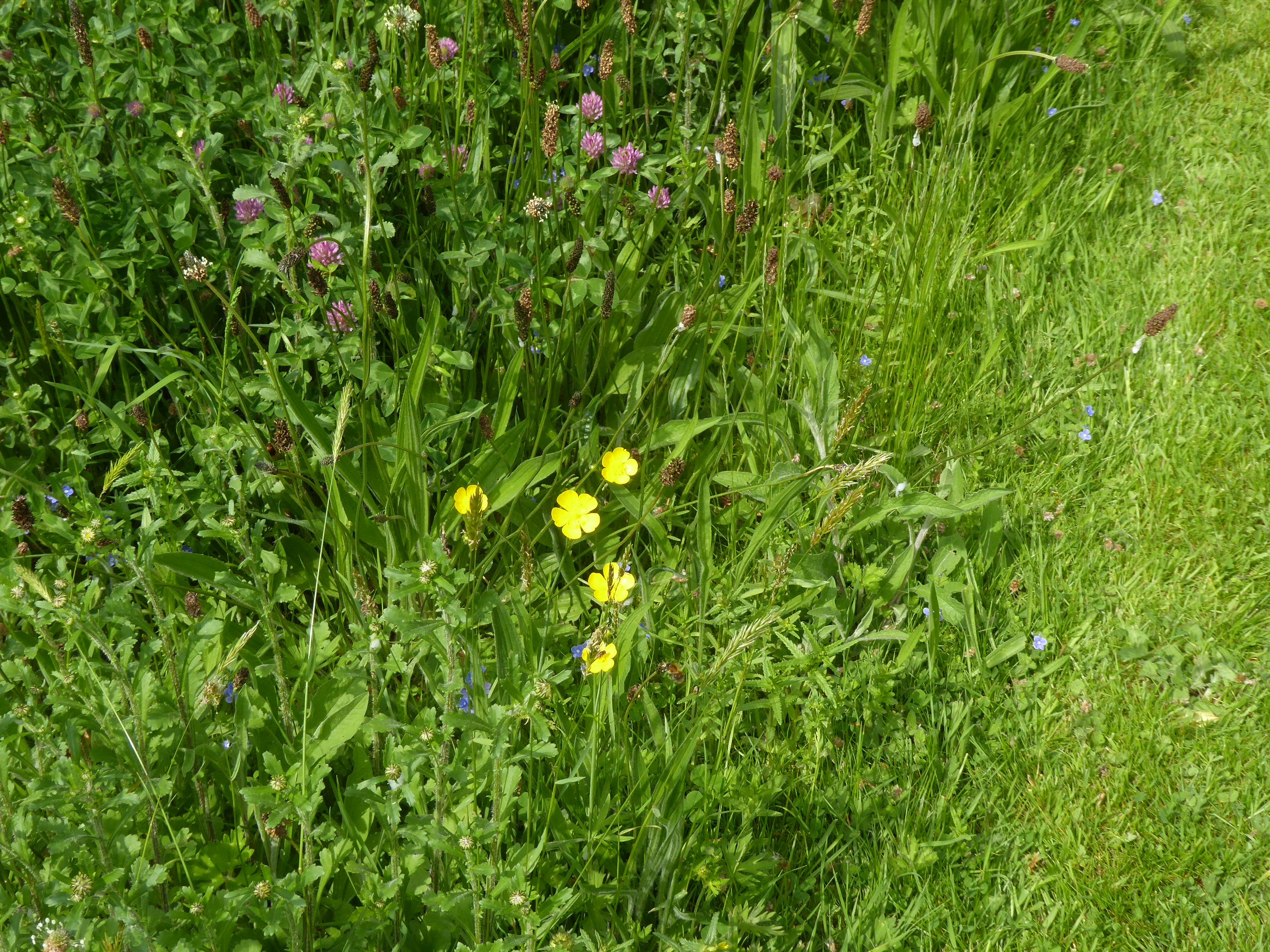
I’ve mown the grass – a lower setting than usual, which means the lawn looks unnaturally neat – and have put up all kinds of defences against invading birdlife. It looks like paranoia on my part . . . but those tiny leek seedlings didn’t pull themselves out of the row to wilt on the bare earth. My particular bêtes noires are wood pigeons, cats and magpies (I was too late in netting one of the pear trees). Even sparrows: I shan’t forget watching them nip off and eat the just-emerging gooseberries a couple of years ago. Gooseberries are now shrouded like phantoms – which does leave them vulnerable to gooseberry sawfly damage, since no birds can pick off the caterpillars. Red- and whitecurrants are similarly defended.

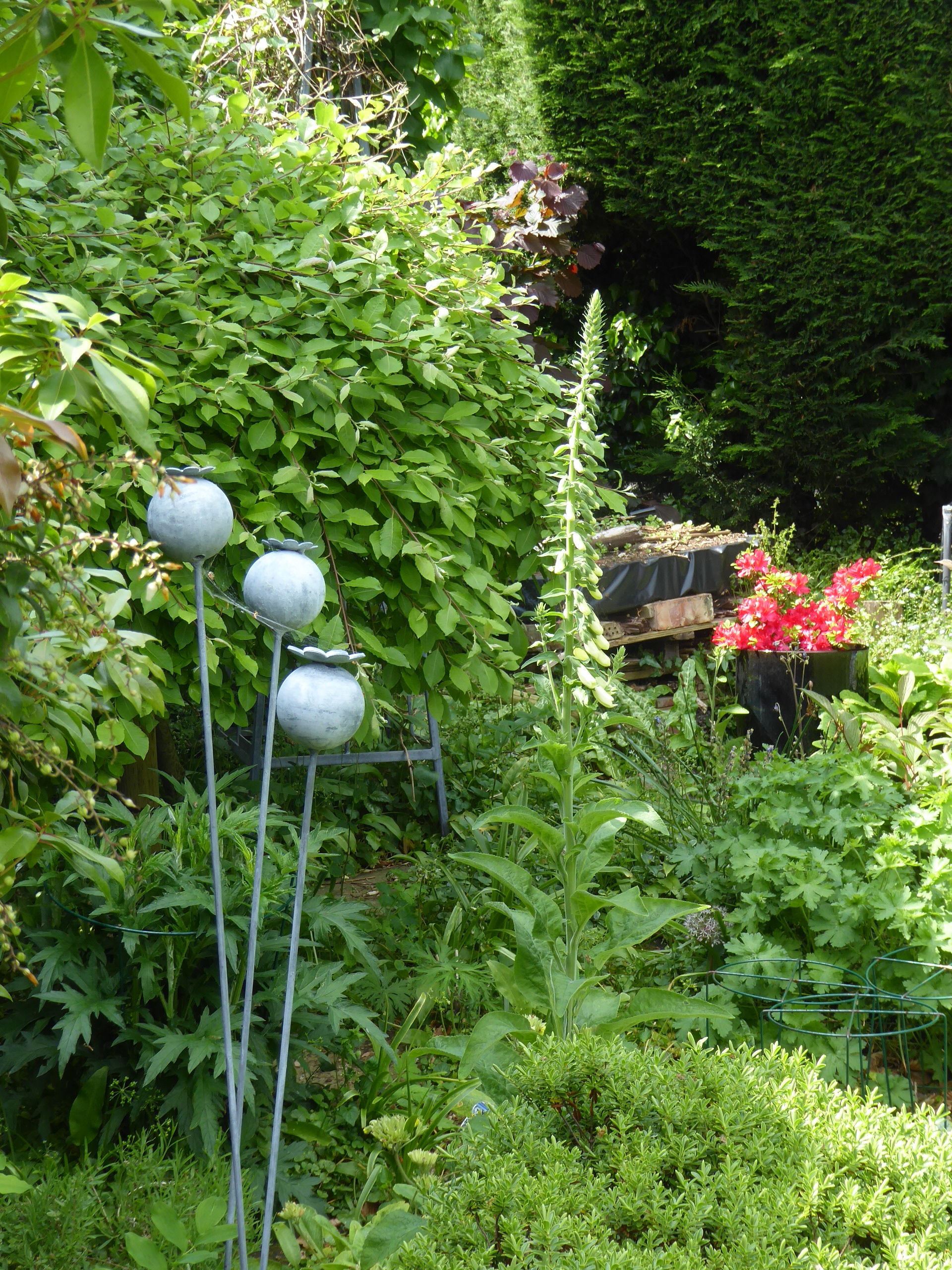
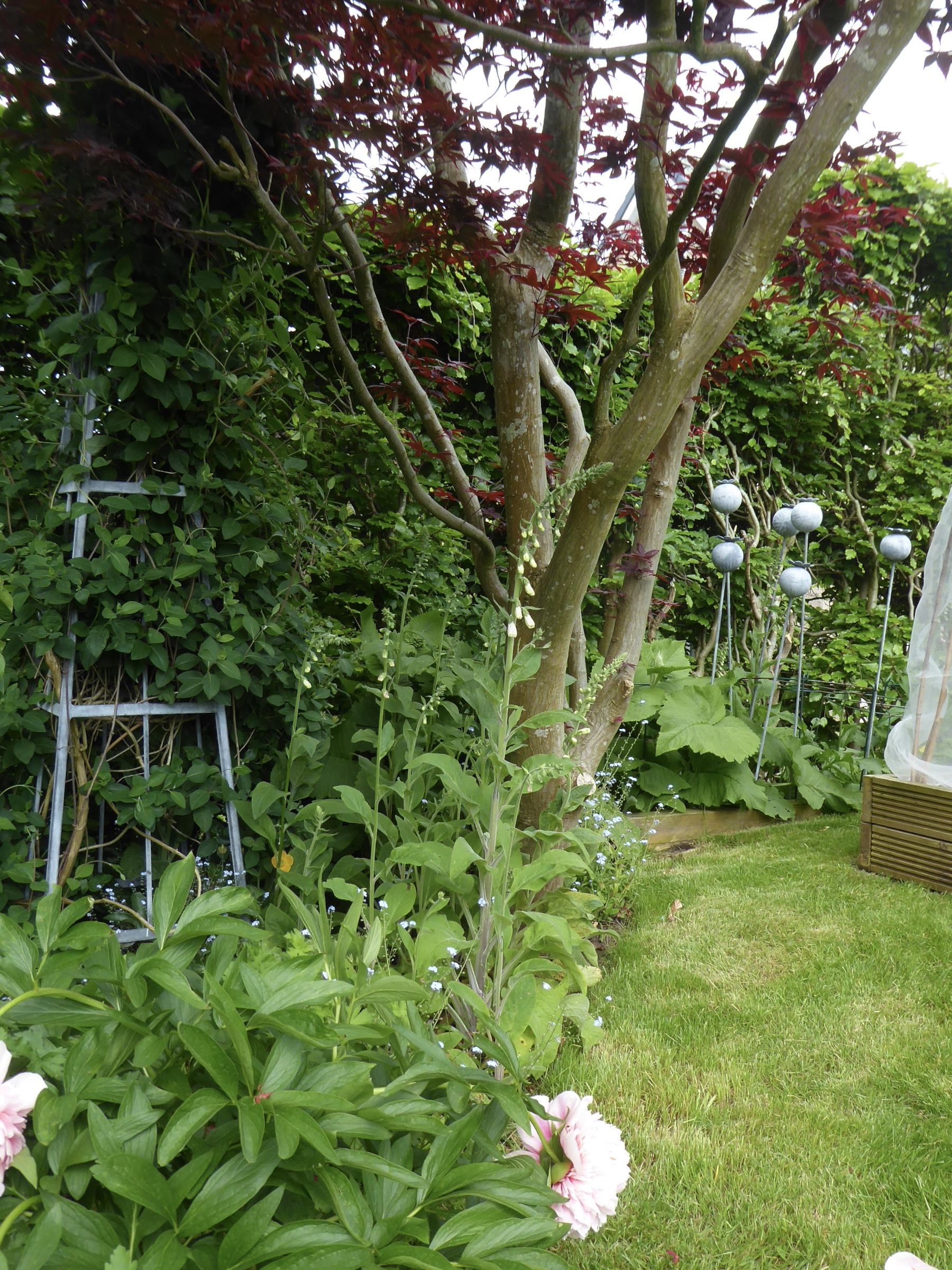
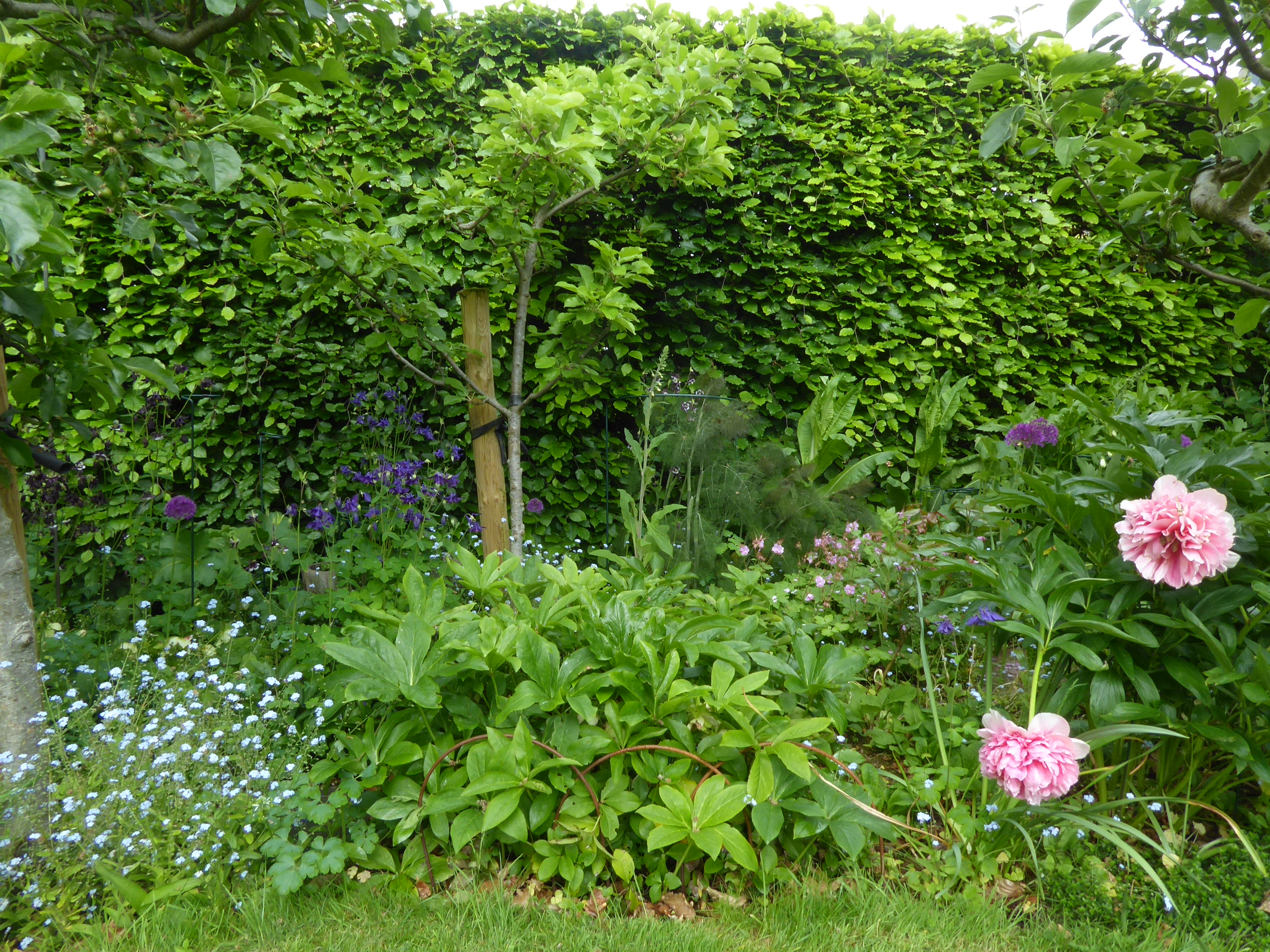
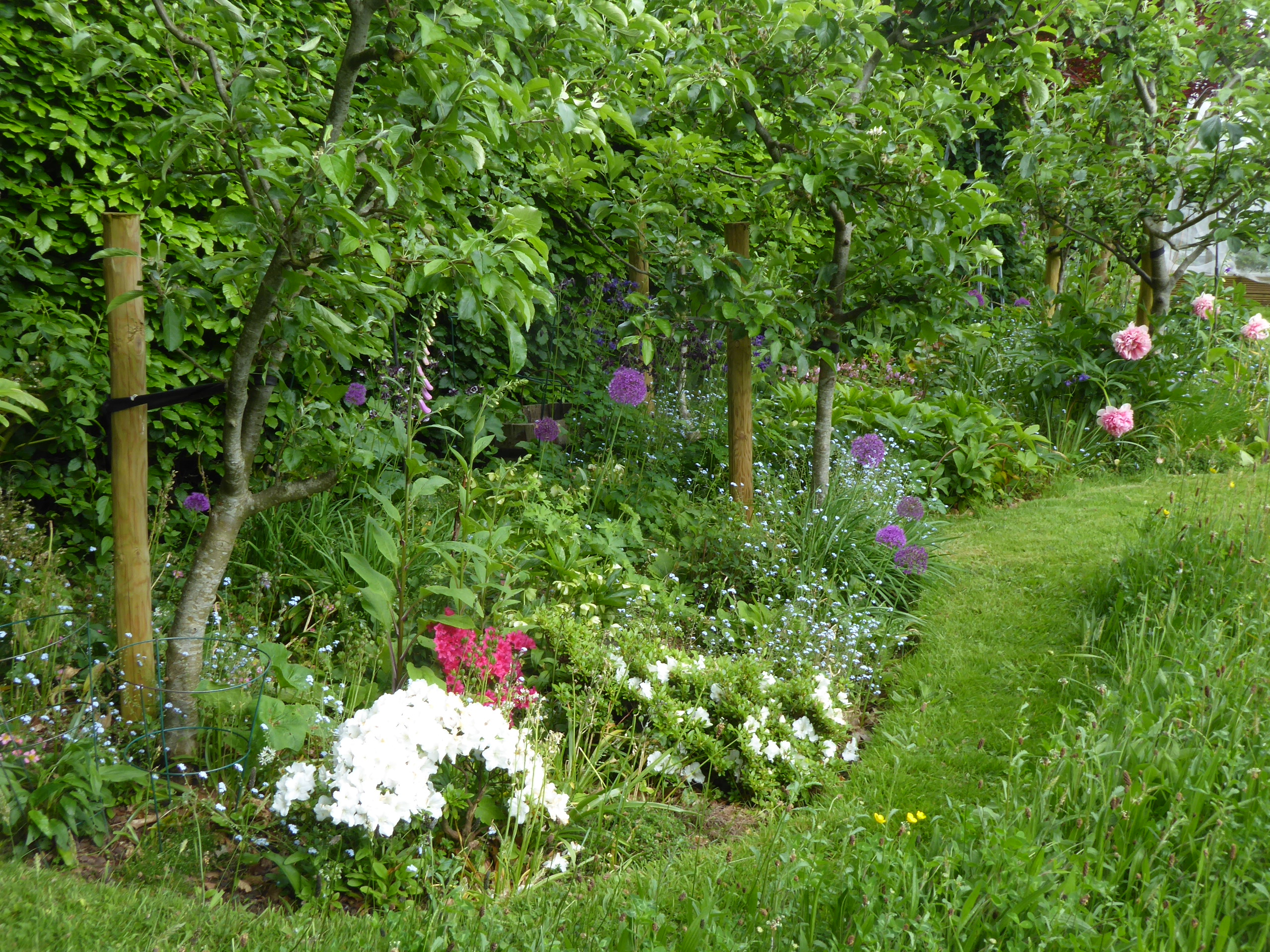
Anyway – to pleasanter thoughts. Everything is growing fast in the usual haphazard way, and the rhododendron is blooming again. (Five years, is it?) I shall be cutting back and pulling up ruthlessly, but at the moment there’s still room for everything. Even better: the weather is finally warm enough to make sitting outside a pleasure.

Next of Kin (1942)

Director Thorold Dickinson with Mervyn Johns, Nova Pilbeam, Jack Hawkins

Originally commissioned by the War Office but released commercially by Ealing Studios. Its message was the familiar “careless talk costs lives” one. Context was important: the knowledge that this was life and death stuff, that some of the actors had been given leave from the forces to make the film, and that it would have been watched by real wives, parents and siblings of people risking their lives in the armed forces. In other respects, it was a film that rattled along to its doomed conclusion (although successful as a destructive mission) and presented its crucial message very effectively. Mervyn Johns was perfectly cast as the unassuming little man who hears everything and passes it on to the Nazis: never overplaying his part but always there as a reminder to the wartime audience to be discreet. Interestingly being a blabbermouth crossed social lines: the upper-class officer and the regular private were each as foolish as each other, and the worst offender was a wing commmander.

Like “Went The Day Well?”, its occasional violence is quite shocking because it seemed so unexpected for a film of its time. It’s as if these films tried to jolt the British public into an acceptance that violence and brutality were a means of defence as well as aggression. I can only be glad that I’ve never been in a position to test that proposition.

Czech New Wave

Like Poland, post-war Czech cinema was state sanctioned and funded. There was a liberalisation in attitude in the early 1960s with the Prague Spring, squashed again after the 1968 Soviet invasion. The FAMU school in Prague, like the Łódź film school, was the training ground for a generation of film-makers. Czech films drew on theatrical and folk traditions like puppetry; the films that we viewed had a much lighter touch than the Polish films from the previous lesson.

Closely Observed Trains, Jiri Menzel, 1966

The sly humour is there from the beginning: martial music as we watch a pigeon strutting its stuff. My fellow students noted sexism and brutality where I saw only a leering male’s point of view (watching the countess ride off) and a comment (the rabbit for the pot) on the ever-present threat of death beneath the “Railway Children” vibe. I guess that makes me analytical rather than sensitive.

The Firemen’s Ball, Milos Forman, 1967

A more obviously comic film, still undermining authority in uniform. (Similarities with Ealing comedies in that regard.) It seems harmless from the short clip we saw, yet it was banned after 1968 and Forman left for the US.

Daisies, Vera Chytilova, 1966

Definitely not mainstream. As surreal as “Last Year in Marienbad” but it looked rather more fun. Two young women, both named Marie, decide to make the most of life in a world gone bad. It looks quirky, with nods to puppetry, robotics, animation. Lots of flowers and girl power, made with non-professional actors.

The Unspeakable Skipton by Pamela Hansford Johnson (1959)

These days I have a Kindle with hundreds of books loaded onto it, and it always comes with me. In my younger days I took whatever books I could find – on youth hostel bookshelves, in small corners of second-hand bookshops where they sold foreign books, or by swapping with others. That’s why I once read a Jeffrey Archer book and why there are/were copies of “The Duchess of Malfi” (Montpellier – probably once a set text for students) and Montaigne’s Essays (Alexandria, I think) on the bookshelves.

Which is a long-winded way of explaining how I once read “Hadrian the Seventh” by Frederick Rolfe, puzzling at its weirdness on each page. I had no idea what to make of its arcane language, waspishness and Roman Catholicism.

That kind of serendipity has long been banished.

And so to my latest read, “a study of an artist’s paranoia”. It’s a clever, satirical novel about literary jousting and artistic skullduggery. Rolfe is partly the updated inspiration for the main character, Daniel Skipton – a repellent, vituperative, dishonest, sleazy, literary Mr Ripley stranded in Bruges, living in squalor and despising the rest of the world for not recognising his genius. He is still polishing his next novel, which he completed a year before, using a black pen for grammar, green for style and red for comment. It’s a slow process:

Daniel counted, the number of lines and the words in each line. Two hundred and forty words, roughly. A day’s work.

The book has plenty of such sly jokes; they keep you reading about such unlikeable characters through the prism of Skipton’s internal discourse. (At least I hope it’s meant to be Skipton’s; if it’s Hansford Johnson’s own style, she’s definitely off my list.)

Skipton turns on almost everyone, including those whose hand he is feeding from. He has a brilliant line in invective, whether written, spoken or thought.

She read to them, in the glutinous accents of self-love, imbecile verses engendered in the tripes and filtered through the clogged sieve of her mind, dropping finally on to the paper with such an irrelevant accretion of stale orts and rotting scraps that the tripes moved at the sight of them, thus bringing, in this meanest work of art as in the noblest, the end into holy fusion with the beginning.

It’s one of the strings that animates him. The other is an acute aesthetic sense which sends him to his window each evening to watch the sunset and anchors him to the beauty and spirit of Bruges. It’s his one sympathetic quality.