Kendal

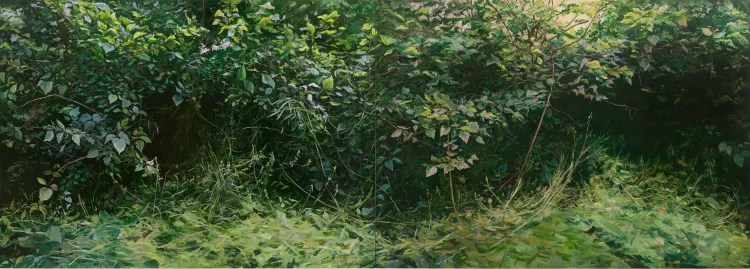
The Verge by James Lane 5, Hannah Brown, 2024, oil on linen

To Abbot Hall for a wander around the “Expanding Landscapes – painting after land art” exhibition. I have – finally! – grasped that I must not expect an immediate “wow” moment – e.g. Dr Pozzi. (Actually, though, there was a “wow” moment – Hannah Brown’s “Verge”, which made me wonder which might lurk in its darkness even while its exuberant growth enchanted me.)

But in general there was no sense of “immediate” in my viewing; I had to read and watch in order to enjoy some of the work. I particularly liked Onya McCausland’s focus on paint colours originally coming from the earth and Jessica Warboys’s river series. It gave depth to paintings that were otherwise a bit underwhelming.

Saffron Walden

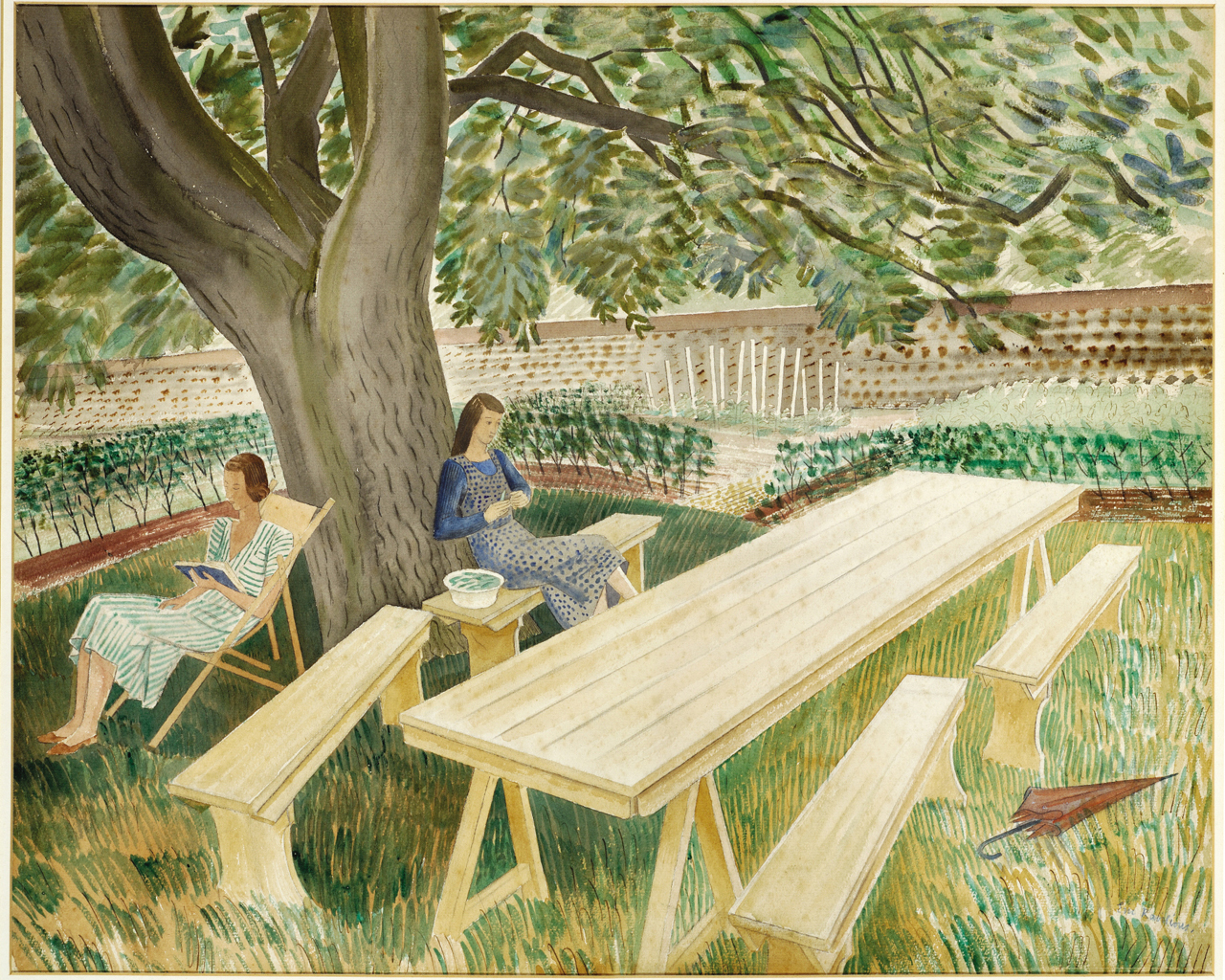
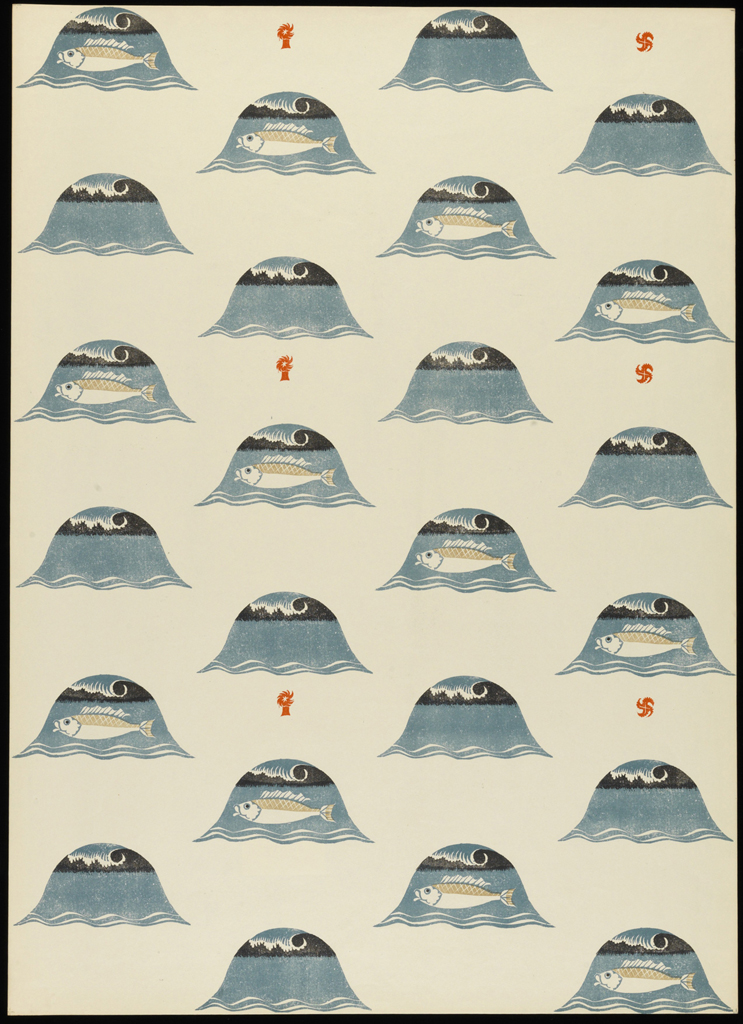
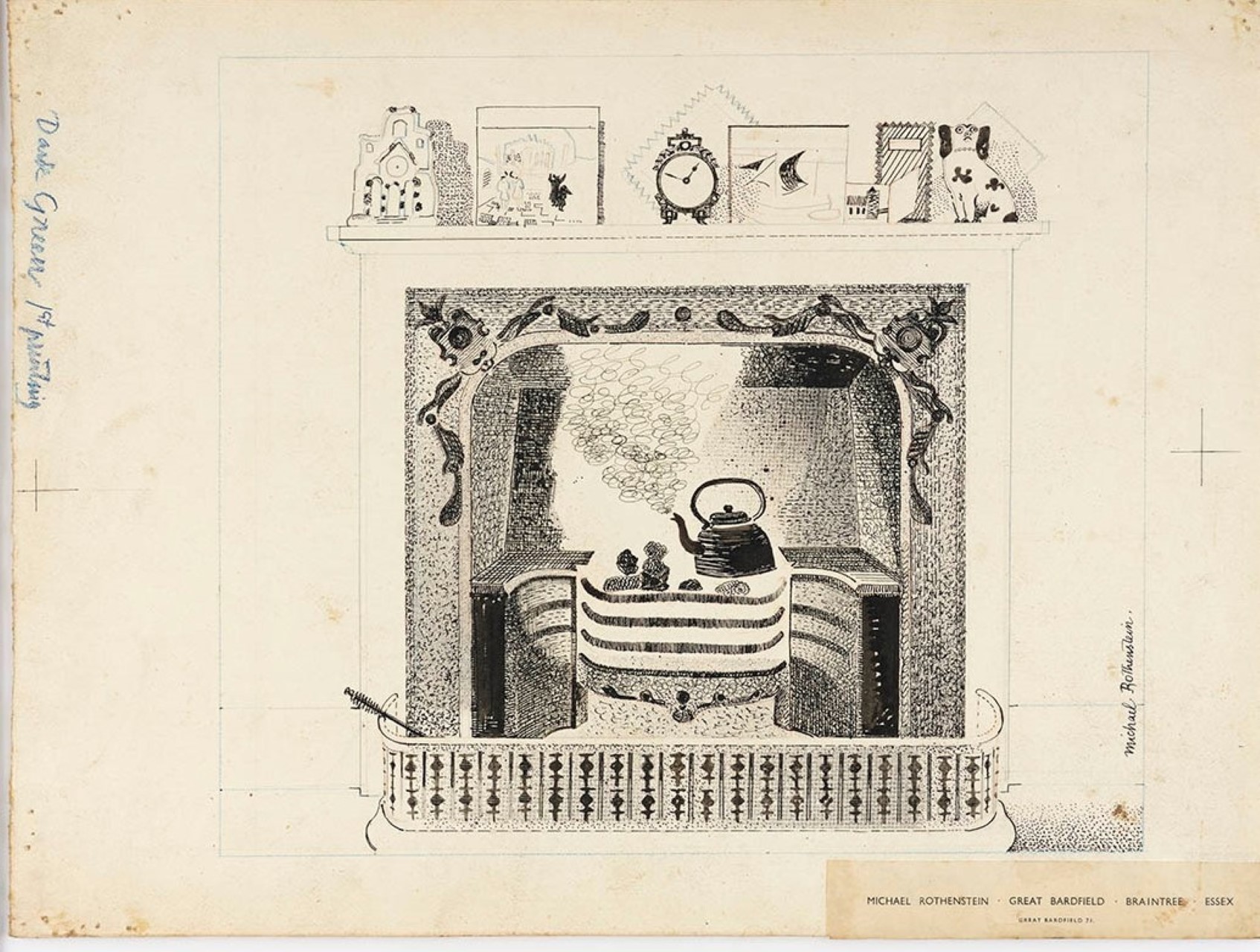
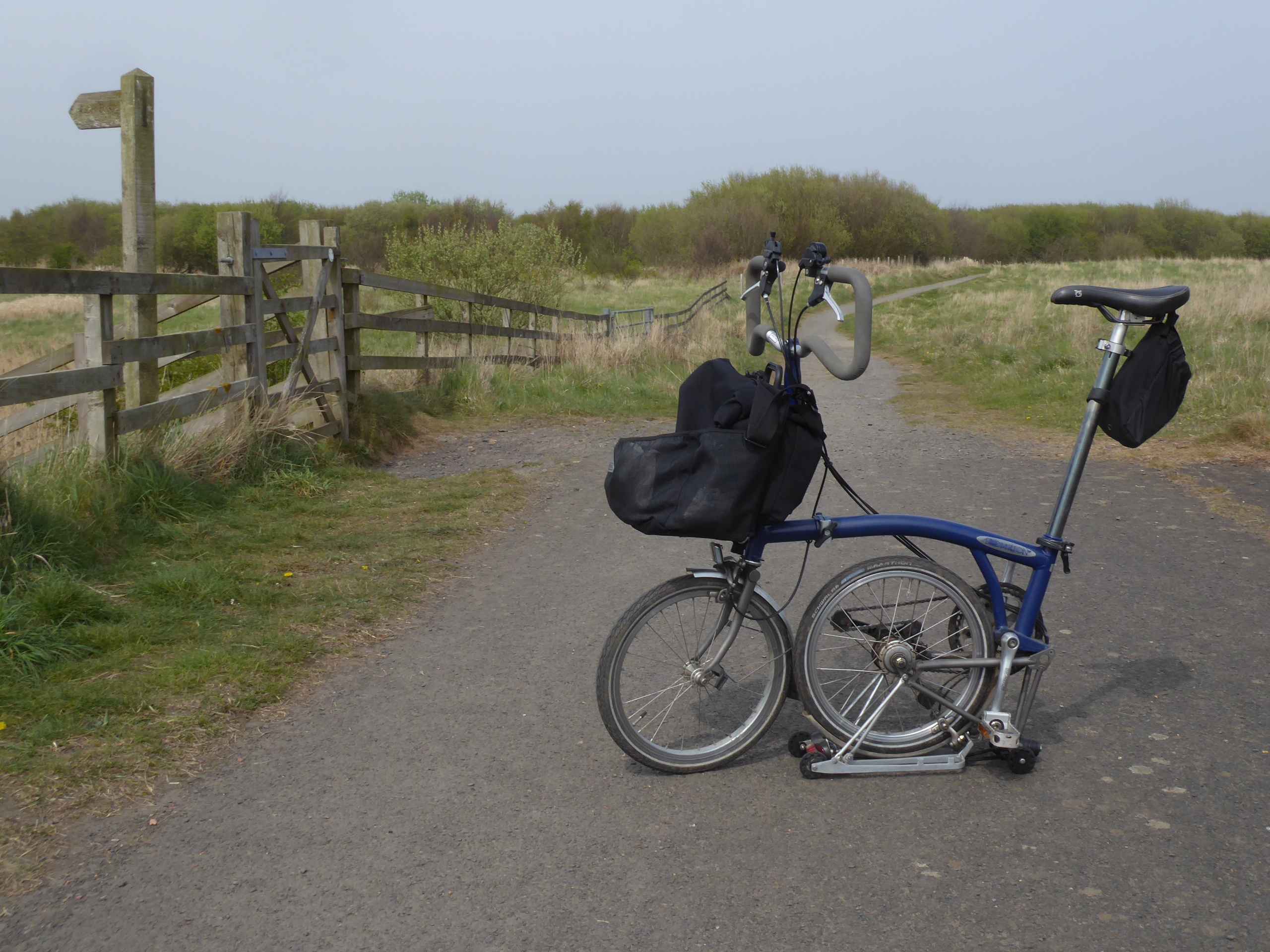
Cycling to Liverpool Street Station early this morning, I realised that the Brompton was in its natural habitat amongst its peers carrying their riders to work. But not me. I was leaving sweltering London behind to visit the Fry Gallery in Saffron Walden and its exhibition of Great Bardfield artists (Edward Bawden, Eric Ravilious et al).

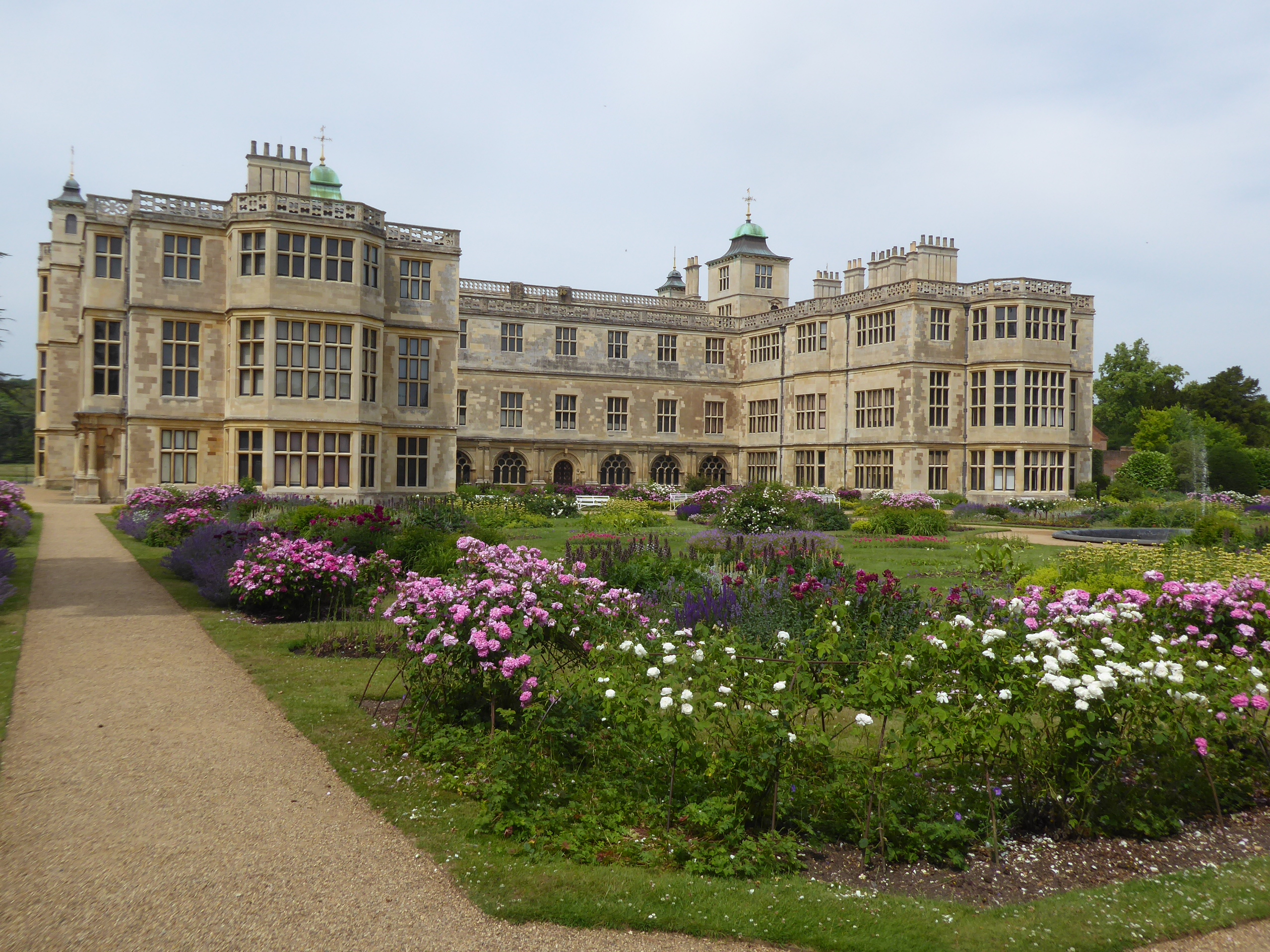
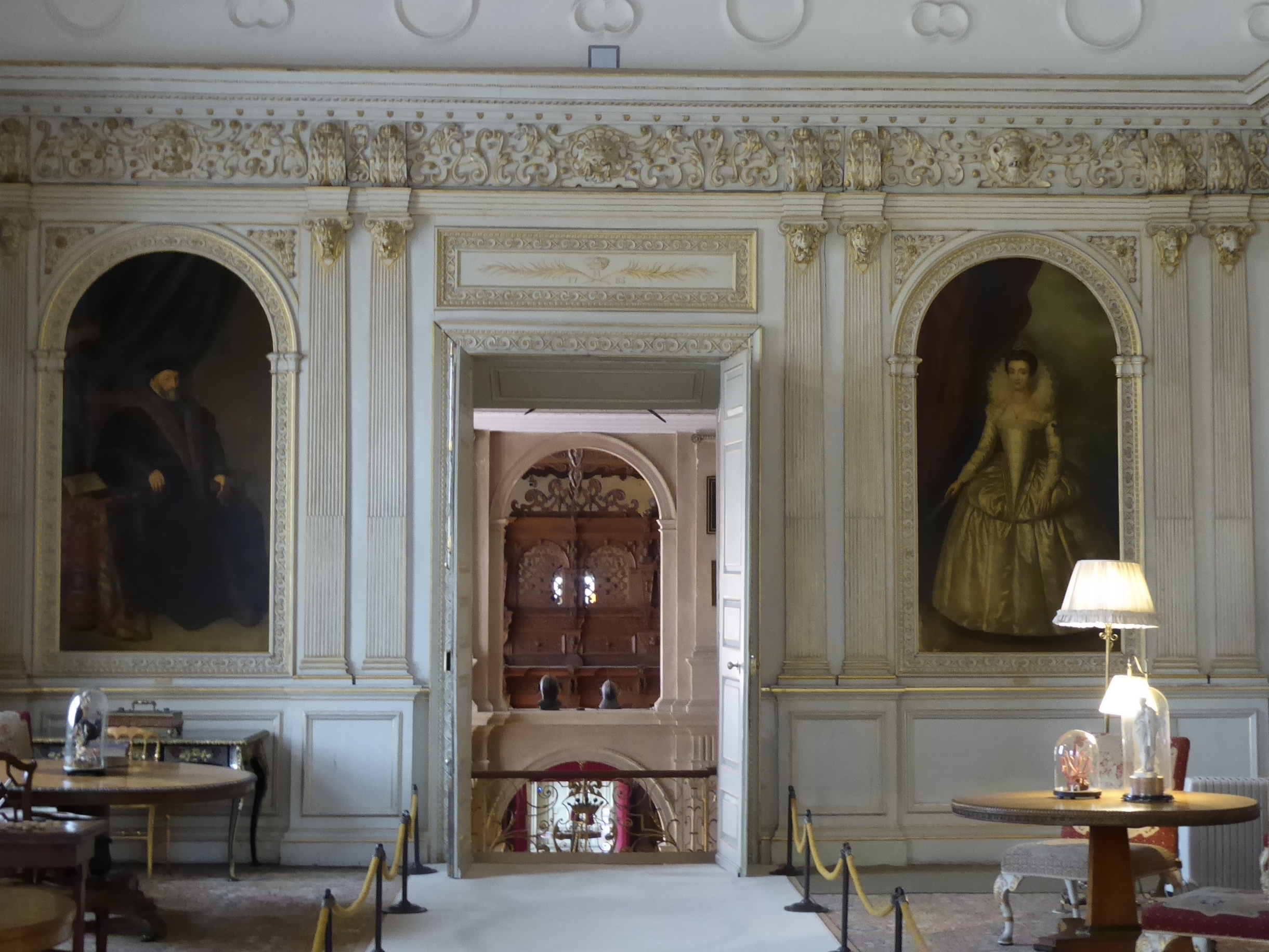
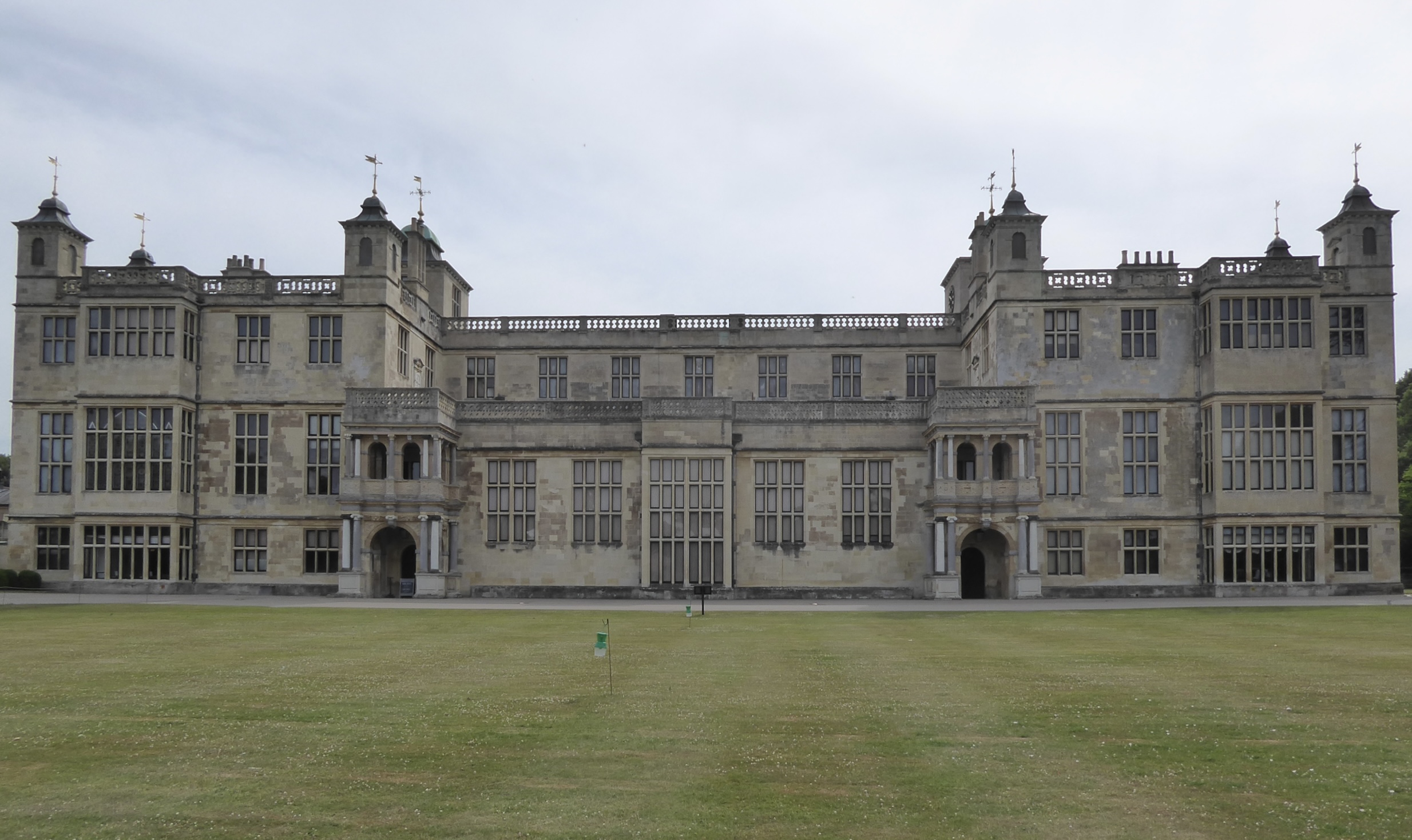
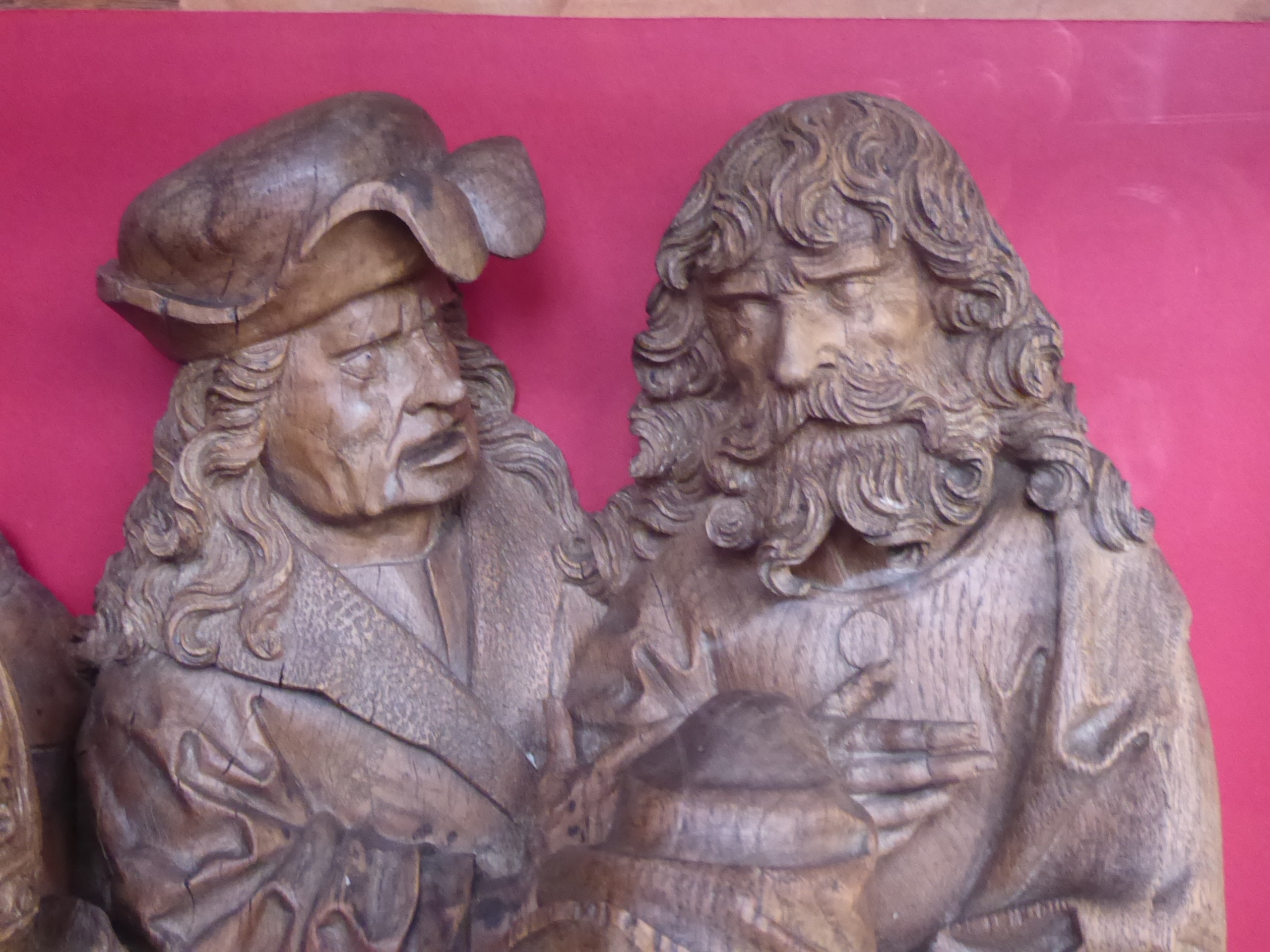
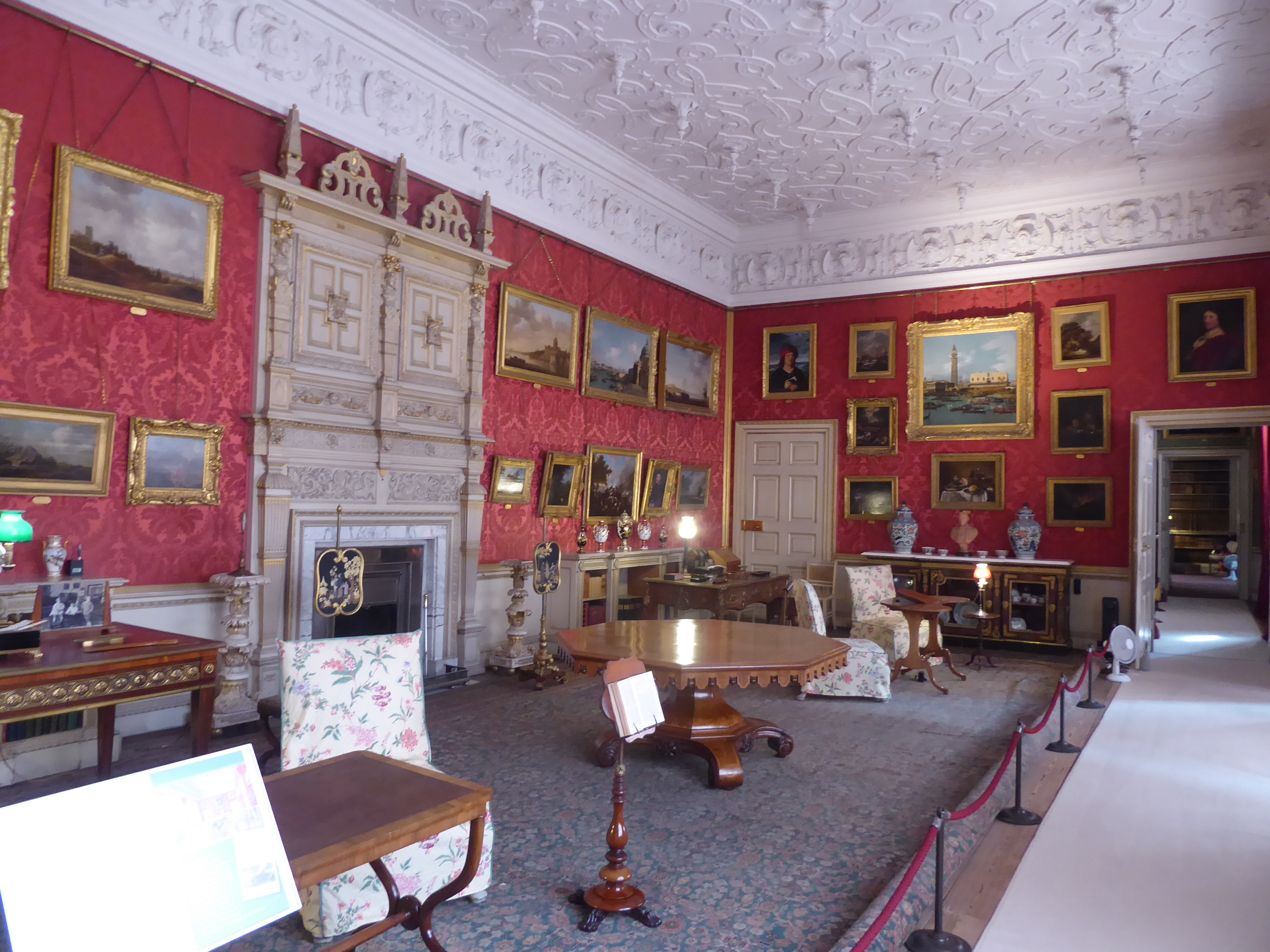
Since the gallery didn’t open until 2 p.m. I looked for something to do before that and discovered Audley End House nearby. It’s basically a Jacobean house that was once much larger and grander, built on the site of a dissolved abbey. The Duke of Suffolk embezzled state funds for it, Charles II once owned it (handy for Newmarket), John Vanbrugh and Robert Adam worked on it at various stages, Capability Brown got fired . . . the usual sort of thing. Over the centuries it has been much reduced and altered, and its current incarnation is early 19th century. So, symmetry everywhere, the deception assisted by false doors and concealed doors. A great hall with an astonishing oak screen that rises to the second floor. Family portraits everywhere plus an art collection by “follower of X” and “school of Y”. An incredible collection of taxidermy, including more kinds of owl than I knew existed and an albatross. A library that basically stored all that an English aristocrat needed to know at that time: rows and rows of records of State Trials of the late seventeenth century; antiquities of Canterbury; Dugdale’s Baronage of Englands Vol I, II etc etc – and, nice touch, a row of Walter Scott novels on an easy-to-reach shelf. The room and bed decorated specially for George III . . . who never visited. A chapel with a separate staircase and wooden seats for the servants, and a fire and padded seats/kneelers for the family. I found it fascinating and bizarre.

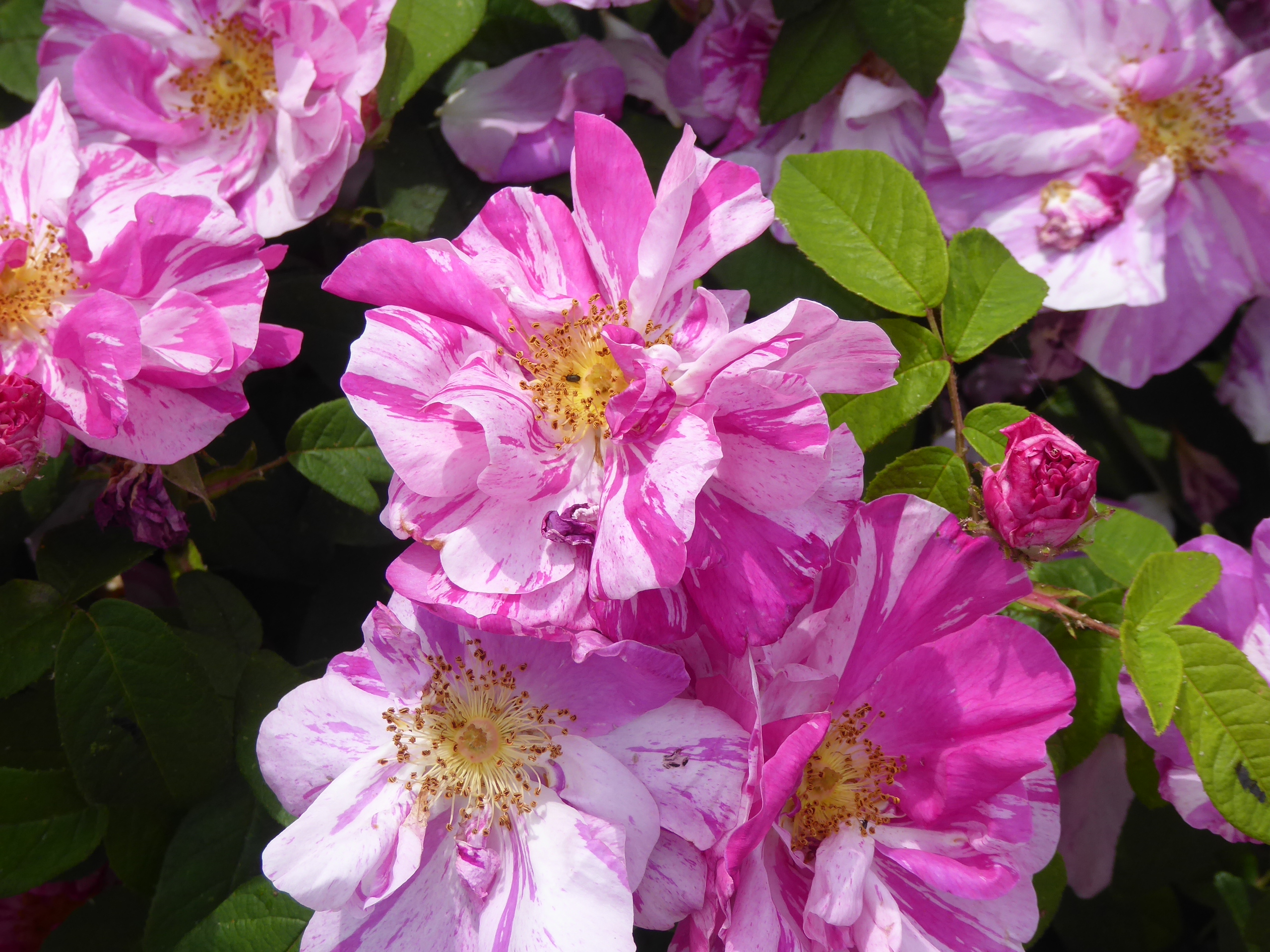
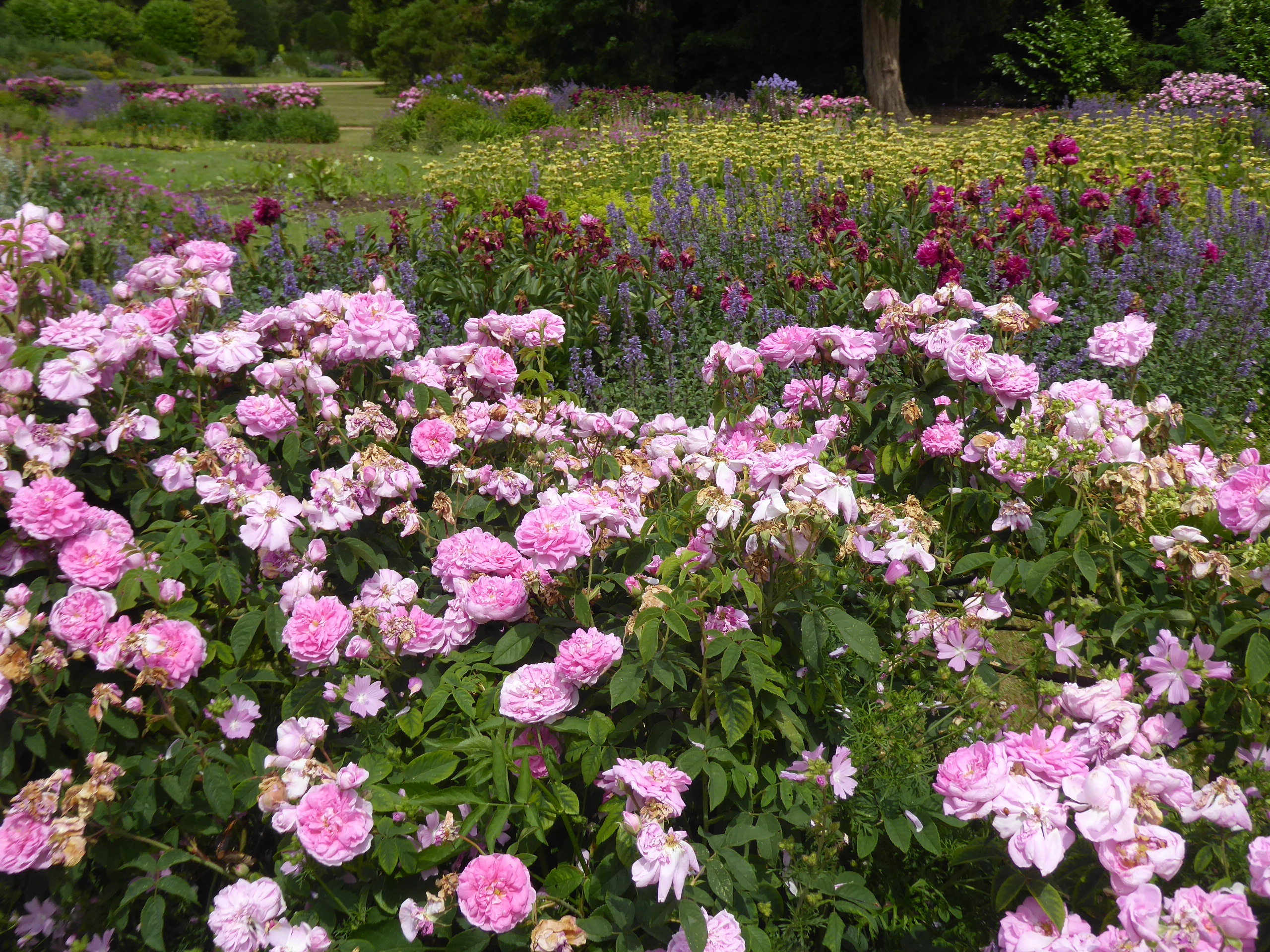
The parterre was lovely, and I saw it at its best. Had I not already been converted to roses, this would have done it.

Then to Saffron Walden for lunch. I ate in the main square in what I guess was once a Victorian-era bank. The great thing was that it was like a small version of Audley End: neo-Elizabethan with decorated stonework and mullioned windows, and inside I sat beneath a white ceiling plastered in Tudor style.

I walked past the castle to the gallery. Saffron Walden is very quaint, but with the heat and the Brompton I wasn’t in a frame of mind to take photos. The gallery is small and filled to the brim with delightful images and objects but after the space of Audley End, it seemed very cramped and the exhibits seemed cosily domestic.

Turner and feminism

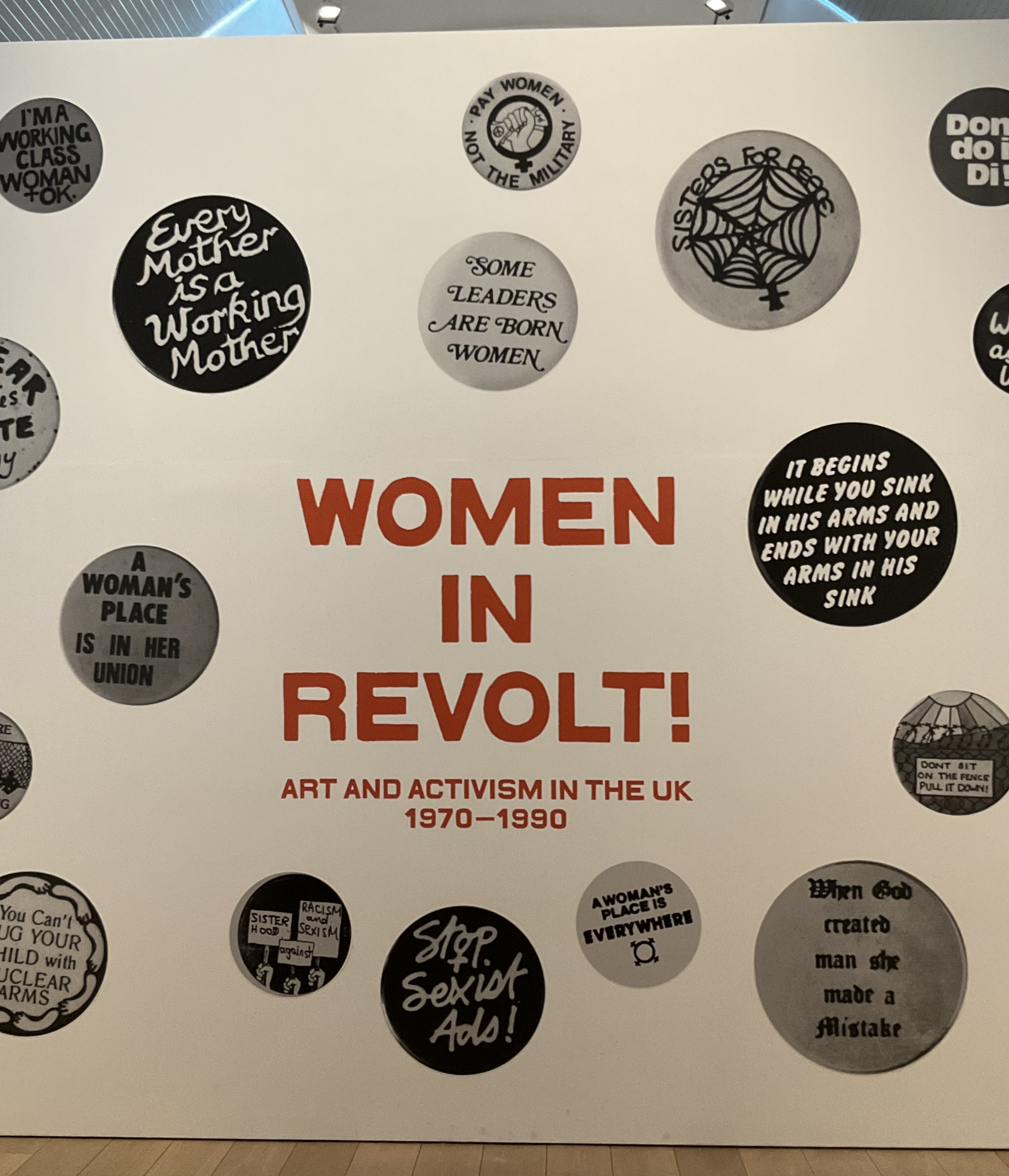
I was in Manchester for the day and went to the Whitworth Gallery and thus saw two contrasting exhibitions. One was Women in Revolt, which I found interesting – probably not entirely for the expected reasons. Since I do recall the 1970s and 1980s, many of the events and social attitudes were familiar to me. The artwork was punchy rather than classy – reflecting the anger of that time and the everyday media that the artists/activists used (e.g. collage, fabric). At this remove it’s easy to forget how outlandish some of the demands for female equality seemed at the time to “ordinary people” – equal pay, professional opportunities, childcare, the assumption of being taken seriously. My aunts, for example, were ambivalent to, if not dismissive of, female equality. How far we have come! No, what did catch my attention was a film of ordinary women in the street, accosted by a male television journalist and asked what problems they encountered as women in the 1970s. It was almost a Socratic dialogue: he hectoring and various shes pondering his questions, totally media-unsavvy, and giving hesitant answers about things they perhaps hadn’t considered before. There was a polite bewilderment at being asked to examine their lives, rather than the redundant-heavy easy flow of words that a vox pop today might elicit. The exhibition assumed a natural relationship between 1970s feminism and other progressive attitudes – the relationship not embraced by women in power at that time like Margaret Thatcher.

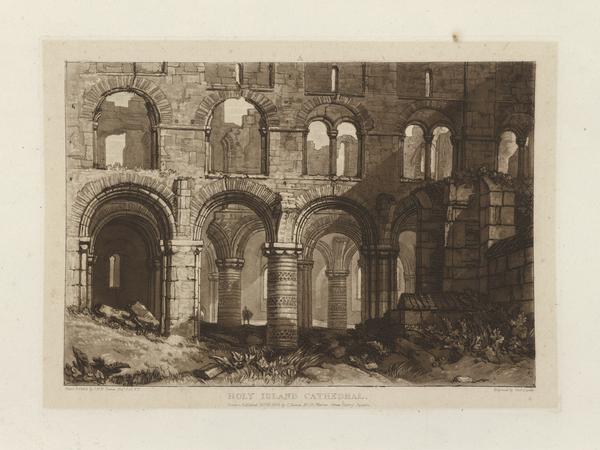
And then Turner’s prints. The Whitworth had emptied all its shelves and backs of cupboards for this. They were rather lovely, and I was impressed by the quality of the mezzotints. A very different experience.

Ashington to Alnmouth

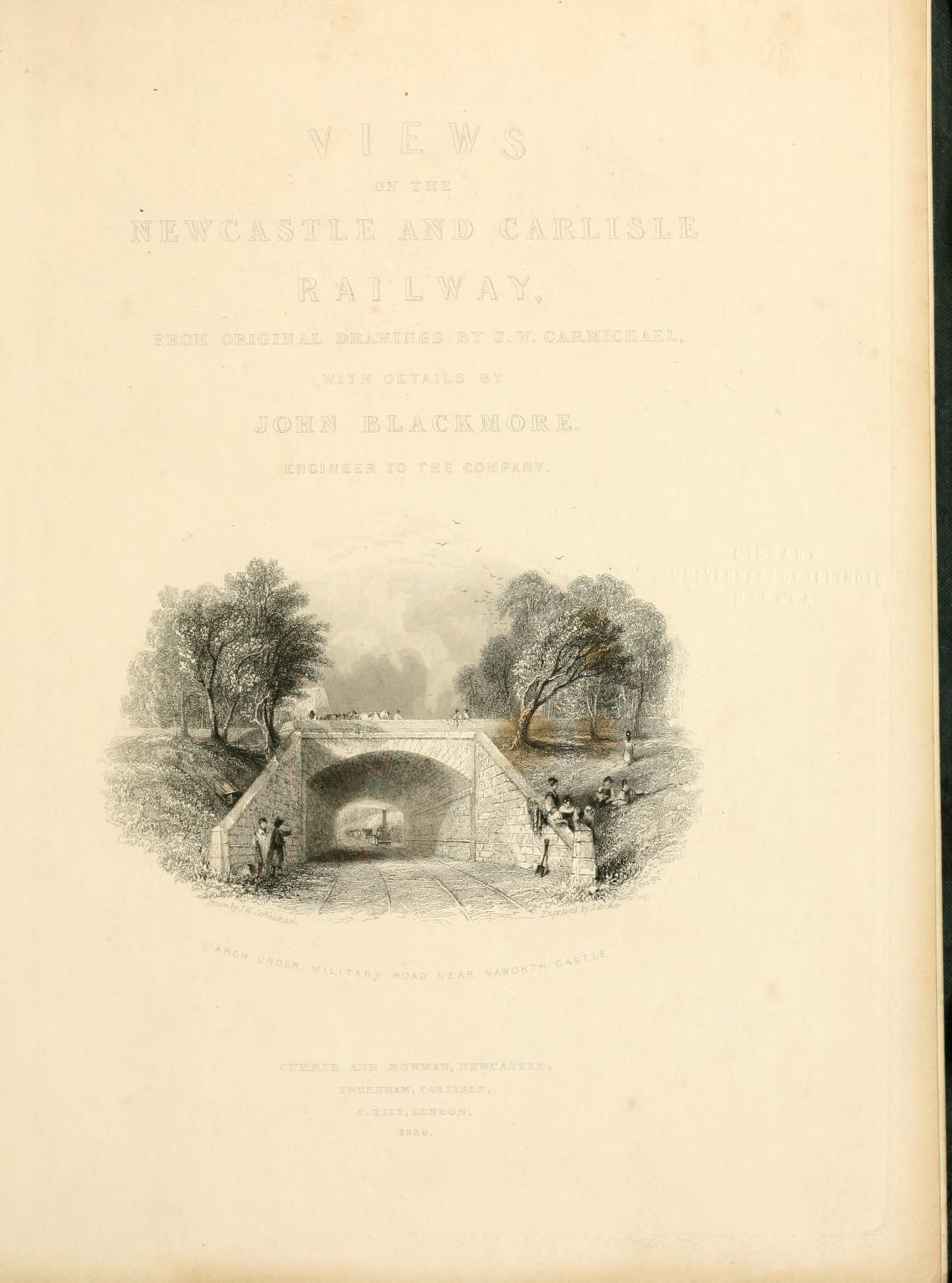
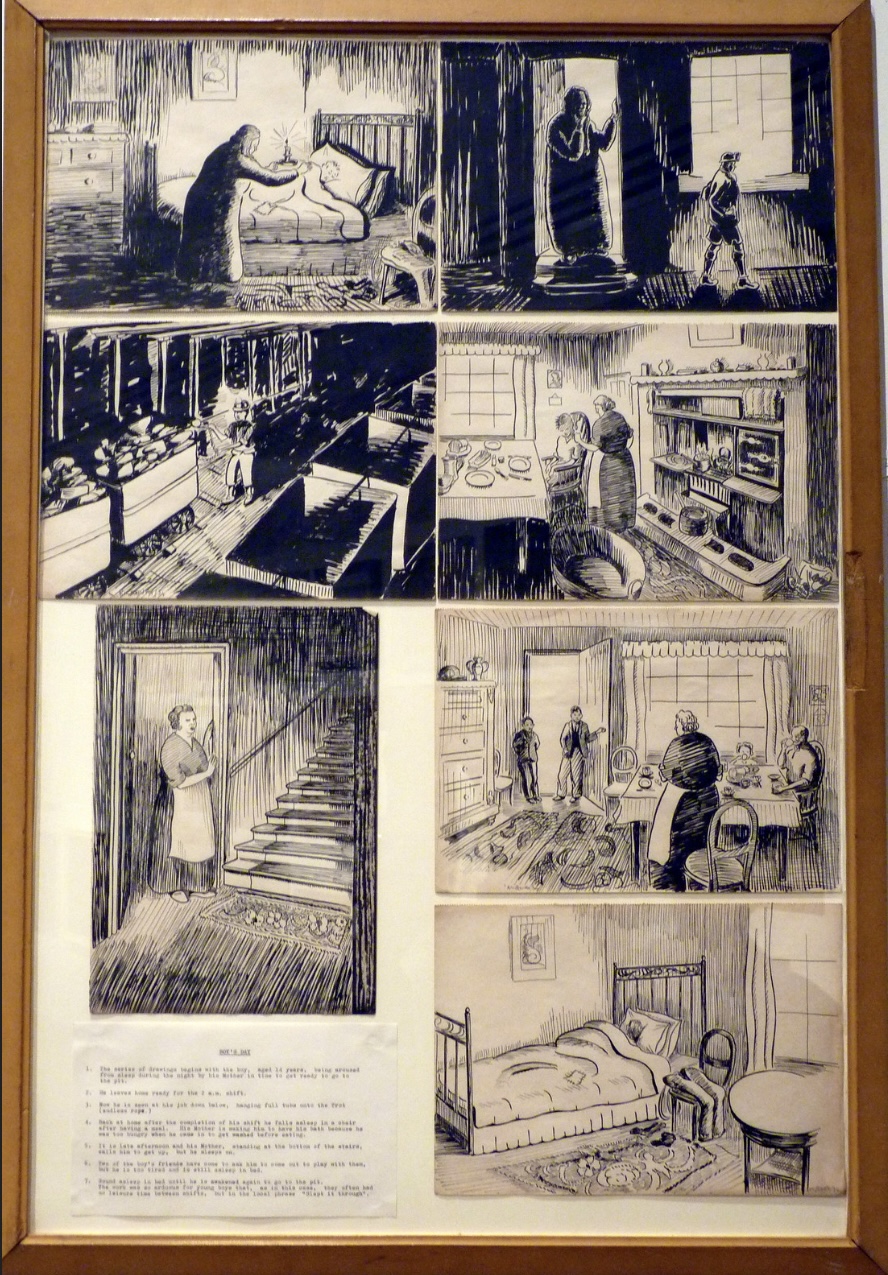
What prompted me to come to Newcastle this time was the re-opening to passenger traffic of the railway line to Ashington – which is the gateway, for me, to see the works of the Pitmen Painters.

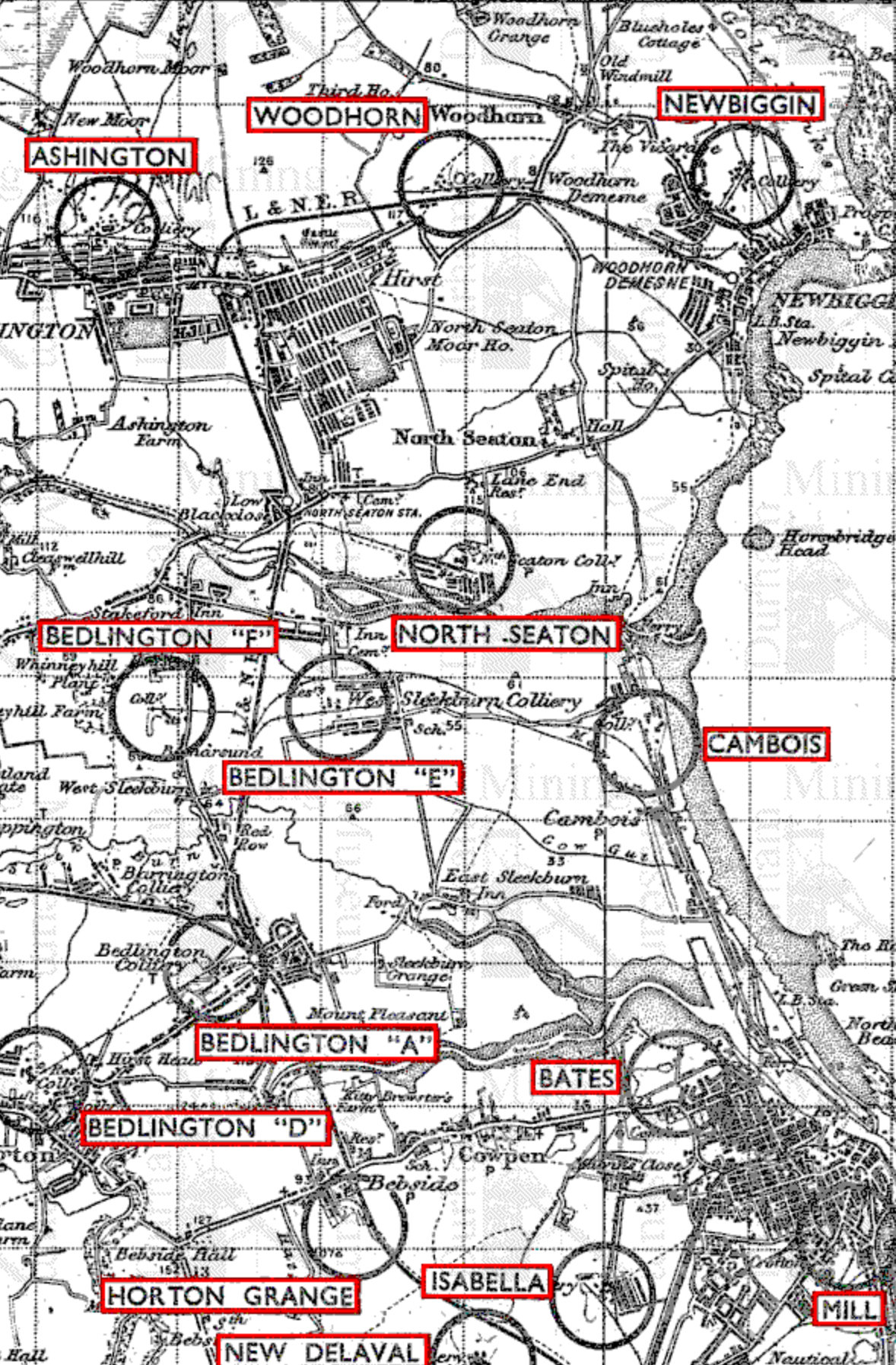
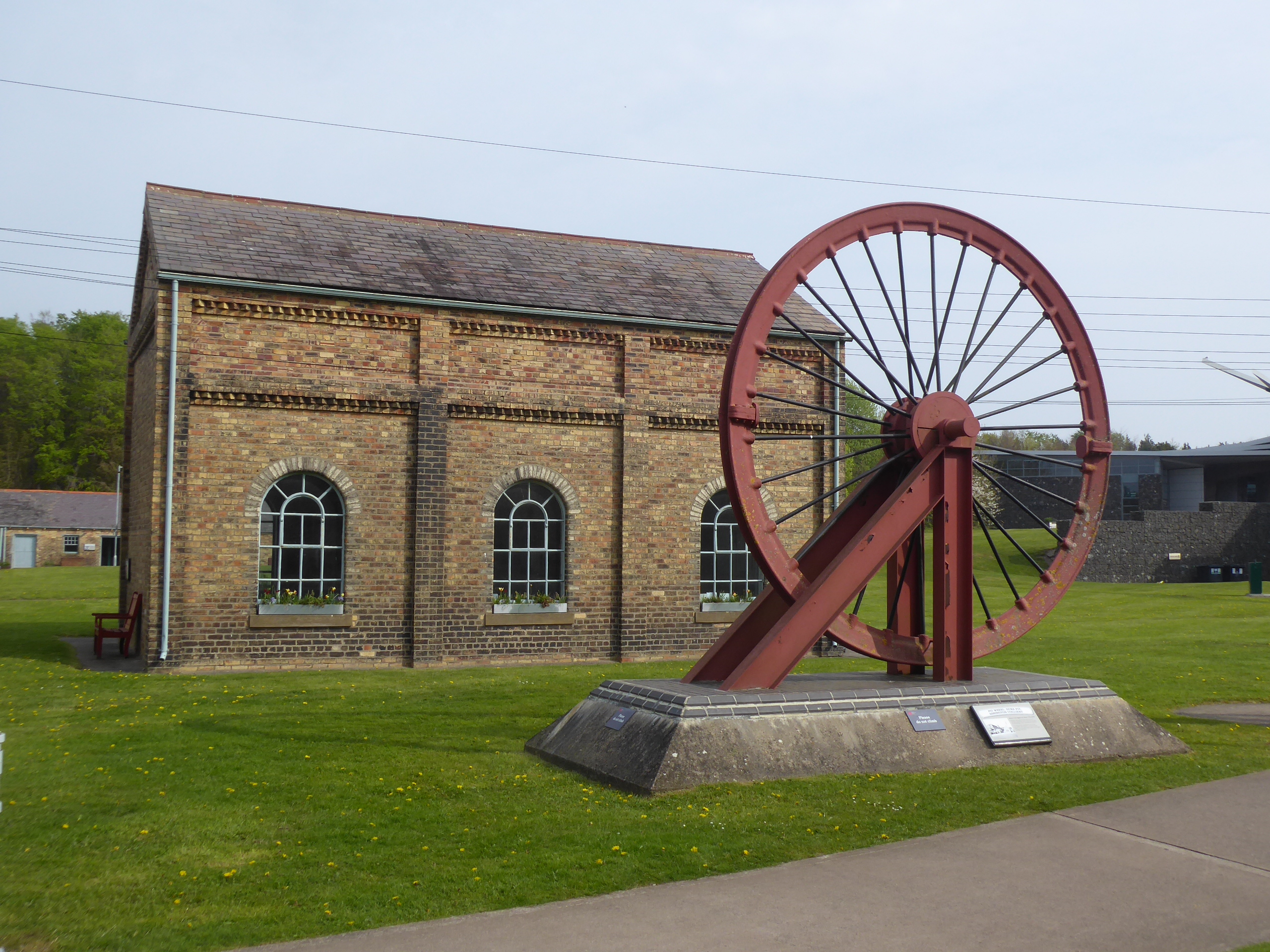
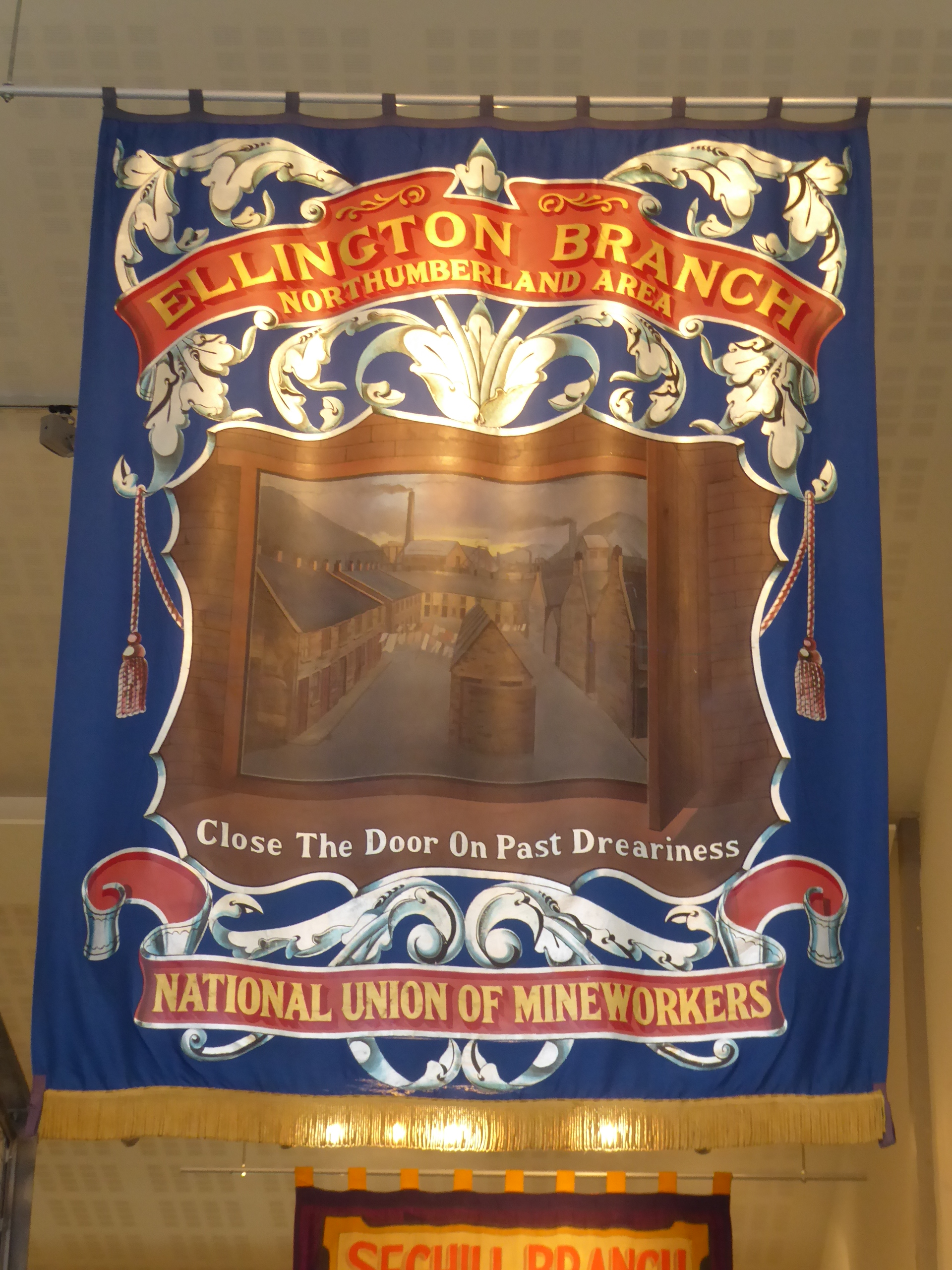
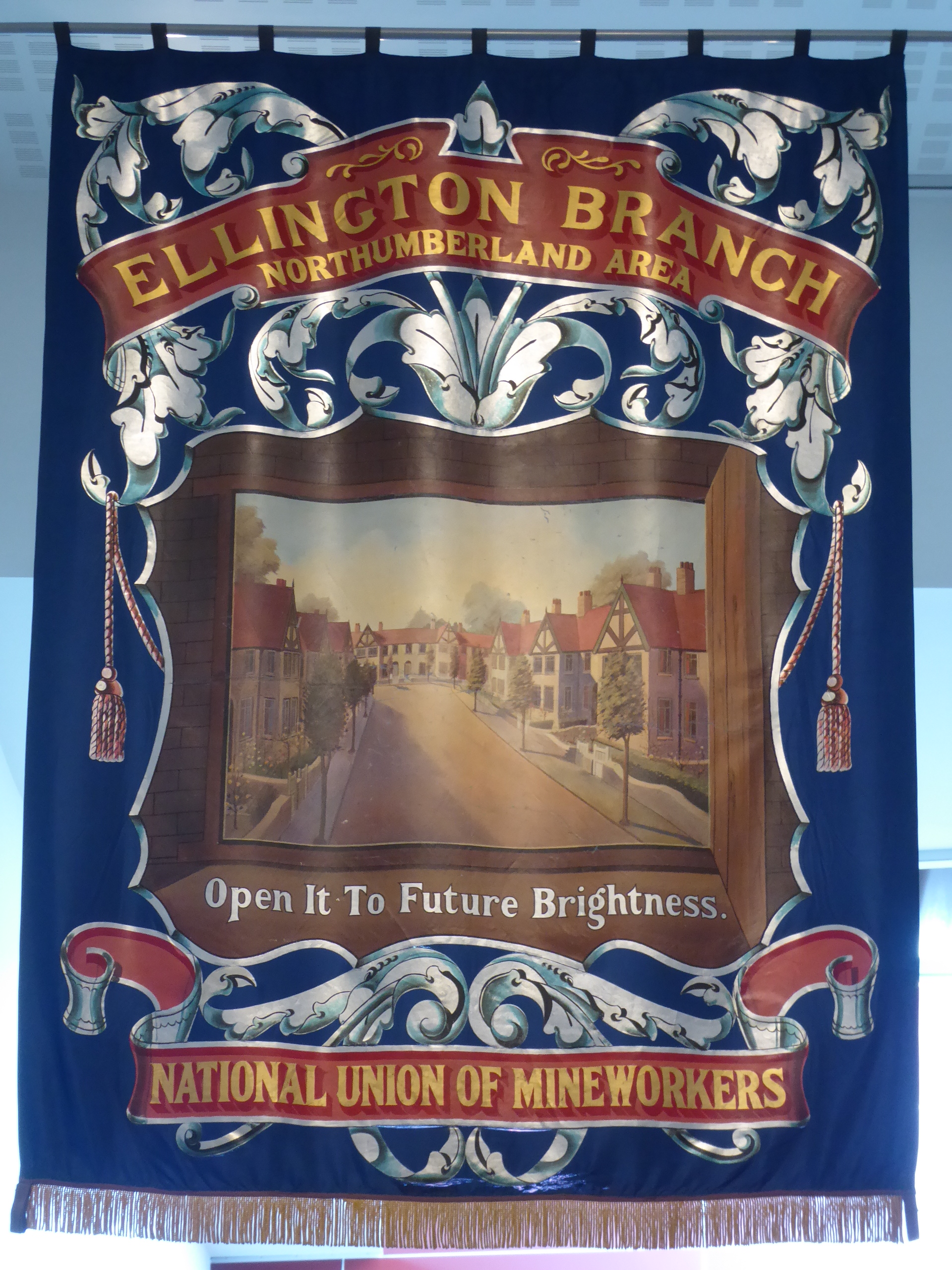
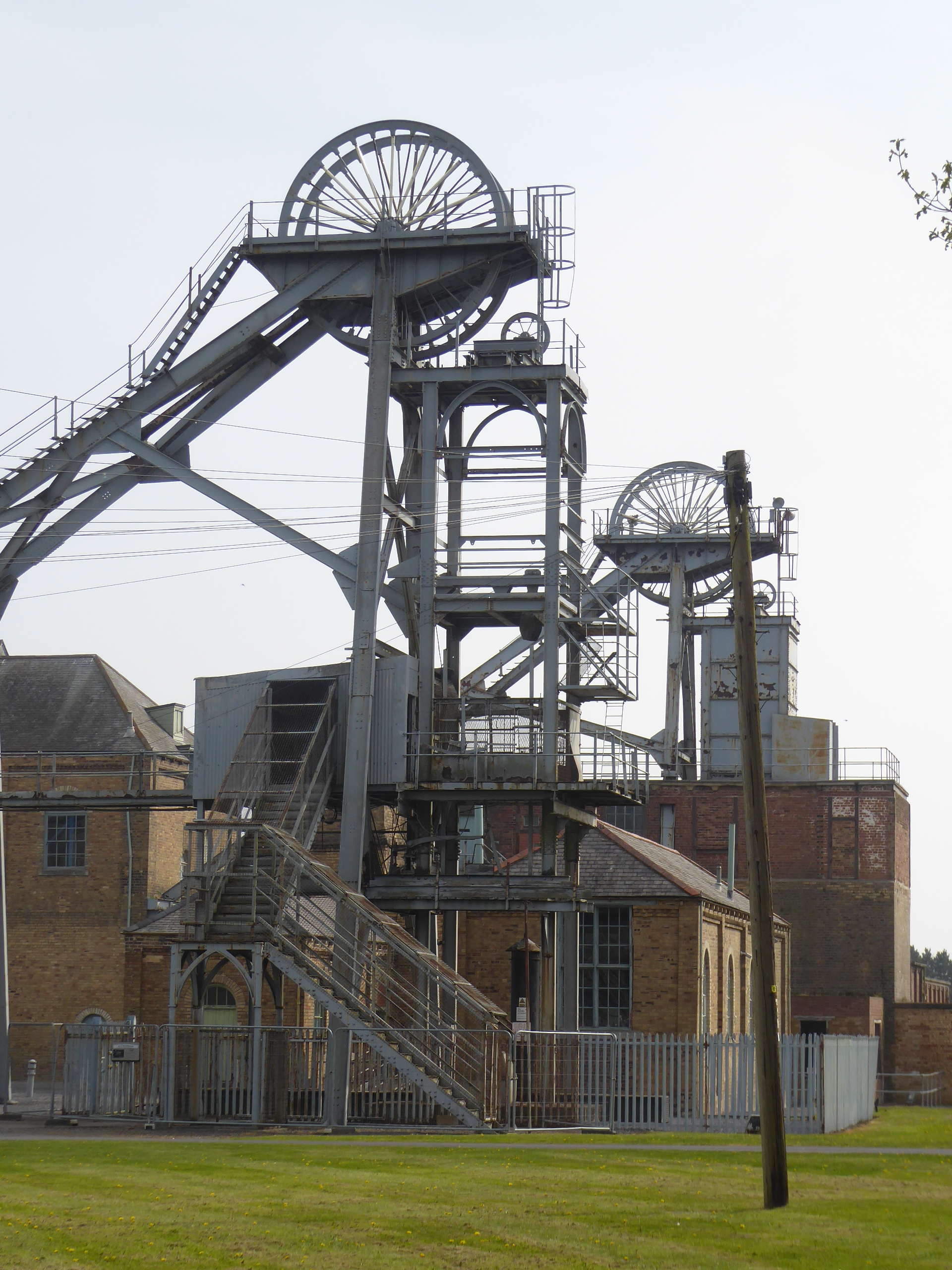
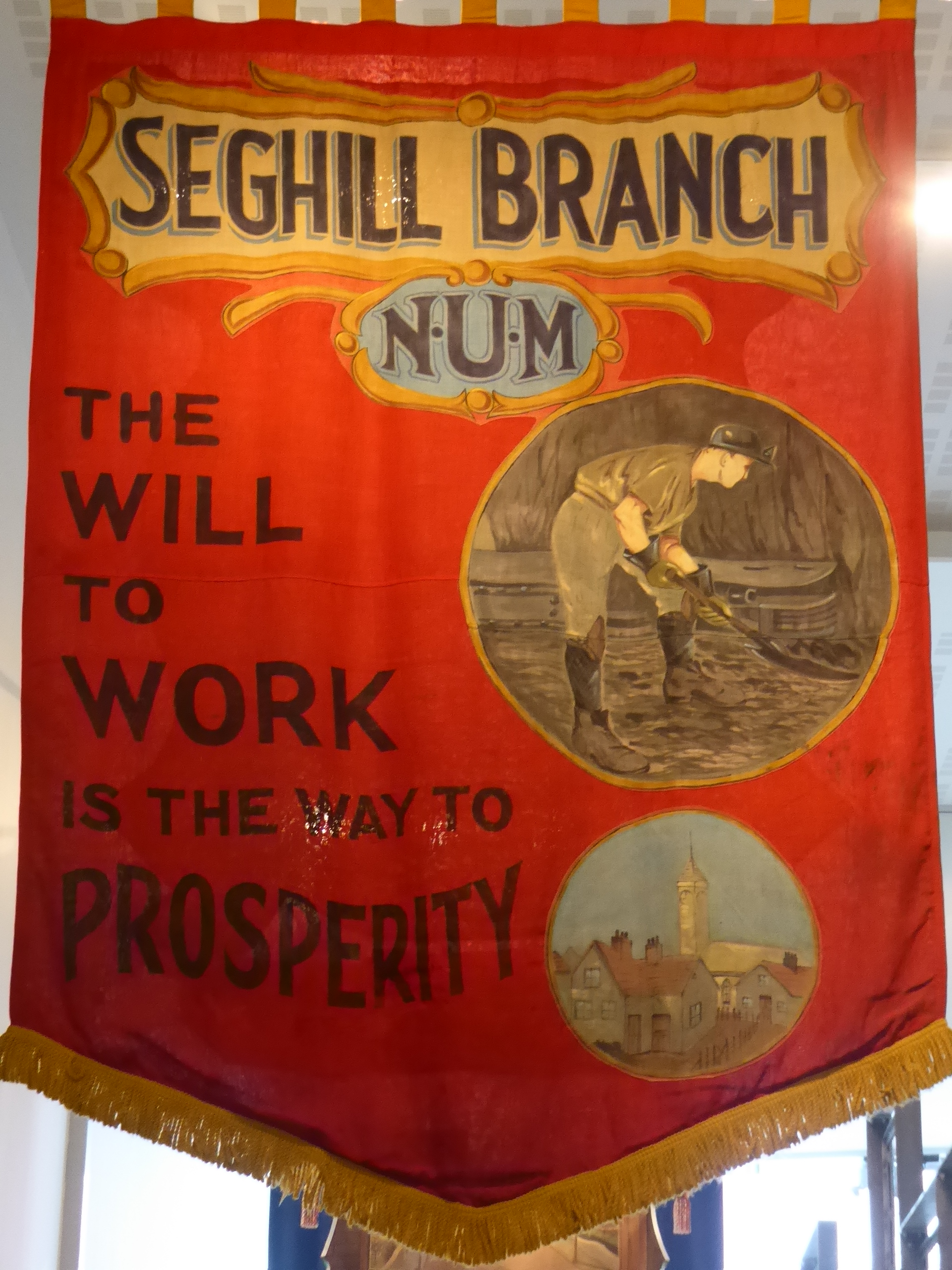
The Brompton and I found the cycle path from Ashington to the Woodhorn Museum. In addition to the gallery, it’s also a mining museum in what was, until 1981, the Woodhorn Colliery. There was once also an Ashington Colliery – a distance that it had taken me ten minutes to cycle slowly – so, of course, I started wondering how cheek-by-jowl collieries were here and found a 1951 map online which gives me an answer. From the train I’d seen a few old spoil heaps, just humps and plains covered by scrubby vegetation, but, as an outsider, I find it hard to imagine what this area was like until fairly recently. The museum is interesting: several of the key buildings remain, along with the pit wheels, and I noted (as with old German mining administration blocks) that even functional buildings can include proportion and decorative elements.

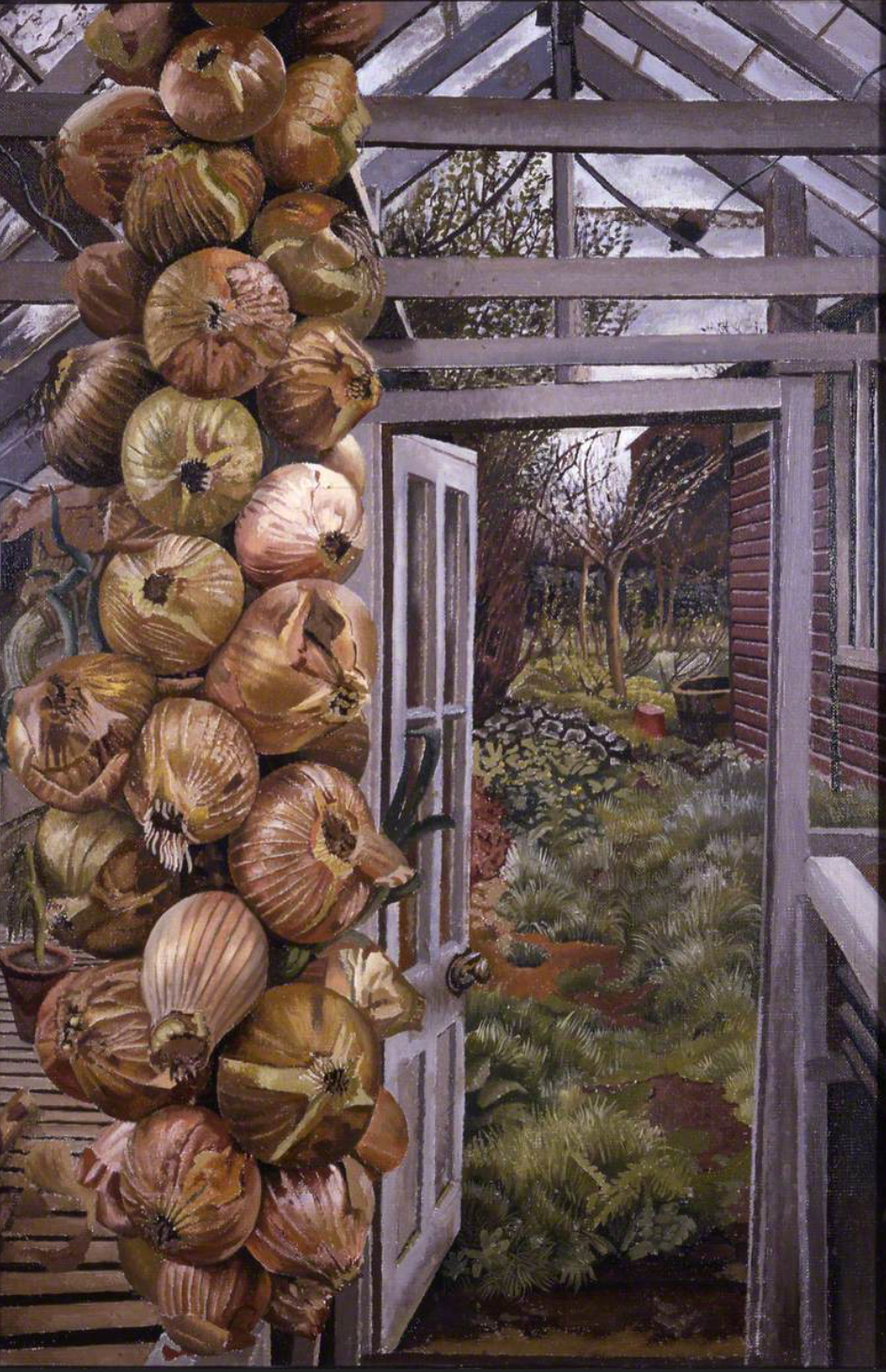
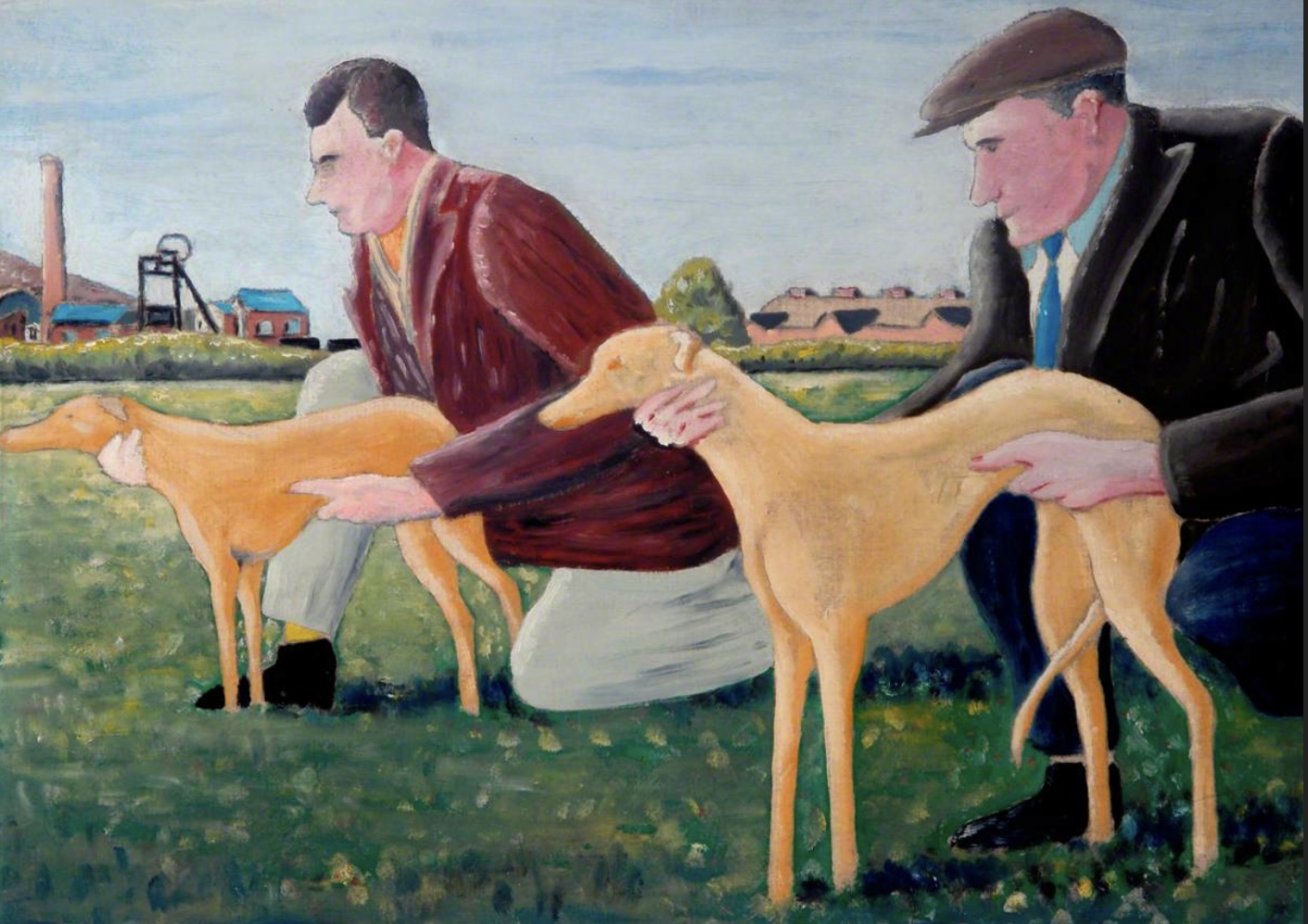
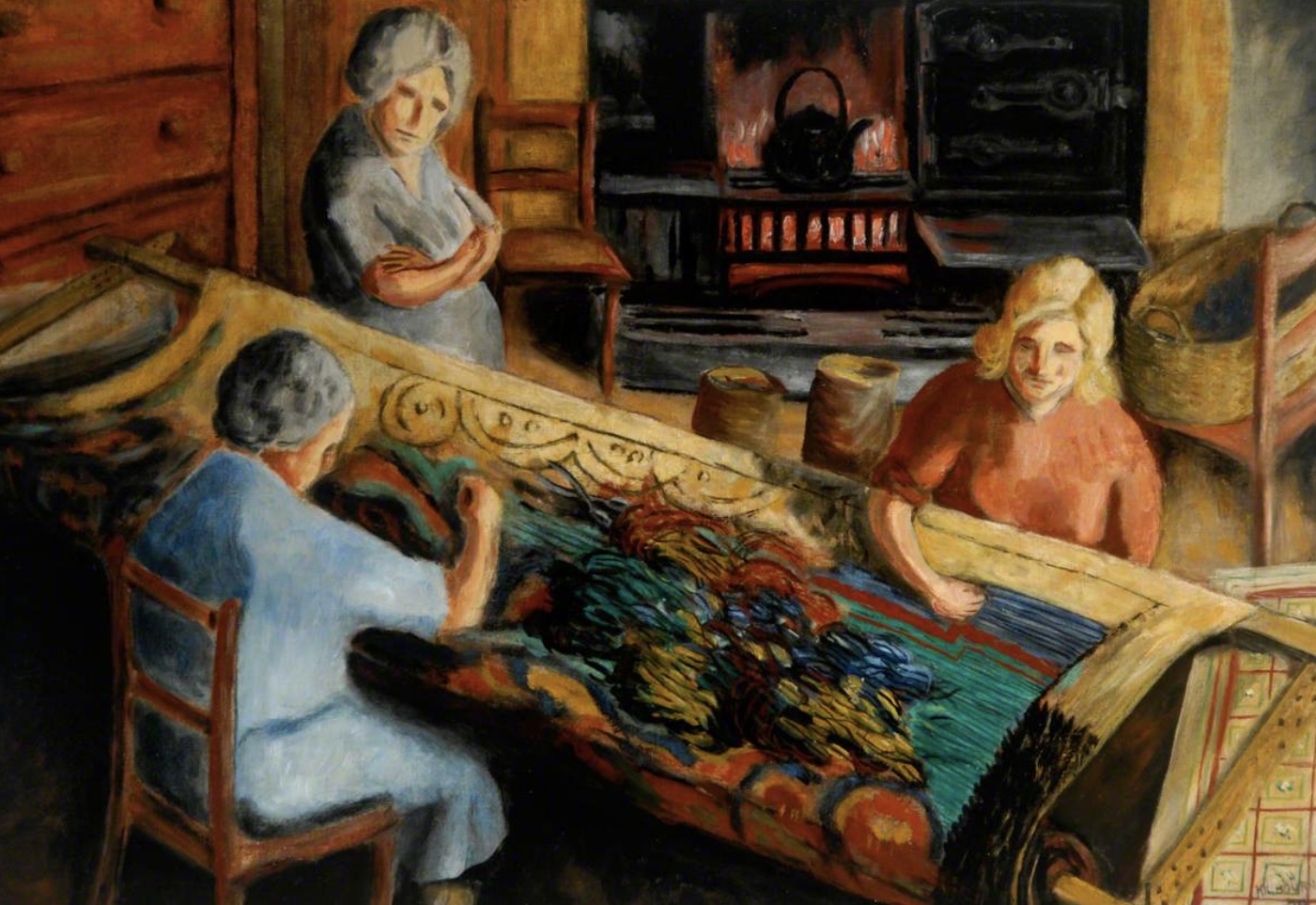
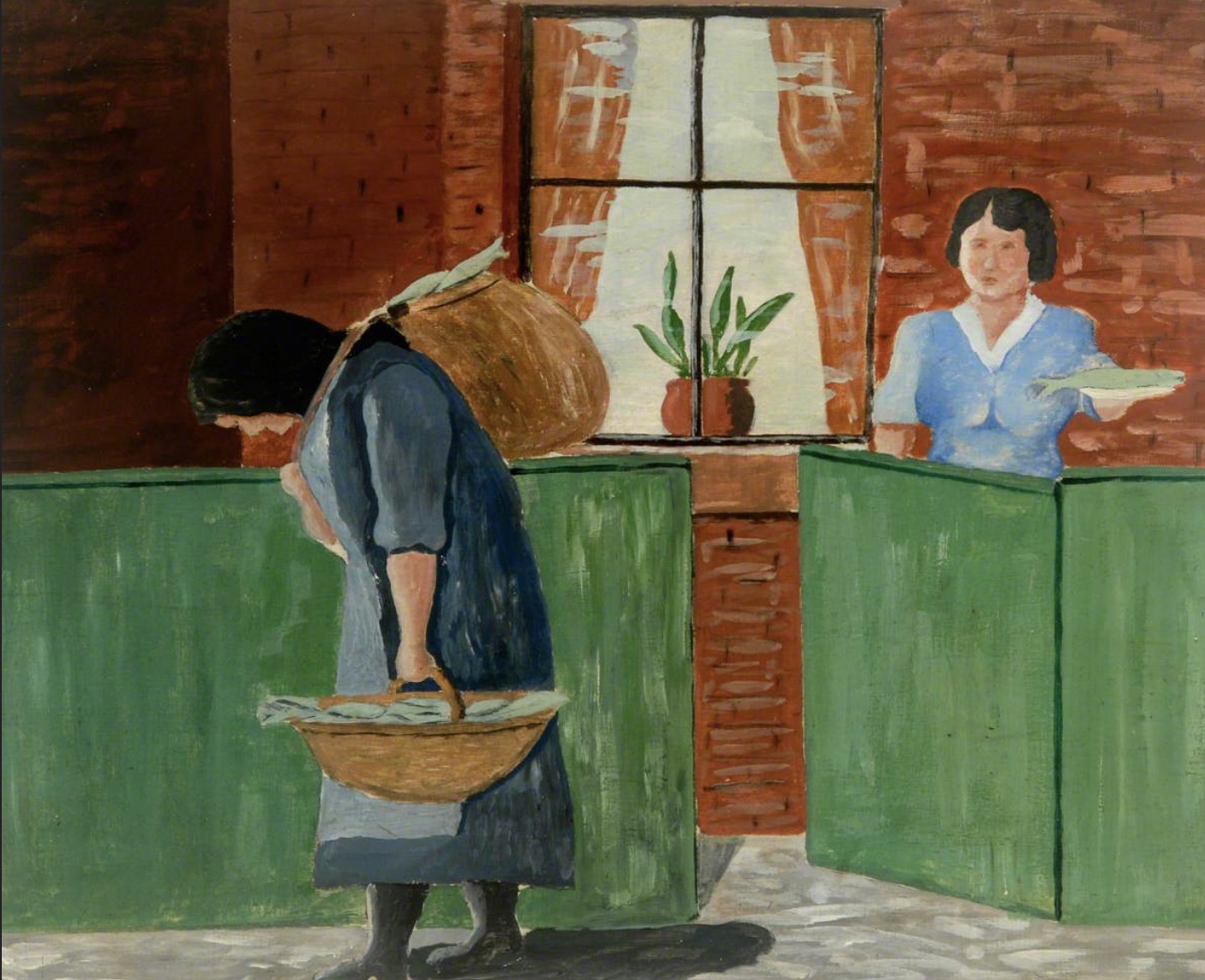
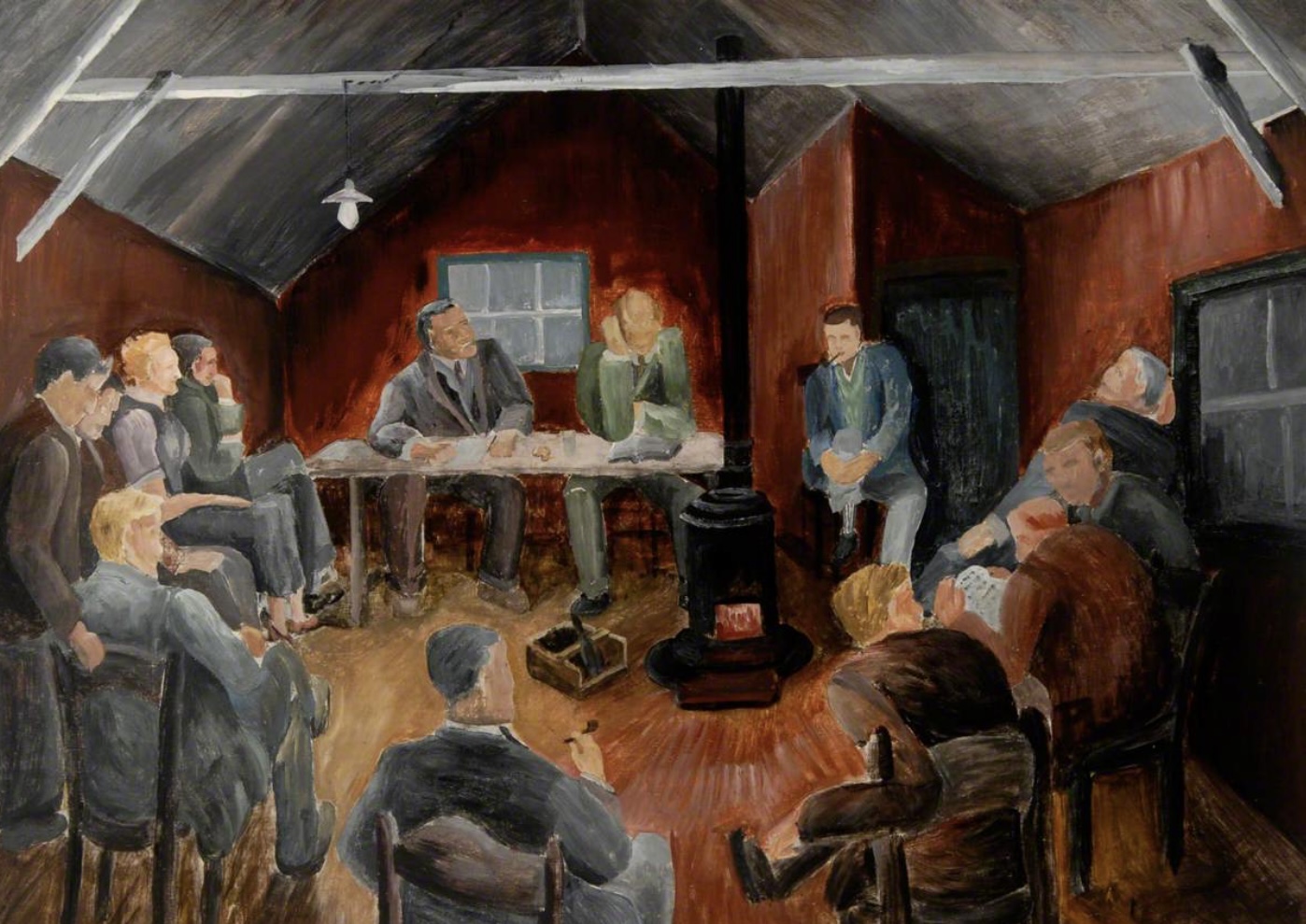
And so to the Pitmen Painters. In 1934 a group of miners, having finished one WEA course, began another on art appreciation under their tutor, Robert Lyon from Armstrong College, Newcastle. (Is that the Cragside and Bamburgh Castle Armstrong?) Lyon considered that his students would learn to appreciate art more effectively by doing it themselves – and so an art group was established in Ashington. They met regularly for fifty years and painted together – mostly scenes from their lives. Their materials were what they could afford, and initially it was Walpamur decorating paint on plywood. I felt rather mean as I reflected that their skills had not developed markedly over the years, but actually I was misreading their work. It was art rooted in their community, from a communal age and a particularly close-knit industry. I had a fleeting sense of recognition as I looked at the paintings – something that took me back to my grandparents – and an awareness of their rootedness. Which I suppose is another word for authenticity.

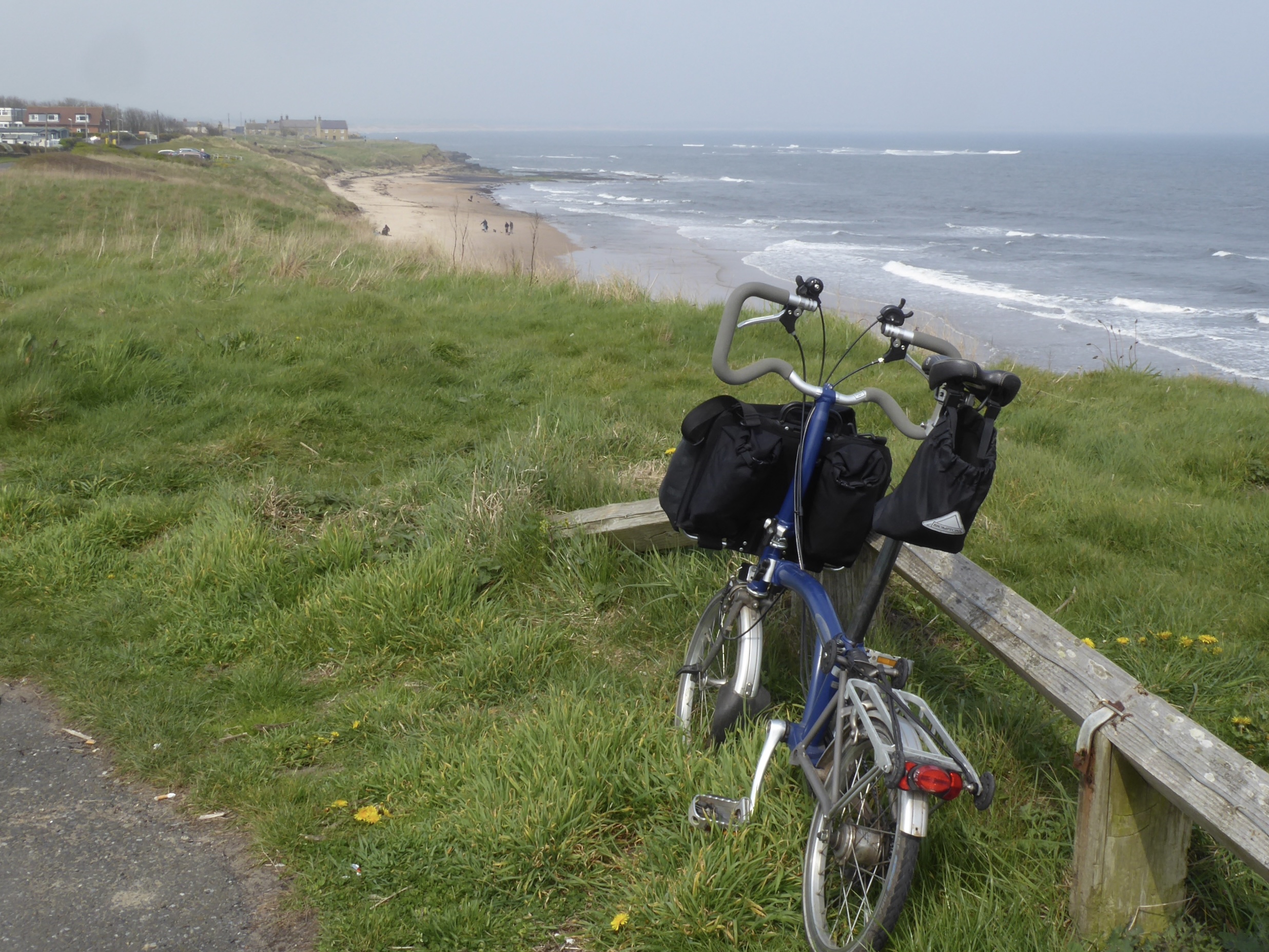
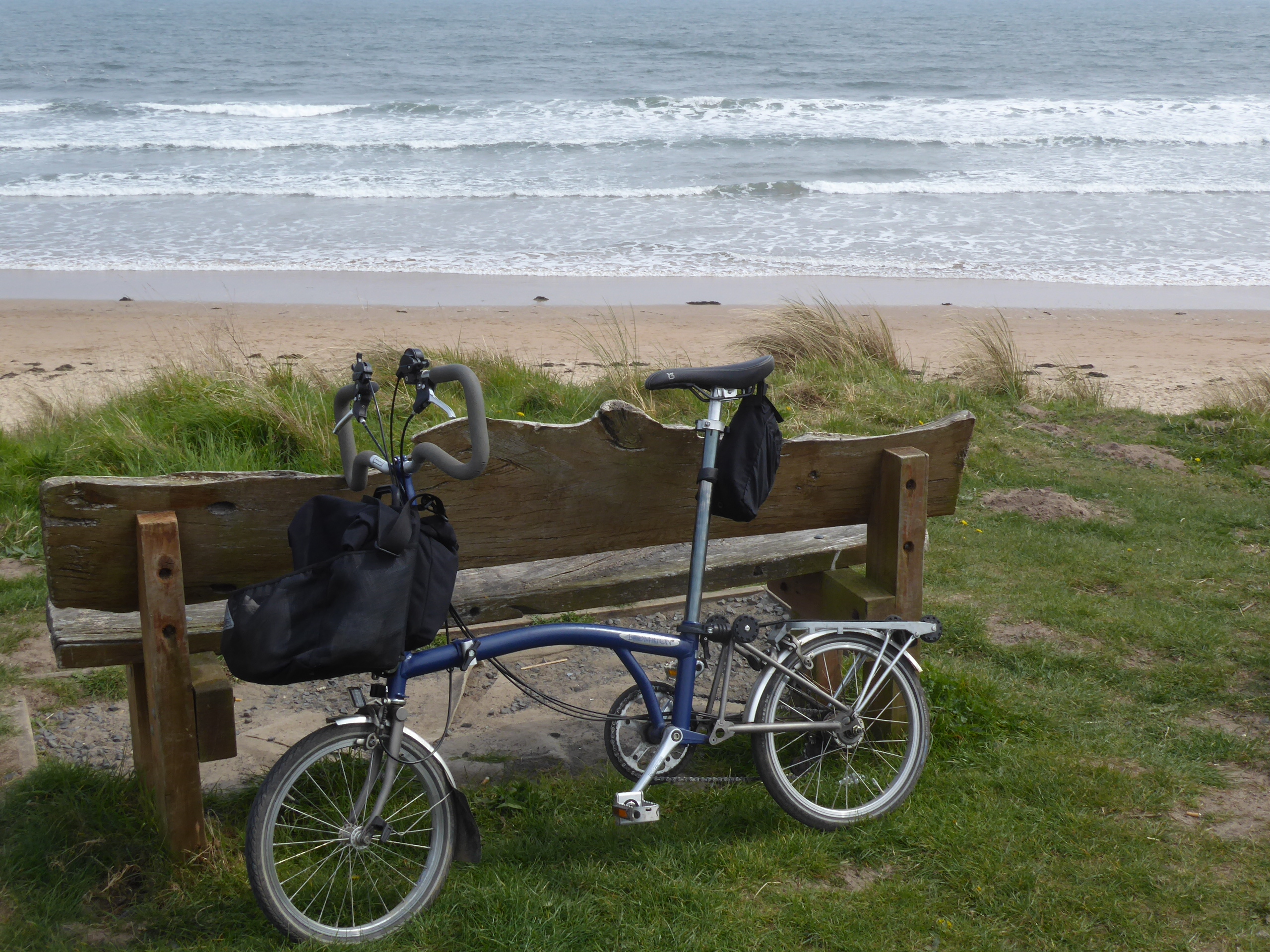
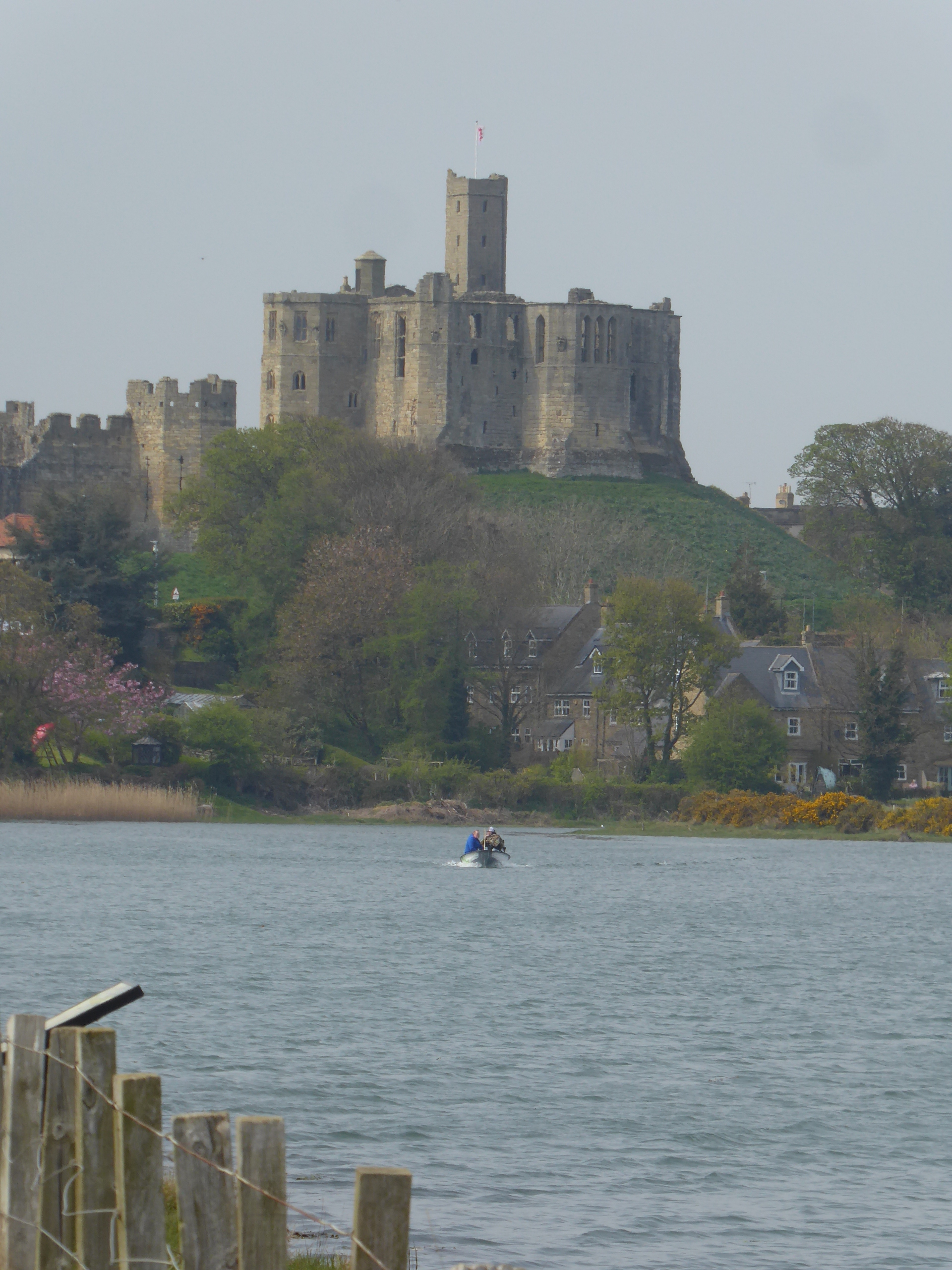
I had decided that I would have a little ride and return to Ashington railway station; the barrier of the River Wansbeck made a ride south look unattractive, so I decided on a little ride north – just a few miles and then turn round. Only the wind was at my back, the weather was so pleasant and the road so quiet that I just kept pedalling, past Druridge Bay, past Amble, past Warkworth Castle . . . until I ended up at Alnmouth once again. I haven’t been there for over twenty years – and now I’ve been there twice in two days.

”Romance to Realities” at the Laing

Perhaps not the most exciting exhibition – over 200 years of landscape painting in the north of England and Scotland – but it gave me the chance to see more of the Fleming Collection (which I’d been introduced to at Abbot Hall). It begins with romantic landscapes – just oozing “sublime” – and then moves to less dramatic scenes. “Real” people begin to appear; there is an awareness of the changes in the landscape as the north industrialises or forces/draws people away from the land.

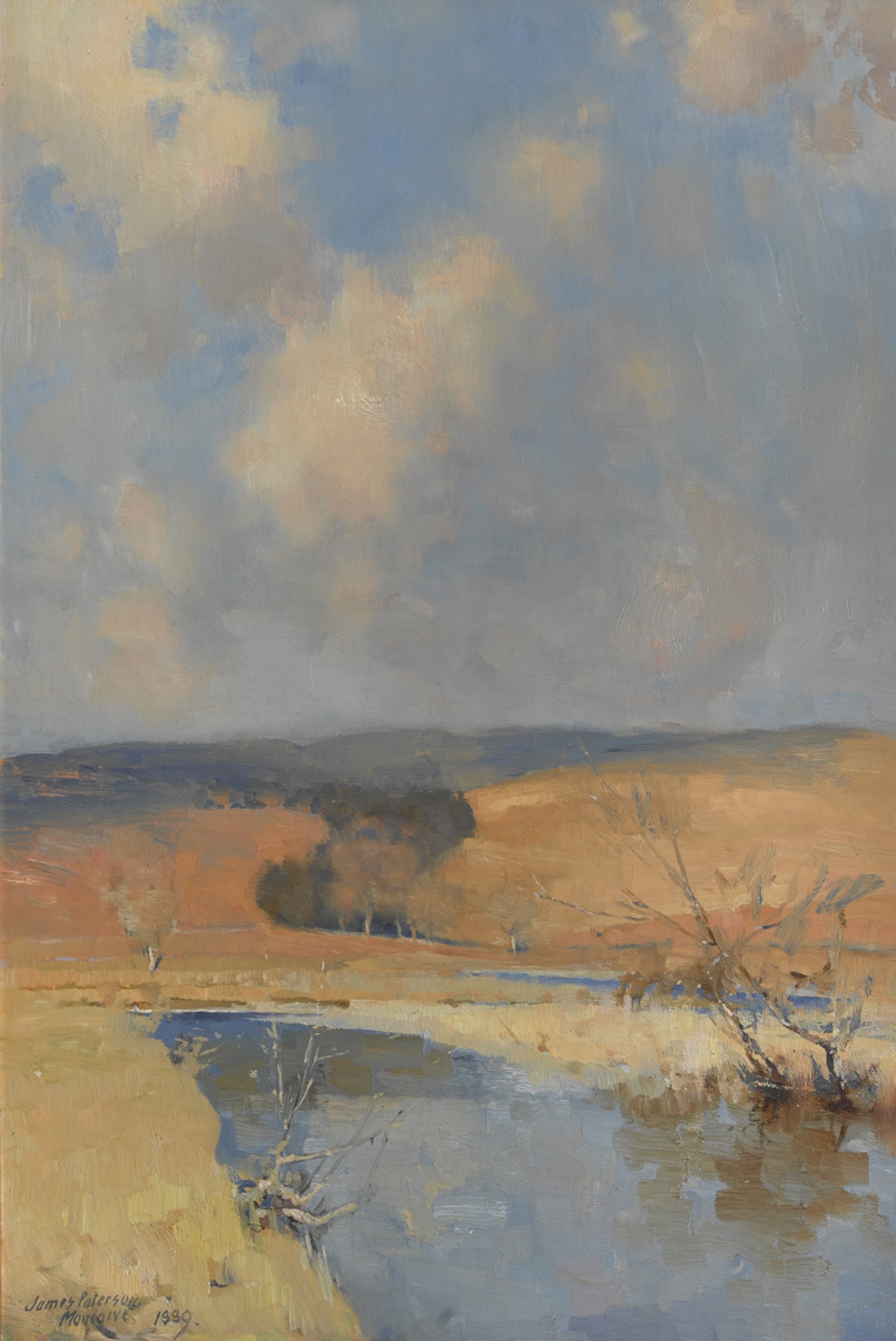
My steal was Ferguson’s “Winter Sunshine, Moniaive” – so simple and so lovely (Moniaive again) – and there was plenty in the exhibition to keep me thinking and comparing.

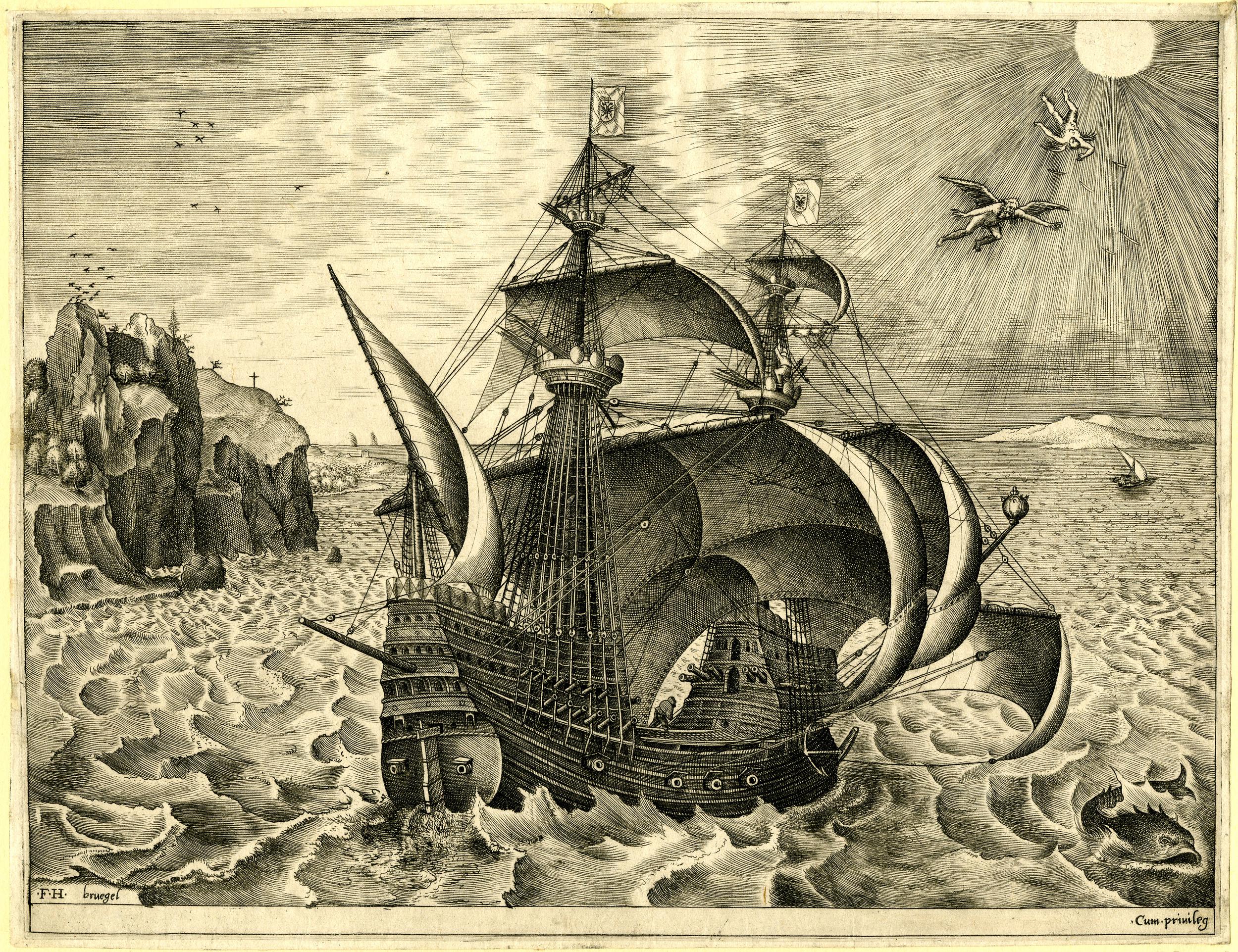
  • The Bruegel engraving – that may be the Bass Rock in the background, and there is Icarus falling again. North Berwick meets Brussels in my memory.
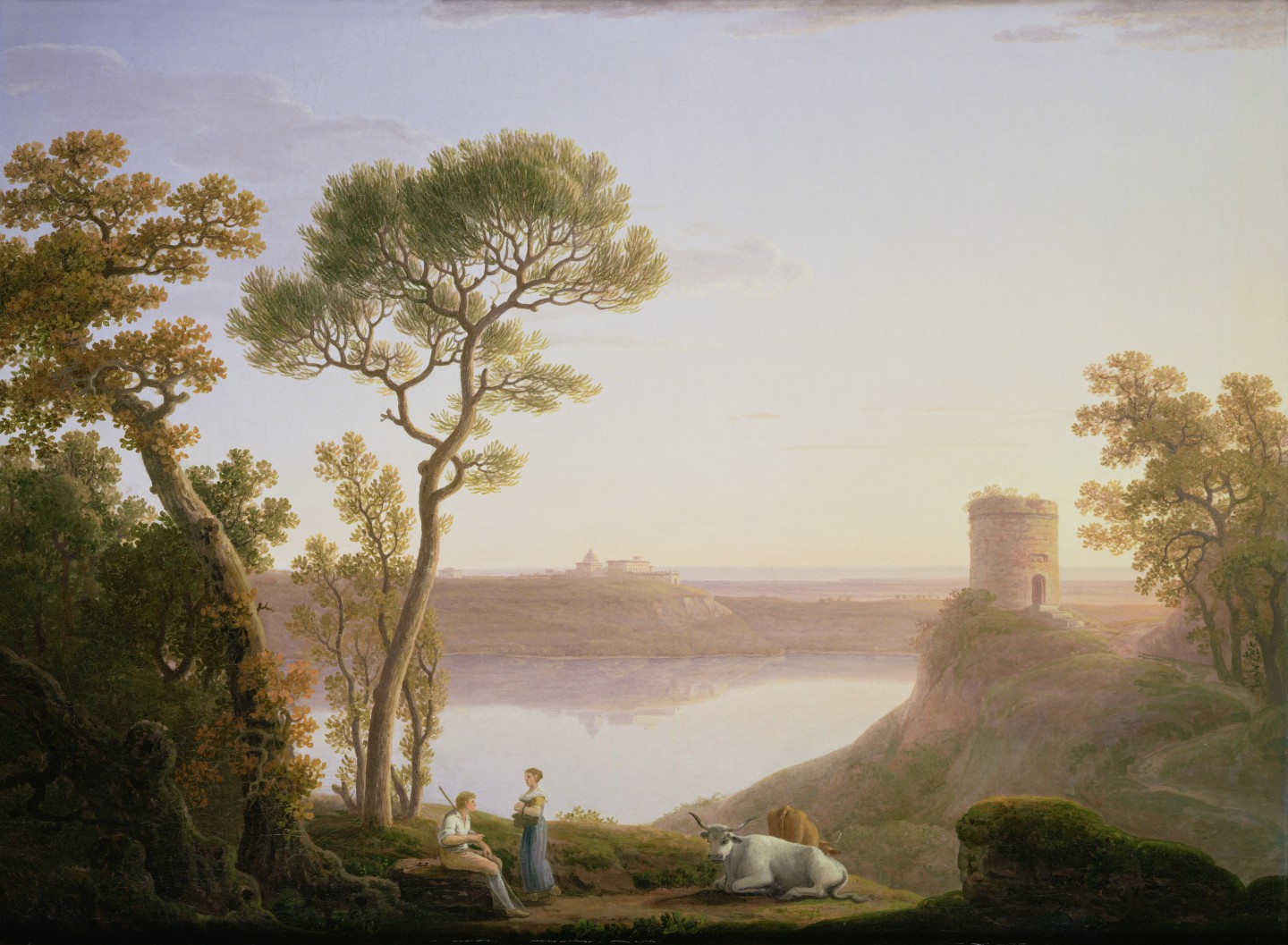
  • Apparently Jacob More used a “Claude glass” to “reduce and simplify the colour and tonal range to give a painterly quality”. Named after Claude Lorrain, it was a small tinted mirror; the painter turned his back on the scene and viewed the reflection.
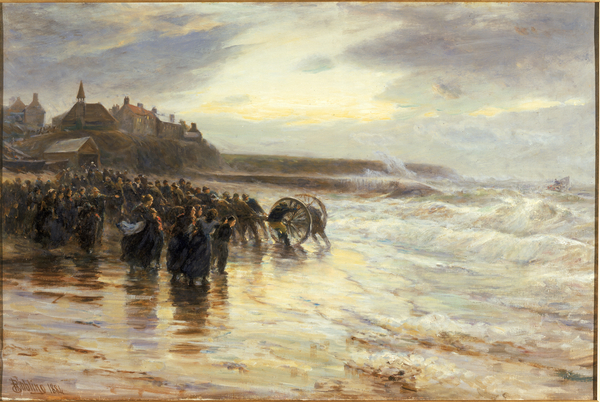
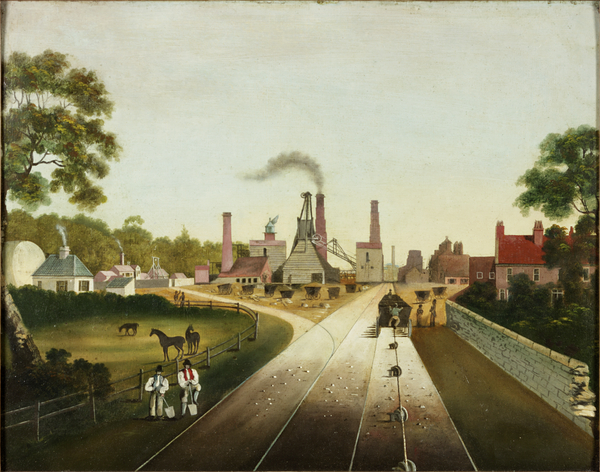
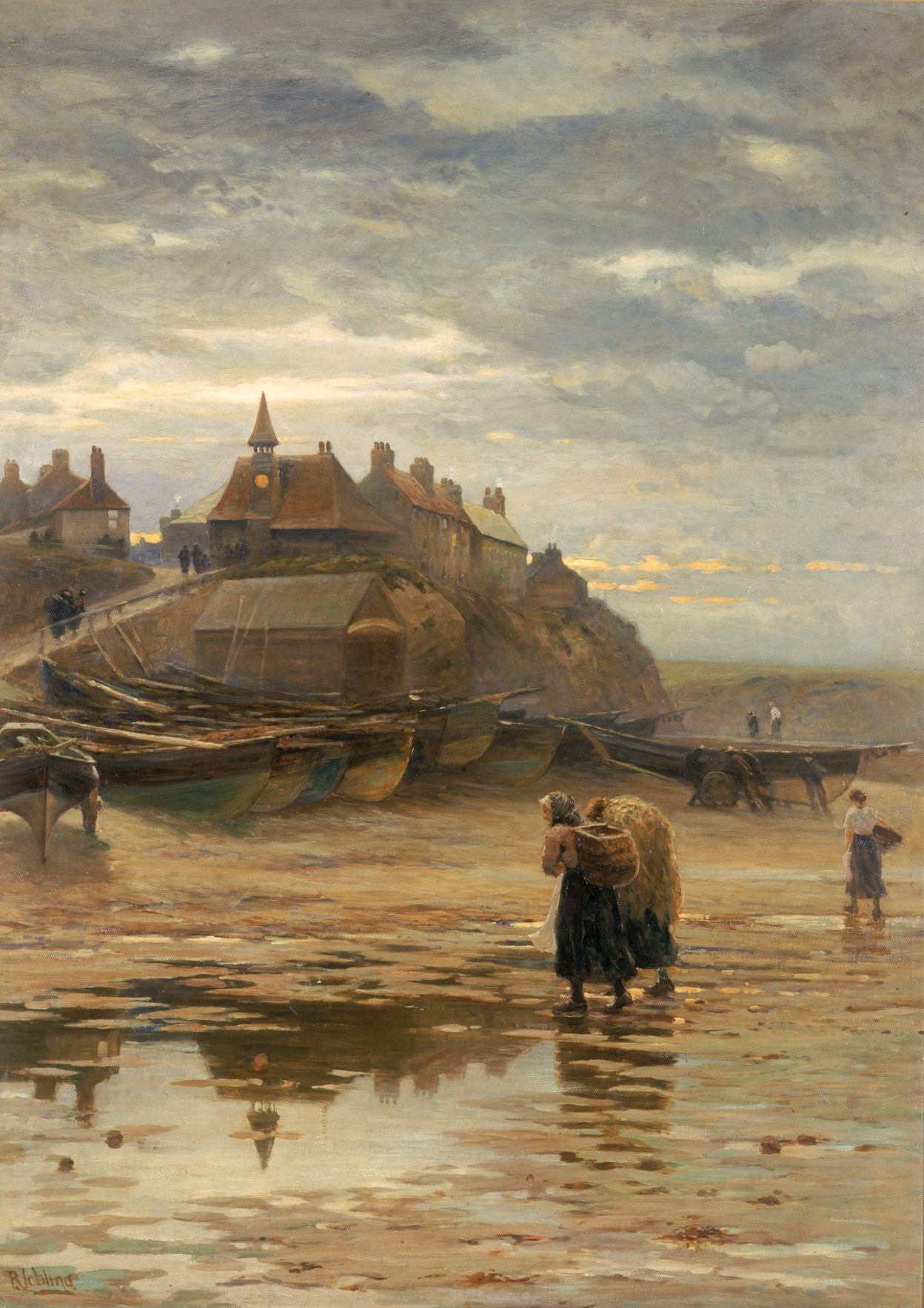
  • Robert Jopling and the north-east coast: great reflections in the wet sand – and as soon as I left the exhibition and moved into the main galleries, there was that same view and those same reflections again.
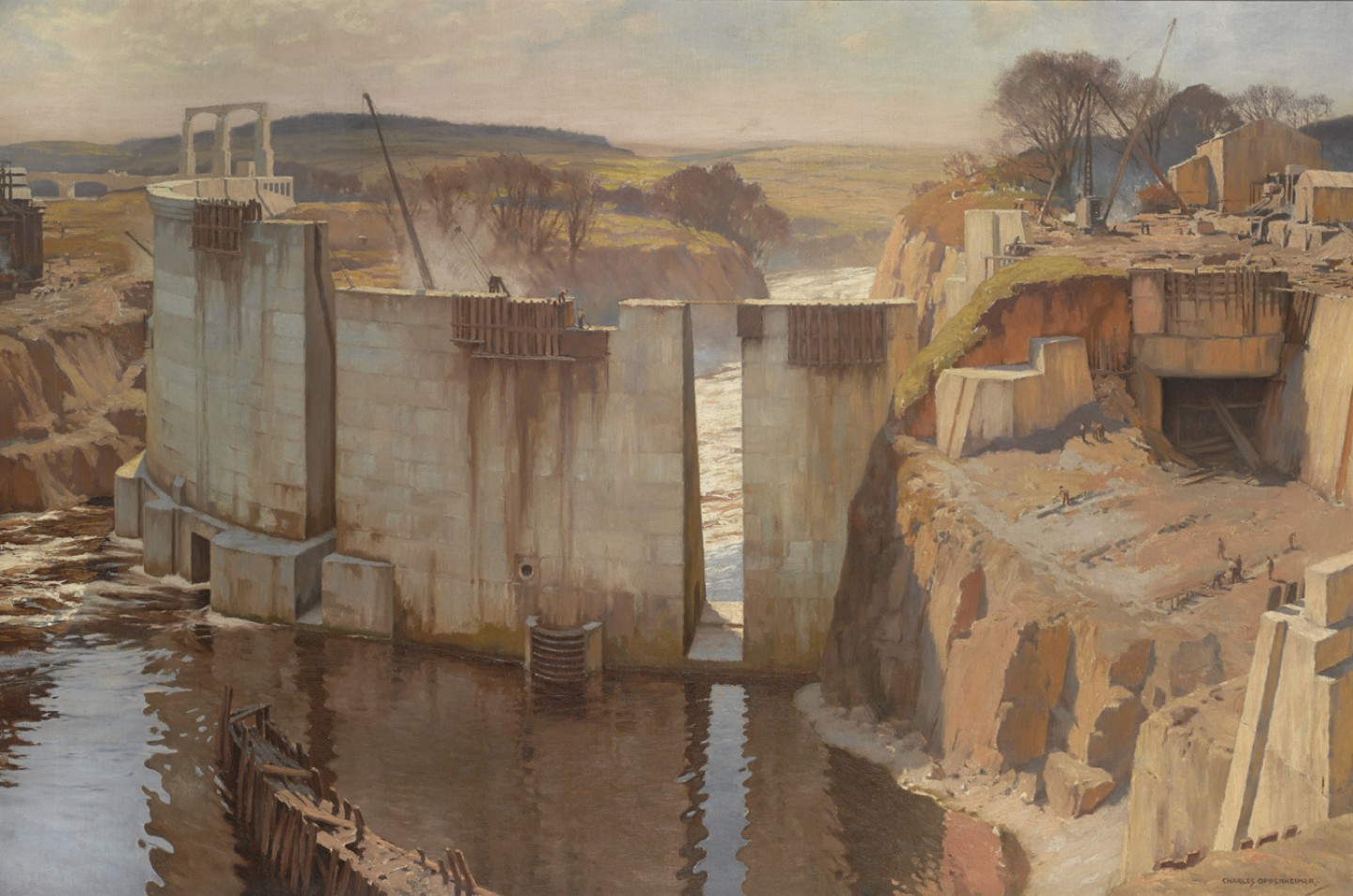
  • The building of the Tongland dam!
  • I liked the patchwork quality in Guthrie’s painting – apparently he used a square brush.
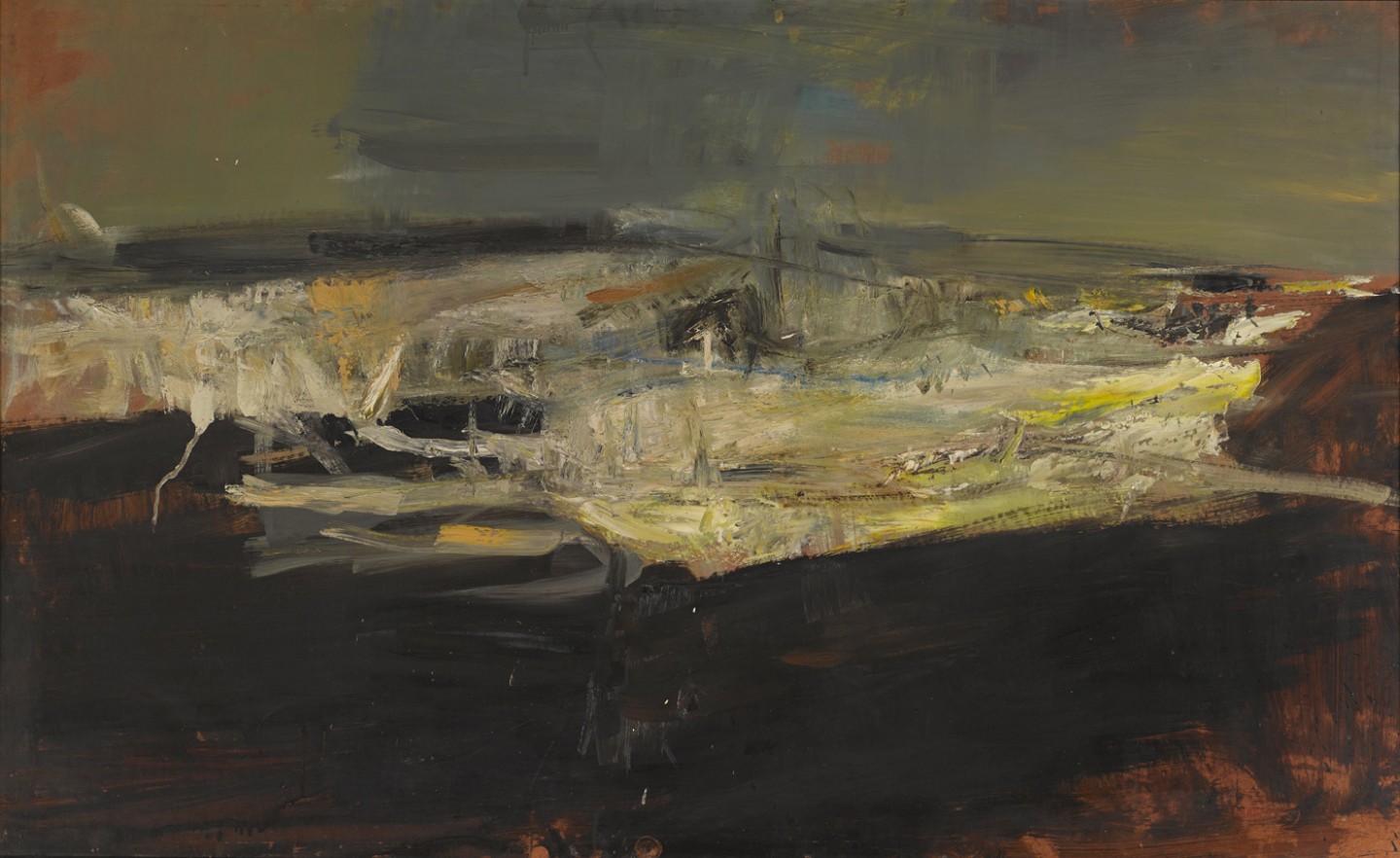
  • Joan Eardley has an alchemical gift with paint. It’s just splodges on canvas with drips where it’s been rained on or splashed by the salt spray – and somehow you really experience the sea.
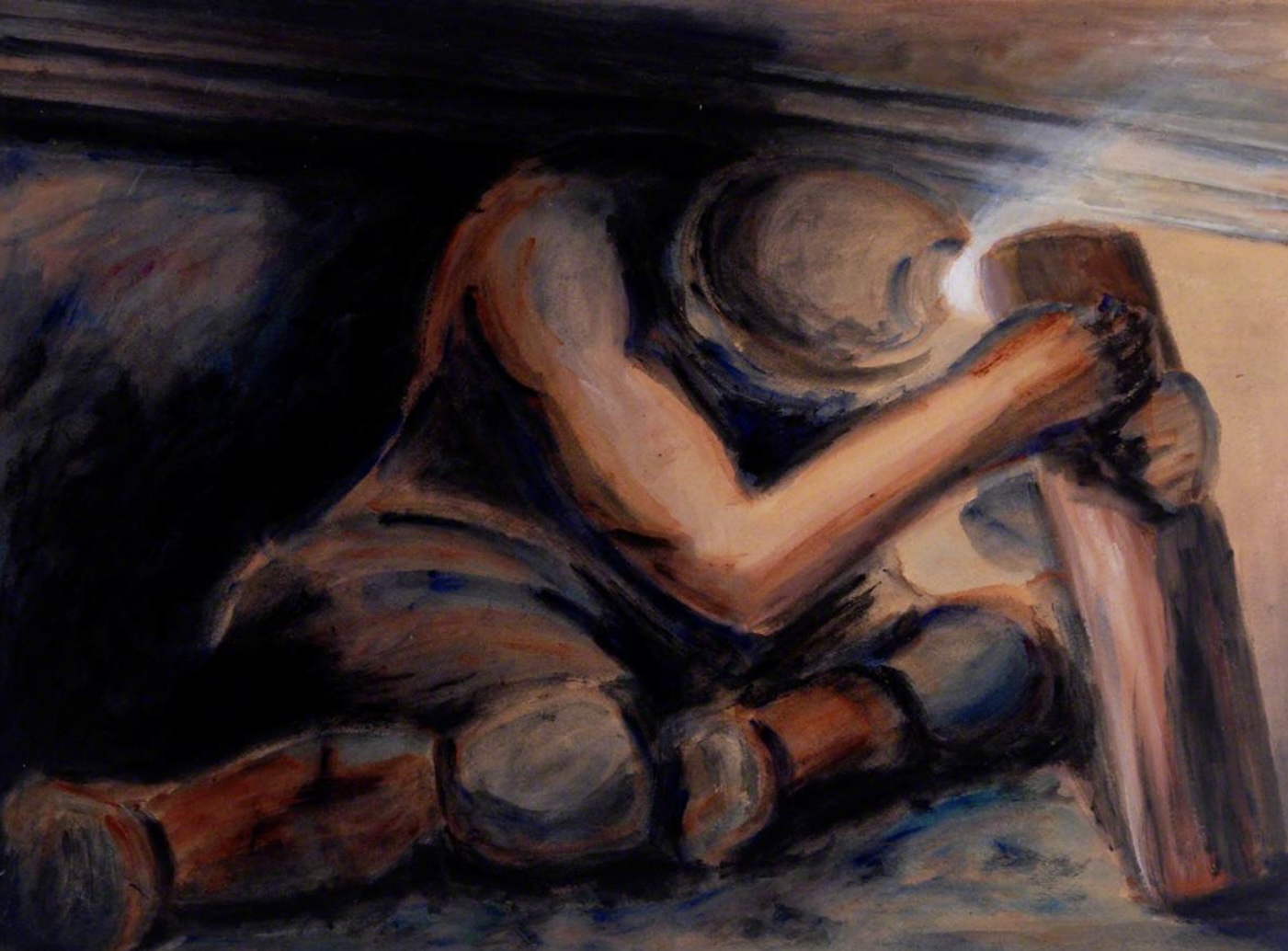
  • The pit painting was by an unknown artist, but I thought it was so particular and strange that it could have been painted a surrealist such as Tristram Hillier. Or perhaps Douanier Rousseau might have been pleased with it.

Kendal

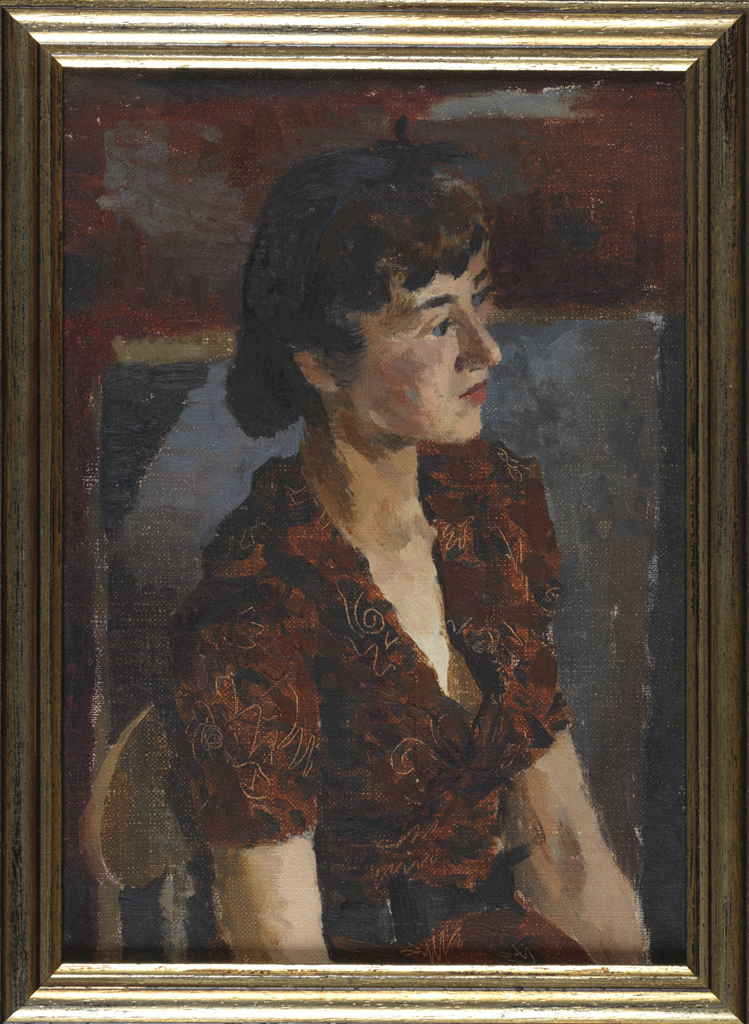
I hadn’t been to Abbot Hall for a while: time to go. There’s an exhibitions of portraits where I enjoyed looking at the way different artists used brushstrokes to represent flesh; there was almost something “paint by numbers”ish about Lucien Freud. I notice that they’re all rather beige.

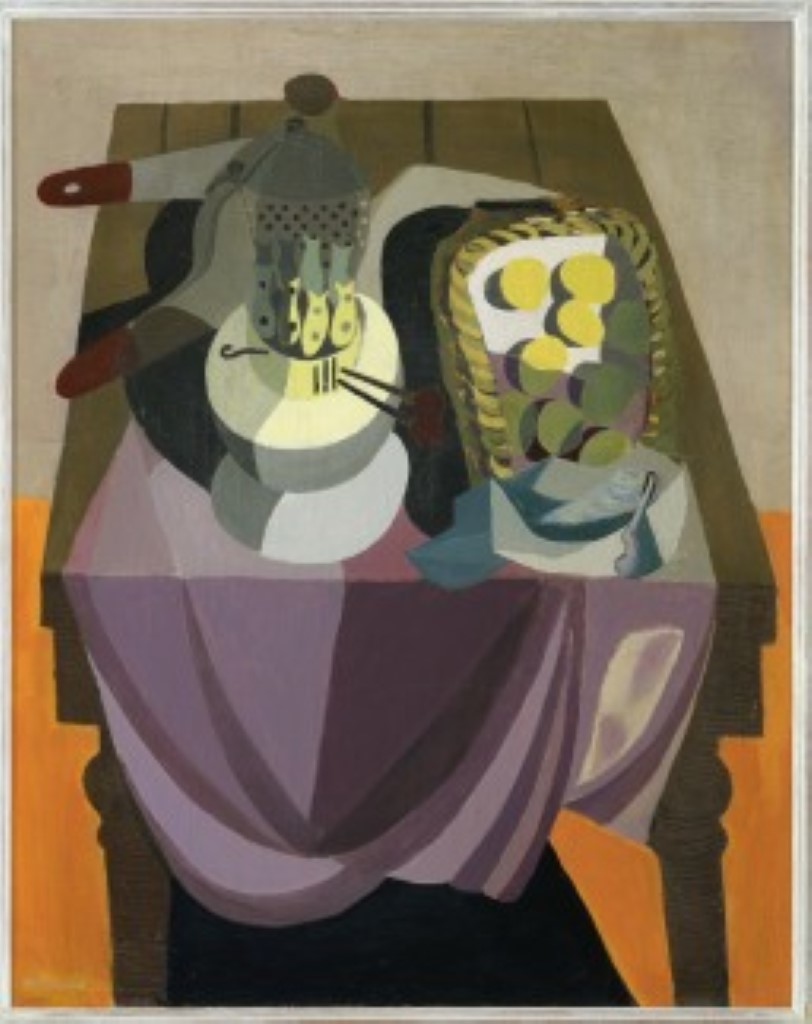
A room of botanical/garden studies (I particularly liked Russell Mills’s collage) and then a history of the Abbot Hall collection from its opening in 1962. There were lots of surprises: a Ferdnand Léger lithograph of “Les Amoureux”, woodcuts by Monica Poole and a watercolour, “Greek Landscape’ by John Craxton,

Kirkcudbright 2

I started with Broughton House, the home of E A Hornel from 1901 until his death. I still don’t care for his work, but it was an interesting visit for the insight it gave into how an artist works. Hornel often used photographs, paying local girls to adopt certain poses which he then copied in his paintings. (A momentary eyebrow-raising here, but they were chaperoned.) The same face cropped up again and again – a local woman not unlike the eastern women who featured so much in Hornel’s work after his first visit to Japan. For all their colour, there was a certain monotony about the paintings on display: the same blobs of background, the same emphasis on face, the same girls. However even a successful artist has a living to earn:

The man who works because he is in the mood may expect failure. I work always. One who enthuses over his work will always find something to do. The real mood or inspiration comes oftener through work than by waiting. Everyone recognises the great importance of inspiration; but the talk of waiting for it is unfortunately so often the excuse for idleness.
As usual, lesser thoughts would intrude. How dirty the photographed girls’ fingernails and bare feet were. (Well, doh . . . obviously!) Did the gas for the early gas mantels come from the gasworks that Lord Peter Wimsey passes in Five Red Herrings? The collection of samplers . . . how did the religious homilies work on the minds of the little girls who made them? Having casts of the Parthenon friezes in your gallery – no false modesty there!
Hornel’s long garden, leading down to the estuary, was, of course, lovely.

After that I walked over the bridge (currently closed; was it the one that Wimsey drove over to Gatehouse of Fleet?) to get a view of Kirkcudbright from the other side. My plan of following a path marked on the map was abandoned after the second deliberate blockage (how does one go walking in Scotland?). I headed grumpily back to town and walked upstream towards Tongland, muttering darkly about being corralled on pavements and boring paths. However it grew on me with the spring freshness of horse chestnut leaves and the glittering sun. (The weather has been glorious.) And then at Tongland I discovered the truncated bridge of a disused railway line, a modernist power station and the earthworks of an ancient fort. How much more could I wish for?