Brontë Parsonage

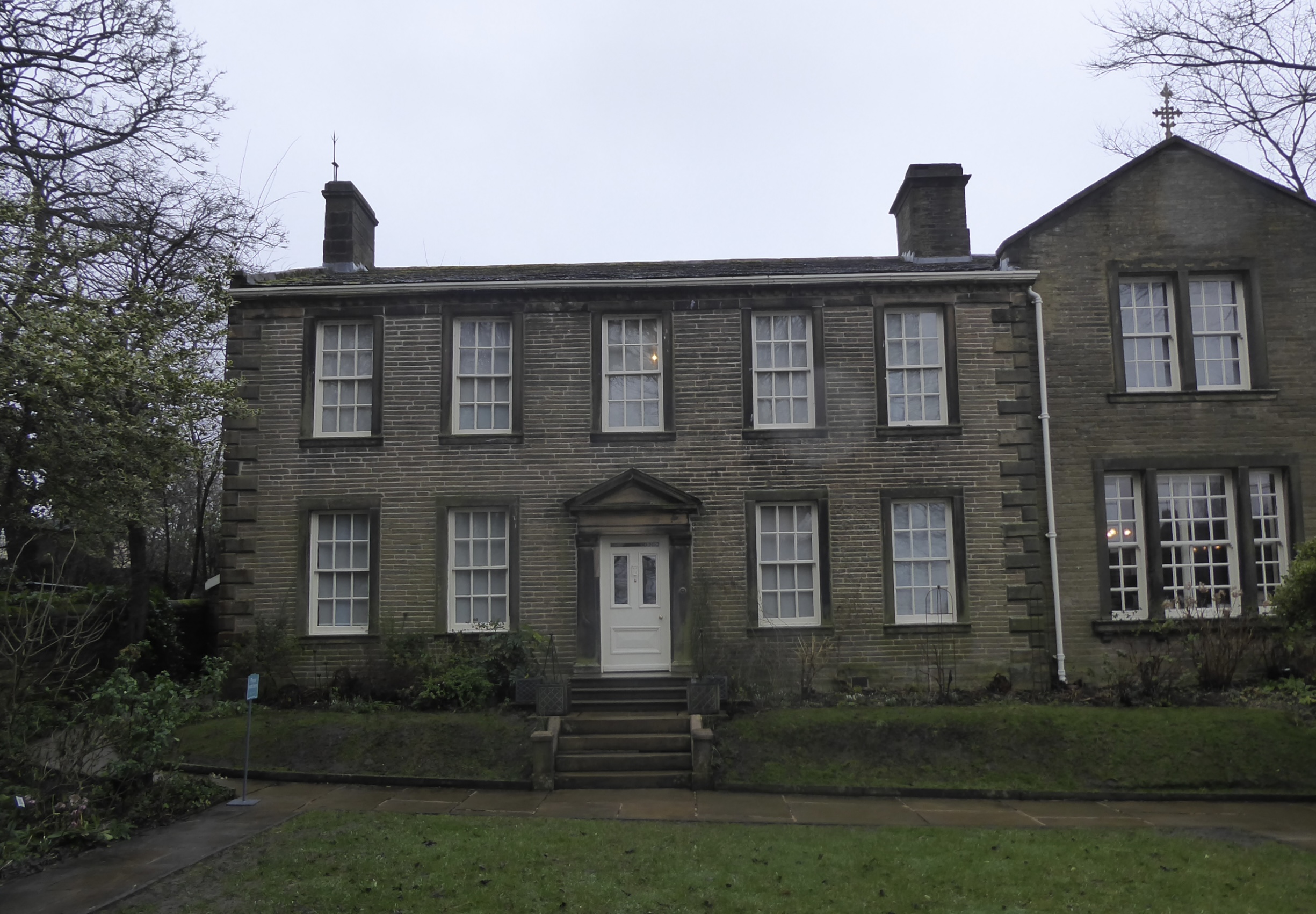
If I am to visit a tourist honeypot, then a cold, grey, damp day in February is my preference. (“There was no possibility of taking a walk that day” – pah!) Ease of getting there and a mild curiosity took me to Haworth, and, once there, it was interesting to have a sense of the physicality of the sisters’ lives. The house was a good size – but one room was reserved for their father’s study, and at one point they were a family of eight plus a servant. The church and churchyard tombstones a constant view from the front. That hill and the demands it made on tubercular lungs. The Sunday School over the way founded by their father and where they taught. The pub where Branwell drank a stone’s throw away, the stationer’s where they bought paper. They wrote with quills – of course! But it had never occurred to me. The tiny handwriting I had wondered at – but of course! Every bit of paper had to be bought and they were not rich. The table that they walked around in long dresses discussing their work.
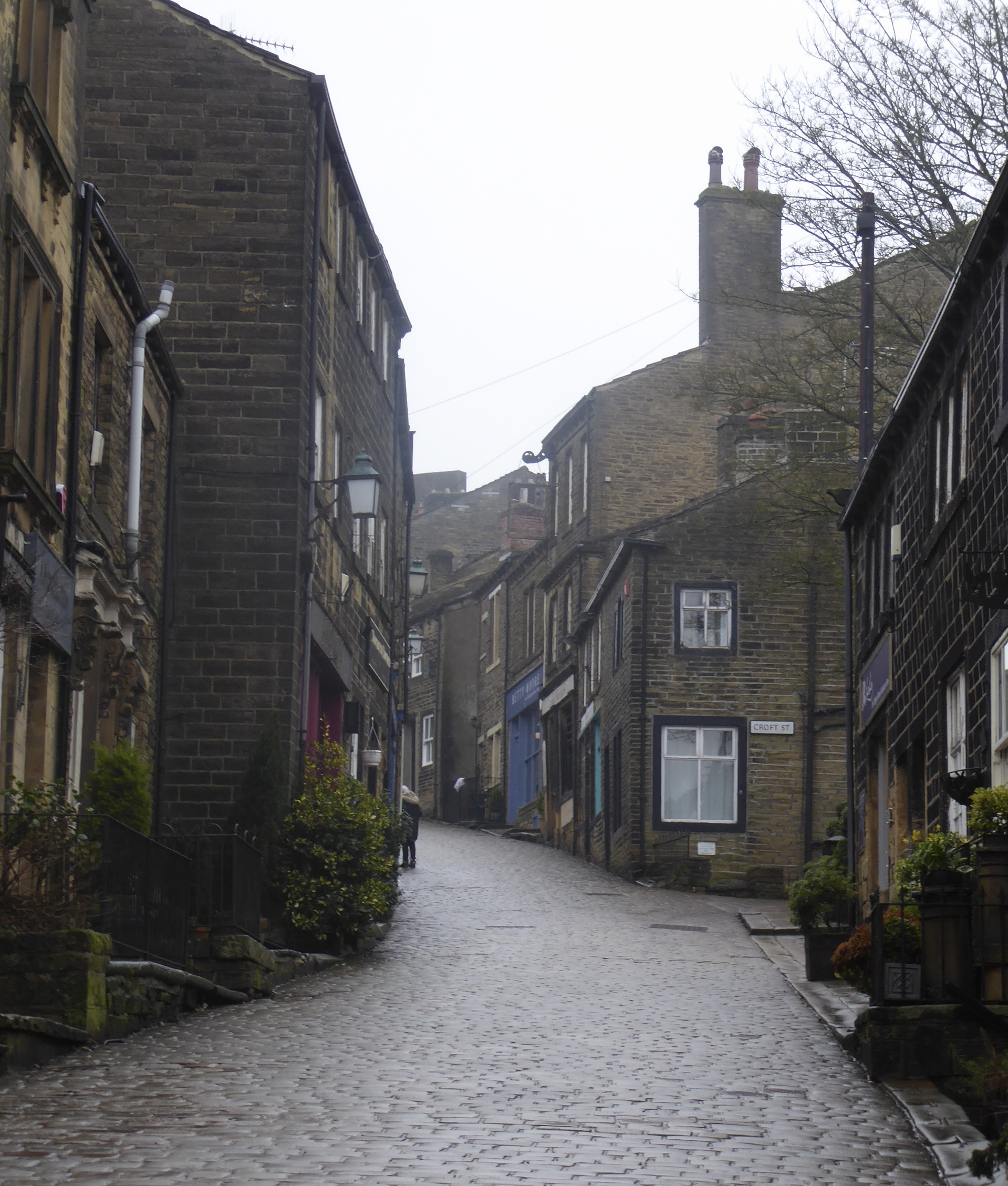
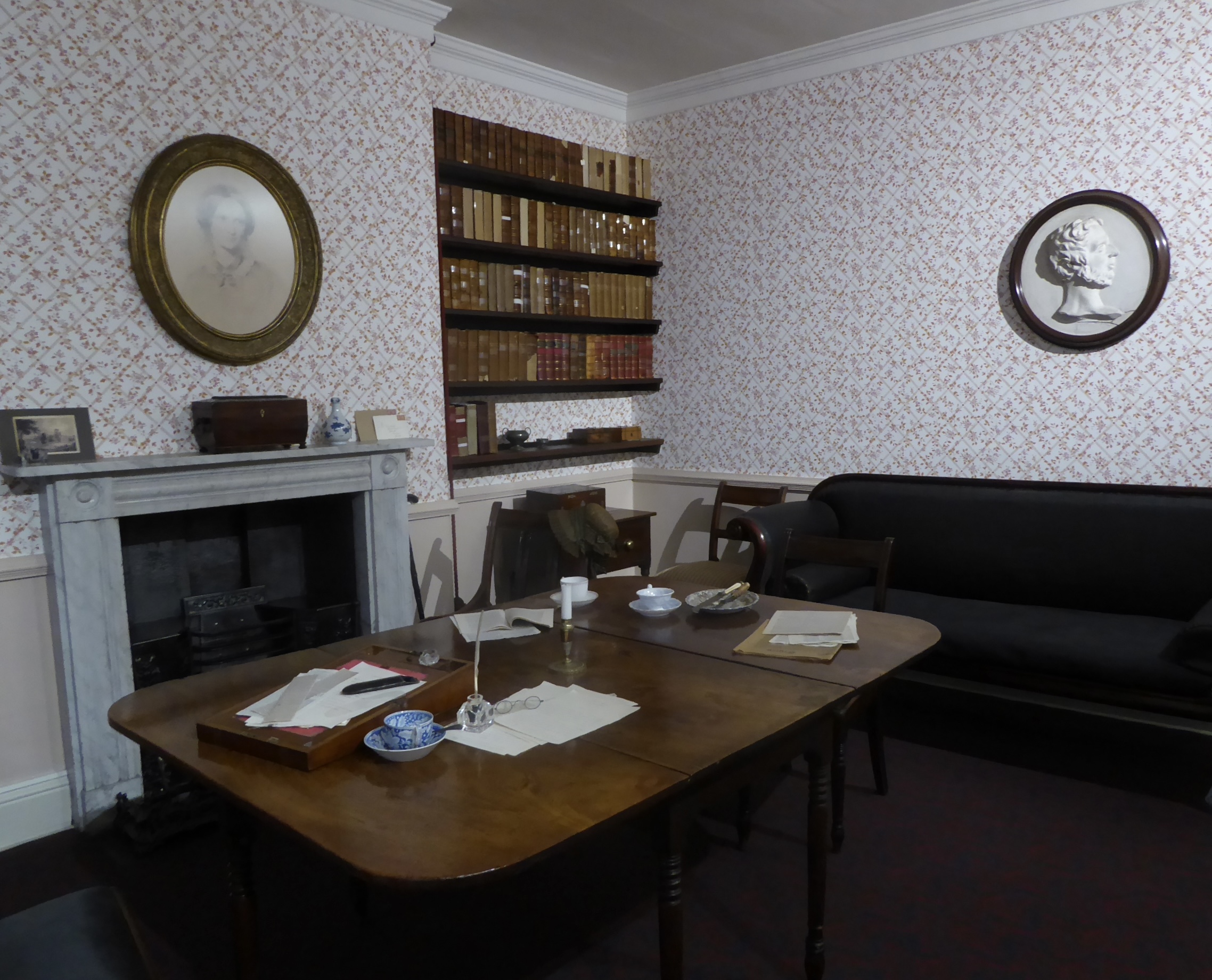
I thought too of how, at an impressionable age, you can learn something from even a rubbish teacher (yes, Dolly Duncan, I mean you). The cupboard in her room full of copies of Jane Eyre and a lesson about the family – which may well have culminated in us having to draw the parsonage – when I first learned how to pronounce Keighley. The 50-odd years melted away.

The Flying Dutchman

My first Wagner opera; I gather the Dutchman is entry-level stuff. At the interval the woman in the next seat turned to me and commented on how bonkers a production this was. (She was a Wagner regular.) My word would have been “incoherent”.

In this production Opera North adds the parallel stories of the lives of refugees in Leeds, who – like the Dutchman – were fleeing and doomed to roam until they could be saved. That adds relevance and empathy – but it ends up confusing. Daland’s ship is the Home Office, staffed by besuited bureaucrats; the metaphor is the ship of state, but that sinks beneath the waves as Wagner’s plot develops. The characters of Erik and the Steuermann are conflated, which means that one man is simultaneously at the helm of the ship and looking after Daland’s daughter on land. As for Senta – well, she was Wagner’s creation and he wrote the libretto, but even by opera standards she’s flaky.

The set design was occasionally fussy and off-putting: things appeared without clear reasons. The costumes were distractingly ugly: even with wearying ages at sea, why was the Dutchman dressed as a bag lady? The mirroring of clothes and movement between the Dutchman and Senta was clever – but what did it add? Ditto Senta as a Christ-like figure as she crawls around the table pouring wine.

Carping over. Maybe I need to do some reading. The music was wonderful and the singing excellent – although my neighbour and I commented on the Dutchman’s excessive vibrato.

V&A

The brilliant sunshine of the last couple of days has been replaced by cold rain, and I went to the V&A simply because I was deterred by the long queue outside the Natural History Museum. It wasn’t second best however: it’s always good to get lost in the V&A for an hour or two. This time it was mostly amongst the ceramics. My goodness, but the museum has so much stuff! And not all of it what one would care to keep. As I looked at the tall glass cabinets of china ornaments I almost expected to see a replica of my parents’ souvenir of Helensburgh or a novelty ashtray.

Inevitably I drifted towards what was familiar and ended up in front of tableware designed by Eric Ravilious. There were also designs by Vanessa Bell – looking unstructured beside Ravilious’s neat delicacy. En route I was waylaid by monochrome Chinese pottery (which brought back the Burrell Collection) the composition of different types of earthenware (having forgotten what I picked at the Bowes Museum a couple of years ago) and a pile of misfired Delft plates. I am sure I first learned about these in the Delft museum, but I took no photographs and can’t rely on my memory.

Vanessa Bell and Charles Dickens

To the Vanessa Bell exhibition in Milton Keynes to see if I could feel more positive about her work. Well, not really – but the journey to that decision was quite interesting.

I’d been to the same gallery to see Laura Knight (1877-1970; Bell 1879-1961) and it was instructive to compare the two exhibitions and artists. Knight’s work (as curated for the exhibition) followed a path from early experimentation to a recognisable style and regular themes; she had to earn her living from an early age and she was sometimes hard up. She accepted commissions, she worked as a war artist, she designed decorative work. She was married to the same man for decades and had no children. In short – at least outwardly – a fairly tidy story of a groundbreaking woman artist and her body of work.

Bell, in contrast, seemed all over the place. She was more experimental (personally and professionally) and her focus was on the “language” of form and colour – but I really couldn’t find a single piece that stopped me in my tracks or pleased me entirely. I had thought of her colour palette as rather murky and muddy, but here there were brighter colours that I hadn’t expected. Nevertheless much seemed slightly unfinished or unthought-through. Her portrait of her sister, Virginia Woolf, was up there with Cassandra Austen’s of Jane: affection but not execution. Whenever something caught my eye, I found myself thinking that someone else had done it better. A painting of the Etchell siblings with featureless faces, for example: it paled beside Gabriele Münter or Roger Fry and looked slightly inept.

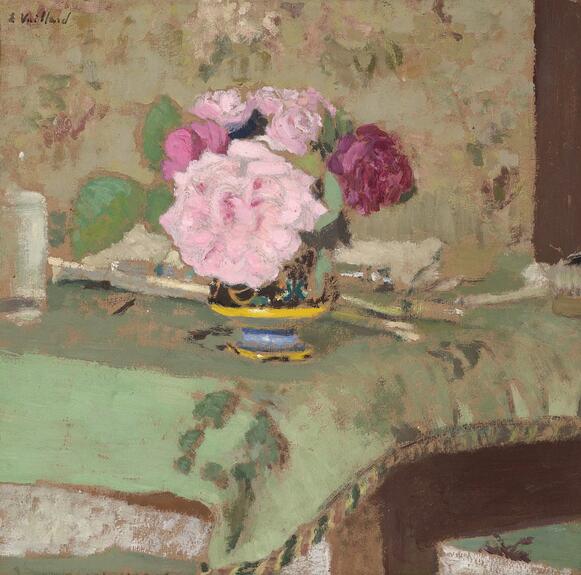
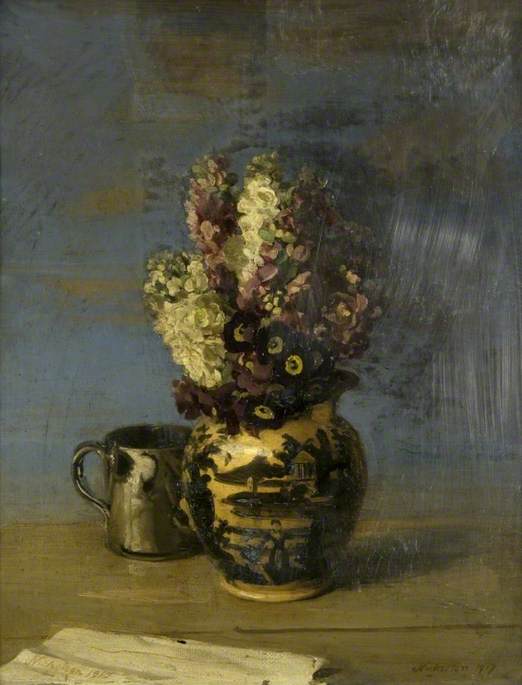
I went with a companion, who got quite irritated with a pair of still lifes. The lack of focus: was it form or colour in the wildflowers? Why did one think of felt-tip pens running out of colour? Why the silly cross-hatching on the vase in the more accomplished lilies?

One answer is that Bell did what she liked. For all her involvement with the Omega Workshops, Bell didn’t have to earn her living by her work, and she had help in bringing up her three children. She also ditched conventional morality. And I think this was the one really great thing about her – she had the chance of freedom and she really went for it. The decorations in their Charleston home, the foregrounding of women’s lives, the collaboration with others, the refusal to be confined by one style or theme, the unconventional way of life – that was what was interesting.

I returned to London and a much more conventional and masculine – even macho – experience. I just had time to get to the Charles Dickens Museum to see the copy of David Copperfield that had gone to Antarctica on the Terra Nova expedition. I had to see it. Edward Wilson, Apsley Cherry-Garrard, Herbert Ponting . . . the fascination I experienced when I first read Wilson’s diaries briefly returned as I looked at the blackened, dog-eared pages. And it was a lovely sky as I walked back through St George’s Gardens: perhaps I can compare this afternoon’s moon with Cassini’s map!

Versailles: Science and Splendour

I’m not sure I’ve ever been in the Science Museum before; if I have, I would have been a child. (I’ve definitely been in the Natural History Museum, but not for over 50 years. Maybe it’s time for another visit.)

This exhibition was about science and bling – what you can do if you are an absolute ruler with vast resources at your disposal. Thanks to Jean Plaidy, I already had a general idea of the generation-hopping longevity of the last three Louis – Louis XIV (1643-1715), his great-grandson Louis XV (1715-1774) and his grandson, Louis XVI (1774-1792). They were great promoters of science and technology as well as the arts. Their reigns cover the Enlightenment and the publication of the Encyclopédie (1751-1772), and I came away with the impression that everybody at that time was discussing Newton’s Principia (1687), looking through gilded telescopes (1750) and ticking off what they could see from Cassini’s map of the moon (1679).

I don’t mean to be facetious. With their immense wealth and power, they were like the pharaohs of Egypt; instead of pyramids, Louis XIV constructed Versailles and its far-stretching gardens – all of which required accurate measurements and engineering. How else could you ensure that the two octagonal pools, 1.7km apart, would appear to be the same size to the king when he looked out of his palace window? Entirely frivolous – but knowledge and skill combined with human labour to make it work. Channels were constructed in the Seine to feed the monstrous Marly Machine to take water uphill to the Versailles fountains: ditto. Horology was crucial – not just for timepieces but to calculate latitude and longitude on the long sea voyages that kept the French empire close. Cassini was enticed from Italy to become the director of the Paris Observatory; he spent eight years observing the moon and to produce his map. He and his descendants also produced a map of France, and it was fascinating to see the triangles stretched across the land to ensure its accuracy. Thinking of Cassini, though, reminded me how knowledge is often in flux and needs constant checking: he began his work at a time when the heliocentric theory was still debatable, and, for all his brilliance in his other discoveries, he was the originator of the suggestion that Venus might have a moon.

Botany and zoology flourished at Versailles. Louis XV was presented with an Indian rhinoceros in 1769 – and here it was (stuffed; another victim of the French Revolution). There were fashions for plants, with Madame de Pompadour popularising Turkish hyacinths, but there was also scientific analysis and recording. Surgery was progressing: there was a display of the slender scalpel that Louis XIV’s surgeon developed to treat an anal fistula along with the small device that looked like an instrument of torture to ensure . . . no, really too much information. But it does bring home to you the uncomfortable reality of how advances are made. (The surgeon “practised” on a few dozen unfortunates with the same condition. Presumably most of his later patients at least must have survived for him to have the confidence to go ahead and tackle the king.) There was a life-sized hand-sewn model of a womb and foetus for the training of midwives: it looked like the kind of doll that a mother might sew for her daughter – which, under the circumstances, seemed appropriate.

Troutbeck

I’ve been meaning to see the Burne-Jones windows in Jesus Church for years and today I finally did so. A walk from Windermere to Troutbeck via Wain Lane and Robin Lane, then to Orrest Head via Longmire Road. Tufted ducks on Middlerigg Tarn, wigeon by Causeway Farm. A pair of Thirlmere gates on either side of Wain Lane: I had almost forgotten my discovery of Thirlmere gates and siphon wells so was pleased to be reminded of them. Little streaks of snow still on the tops, but by the time I reached Orrest Head it was too hazy for the big view. All in all, a very satisfying day.

Leeds

Over Christmas I’d watched Alan Bennett’s play “Sunset Across The Bay” from 1975 on BBC iPlayer. There’s a short scene of the bus passing City Square and the old man remembering when the statues were seen as “right rude”. (Heavens, how dirty the Queens Hotel was then! And the nymphs have moved around.) I’ve always rather liked the statues and I’d noticed that there were a few more barely-clothed figures around, so I looked out for them on my walk to the University.

The Stanley and Audrey Burton Gallery has had a change since I last visited. I was oddly taken by the work of Judith Tucker – insignificant, commonplace landscapes that are very familiar and deserve more attention. Then a painting by Wilhelmina Barns-Graham that – despite being “Untitled” – struck me (after a night at the opera) as representing three cellists. Even though I knew it wasn’t, I still stuck to it. And there was a figure by Bernard Meninsky, whom I’d come across in Hull. Not inspiring, but I can add him to my mental list. (Matthew Smith and Jacob Epstein were there too, looking very Smithy and Epsteiny.)