T S Eliot and London

A day-long course on T S Eliot – The Love Song of J. Alfred Prufrock and The Wasteland. I got what I had hoped for: an interesting day and a spur to go further. I realise now how hearing his poems read aloud makes so much difference. Eliot himself wrote: “Genuine poetry can communicate before it is understood”, and that certainly chimed with me. Listening to a recording of Eliot reciting Prufrock helped me to enjoy the sound and rhythm without feeling any urgency to analyse it.

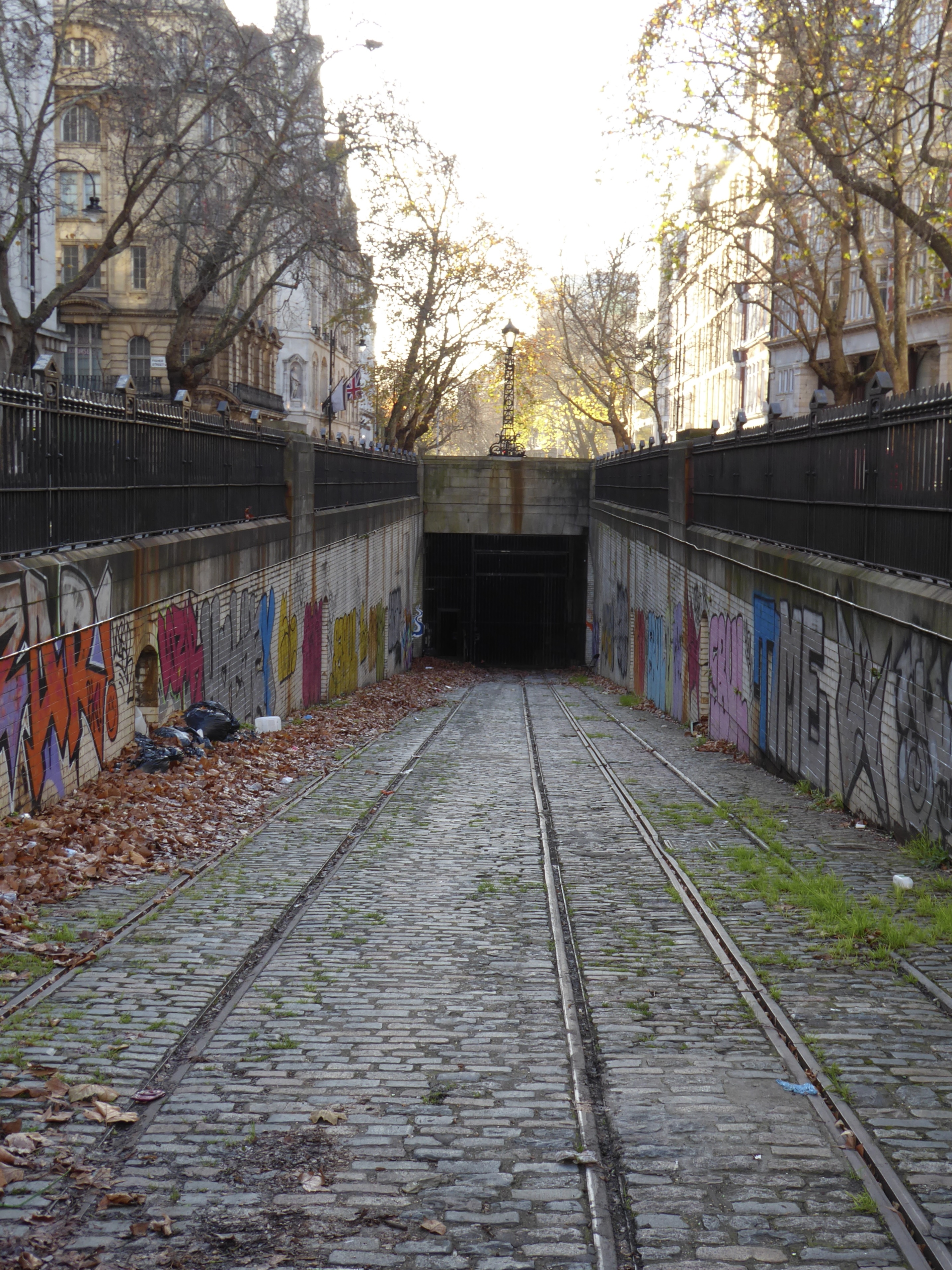
I checked on the entrance to the Kingsway tram tunnel too: yes, it is still there.

Hidden City (1987)

Director Stephen Poliakoff with Charles Dance and Cassie Stuart

A dud of a film – stilted, with over-expositionary dialogue and some wooden acting; basically just not good enough to keep you in its orbit. Typical Poliakoff – a fascination with the recent past that pulls you in and a disregard for credibility or coherence that pushes you away. This one was a psychogeographic conspiracy theory with gaping holes and sidetracks that led nowhere. The scene where the secret service heavies stopped for their tea break was straight out of Astérix chez les Bretons. (Or perhaps the writer might have been hoping for more of a Blow Up vibe.)

And yet . . . While it didn’t succeed as a good film in its own right, there was something about it that set me thinking. I liked the use of locations – particularly the Kingsway tram depot that I remember (the site of which I shall walk past tomorrow) – and the sense of other lives at other times in this selfsame spot. It reminded me of my little trip into the London underground. There was some humour – just not in the attempt at mismatched couple comedy, which misfired thanks to some poor dialogue and worse acting. There was a side interest in a 1980s take on video culture and declining attention span. (So ironic that Richard E Grant announced that he hadn’t watched a film all the way through for some years when I was thinking about the off button.)

Comparisons to other films: Radio On for its interest in screens and really looking at things. I also thought of The Edge of Darkness from the 1980s and its take on buried secrets (literally and metaphorically), government conspiracy and cover-up. That also grew increasingly unbelievable as a literal plot, but such was its quality that you were carried along with it. No such luck with Hidden City.

Wayne Thiebaud

Each era produces its own still life

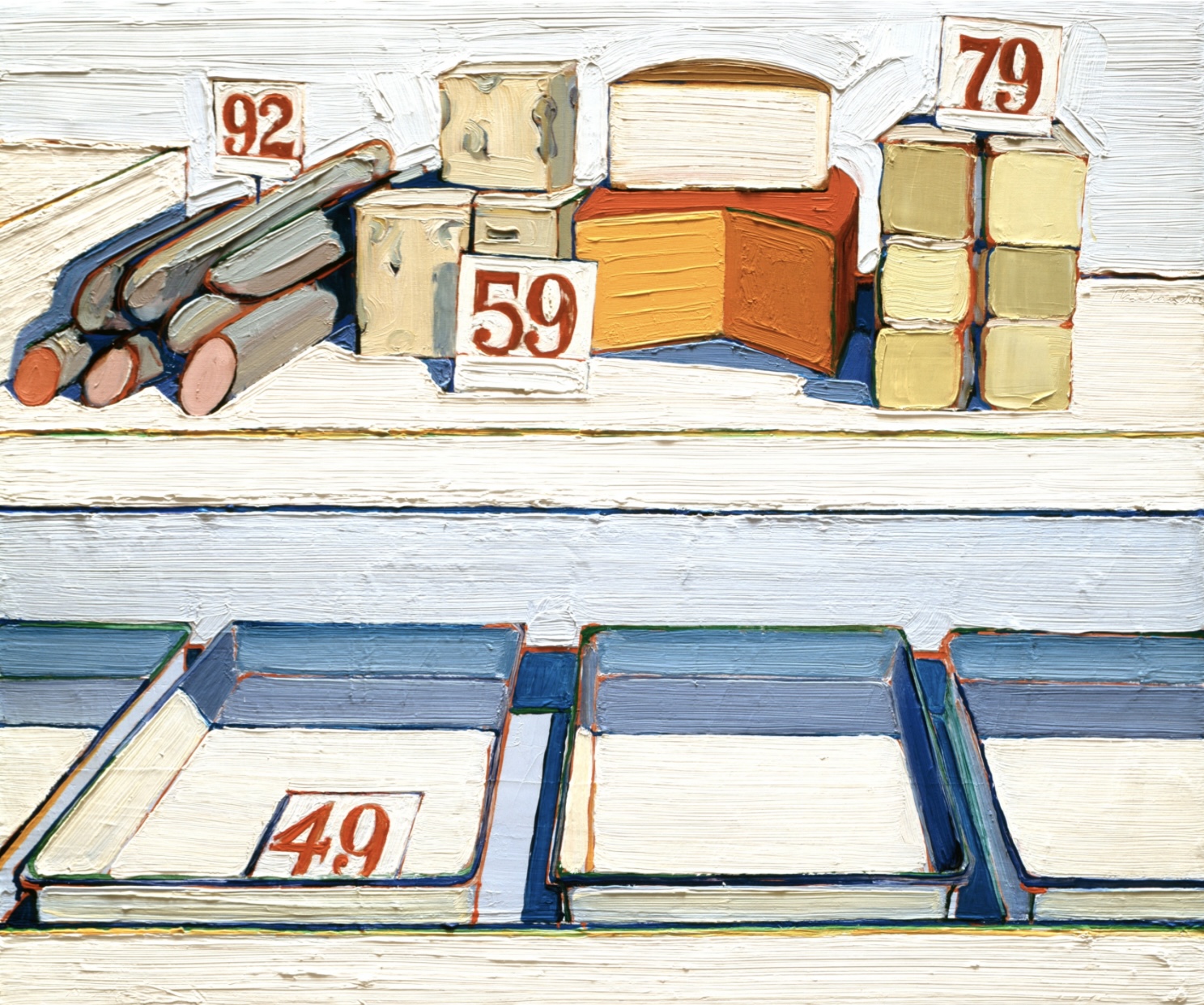
Sometimes I am not sure what will grab me and what will elude me. I quite like being surprised by myself. And – for some reason – this small exhibition of a particular section of Thiebaud’s work grabbed me. The introductory panel with Thiebaud’s own quotation set me up: I couldn’t deny what he said, and it was enough to open my mind to his work. Without it I could just as easily have come away thinking that, like Lichtenstein, he had found his schtick and stuck to it. The exhibition reminded me of a book I had to read (“plough through”) for an OU course: Gombrich on the beholder’s share when looking at a work of art. It made sense in front of Thiebaud.

As a graphic artist, he knew how to make an impression. Things I noted:

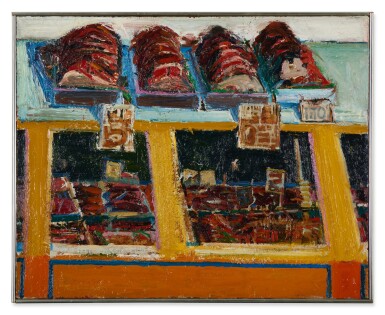
  • The muddiness of his early Meat Counter painting. Rather nasty colours and textures – unless his aim was to convert you to vegetarianism.
  • Abundance/scarcity – the empty trays on the delicatessen counter. It reminded me of the shock of seeing reduced food availability during Covid. That balance in the modern world of having everything under the sun available to buy . . . but empty shelves are never far away.
  • His still lifes are of everyday objects – nothing exotic or hot-housed here. They are cheap and mass-produced, painted so thickly that you can feel your teeth ache with the sweetness.
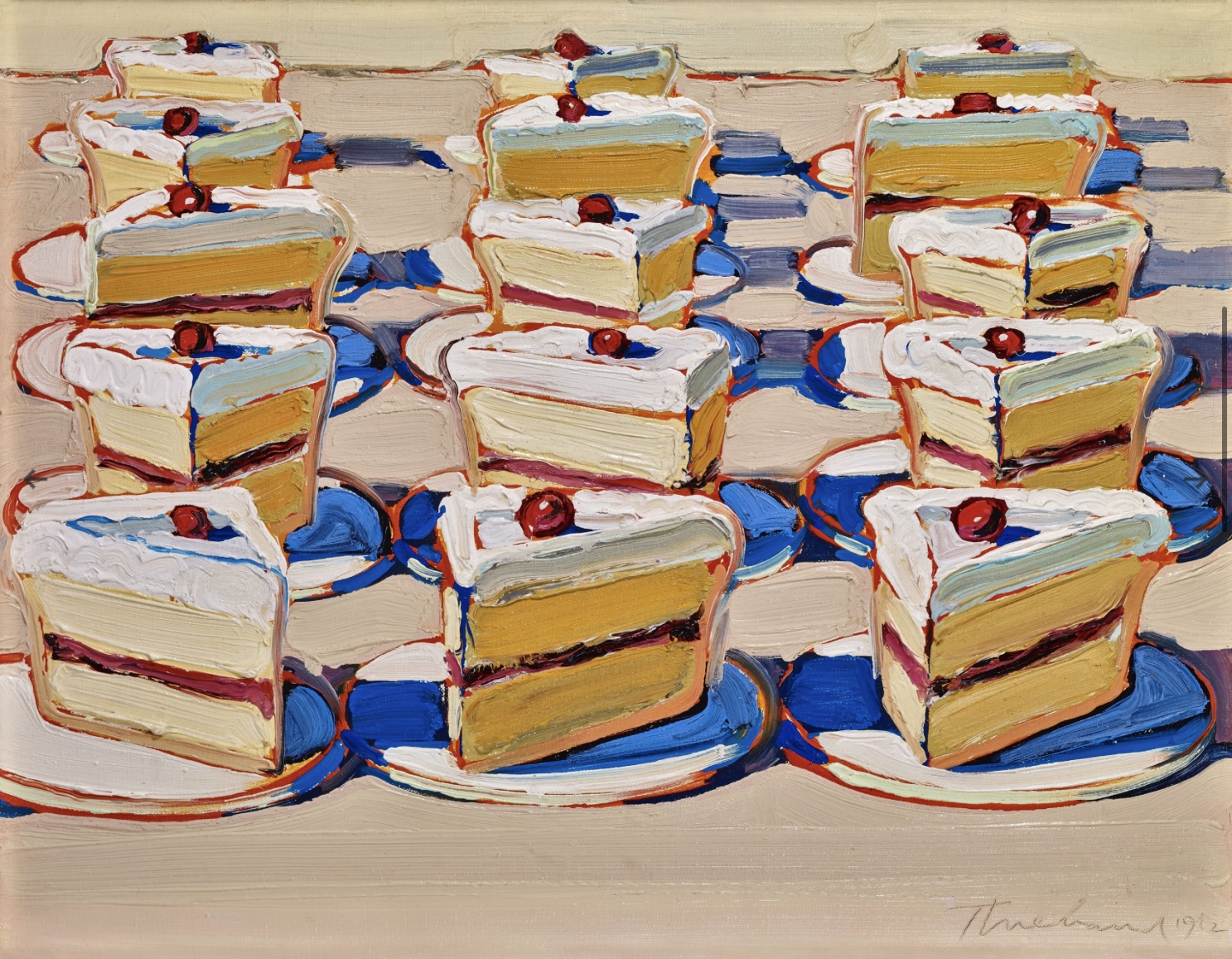
  • My steal was the Boston Cremes. They seemed to be float like moored yachts or even like ice shards on Friedrich’s Das Eismeer. Choreographed by Busby Berkeley.
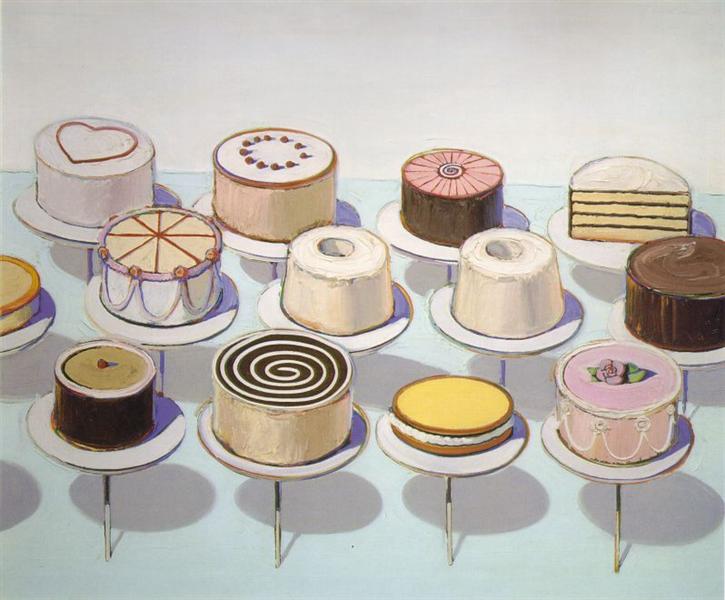
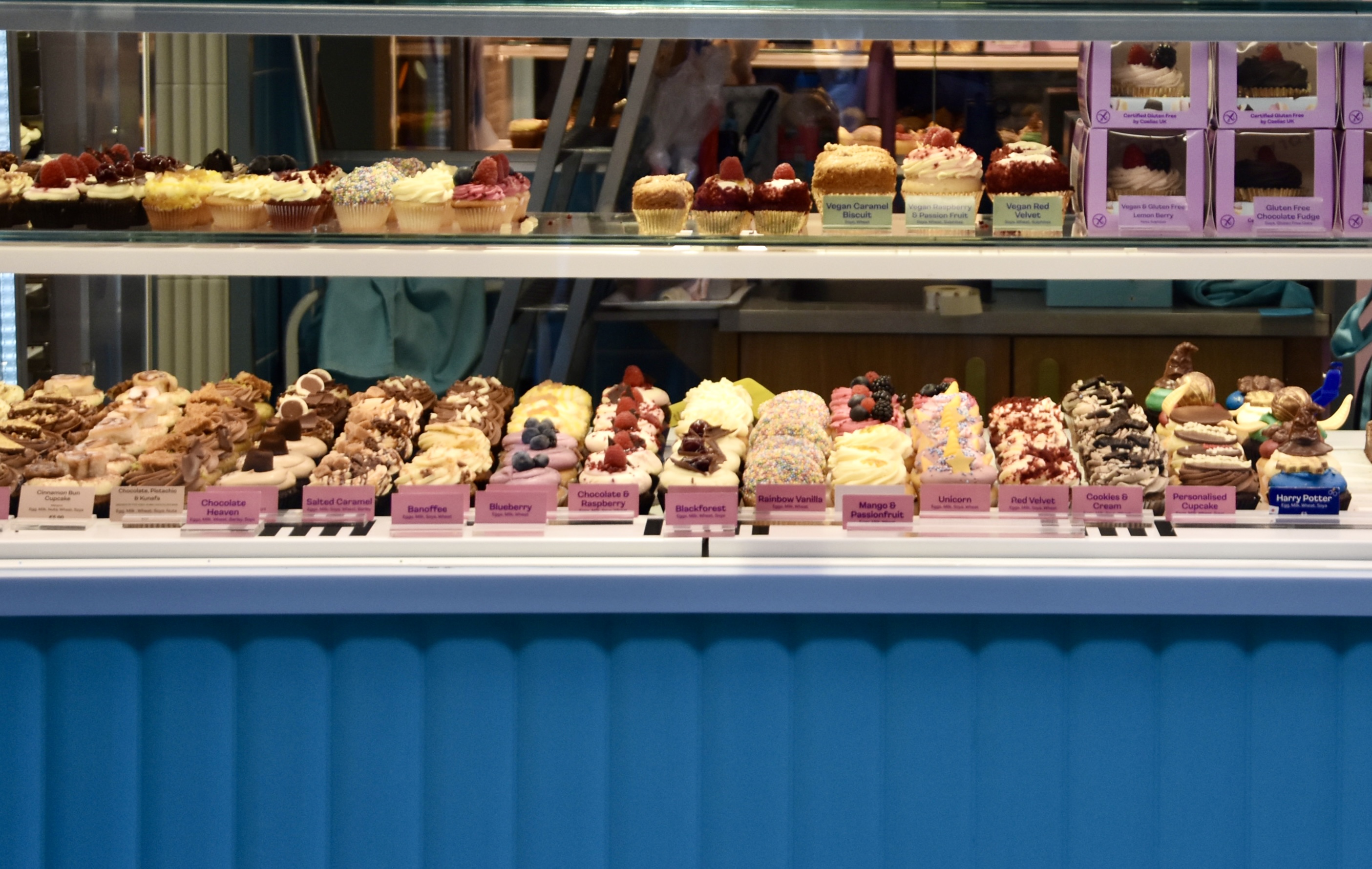
  • Cakes made me think of the cake/doughnut counter at Leeds station. I have always regarded it with a detached and puritanical eye – all that sugar! – but now I shall look at it anew. Walking back, I passed another such counter and had to acknowledge how attractive it was in a garish fashion. (Now that I have aged into an appreciation of The Savoury, I can be judgemental about and ignore the attractions of The Sweet – hypocritcally obliterating from my memory the delicious sugar cubes I used to steal from the larder.)
  • I took a photograph of Cakes above the heads off people sitting on the bench, when really I should have included them. They would have complemented the palette perfectly – him in pale blue jeans and her in a pastel pink top.
  • Thiebaud referred to Cezanne and Chardin – and I could see that his perspective echoed Cezanne and his simplicity Chardin.
  • The impasto: it worked perfectly on the food, but he also layered the paint thickly on the smooth surfaces of the counters and trays. He wasn’t trying to be that representational.
  • Picture captions pointed out that, despite the seeming repetition of, for example, his slices of pie, each one was subtly different. And later I went for a coffee and noticed the cakes under their glass cases: they were indeed all slightly different, and had I had a cake I would have been silently willing the server to choose this one rather than that one.
  • It was all utterly trivial – cakes and toffee apples, for goodness sake! – but somehow utterly wonderful.

Joseph Wright and Cecil Beaton

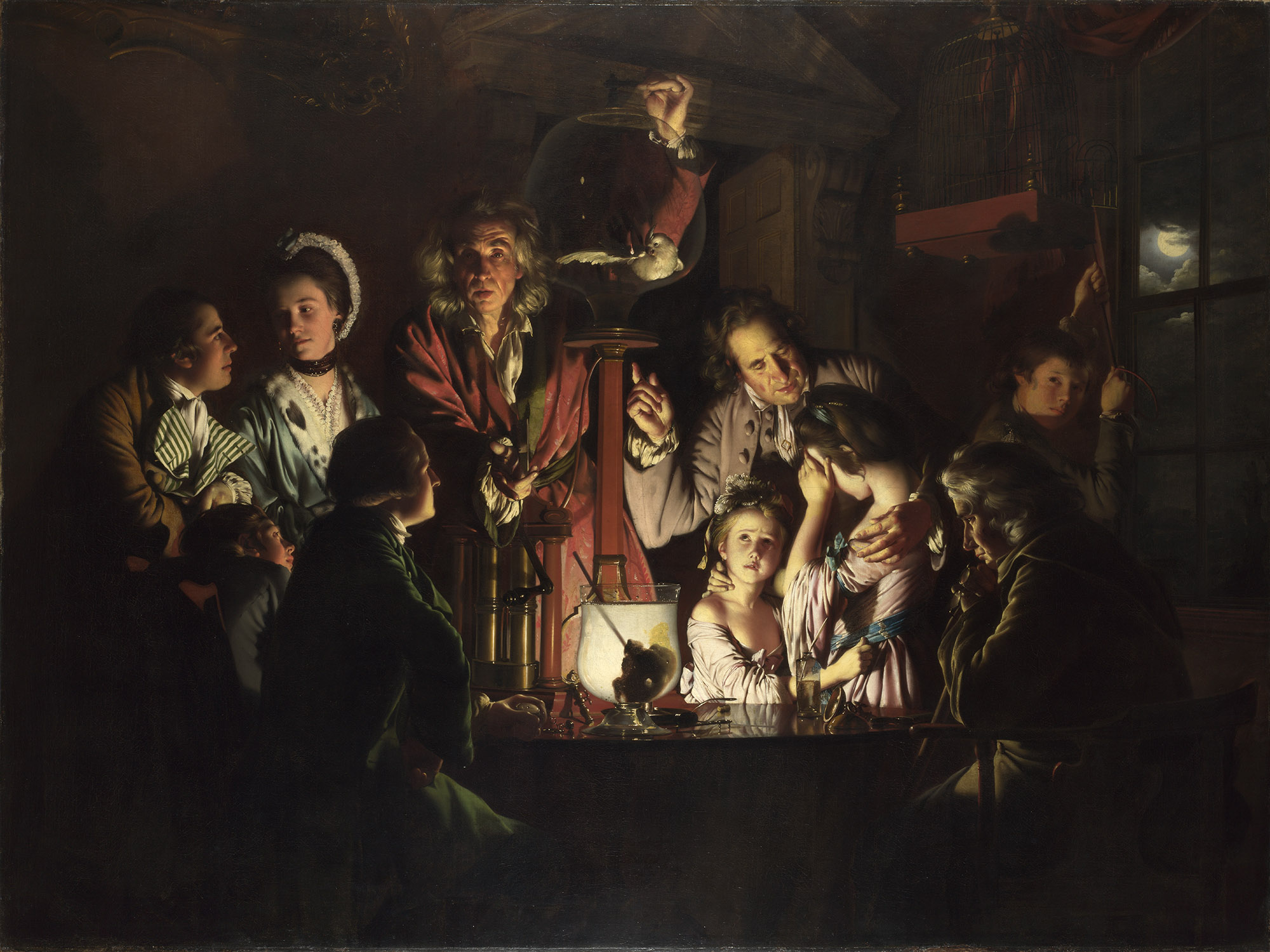
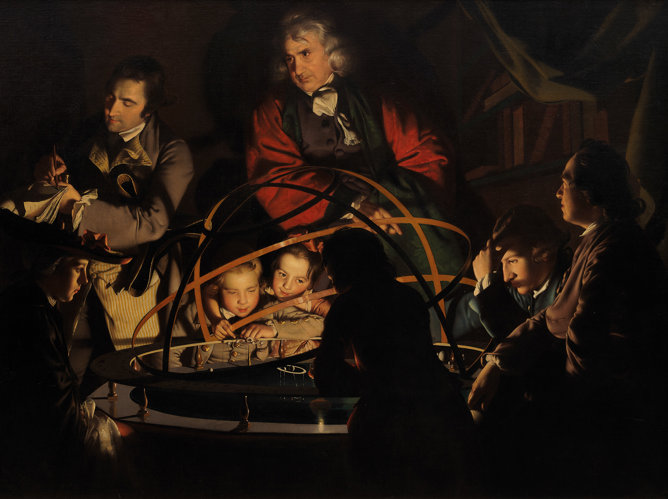
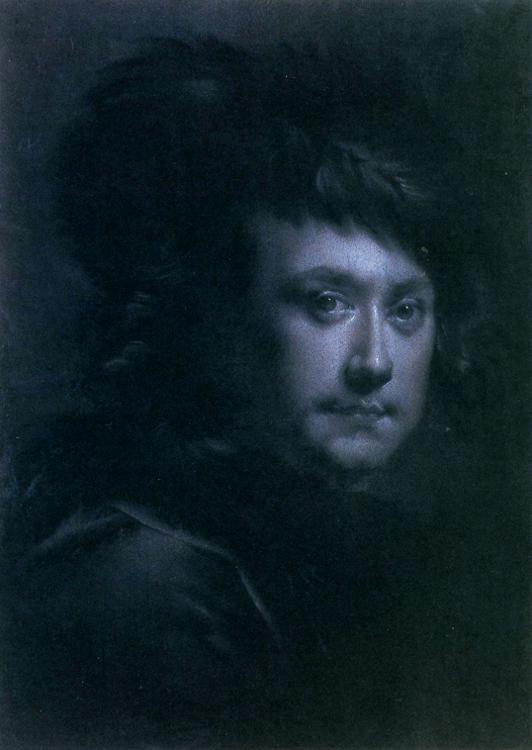
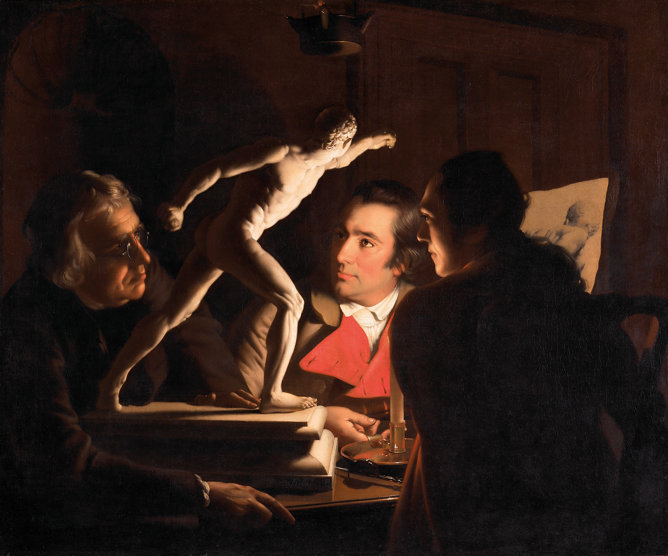
After two exhibitions in one afternoon, I thought that what Joseph Wright of Derby (the “of Derby” to distinguish him at that time from another painter of the same name) and Cecil Beaton had in common was creating their own distinctive worlds. One serious and one frivolous. The Wright exhibition was small, containing only a few large canvasses (but what canvasses!), some mezzotints (Wright had an eye for wider consumption), a couple of related exhibits (e.g. an air pump and an orrery) and a rather wonderful self-portrait in pastel. I had thought of him as painter of the new “scientific” age – casting new discoveries in a mould usually reserved for the heroic or biblical – but his range was broader than that. There were little tics: hidden light sources, glowing red tones. He certainly casts J Atkinson Grimshaw into the shade.

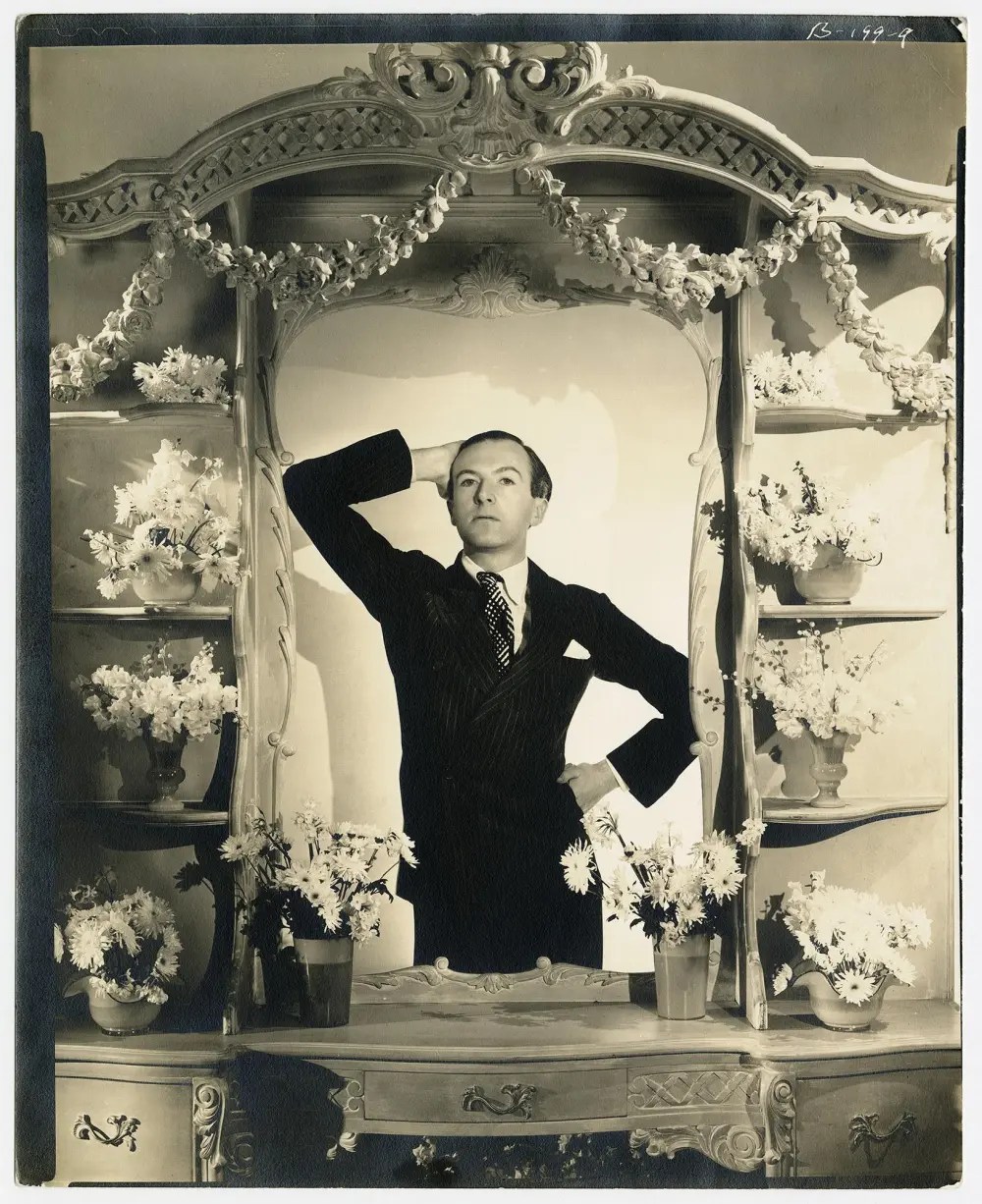
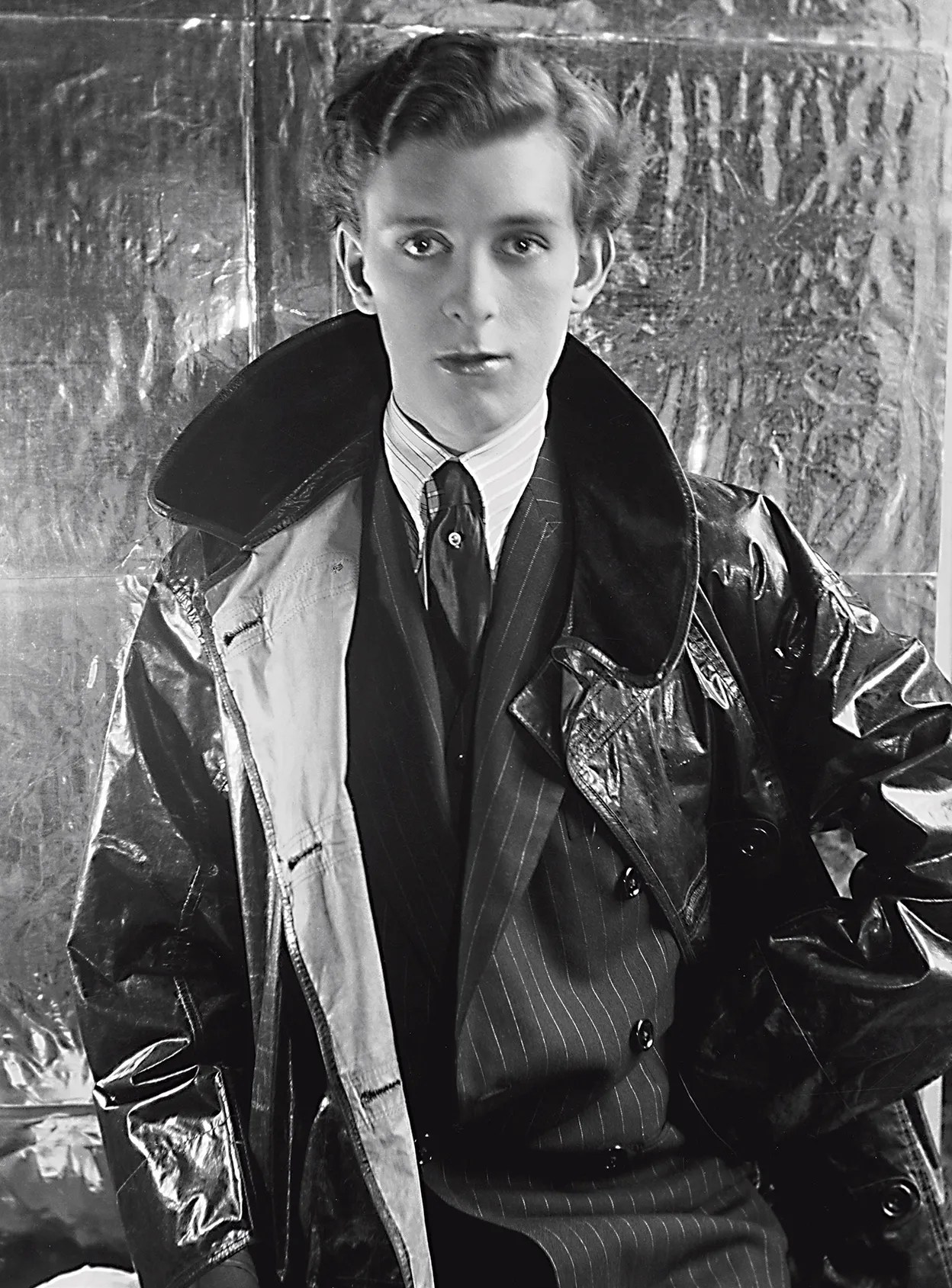
And then Cecil Beaton. The Wright exhibition was compact, and the Beaton one would have benefited from the same treatment. At times it felt like one perfect epicene profile and slicked-down hairstyle after another: the appeal of glamour (which is great) had dwindled to a yawn by the final rooms. His photographs, though – like Wright’s painting – do conjure up their own world, a mix of Brideshead Revisited and Hollywood floating in an atmosphere of superficiality and what would now come across as snobbery. There was the hiatus of WWII in all this gaiety; it killed Rex Whistler, Beaton’s friend, and sent Beaton around the UK and the world for the Ministry of Information. The Royal Family, Vogue, theatrical design . . . ah, good, the exit.

But it did send me up to room 24 afterwards to look at Augustus John’s portrait of Lady Ottoline Morrell, described by Beaton as presenting her with magenta hair and fangs. And it does!

Saffron Walden

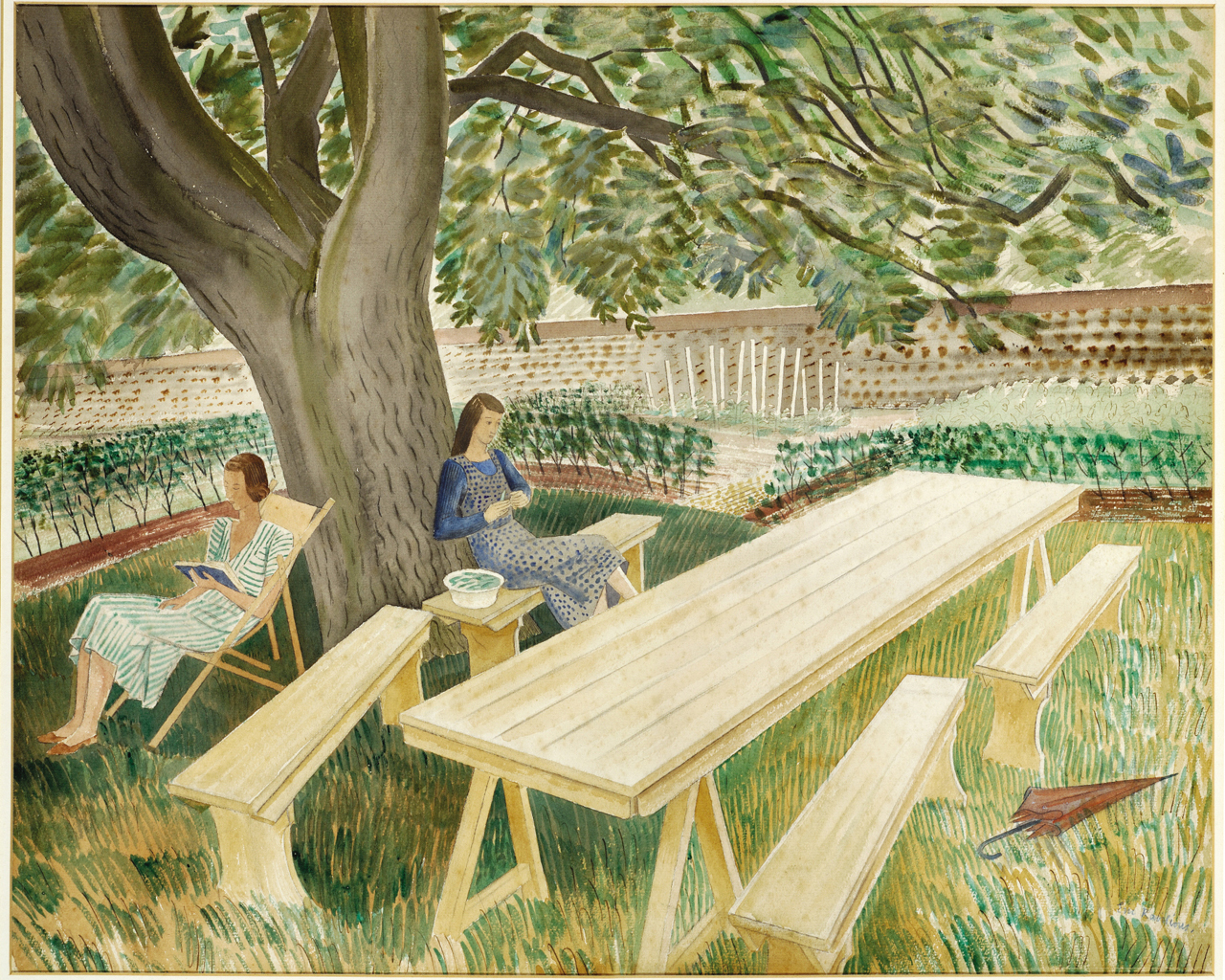
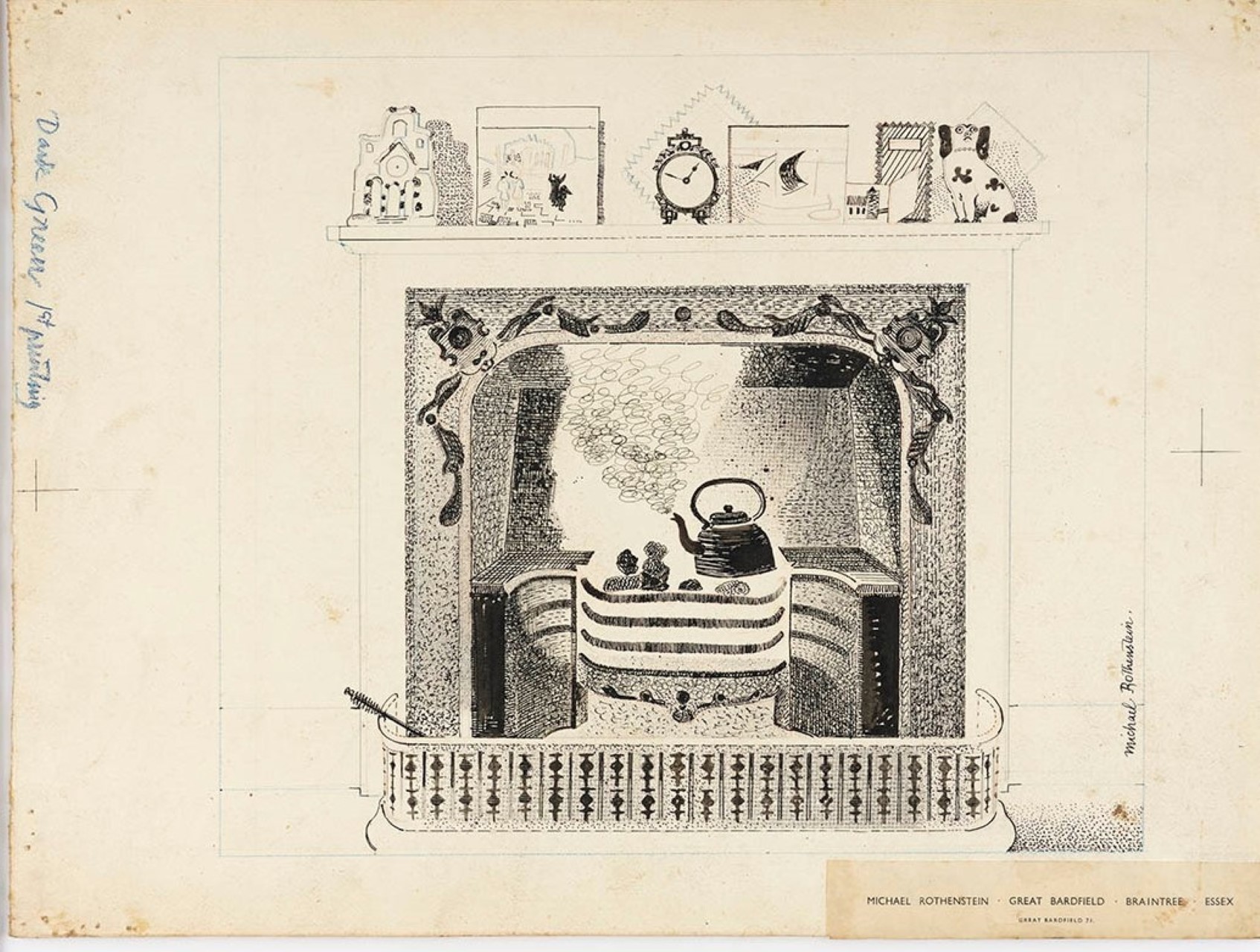
Cycling to Liverpool Street Station early this morning, I realised that the Brompton was in its natural habitat amongst its peers carrying their riders to work. But not me. I was leaving sweltering London behind to visit the Fry Gallery in Saffron Walden and its exhibition of Great Bardfield artists (Edward Bawden, Eric Ravilious et al).

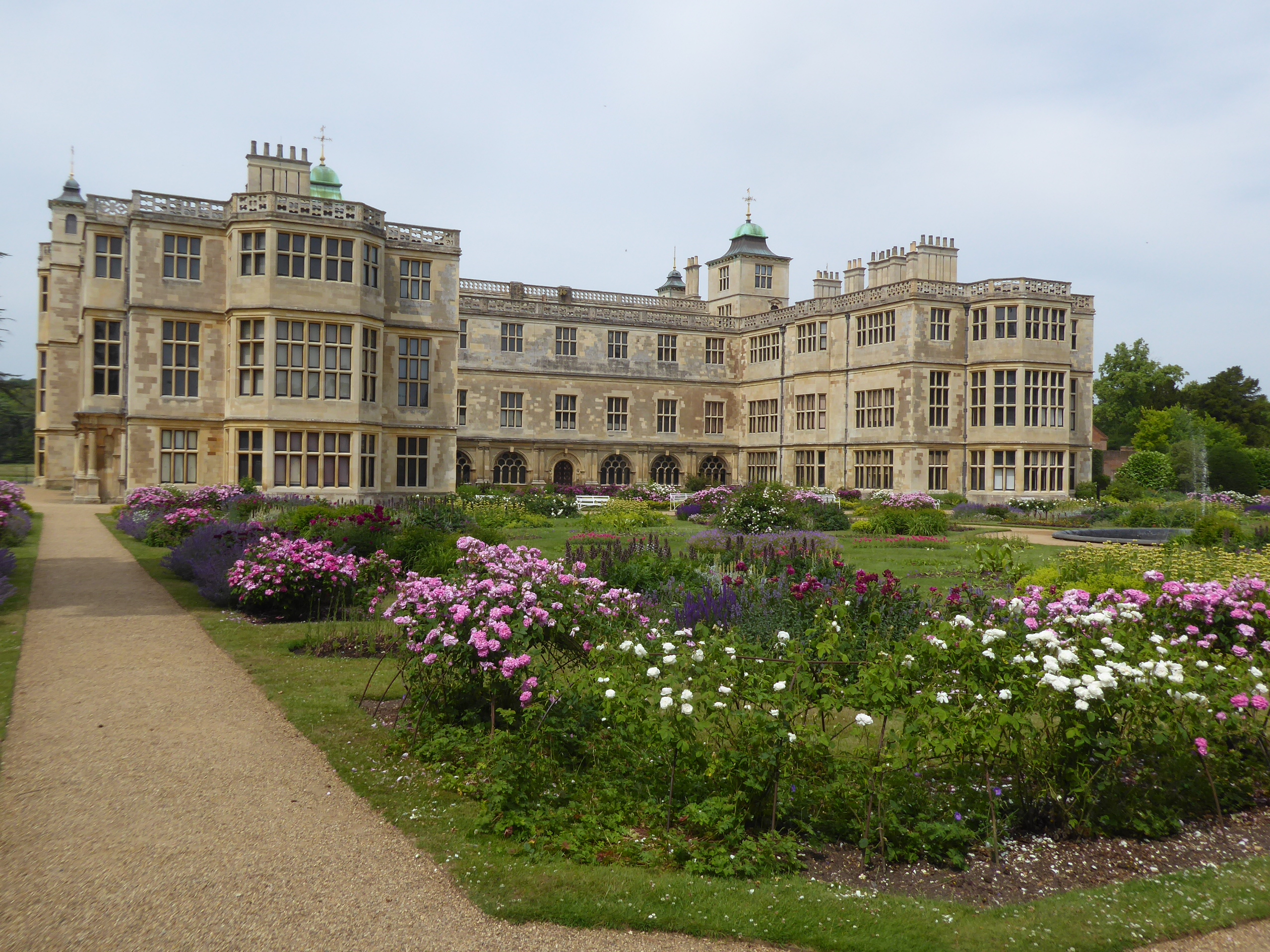
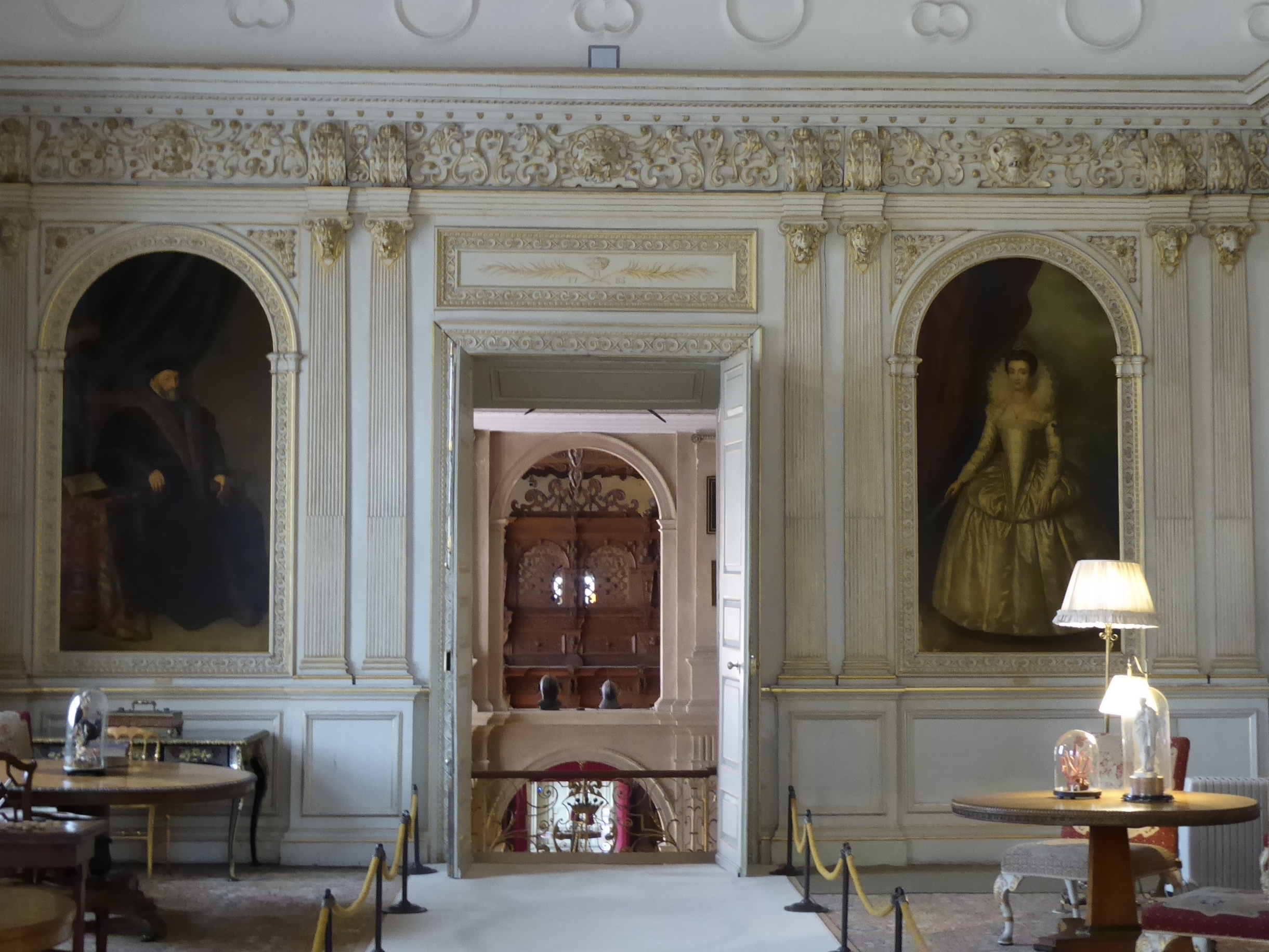
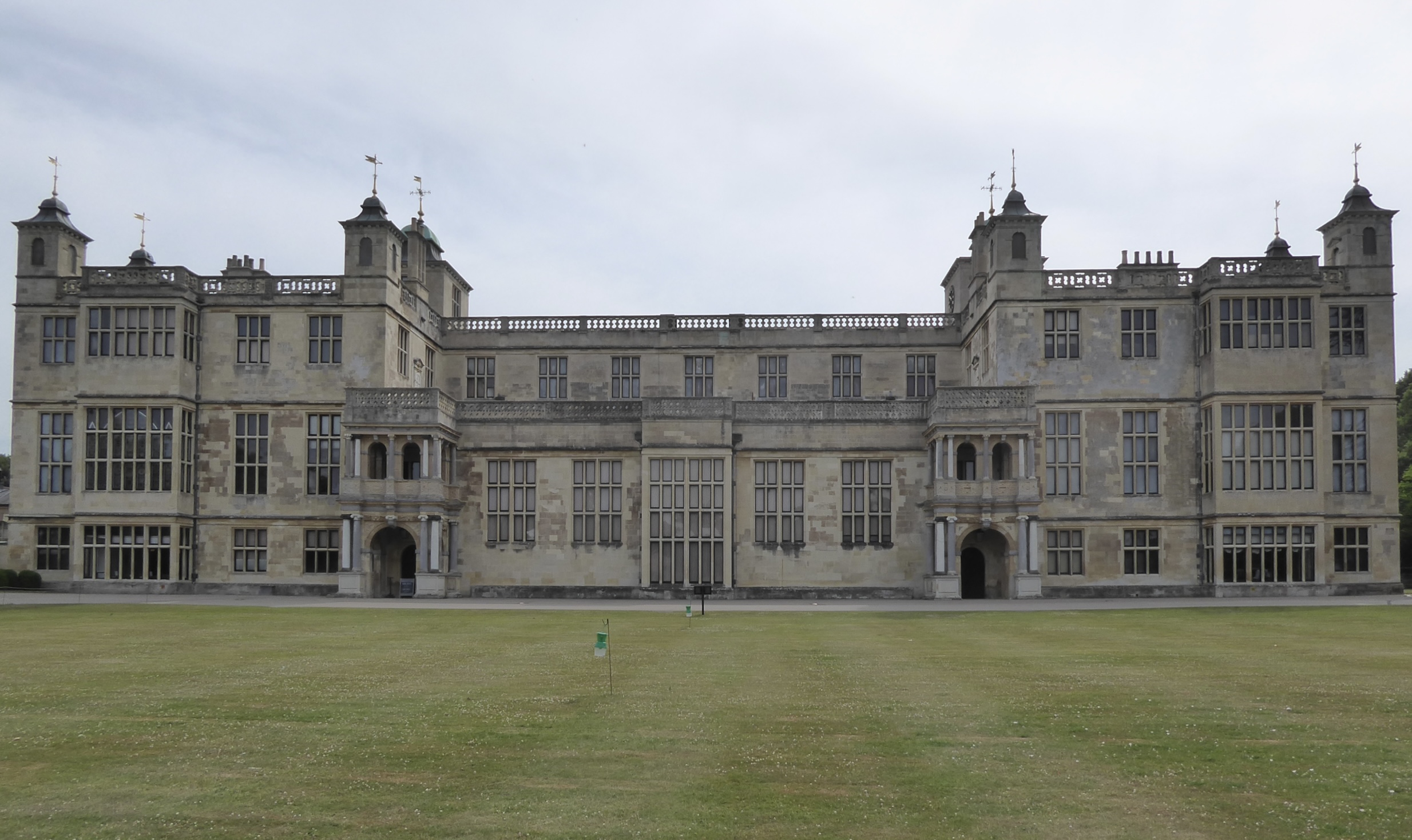
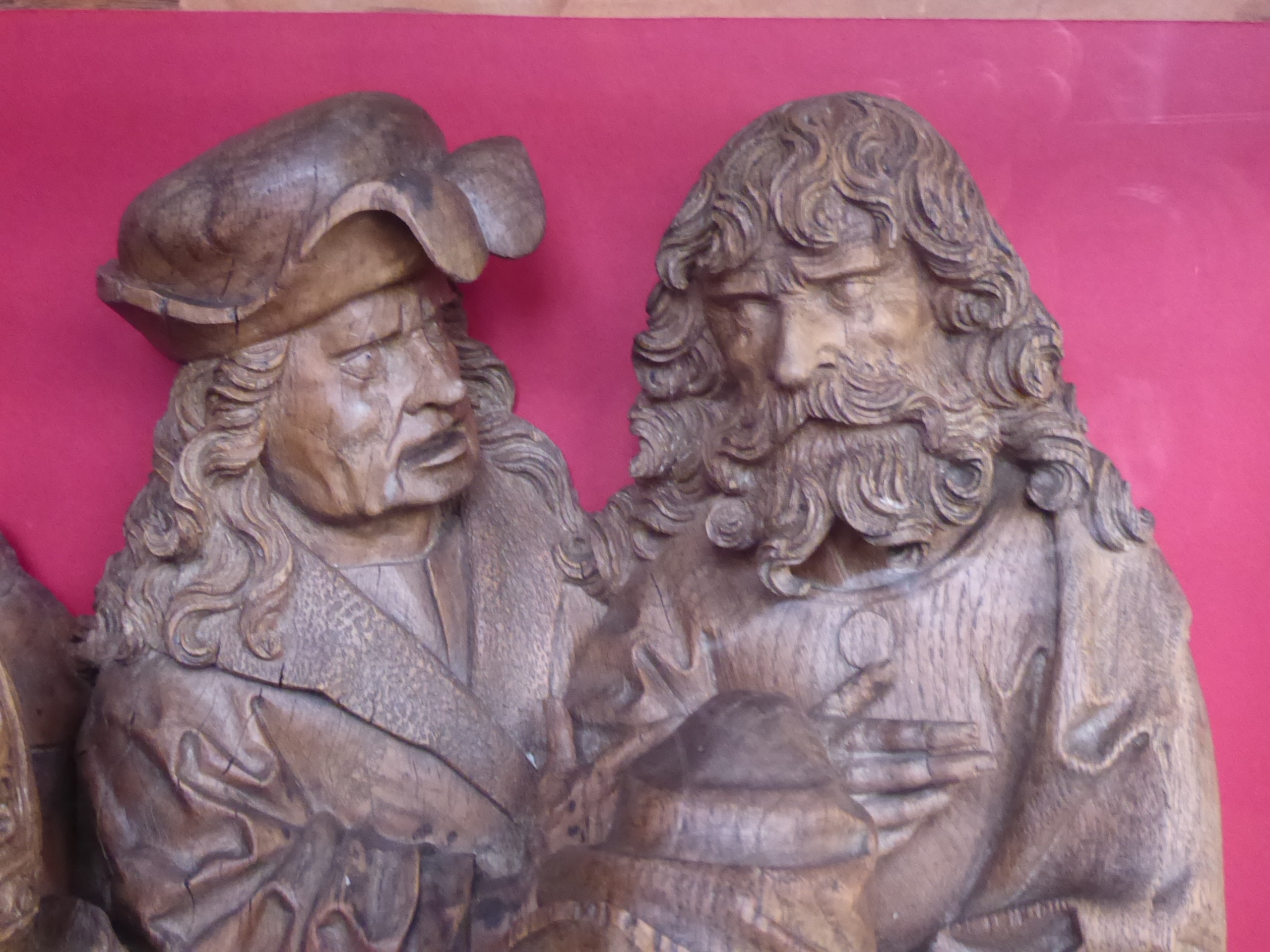
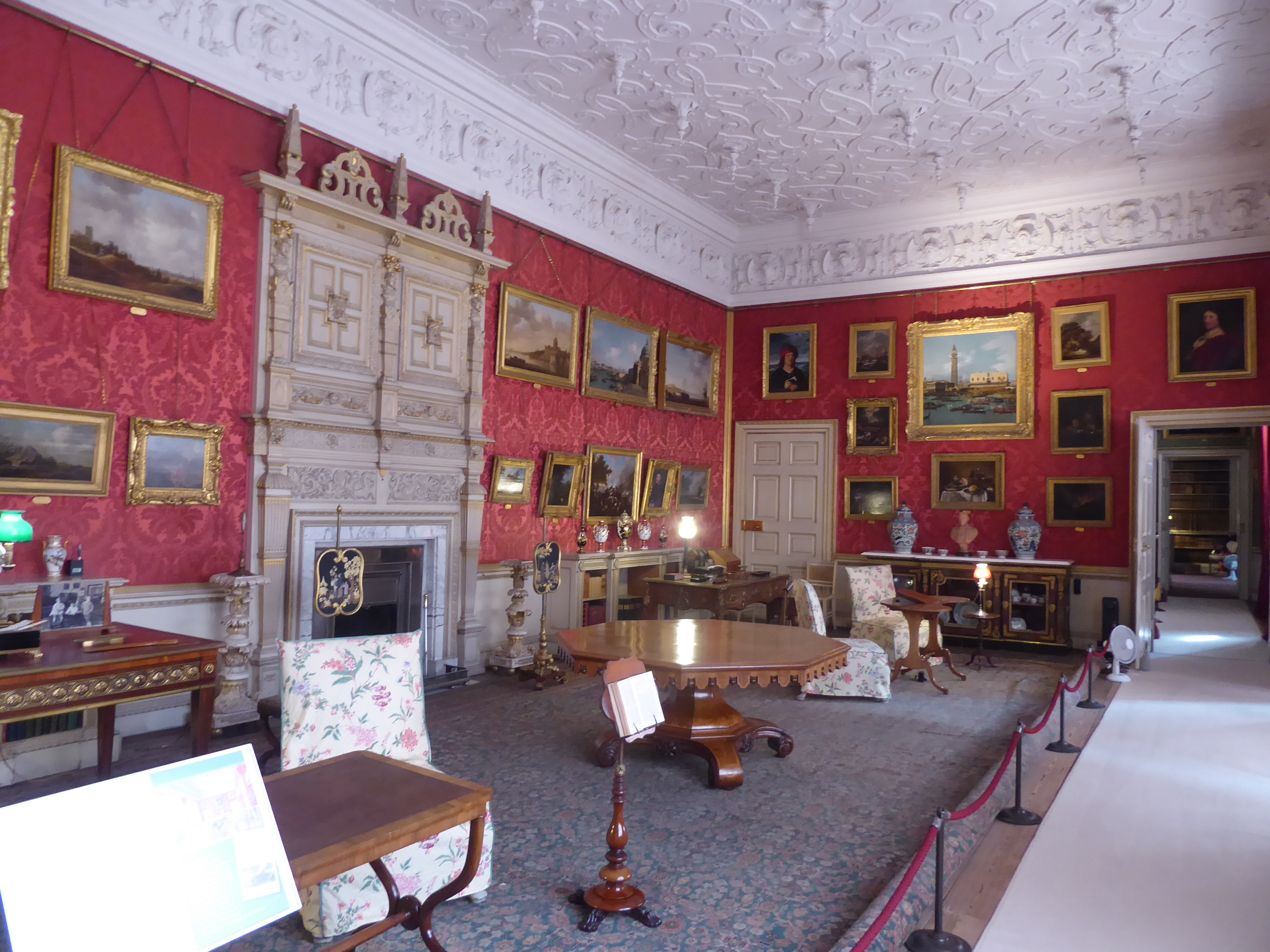
Since the gallery didn’t open until 2 p.m. I looked for something to do before that and discovered Audley End House nearby. It’s basically a Jacobean house that was once much larger and grander, built on the site of a dissolved abbey. The Duke of Suffolk embezzled state funds for it, Charles II once owned it (handy for Newmarket), John Vanbrugh and Robert Adam worked on it at various stages, Capability Brown got fired . . . the usual sort of thing. Over the centuries it has been much reduced and altered, and its current incarnation is early 19th century. So, symmetry everywhere, the deception assisted by false doors and concealed doors. A great hall with an astonishing oak screen that rises to the second floor. Family portraits everywhere plus an art collection by “follower of X” and “school of Y”. An incredible collection of taxidermy, including more kinds of owl than I knew existed and an albatross. A library that basically stored all that an English aristocrat needed to know at that time: rows and rows of records of State Trials of the late seventeenth century; antiquities of Canterbury; Dugdale’s Baronage of Englands Vol I, II etc etc – and, nice touch, a row of Walter Scott novels on an easy-to-reach shelf. The room and bed decorated specially for George III . . . who never visited. A chapel with a separate staircase and wooden seats for the servants, and a fire and padded seats/kneelers for the family. I found it fascinating and bizarre.

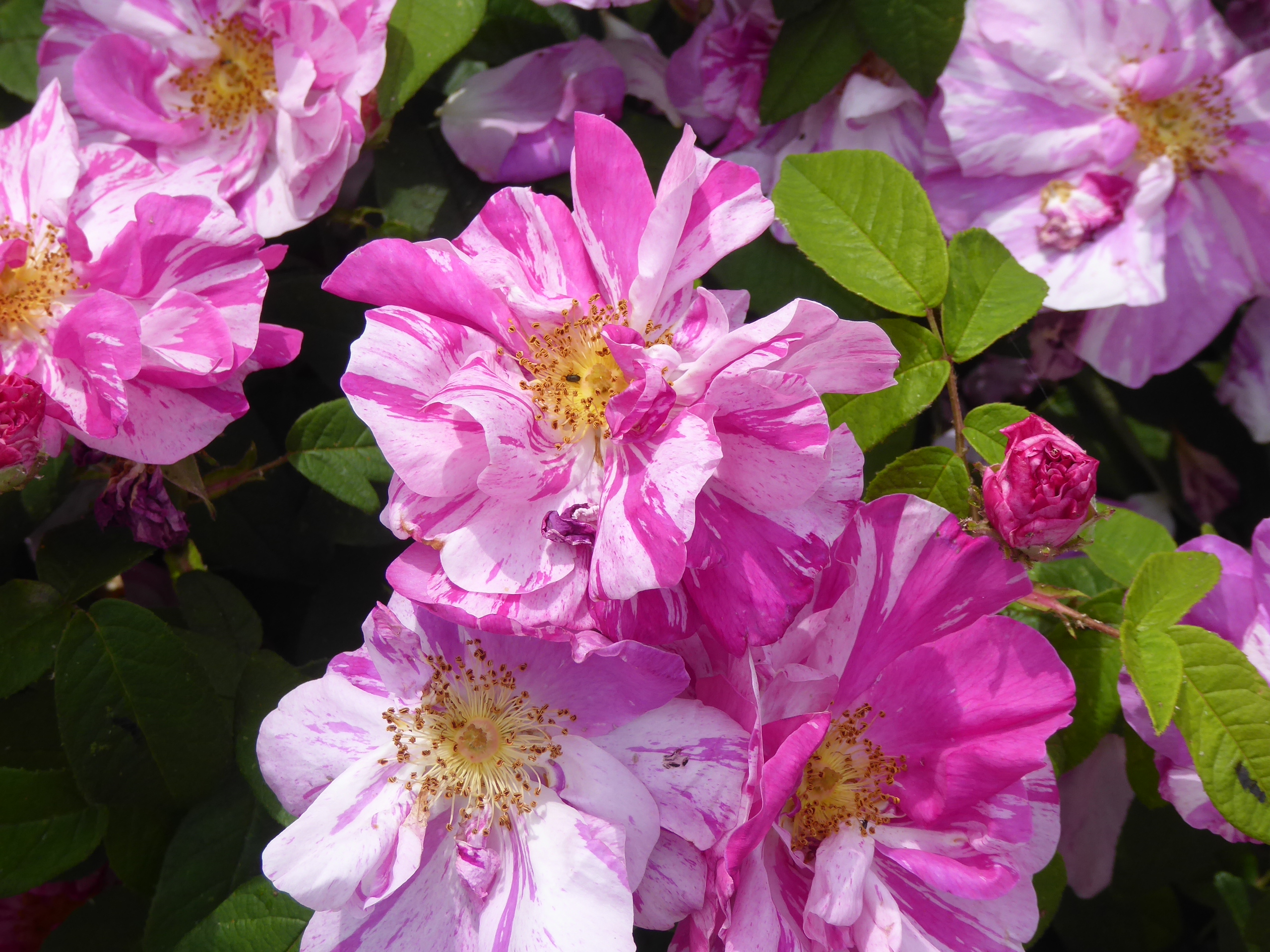
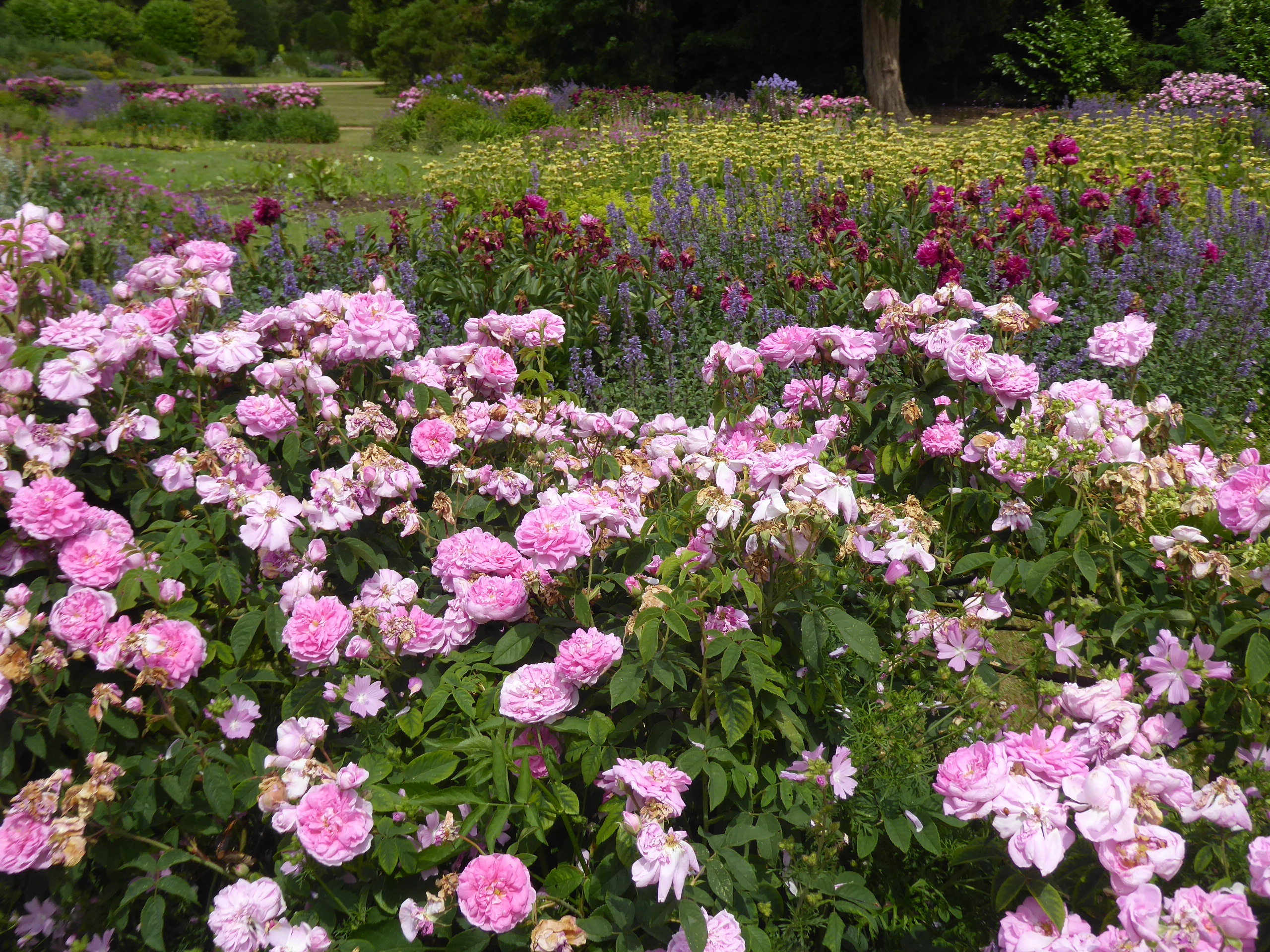
The parterre was lovely, and I saw it at its best. Had I not already been converted to roses, this would have done it.

Then to Saffron Walden for lunch. I ate in the main square in what I guess was once a Victorian-era bank. The great thing was that it was like a small version of Audley End: neo-Elizabethan with decorated stonework and mullioned windows, and inside I sat beneath a white ceiling plastered in Tudor style.

I walked past the castle to the gallery. Saffron Walden is very quaint, but with the heat and the Brompton I wasn’t in a frame of mind to take photos. The gallery is small and filled to the brim with delightful images and objects but after the space of Audley End, it seemed very cramped and the exhibits seemed cosily domestic.

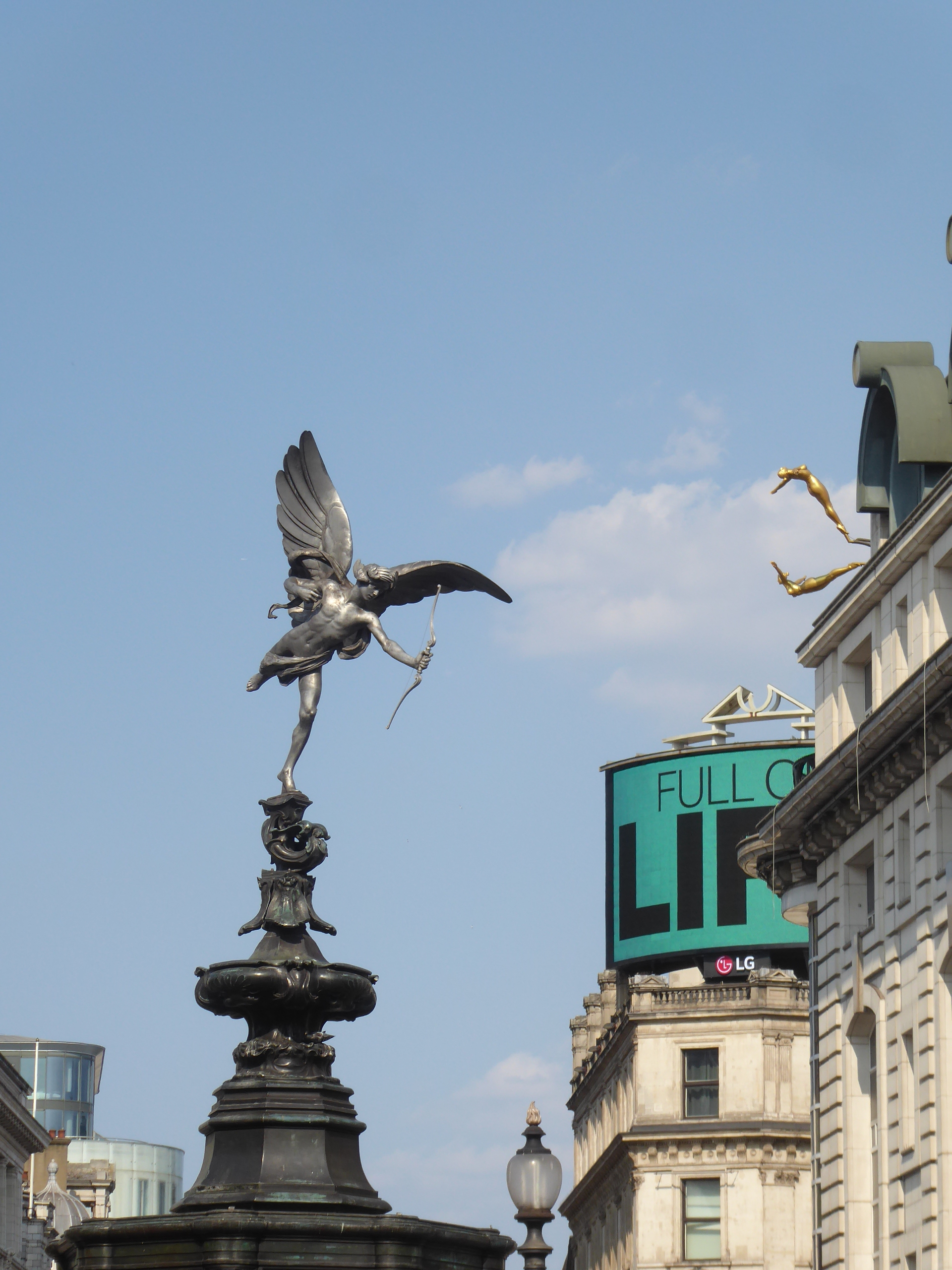
Piccadilly Circus

London in the upper twenties is fairly horrible, but nobody forced me to come so I shan’t complain.

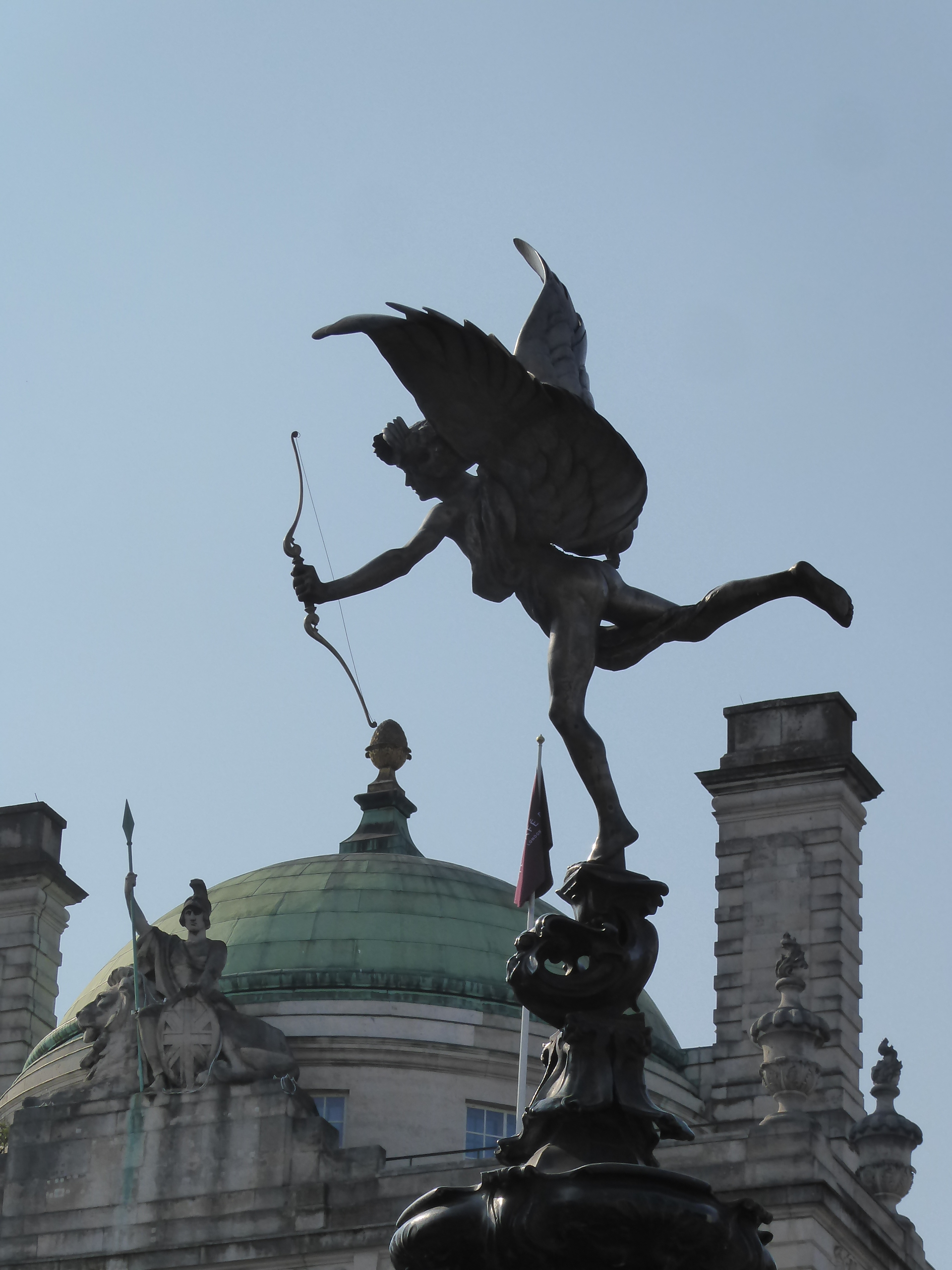
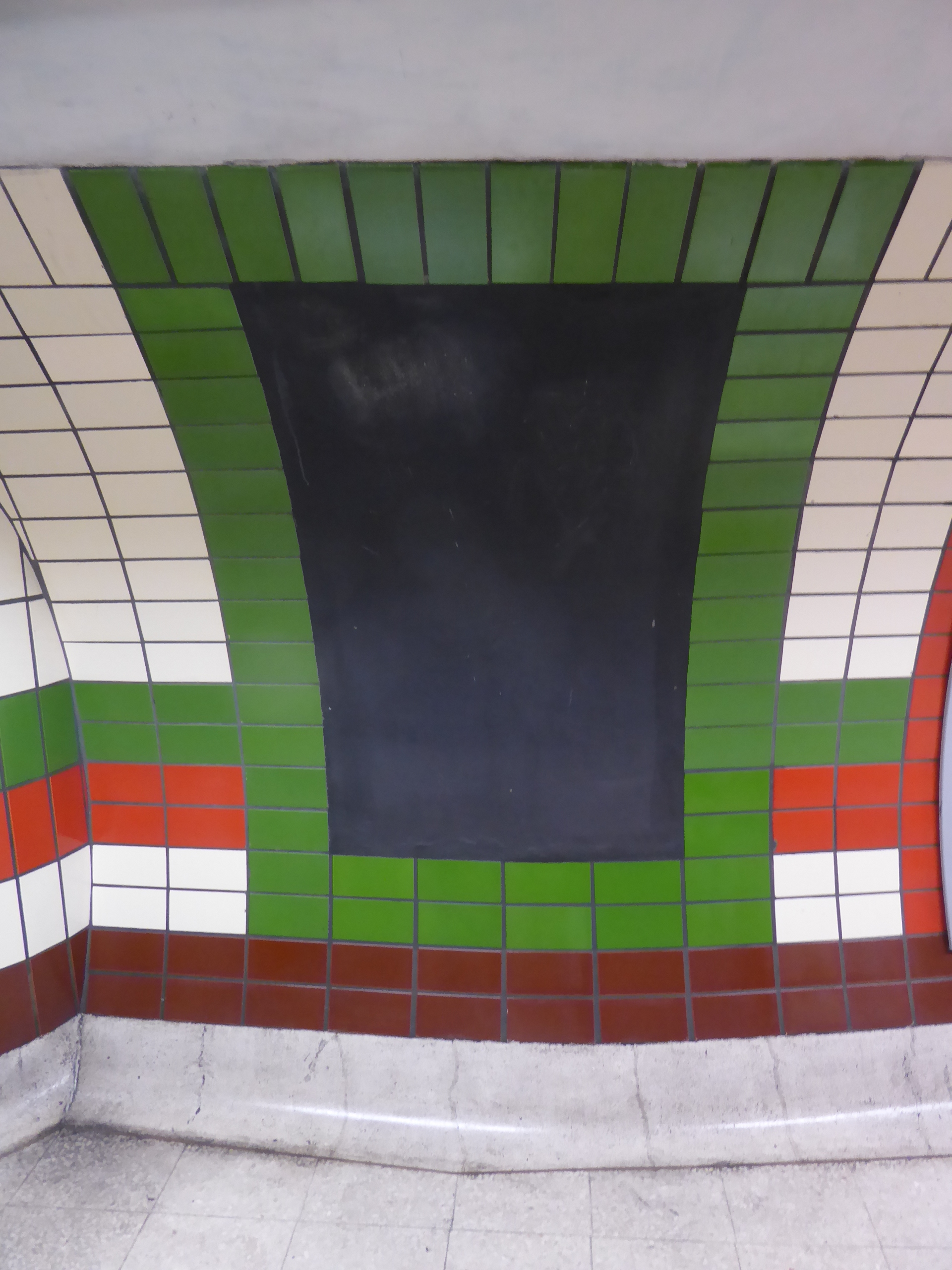
One of the things I decided to do while I am here was take a Hidden London tour of Piccadilly Circus. It wasn’t quite what I expected: I wanted more about the architects and the design and less about the Underground being used as a wartime bomb shelter. However the guides were very good and informative and it gave me the push to find out more. Basically, Piccadilly Circus tube station was designed by Leslie Green – he of the oxblood-red glazed tiles – and opened in 1906. It was served by 8 lifts, but it was quickly discovered they could not cope with the increasing number of people using the station so it was redesigned to accommodate escalators. Charles Holden was commissioned by Frank Pick; the new station opened in 1928. The circular booking hall was below a vast steel roof that took the weight of all the traffic above. No expense had been spared: Travertine marble and scagliola columns. Despite the closure of so many of the little shops in the hall and modern changes, it’s still impressive.

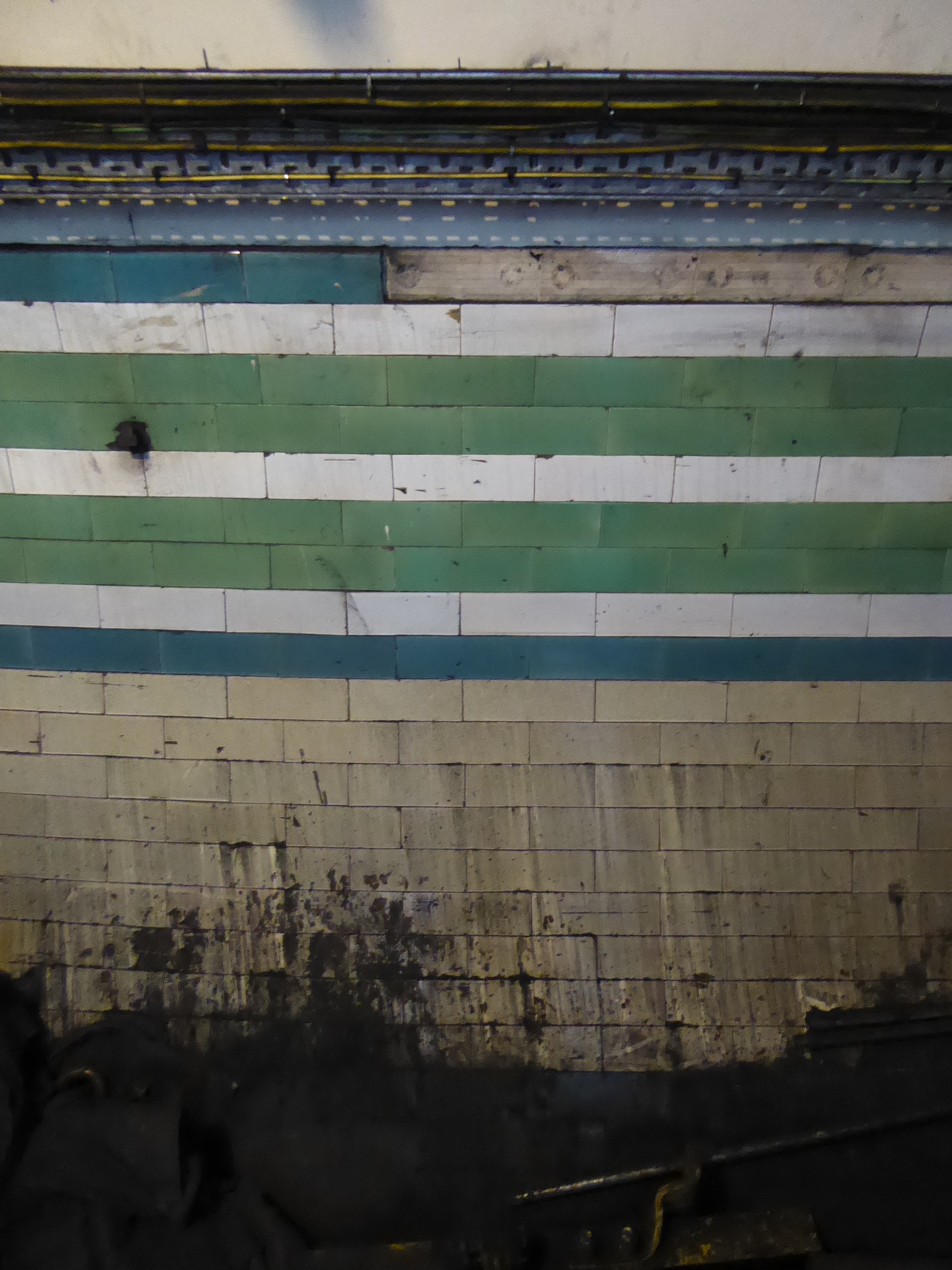
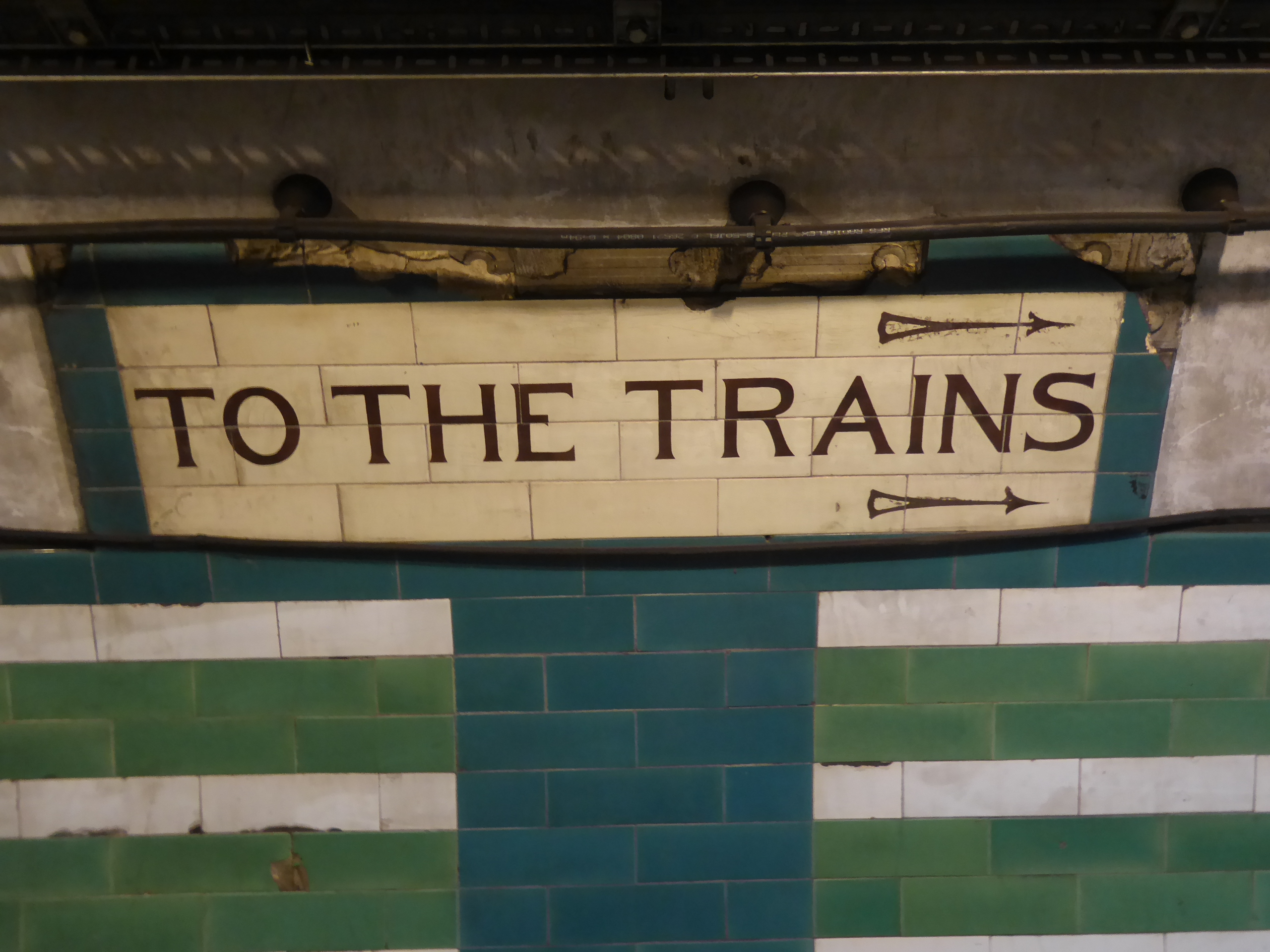
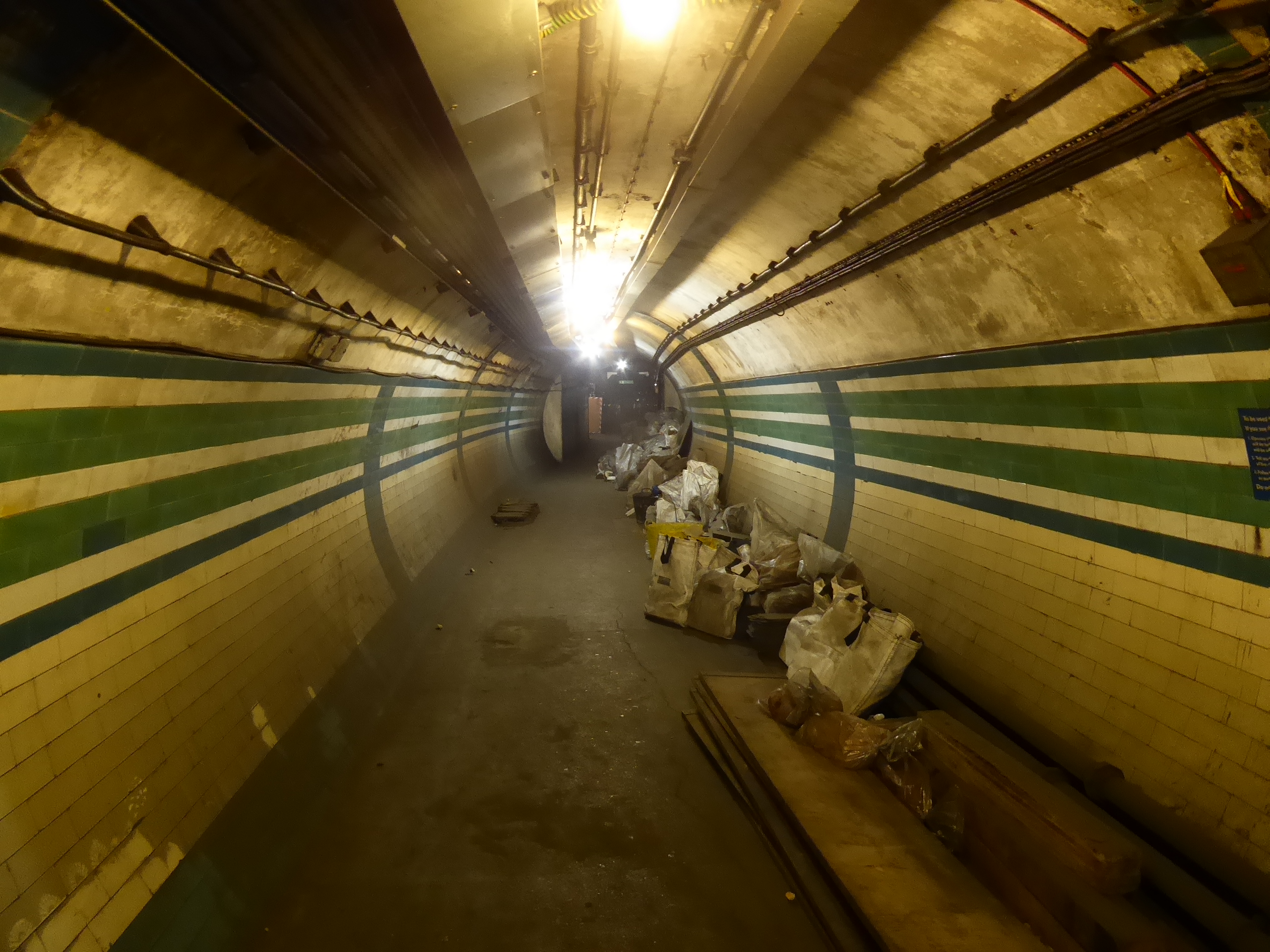
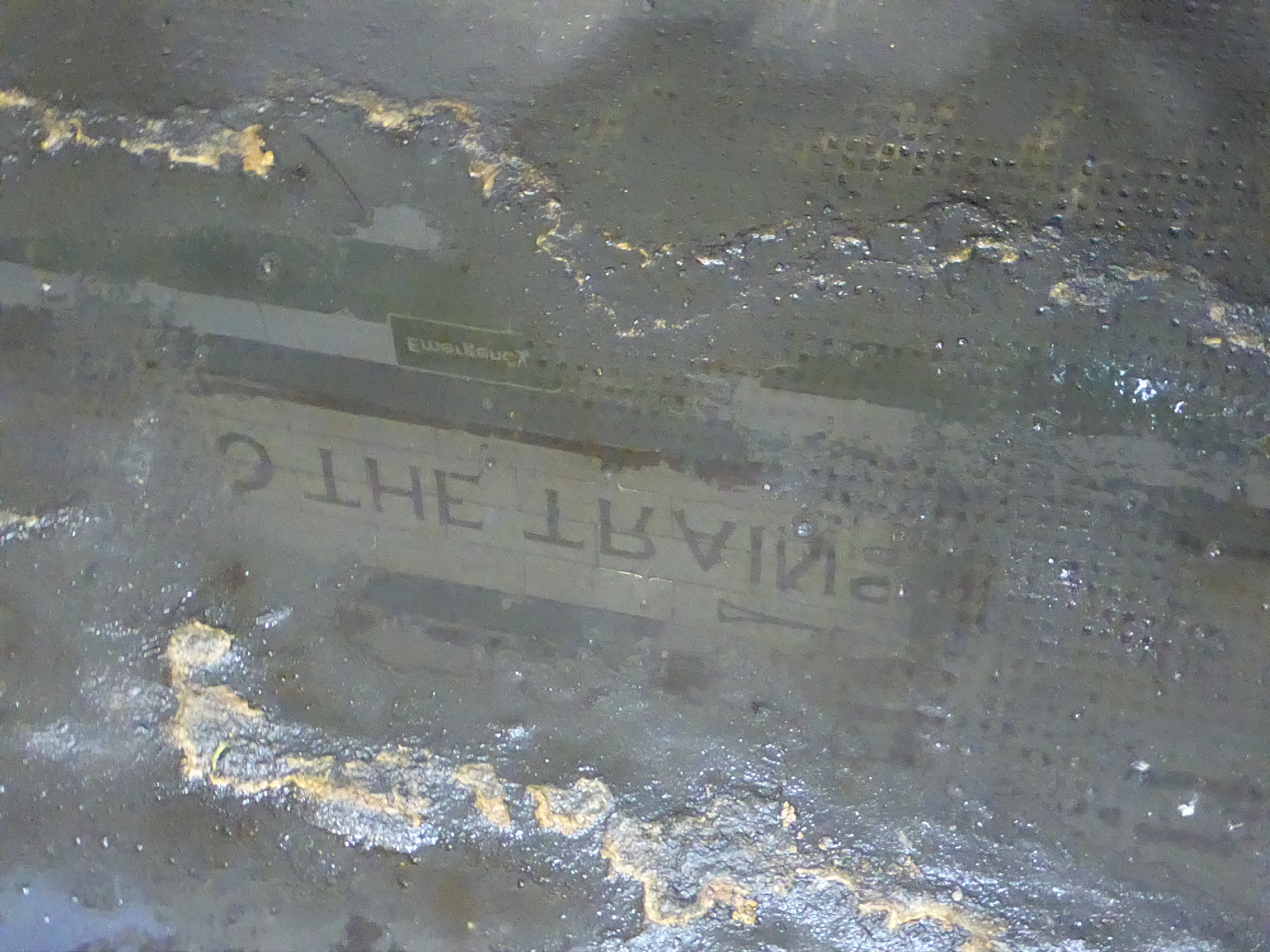
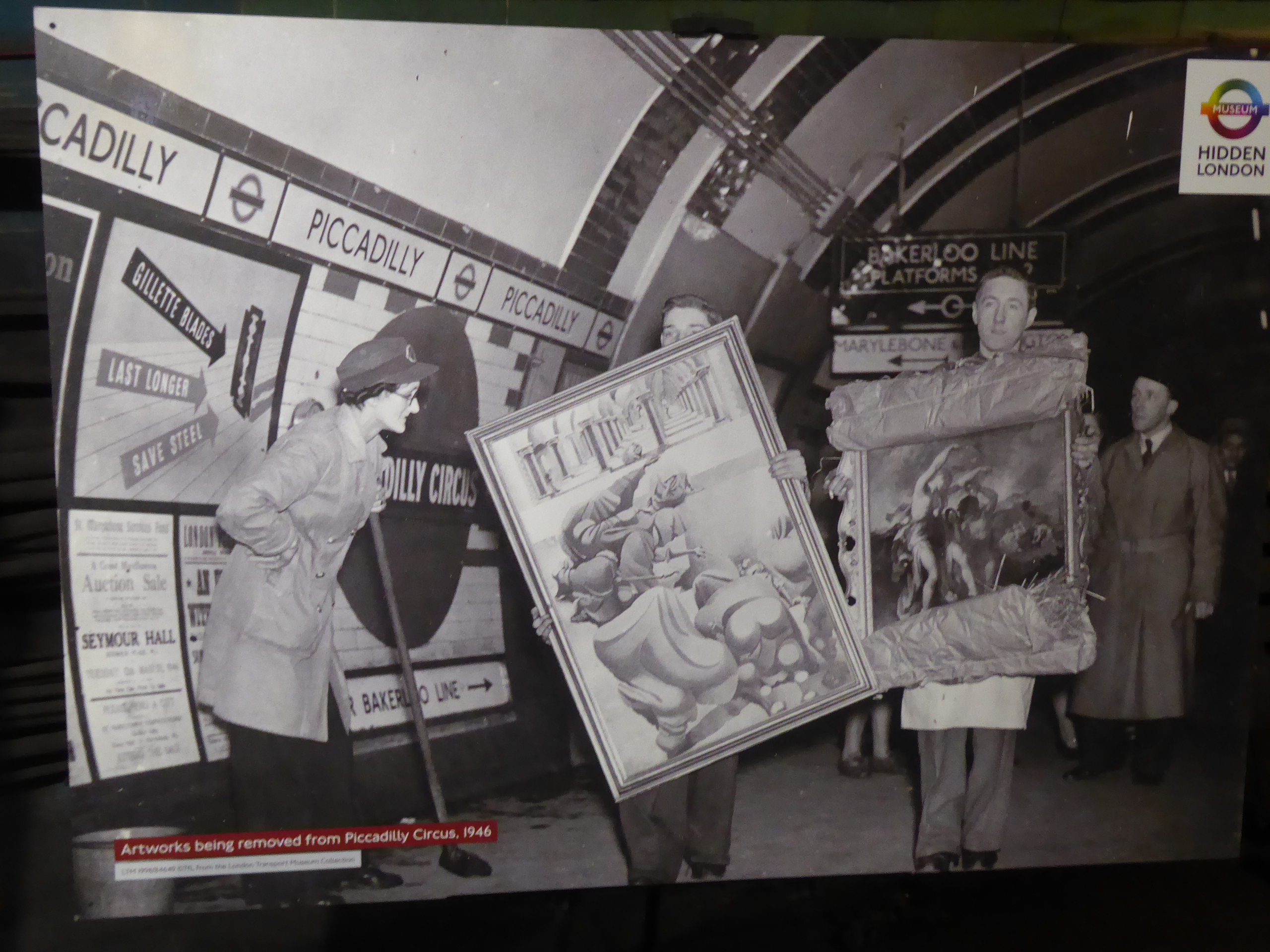
We were taken through disused tunnels serving the defunct lift shafts – authentic and dirty, with traces of Green’s original tiles and signs. The gentle shades made the modern tiling look horribly garish. The thought of crowded humanity sheltering in the tunnels during wartime nights was chastening. Artworks were also stored in the tunnels: one of the paintings in the photograph of artworks being taken out of storage was by Edward Burra; I was thinking of going to see the current exhibition of his work.

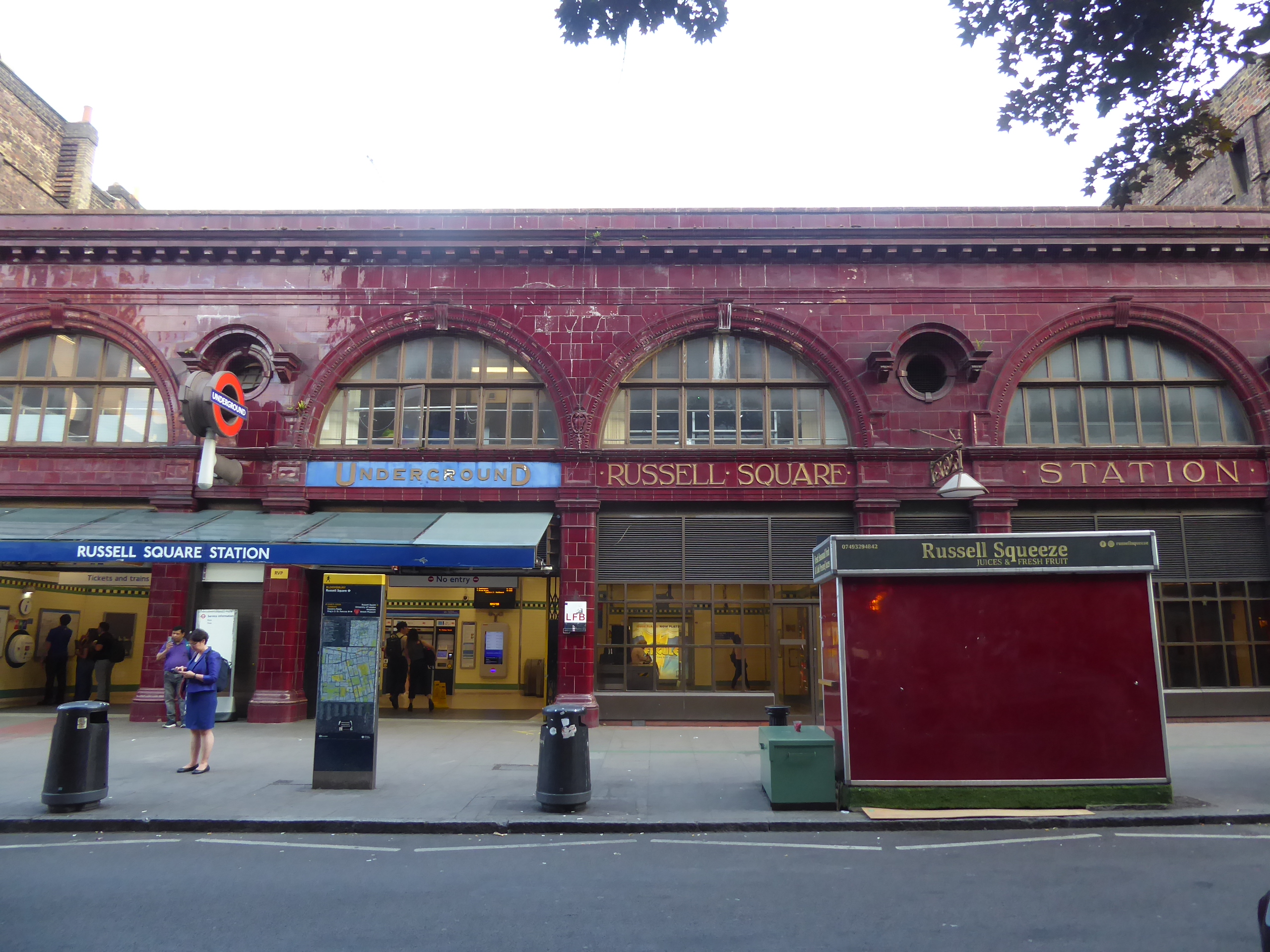
On my way back, I stopped at another of Green’s stations: Russell Square.