Hadrian’s Wall

Last night I saw the moons of Jupiter and the rings of Saturn for the first time. Also a close-up of the full moon, so large that it barely fitted in the eyepiece. We were very fortunate: it had been so murky a day that I had no expectation of clear skies – and, indeed, everything clouded over again just as we were finishing.

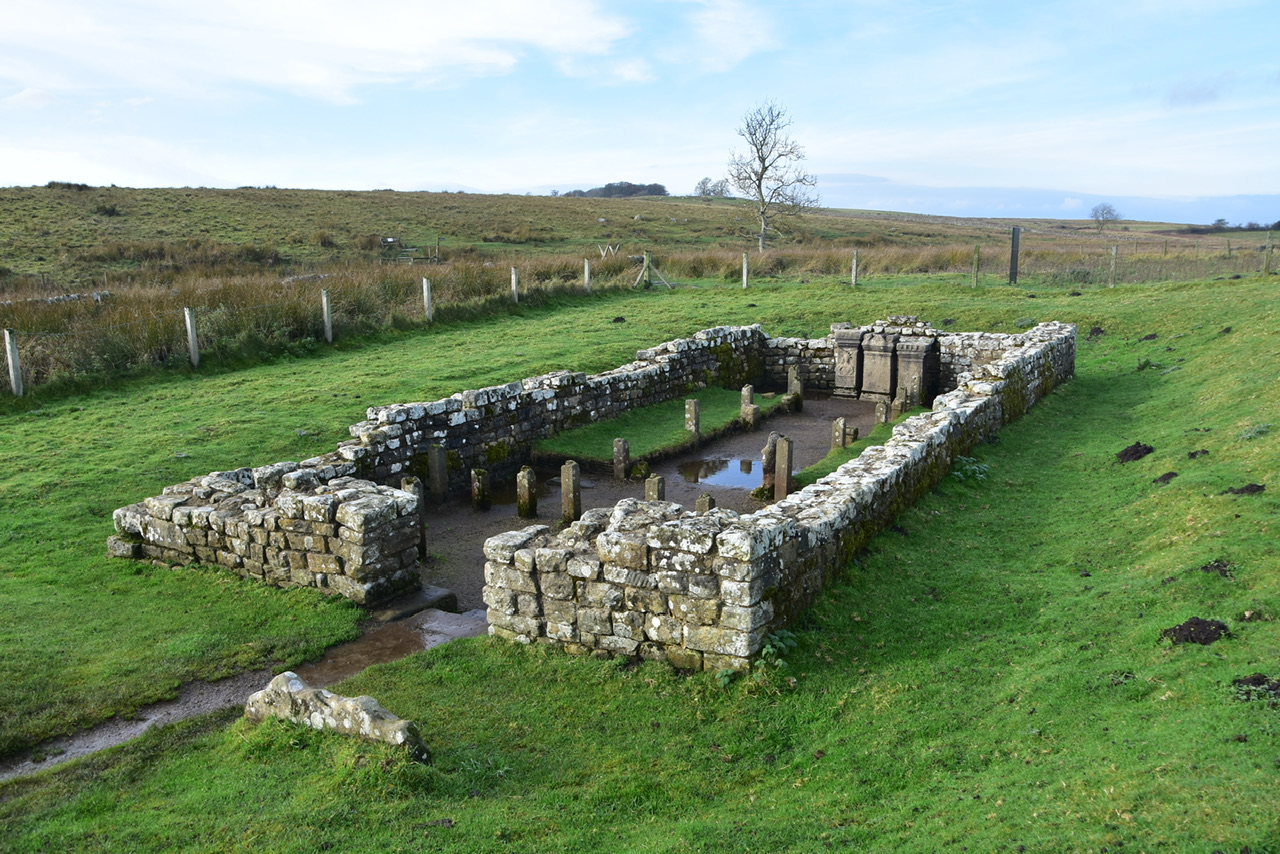
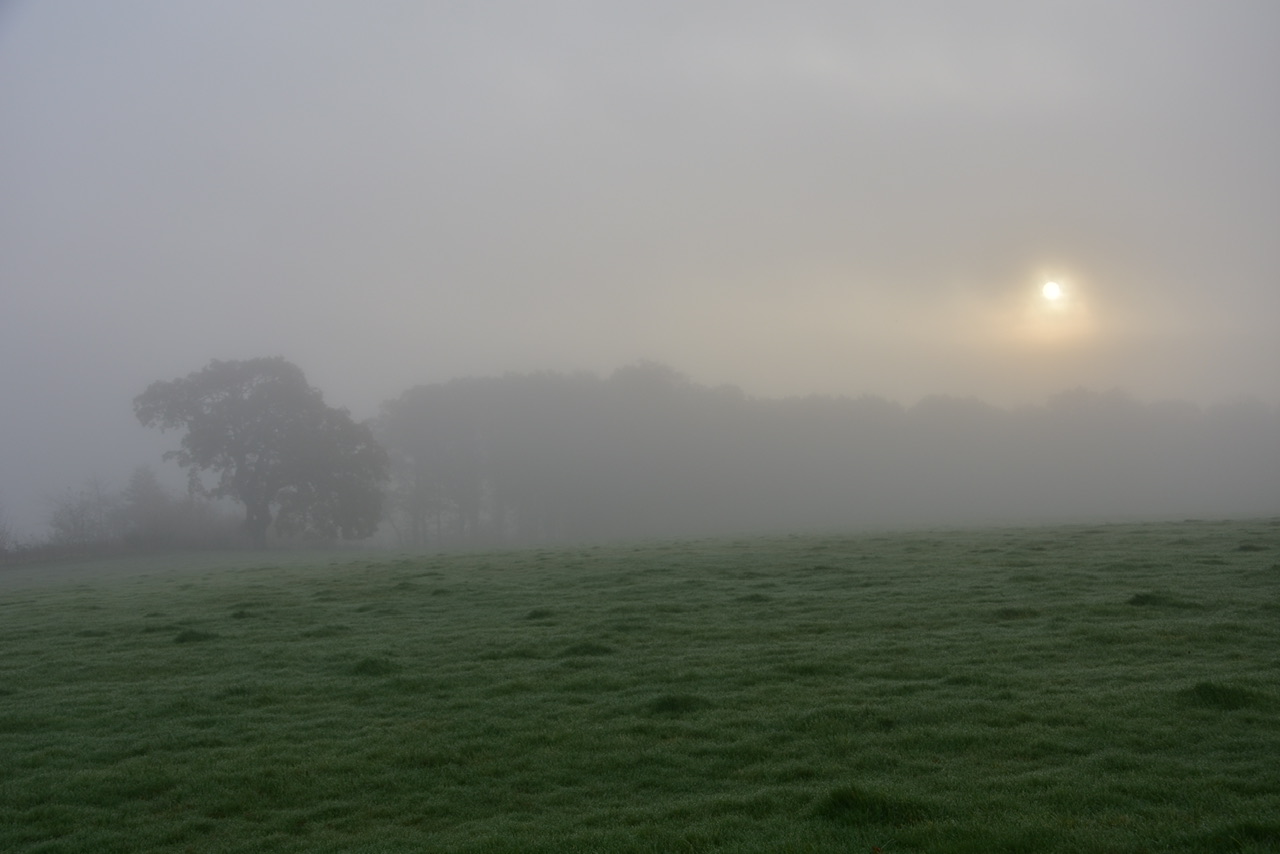
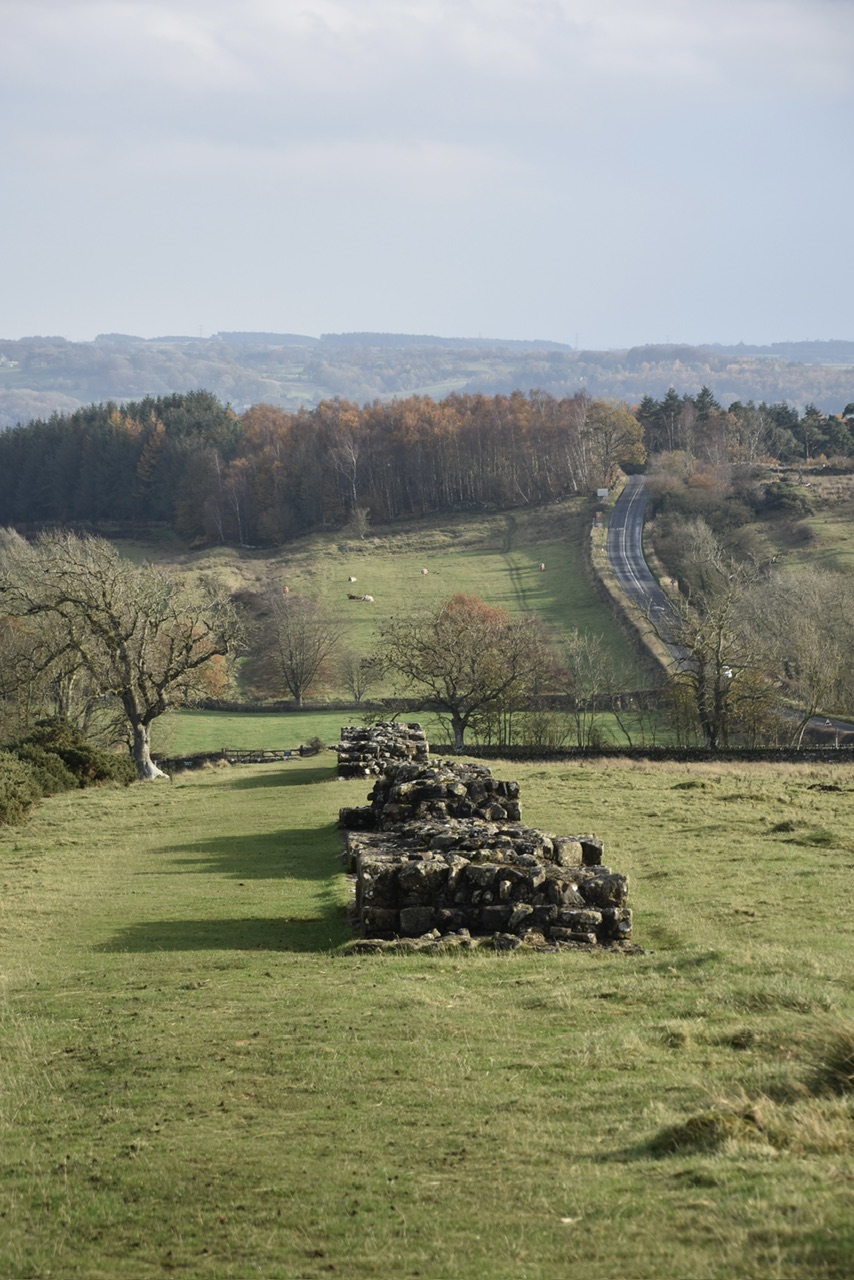
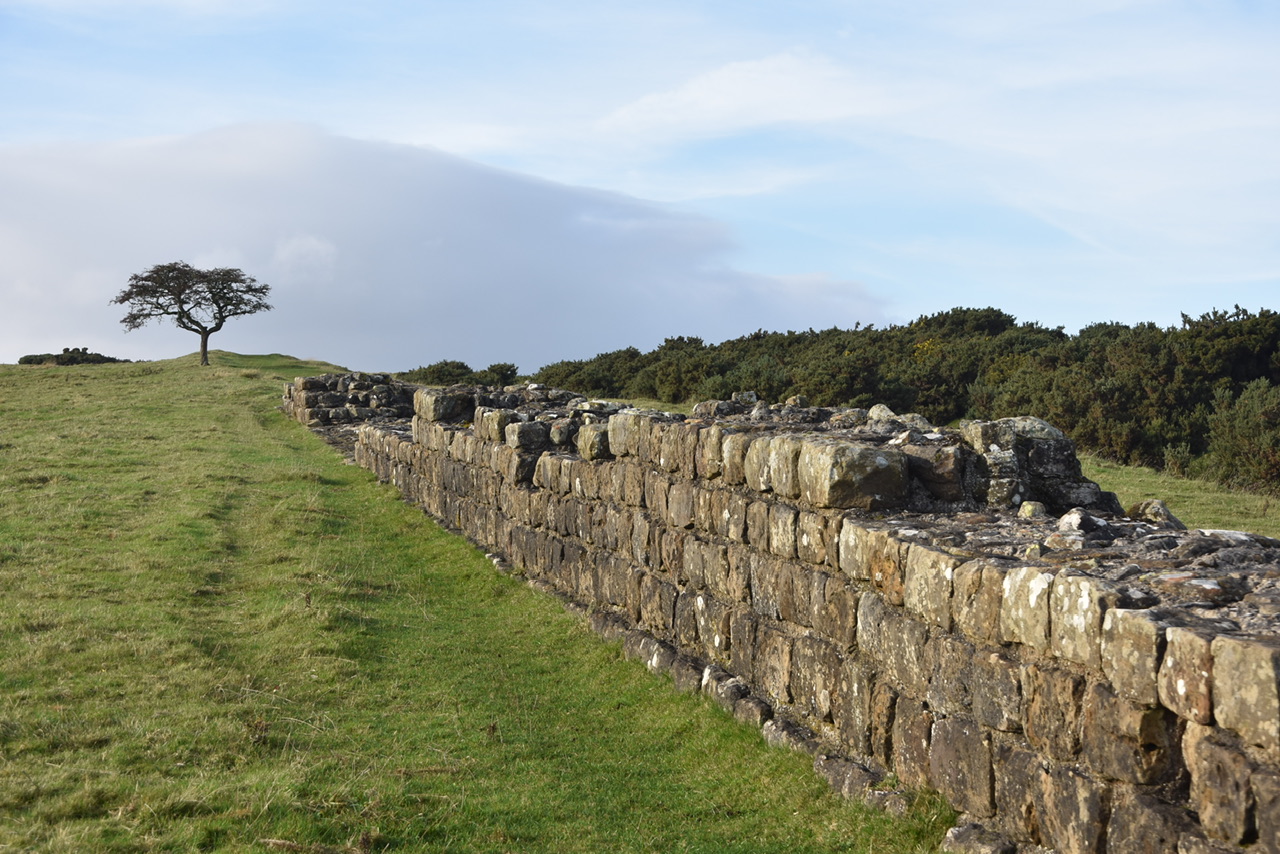
I started today by misreading the bus timetable. A mild, misty day with the promise of sunshine. I definitely didn’t want to wait two hours for another bus so set off on foot for a path that included a “Ford” marked on the map! The route I chose was cautious rather than direct (and, yippee, the dreaded “Ford” was furnished with a footbridge), and I reached Hadrian’s Wall at the Temple of Mithras. I had the impression from the map that this wasn’t a great stretch to walk – close to the road and the sound of traffic – but it was wonderful. I had the path to myself and I wasn’t expecting to come across the short section of wall still standing.

At Chollerford – far too early for the bus to Wark – I decided to catch a bus into Hexham for a coffee and a newspaper and return from there. A quite wonderful 24 hours.

Bellingham

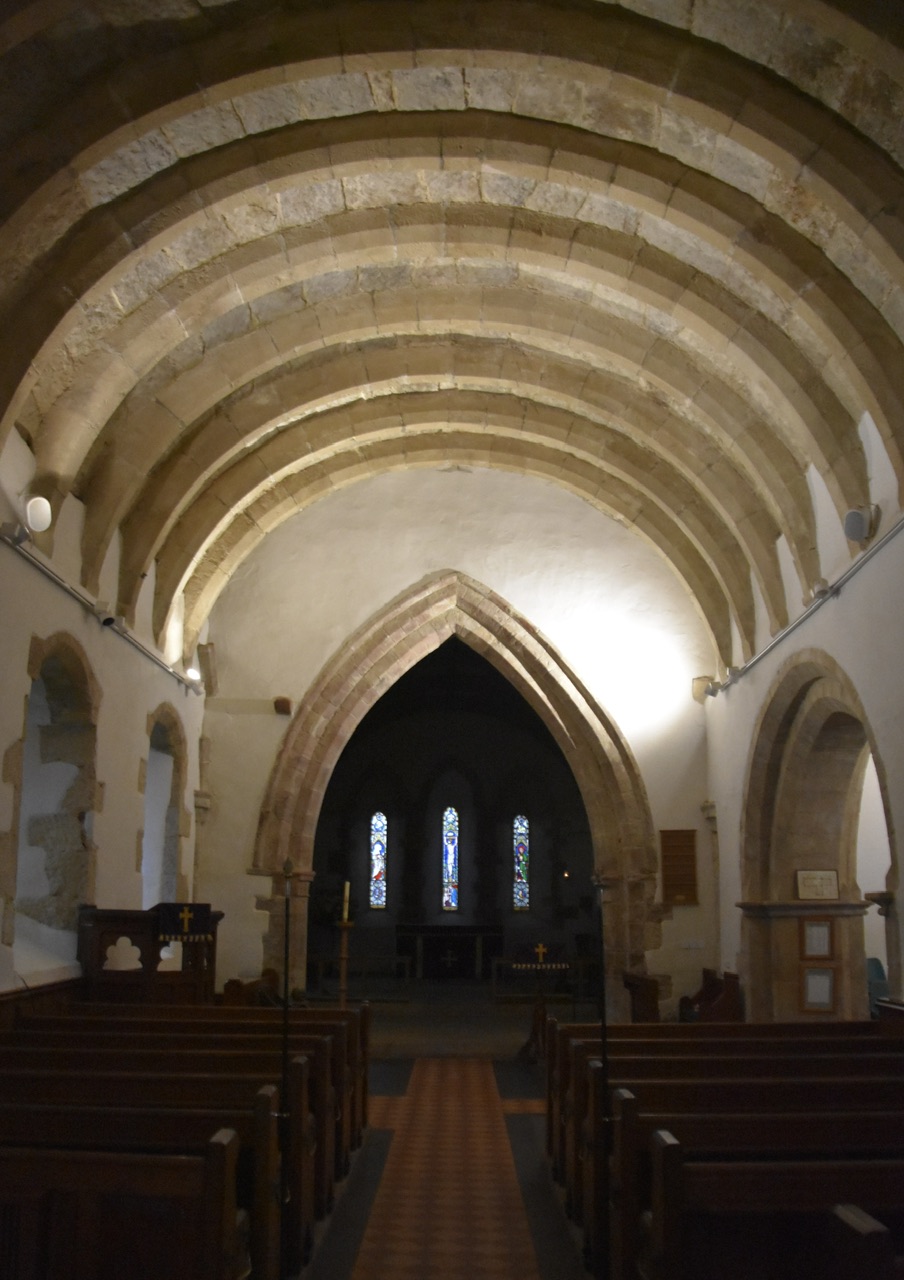
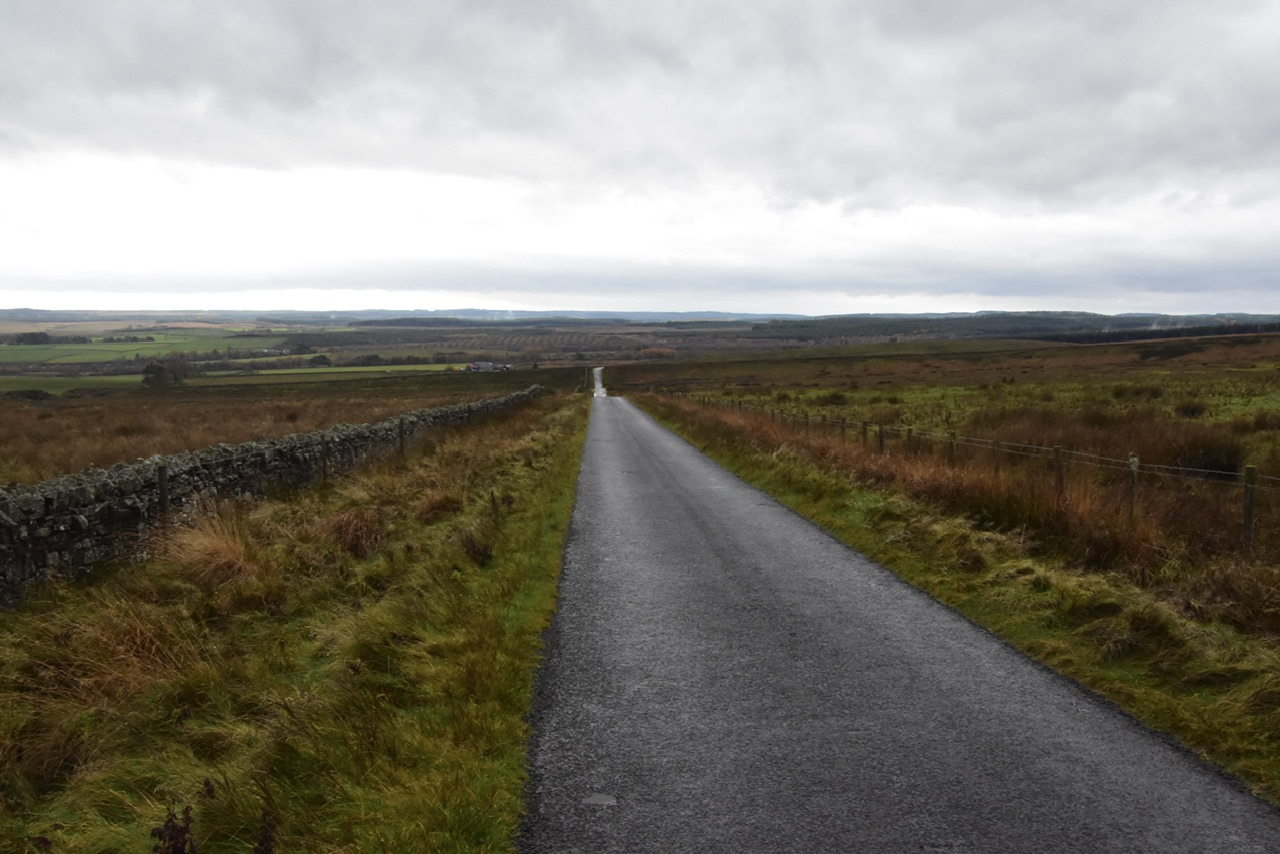
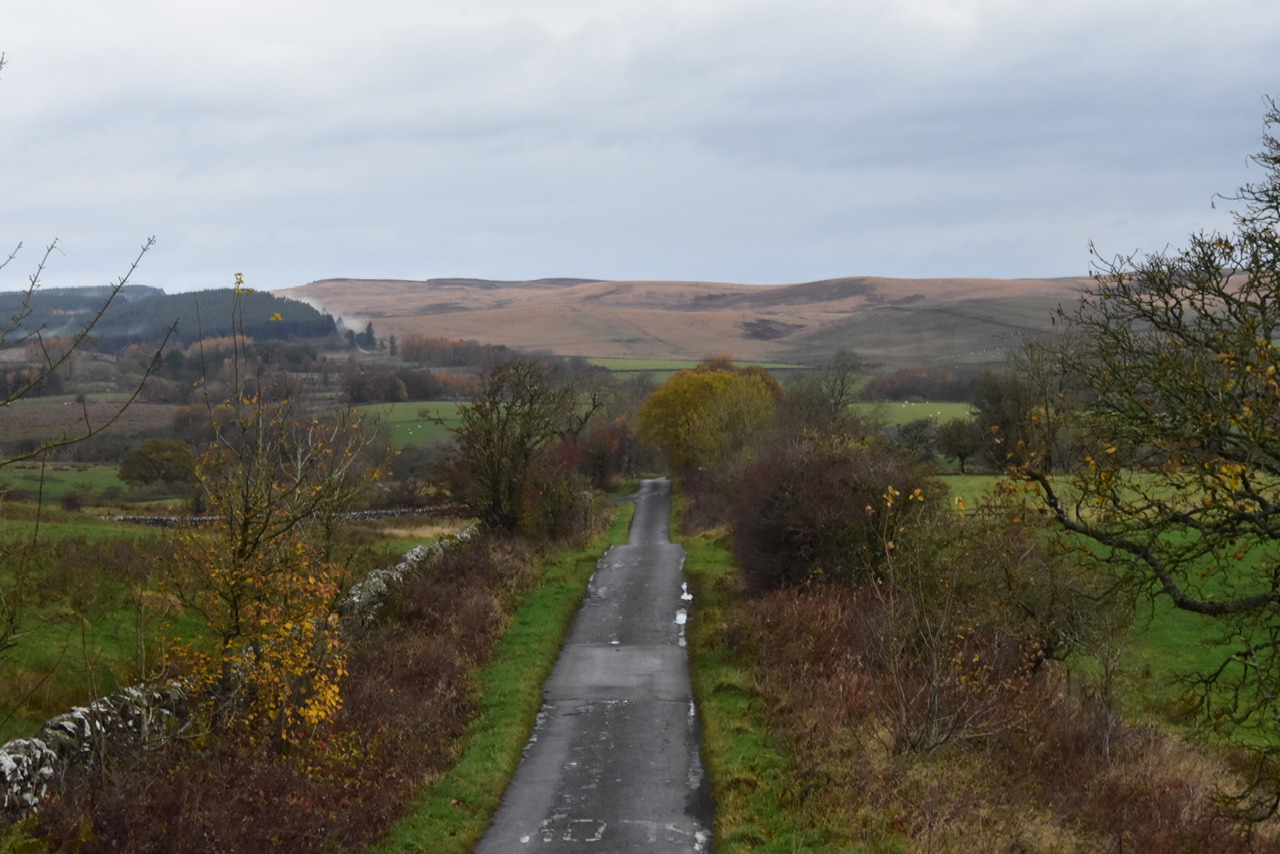
It rained all morning. And was still raining when I caught the noon bus to Bellingham to walk back. I’ve decided against unknown footpaths – and definitely not those marked with “Ford” on the OS map – so, after going inside St Cuthbert’s Church (thick slate roof which must weigh a ton), I walked back to Wark on minor roads.

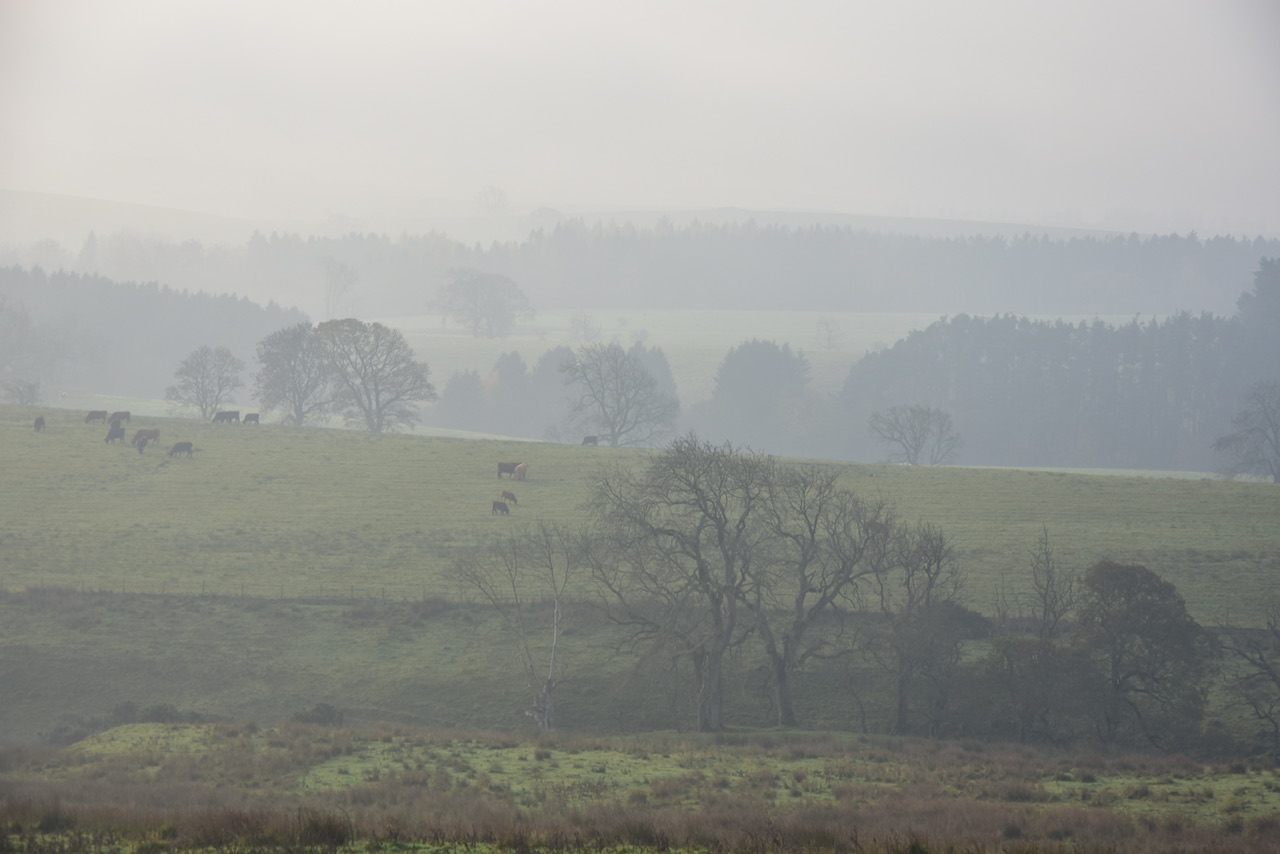
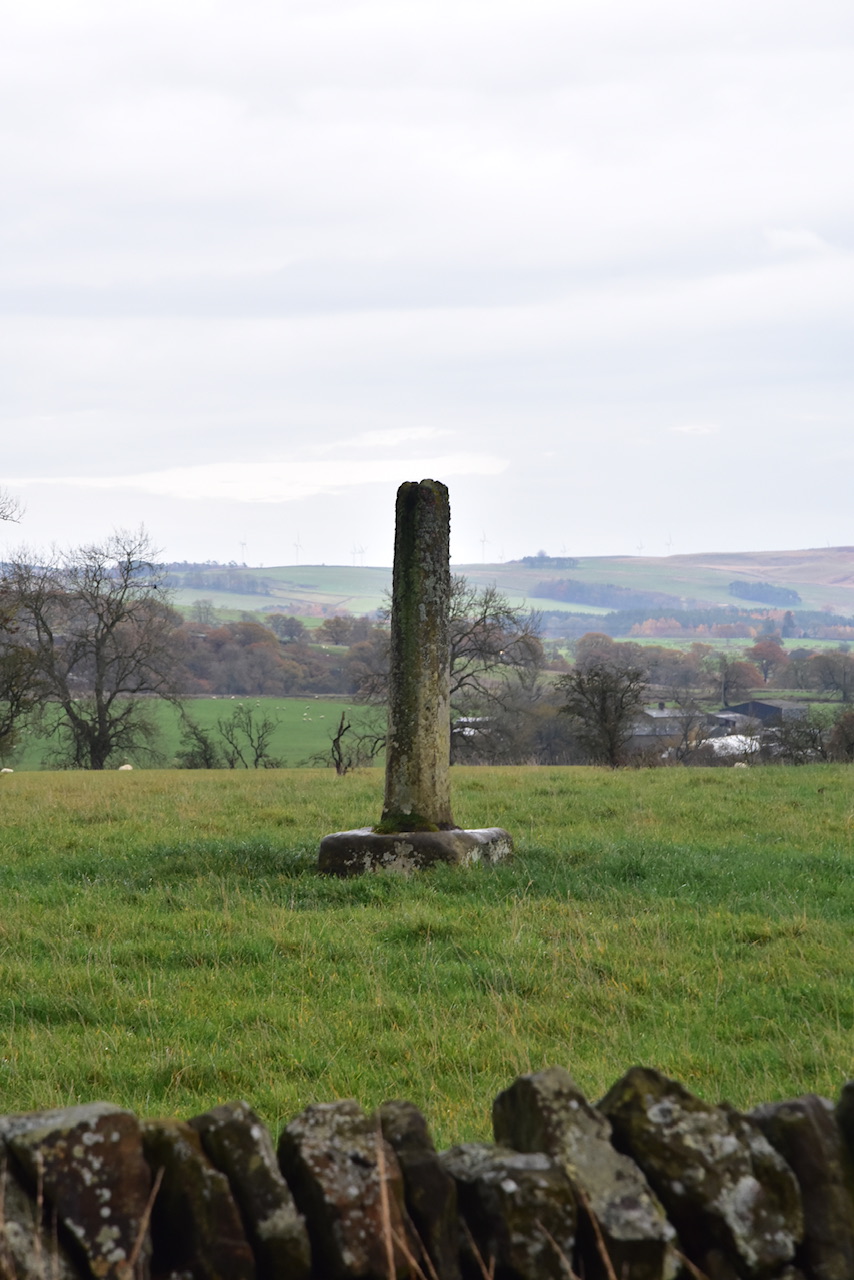
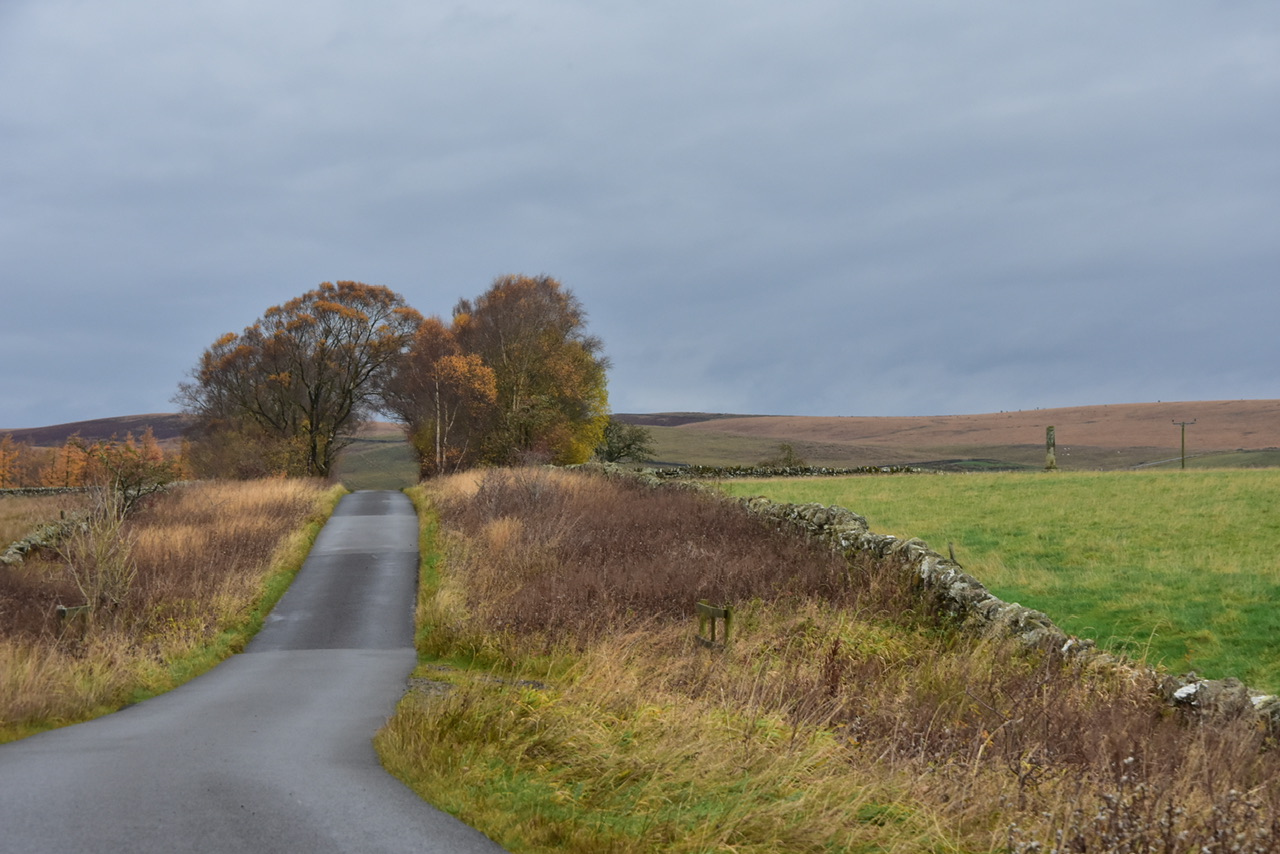
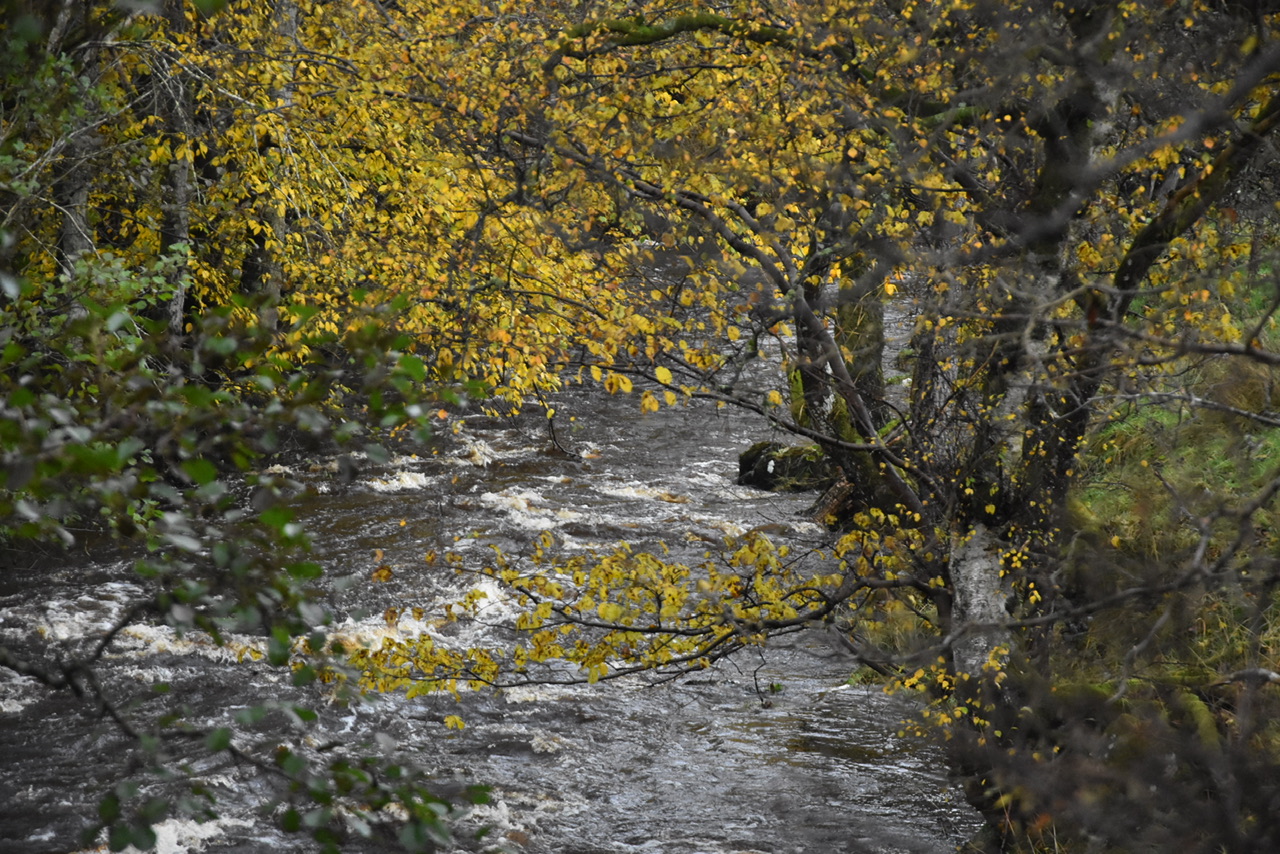
It didn’t rain, it was mild, there was little wind, and even in the gloom there was an autumnal glow. What’s not to like? Just after my lunch stop I saw something marked as a “Cross” in Gothic letters on the map. Streams were fast-flowing and traffic was very light. I was glad to have been active and interested in my surroundings on so unpromising a day; as I walked along I listed to myself all the reasons that I actually enjoy this.

Wark

With the derailment at Shap, I had to come to Wark via Leeds and Newcastle, which gave me the opportunity to have a cup of coffee amongst the Burmantofts splendour of The Centurion bar on Newcastle station. I’ve come for walking and star-gazing, but the weather may rain on both those ambitions.

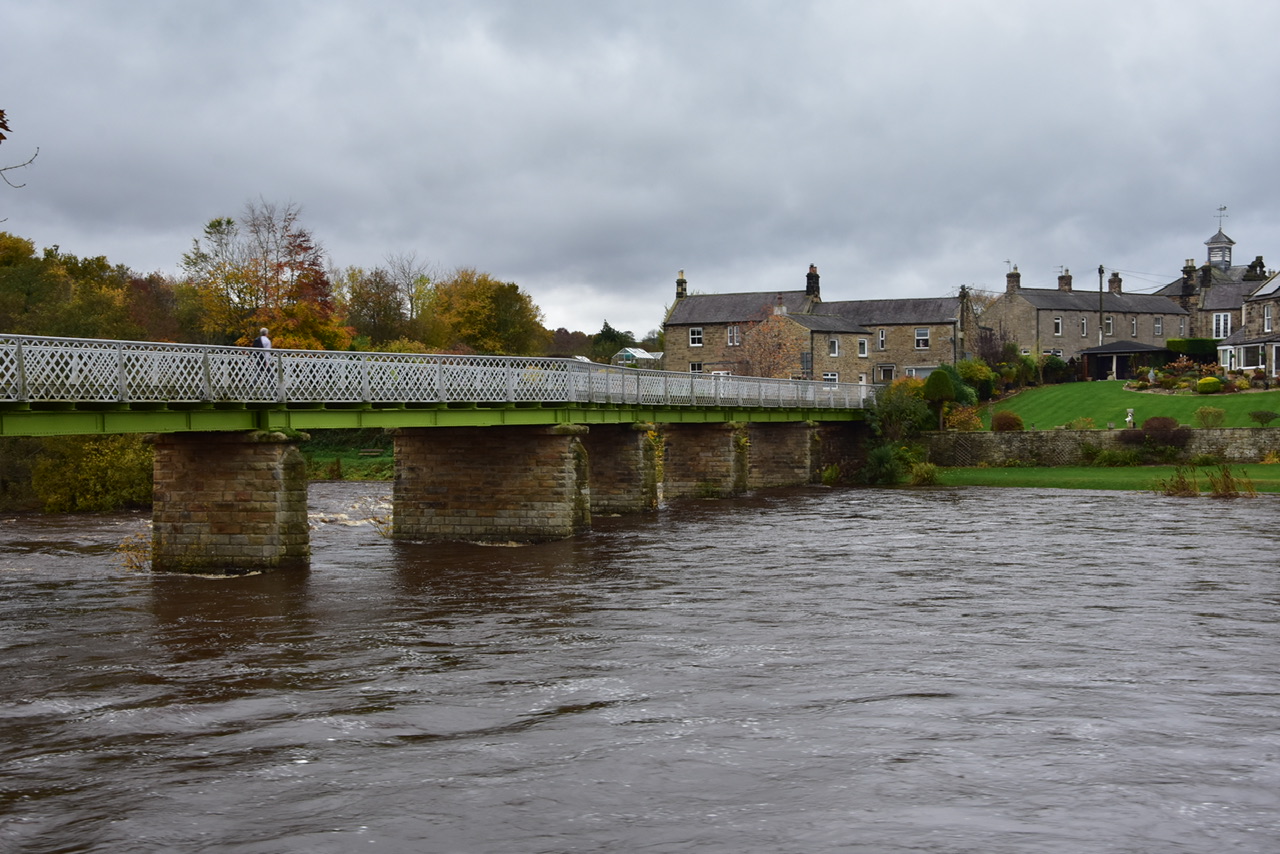
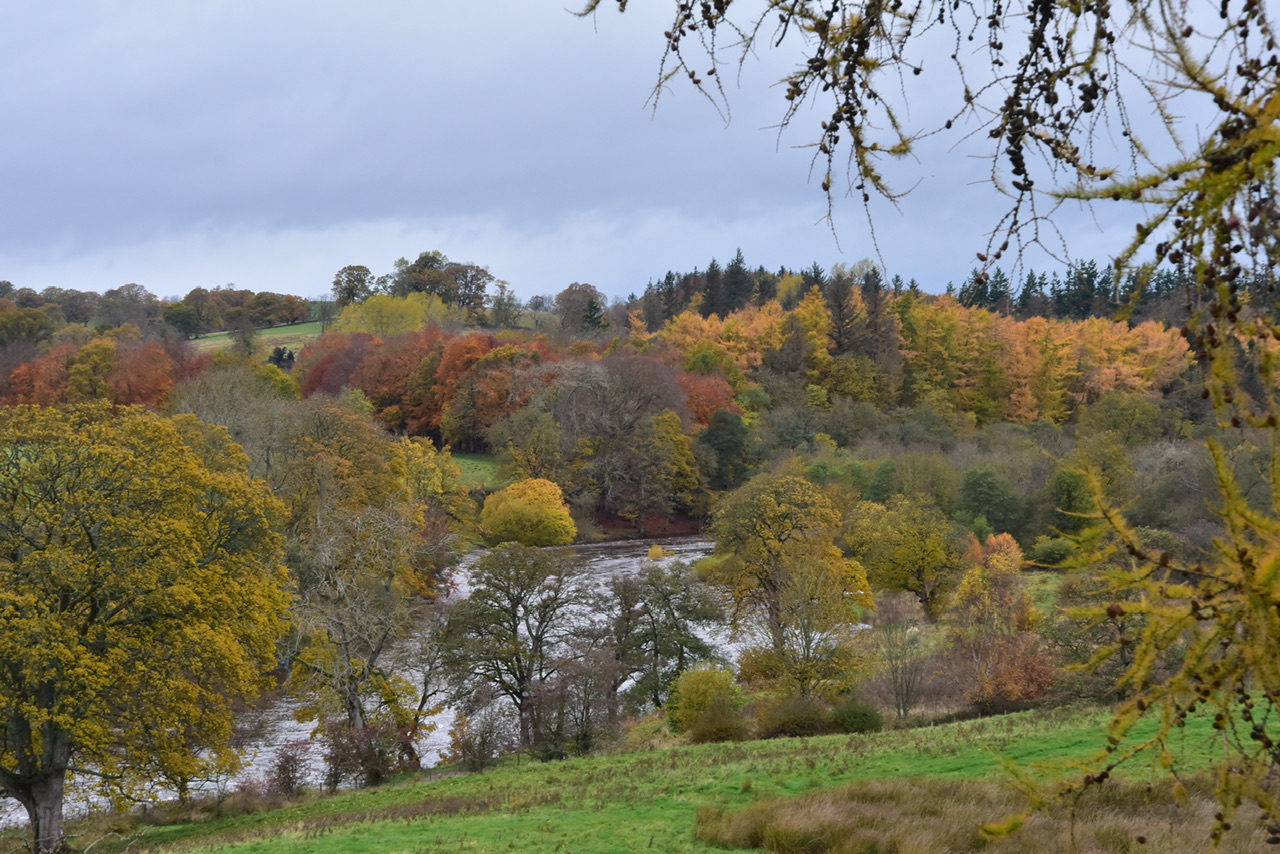
I arrived shortly after 2, dumped my case and set off to explore Wark and look at the Tyne (high and fast-flowing). I picked up a leaflet at reception and ended up doing a circuit on minor roads with only a camera, an umbrella and a torch. Fortunately the weather stayed dry and I got back before dark, having discovered another disused railway line (the North British Railway). It feels satisfying to be exploring somewhere new.

Seaton Delaval to Tynemouth

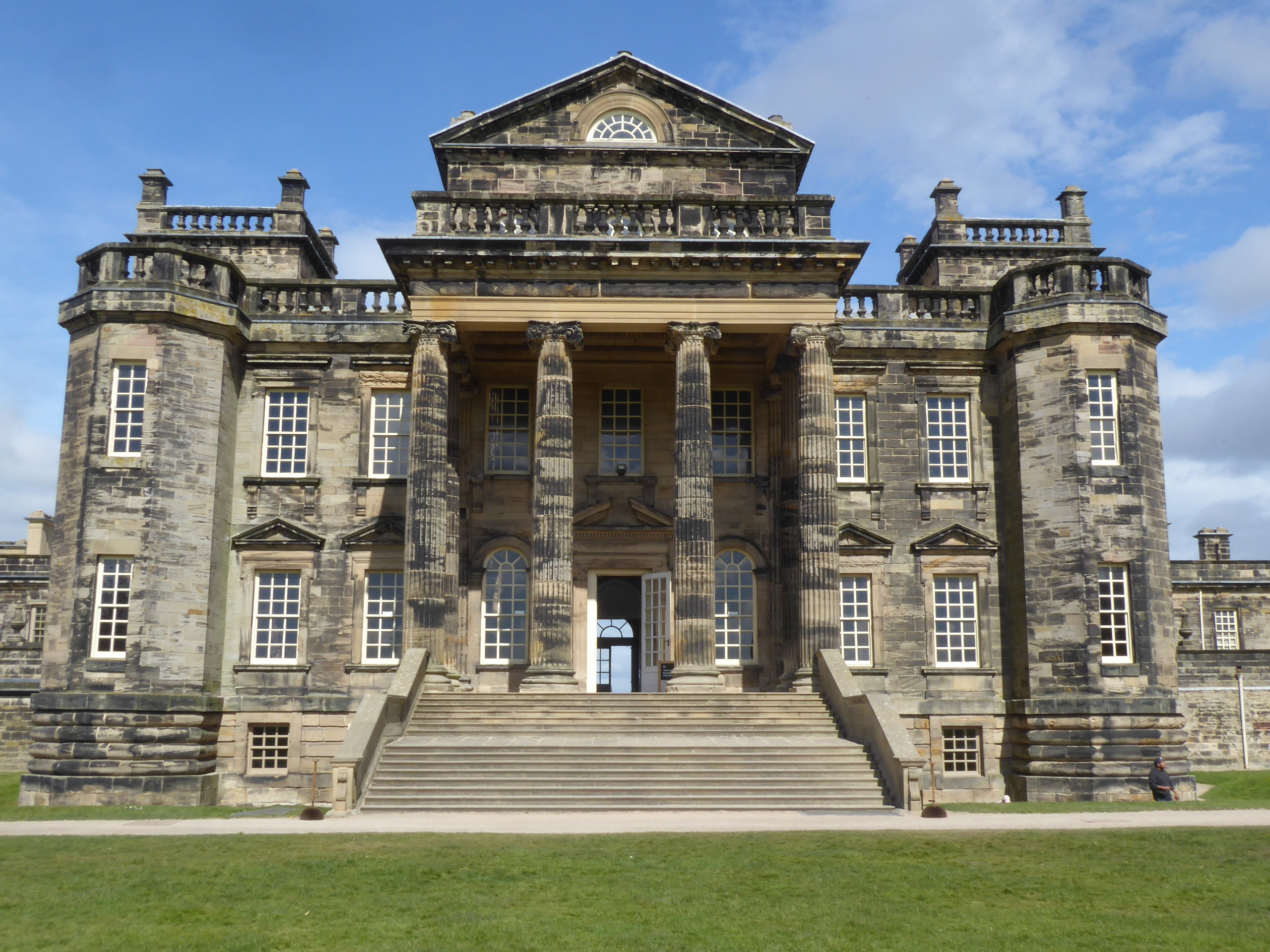
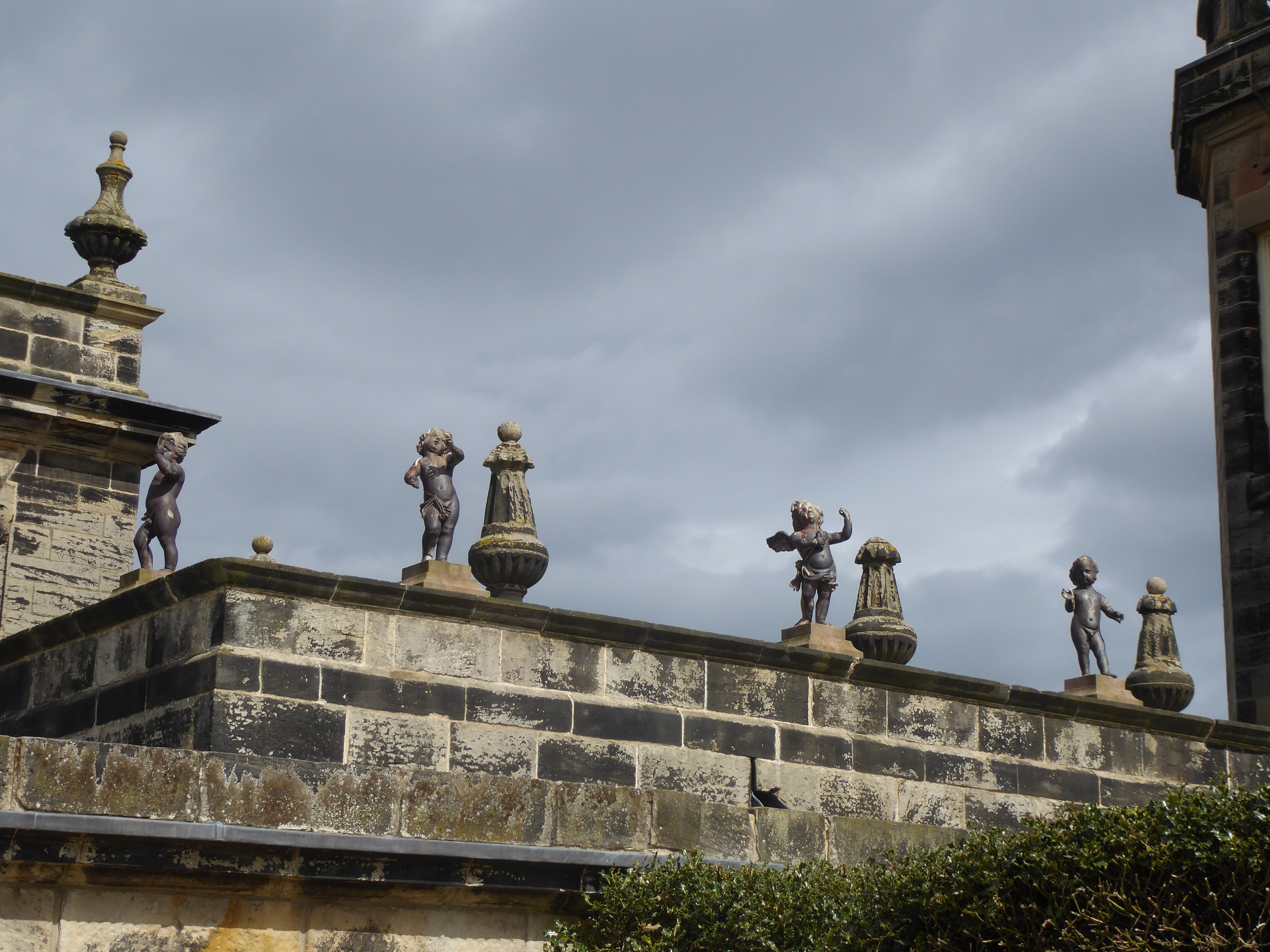
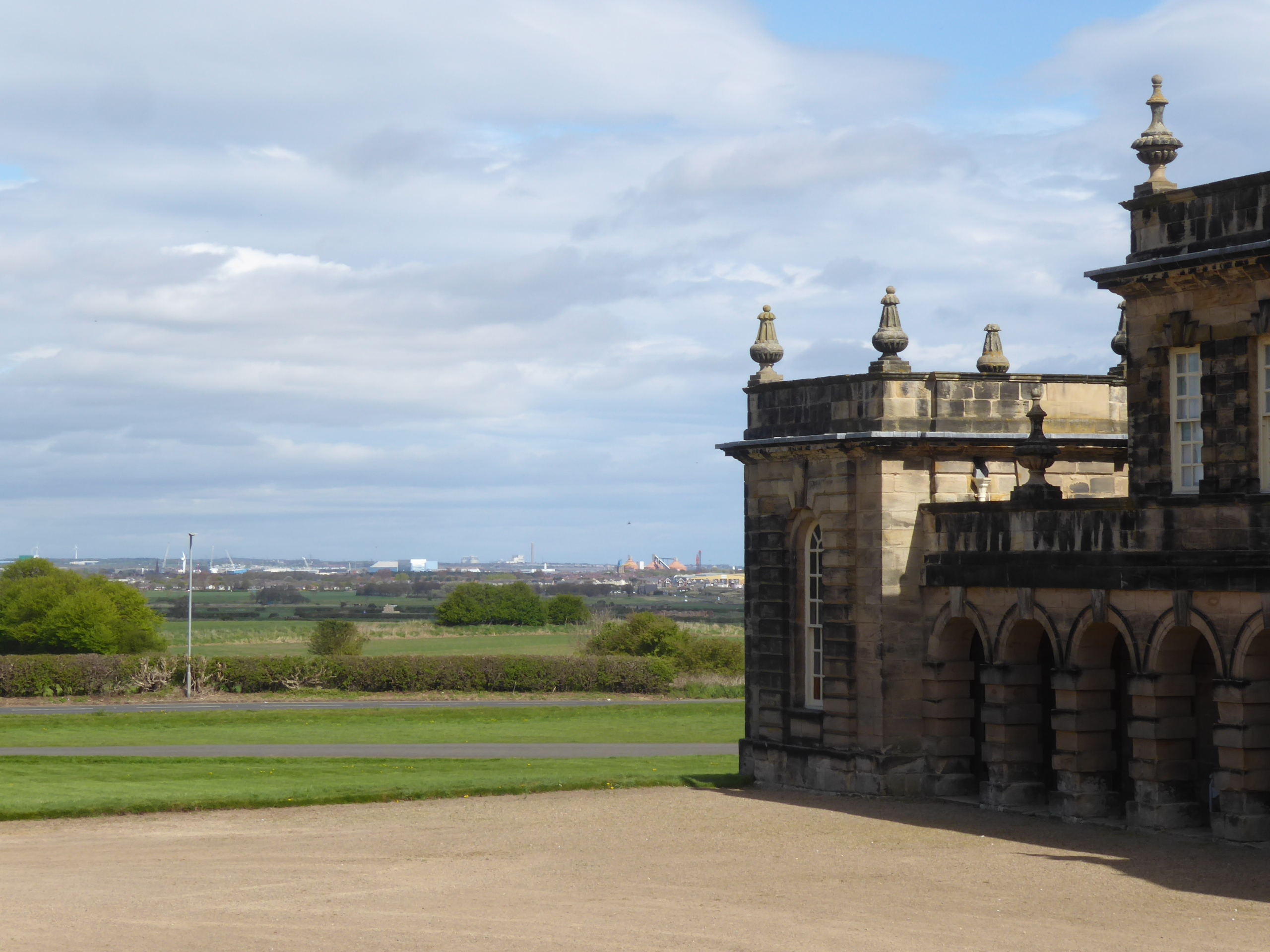
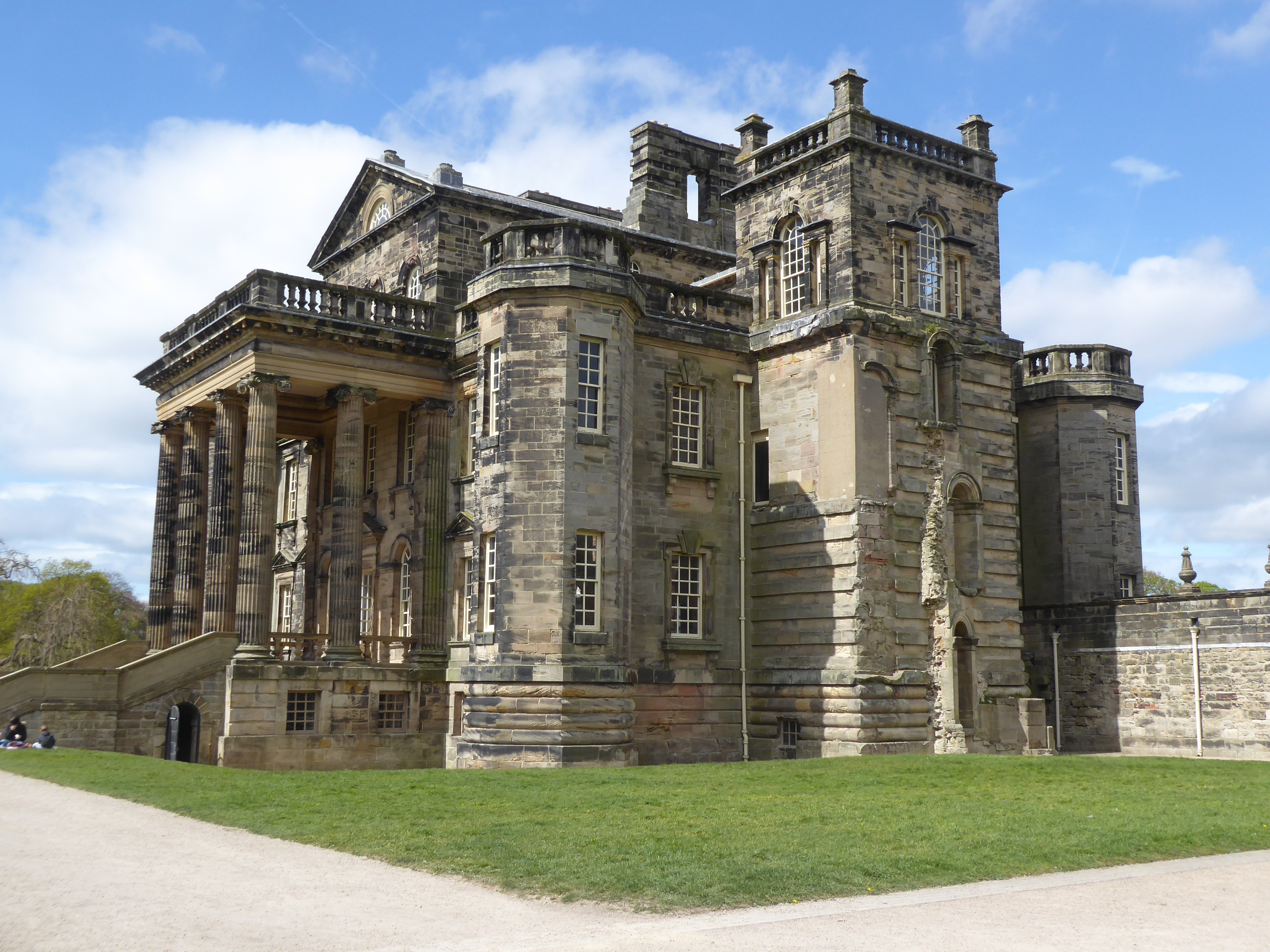
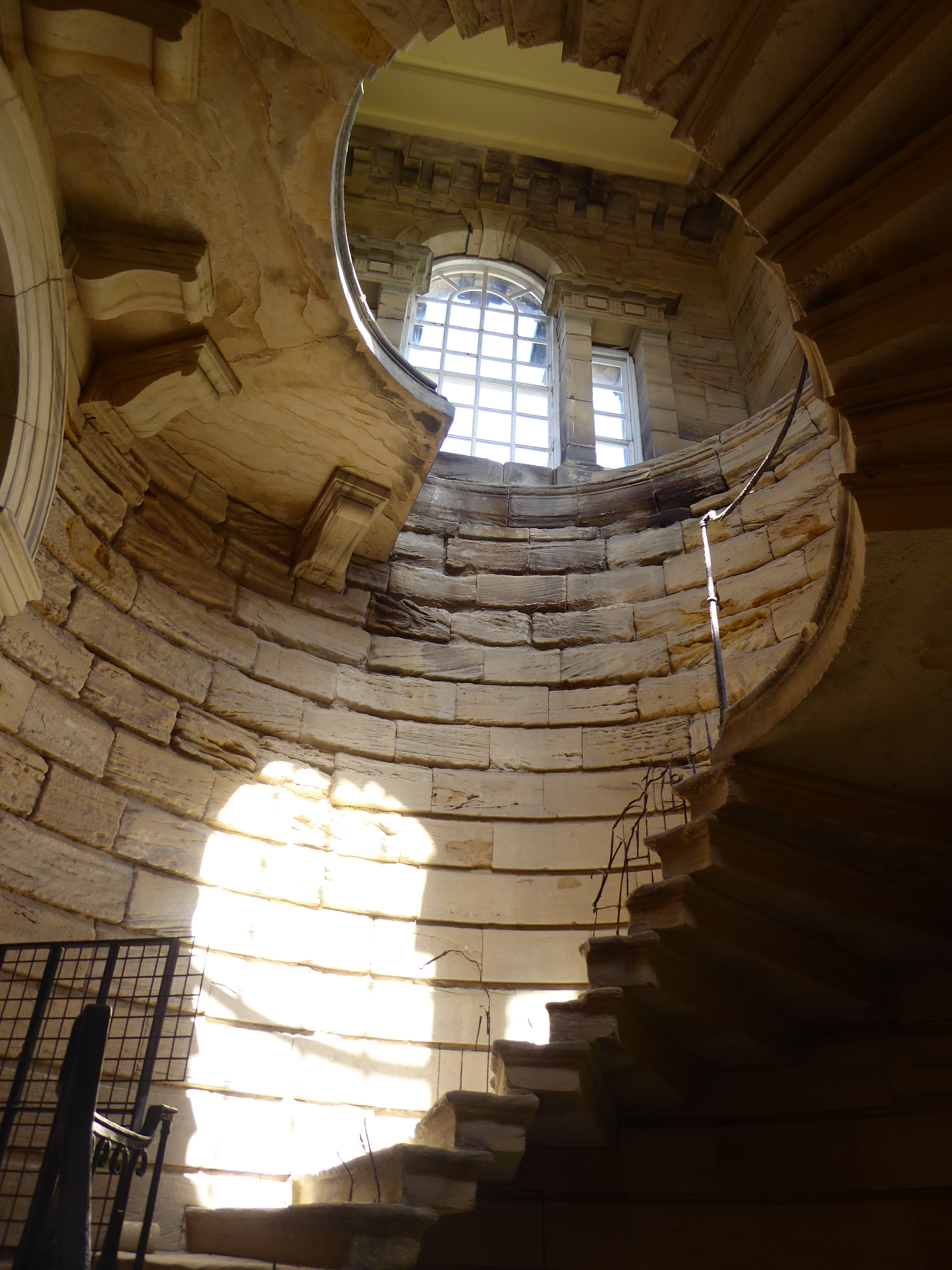
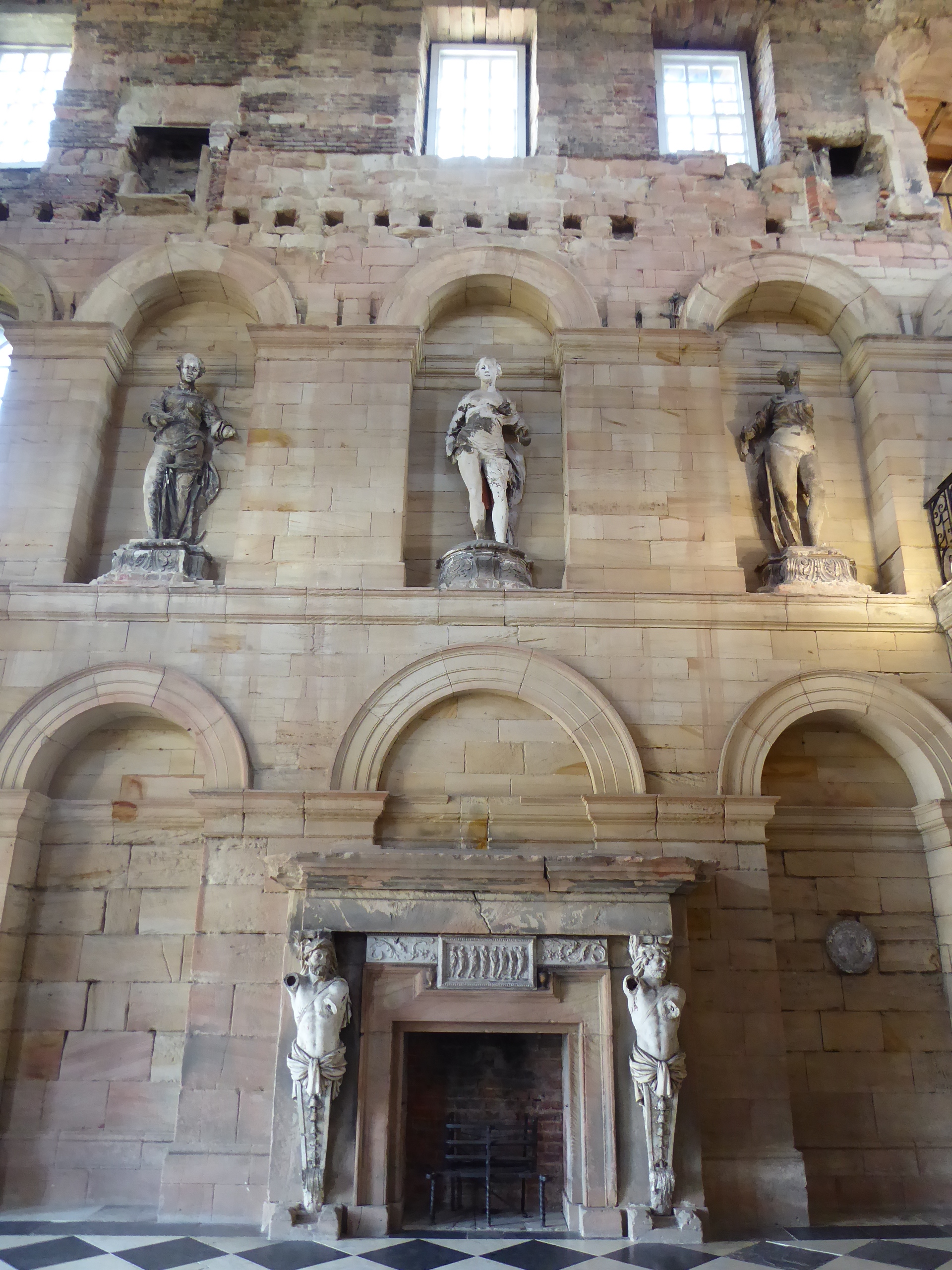
The Ashington train again, but this time only as far as Seaton Delaval and the Hall. Designed by Sir John Vanbrugh and built 1718-28. In 1822 a fire destroyed the south-east wing and gutted the central hall – the corps de logis. (I was confused about this, since both wings seemed intact, but a guide explained to me that the destroyed south-east wing was a later addition.) A great shame, priceless masterpiece, yada yada yada . . . but actually the damage to the showpiece central hall makes it all the more marvellous. Pipistrelle bats hibernate in the upper storeys. You can see which pilasters were made of stone. The eighteenth-century brickwork contrasted with the essential patching up of the nineteenth. Its ruin has been arrested, its proportions and exterior still dominate, and the interior has an air halfway between Ozymandias and poignancy. The family wealth (my inner Marxist asks the question) originally came from salt, glass (from the lovely sandy beaches) and coal.
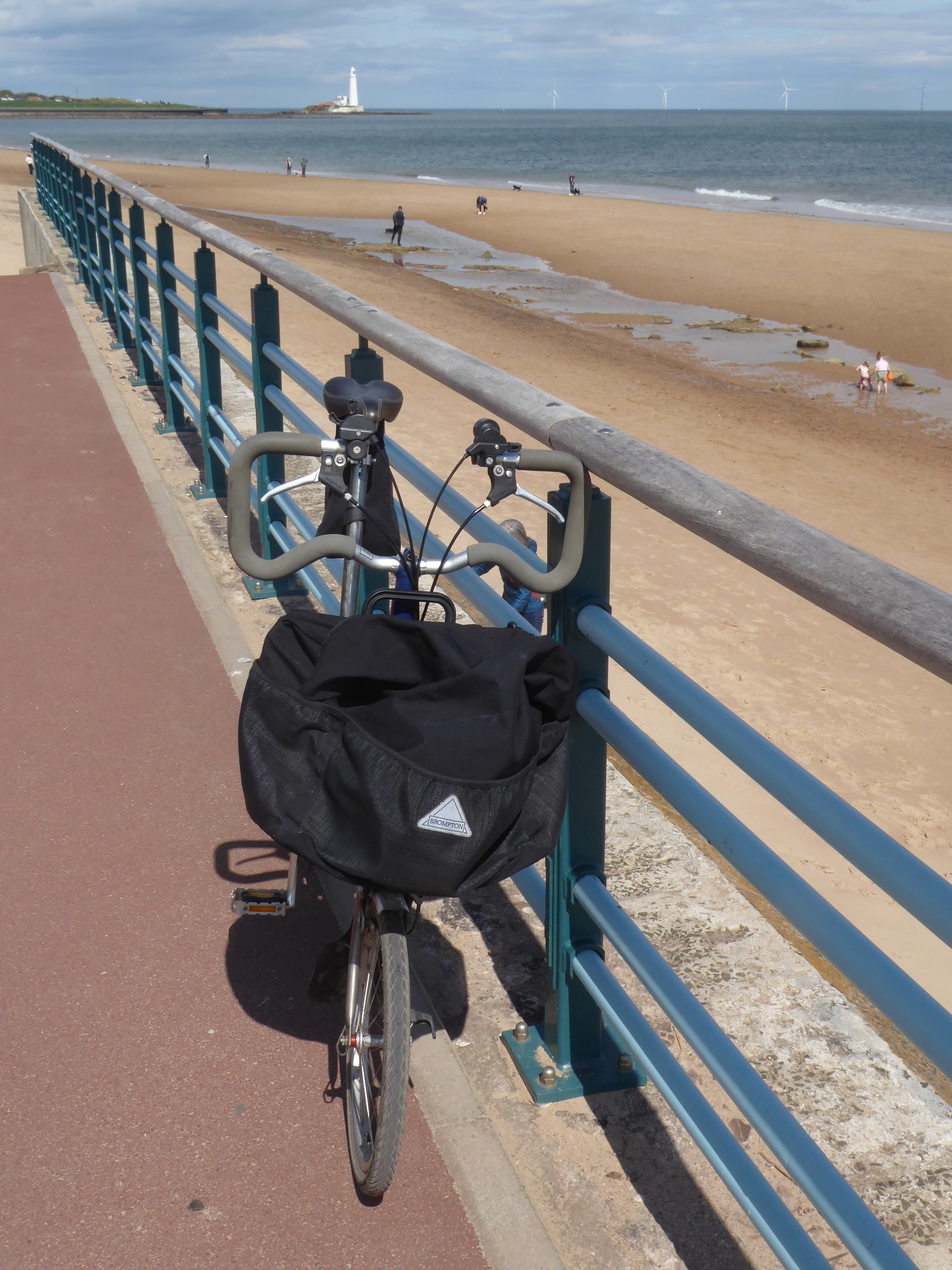
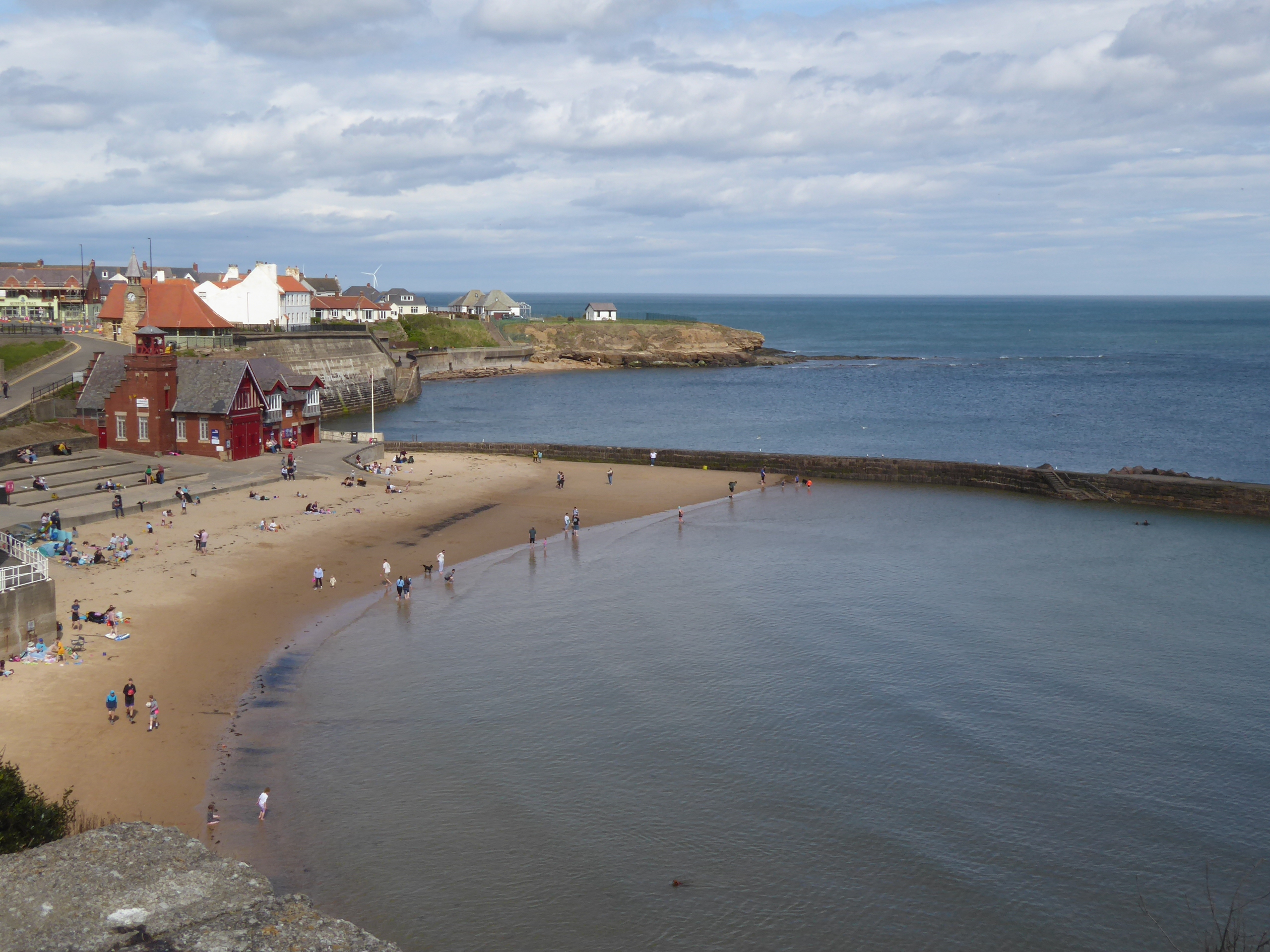
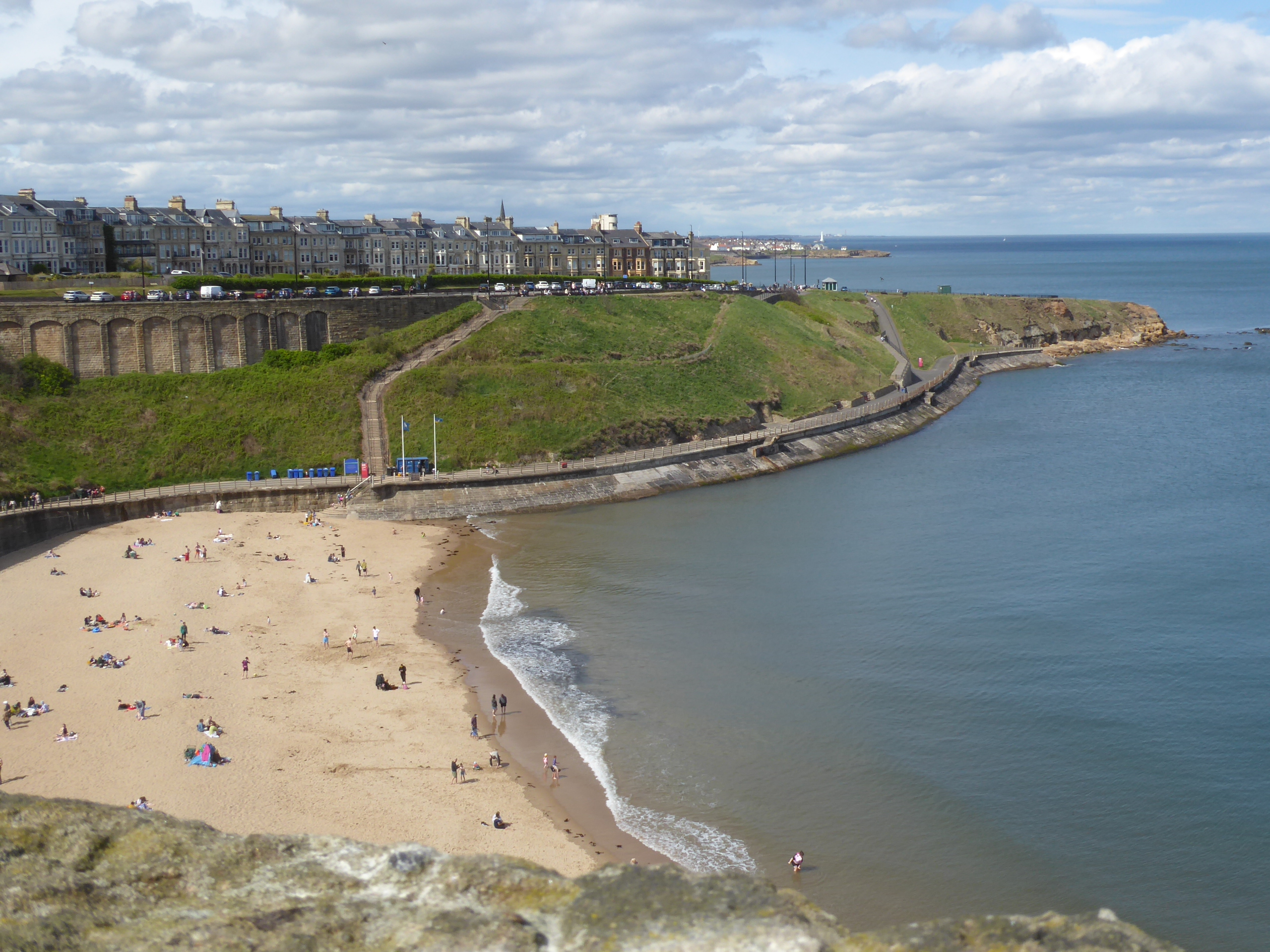
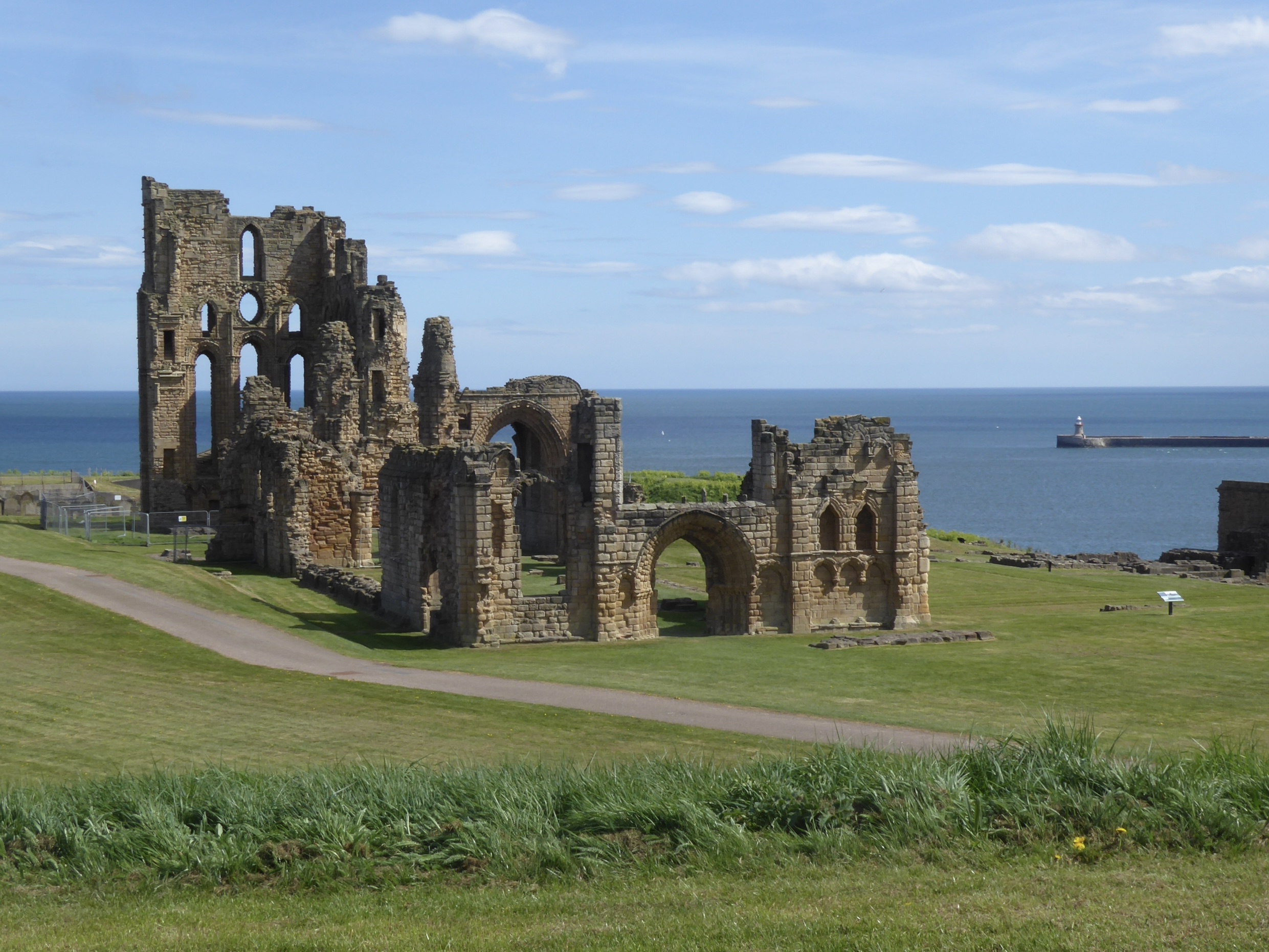
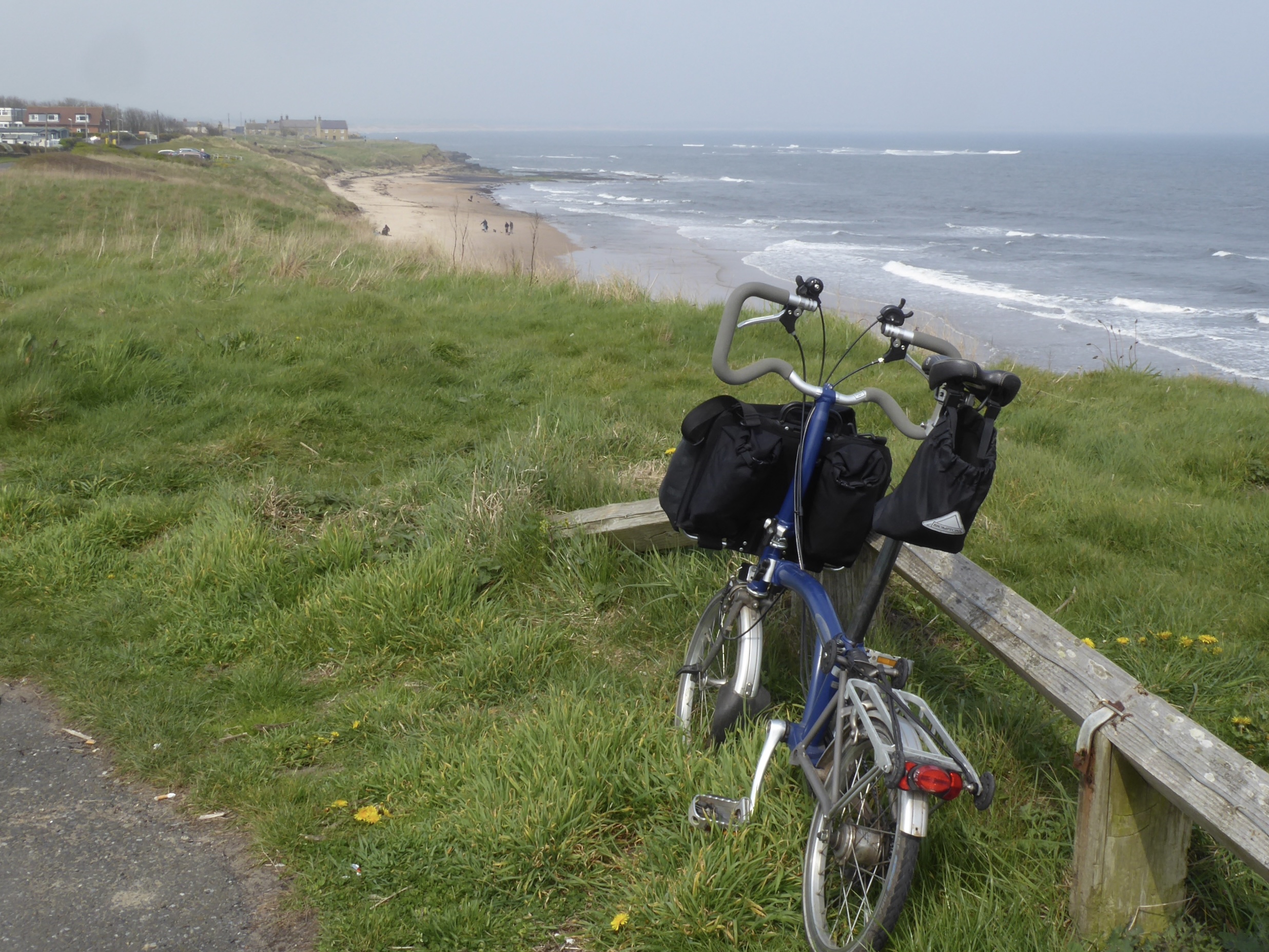
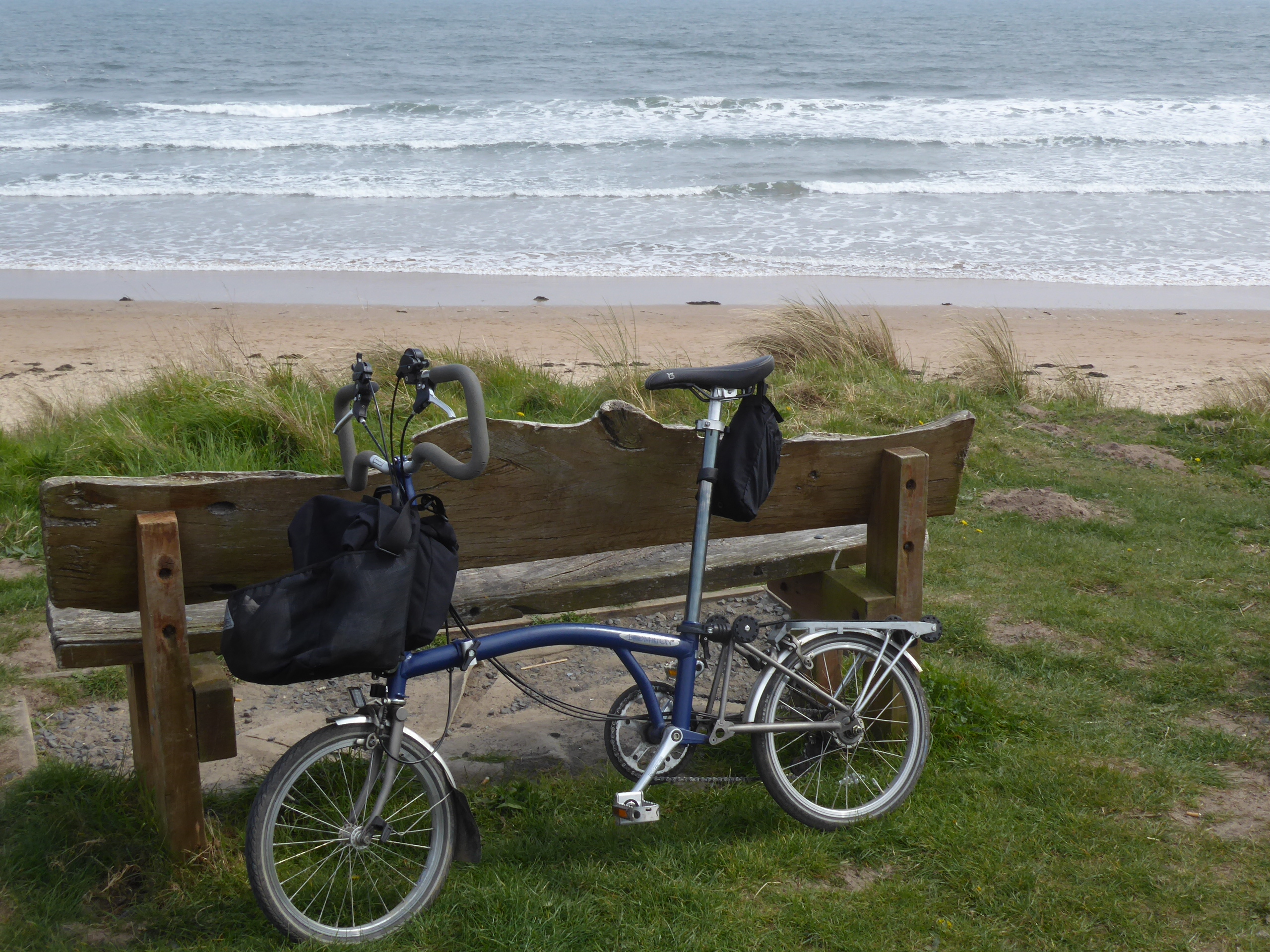
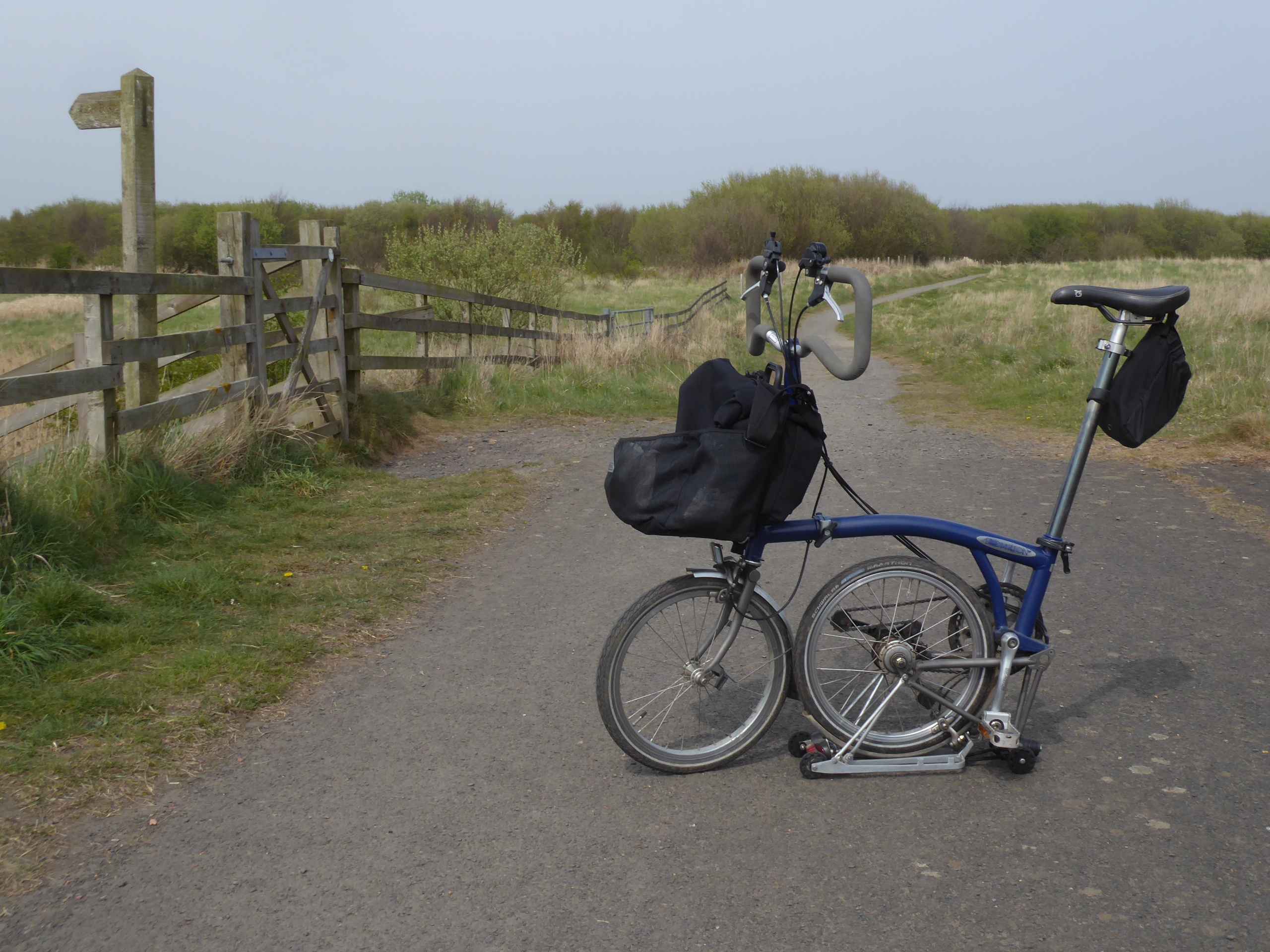
Then back to the Brompton and a ride to Seaton Sluice and southwards along the coast through Whitley Bay and Cullercoats to Tynemouth. I stopped to admire the Spanish City and remembered how my Newcastle-bred mother used to refer to Whitley Bay as some kind of childhood Nirvana. At Cullercoats I recognised the bay and Watch House from Robert Jopling’s paintings. And the outline of Tynemouth priory looked uncannily familiar until I remembered an evening ferry from Newcastle to Ijmuiden years ago. Then the metro back to Monument and I was in the big city once again.
Ashington to Alnmouth

What prompted me to come to Newcastle this time was the re-opening to passenger traffic of the railway line to Ashington – which is the gateway, for me, to see the works of the Pitmen Painters.

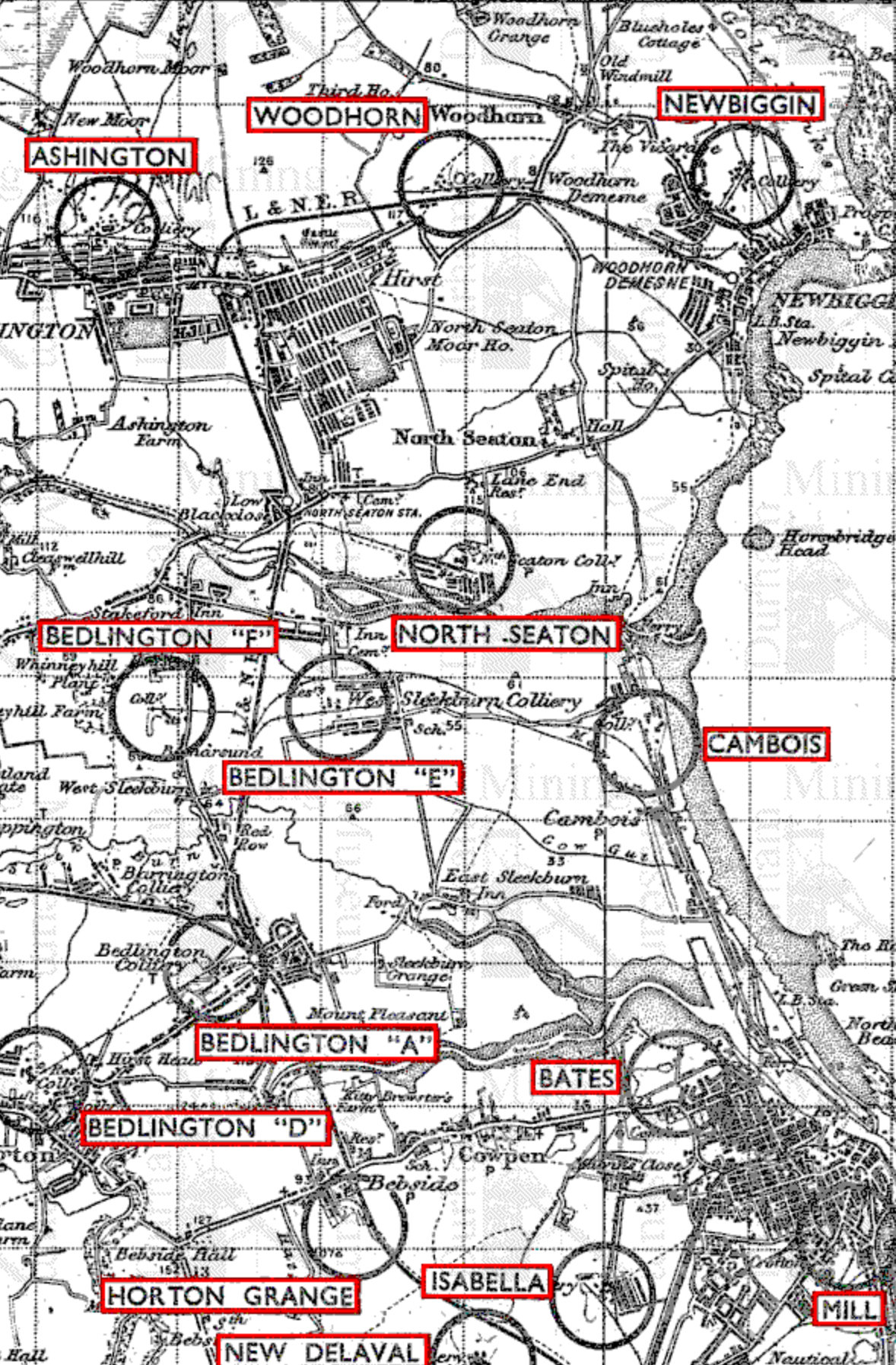
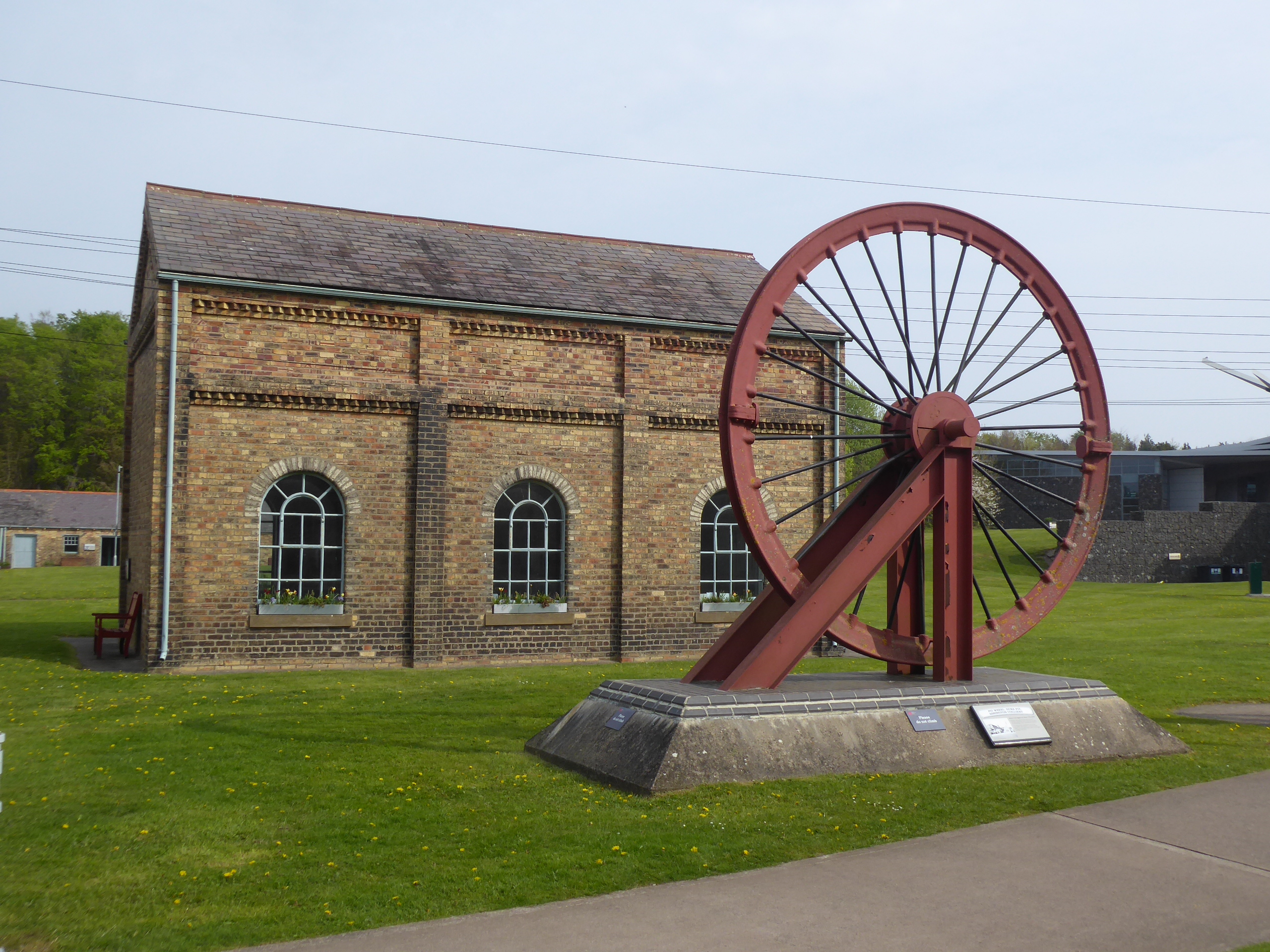
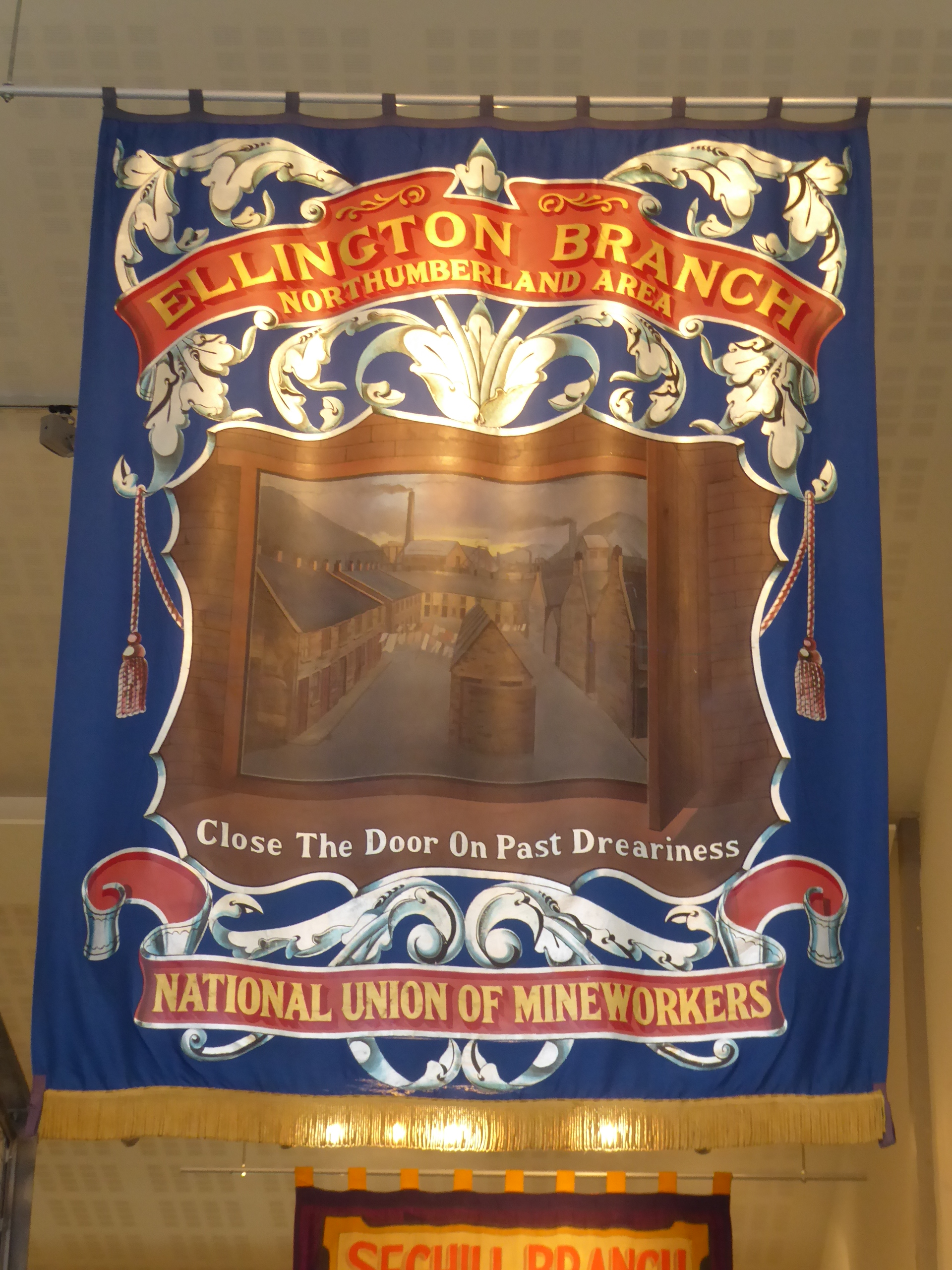
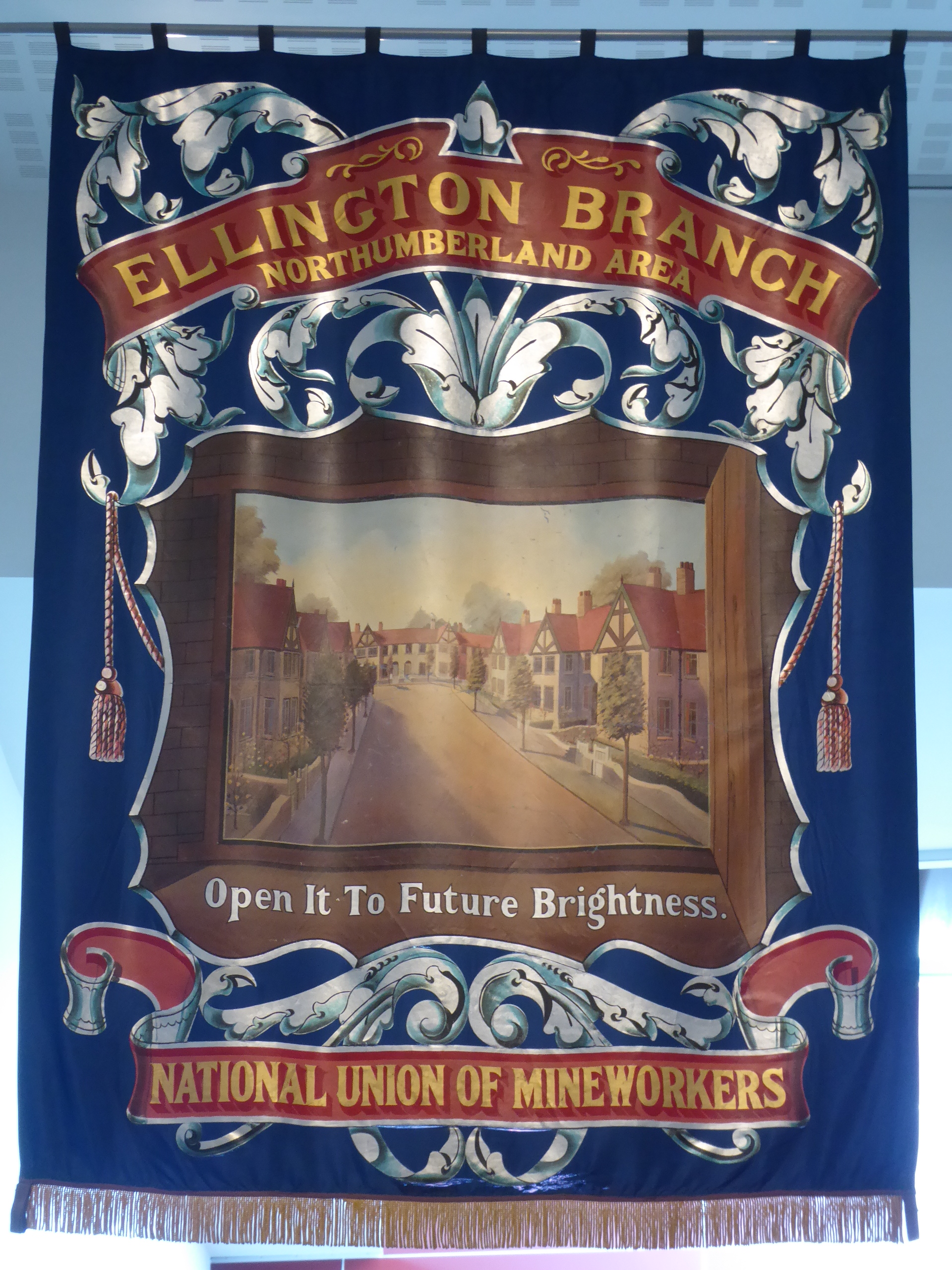
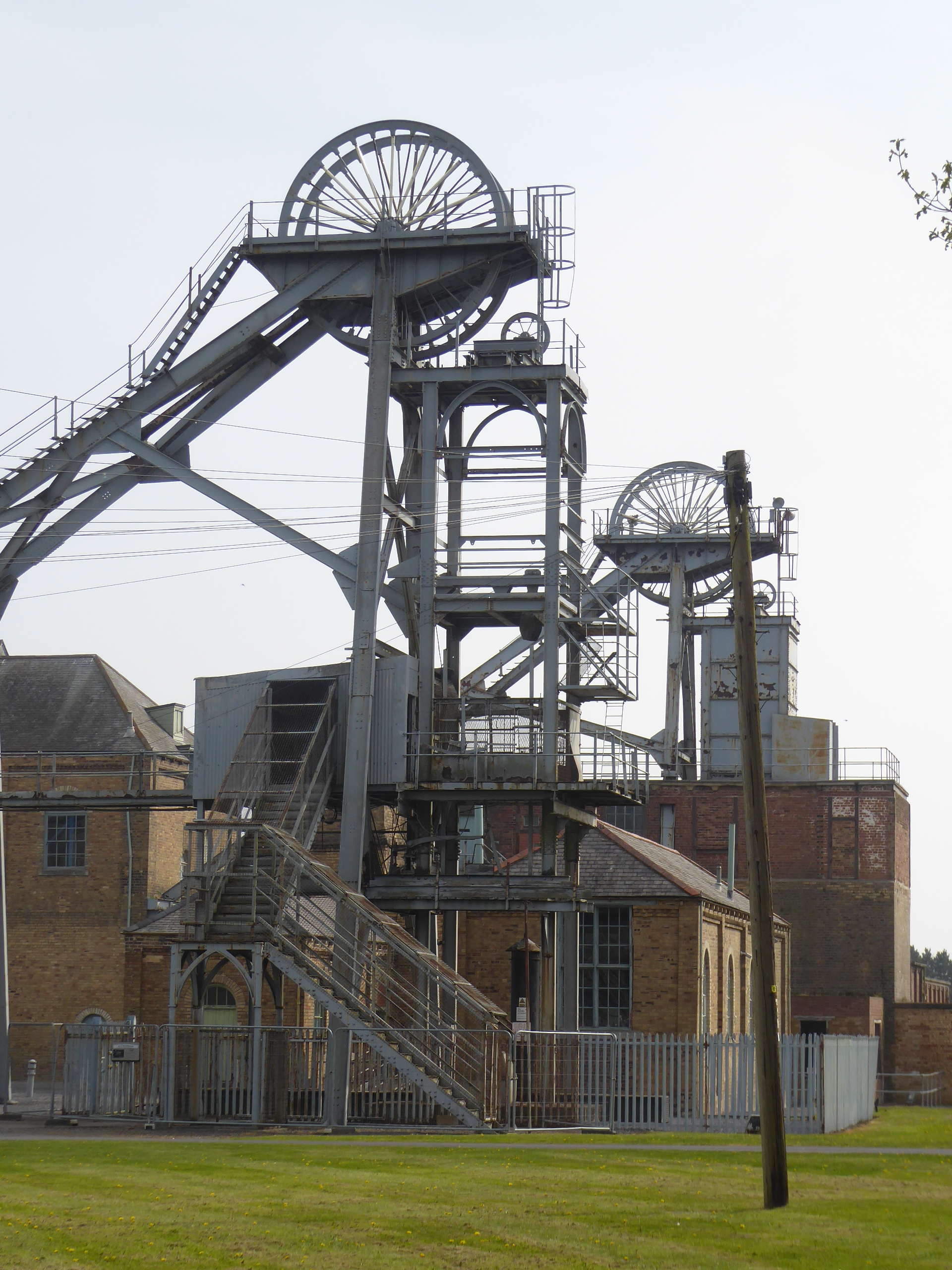
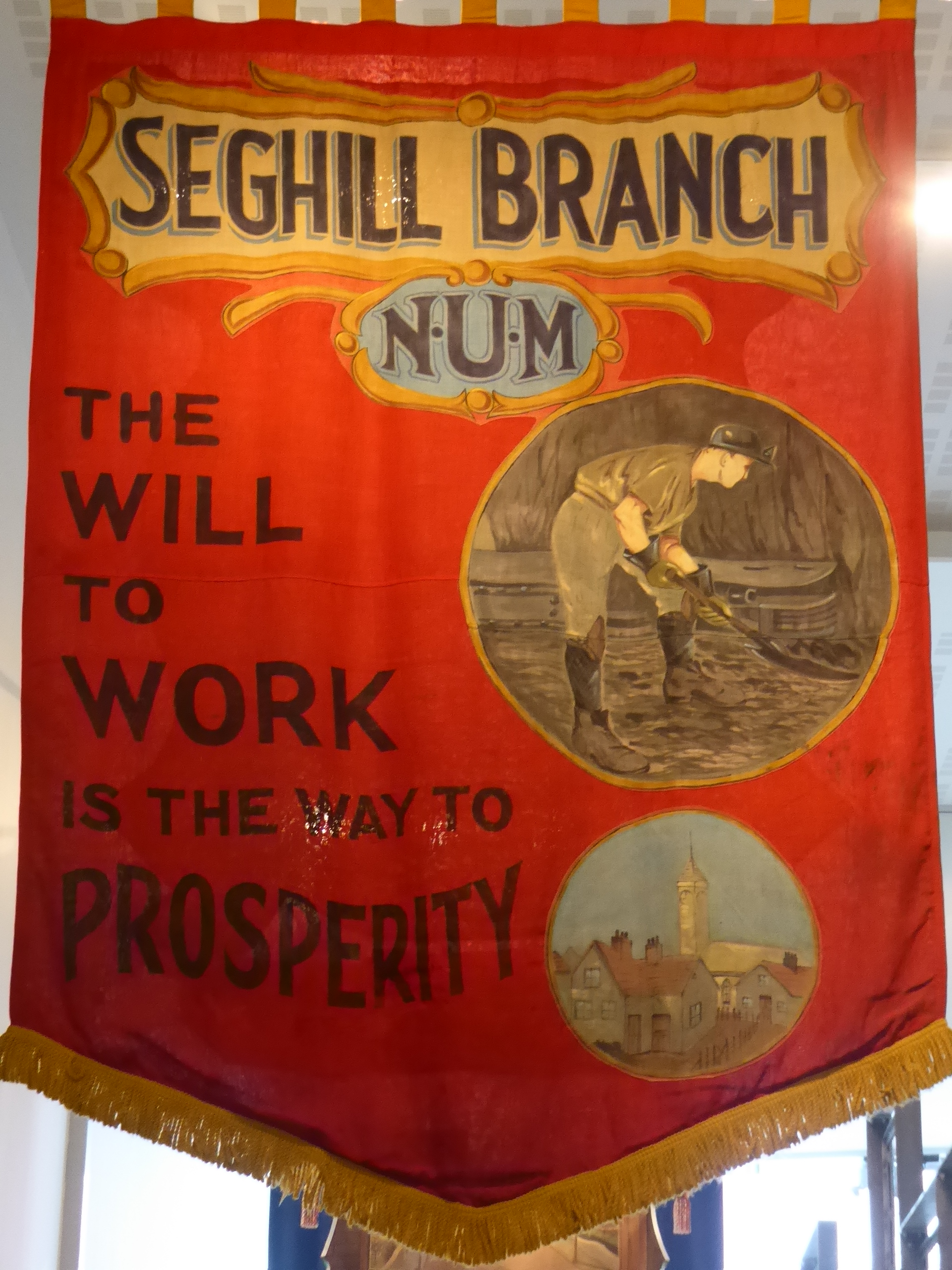
The Brompton and I found the cycle path from Ashington to the Woodhorn Museum. In addition to the gallery, it’s also a mining museum in what was, until 1981, the Woodhorn Colliery. There was once also an Ashington Colliery – a distance that it had taken me ten minutes to cycle slowly – so, of course, I started wondering how cheek-by-jowl collieries were here and found a 1951 map online which gives me an answer. From the train I’d seen a few old spoil heaps, just humps and plains covered by scrubby vegetation, but, as an outsider, I find it hard to imagine what this area was like until fairly recently. The museum is interesting: several of the key buildings remain, along with the pit wheels, and I noted (as with old German mining administration blocks) that even functional buildings can include proportion and decorative elements.

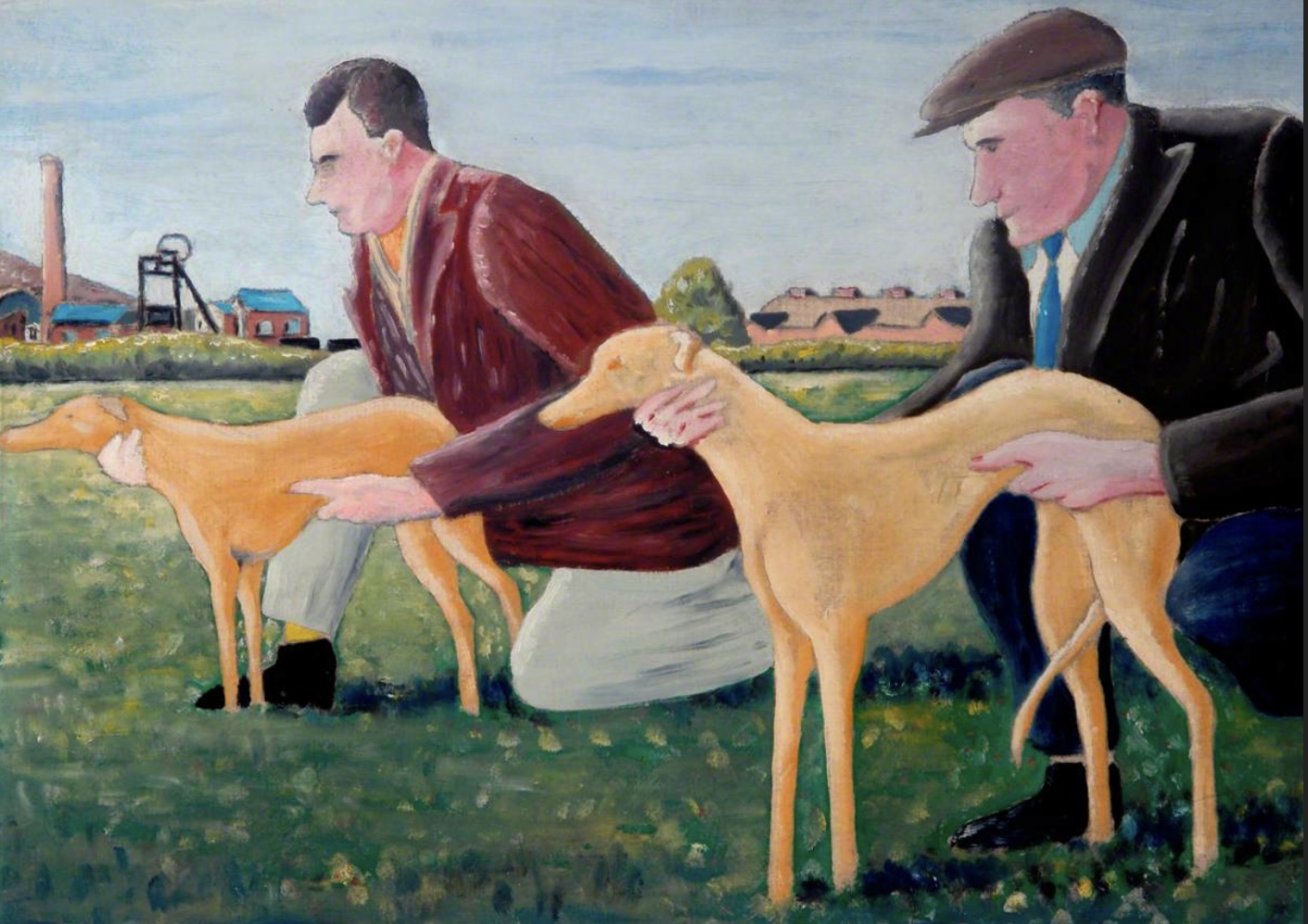
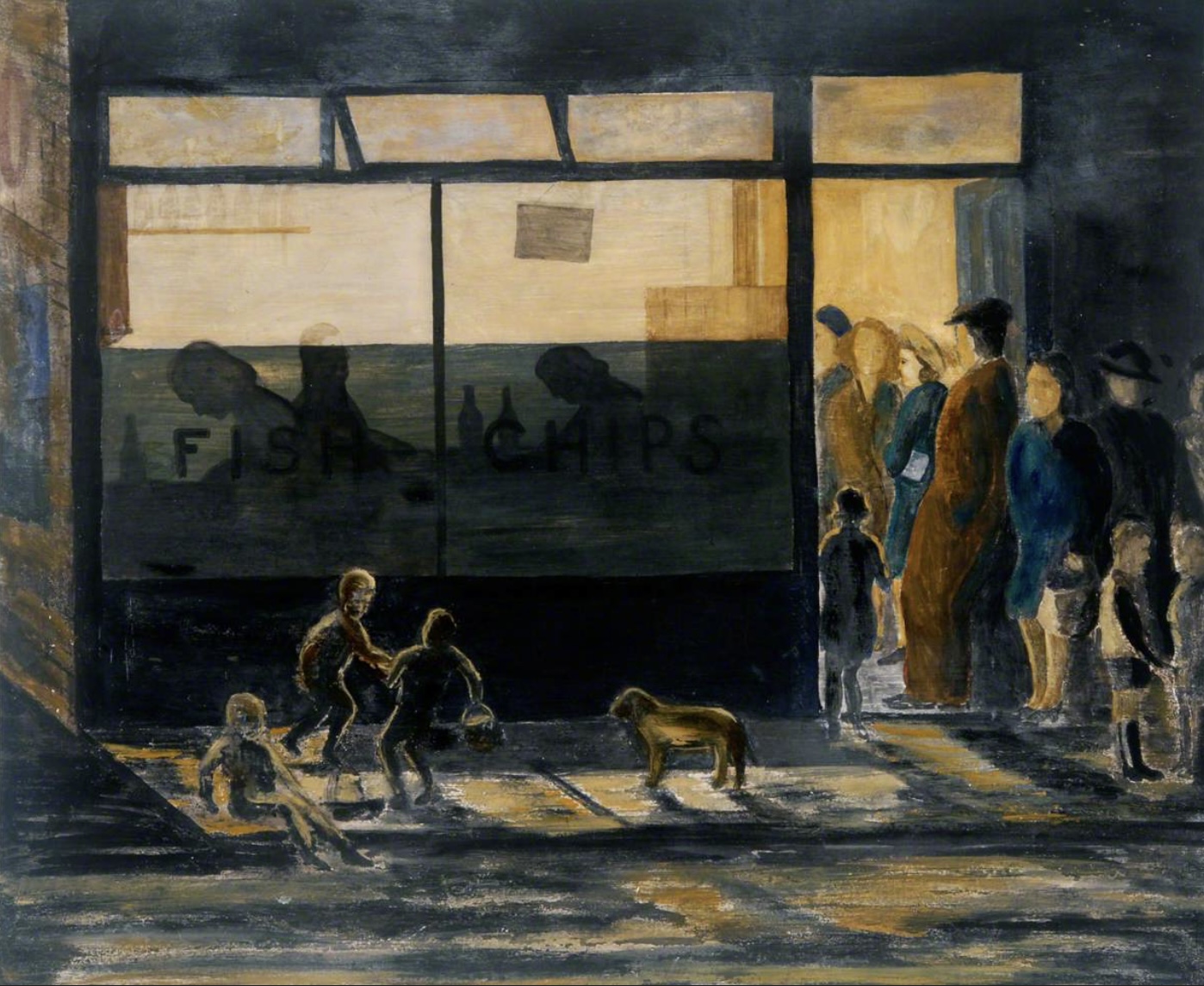
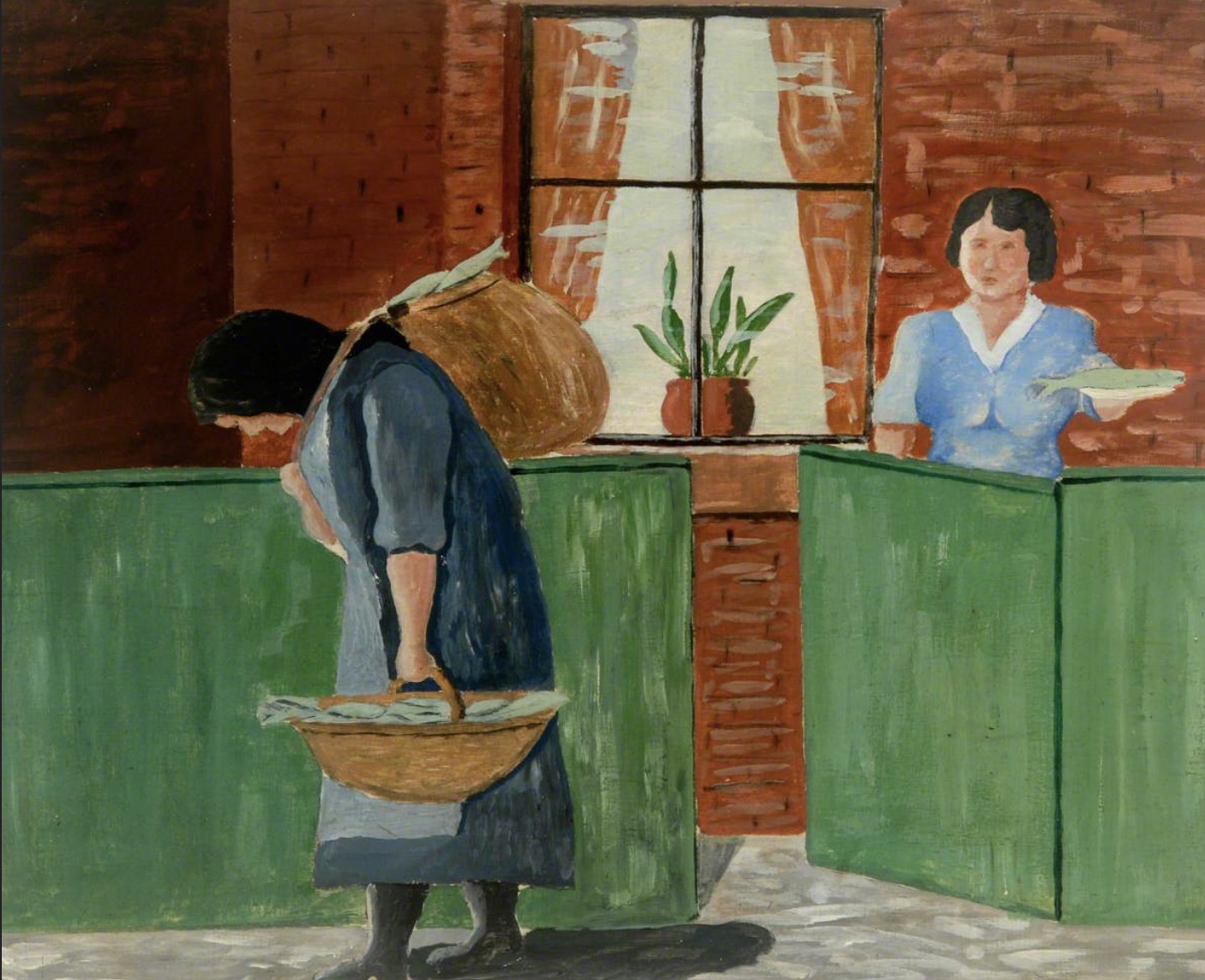
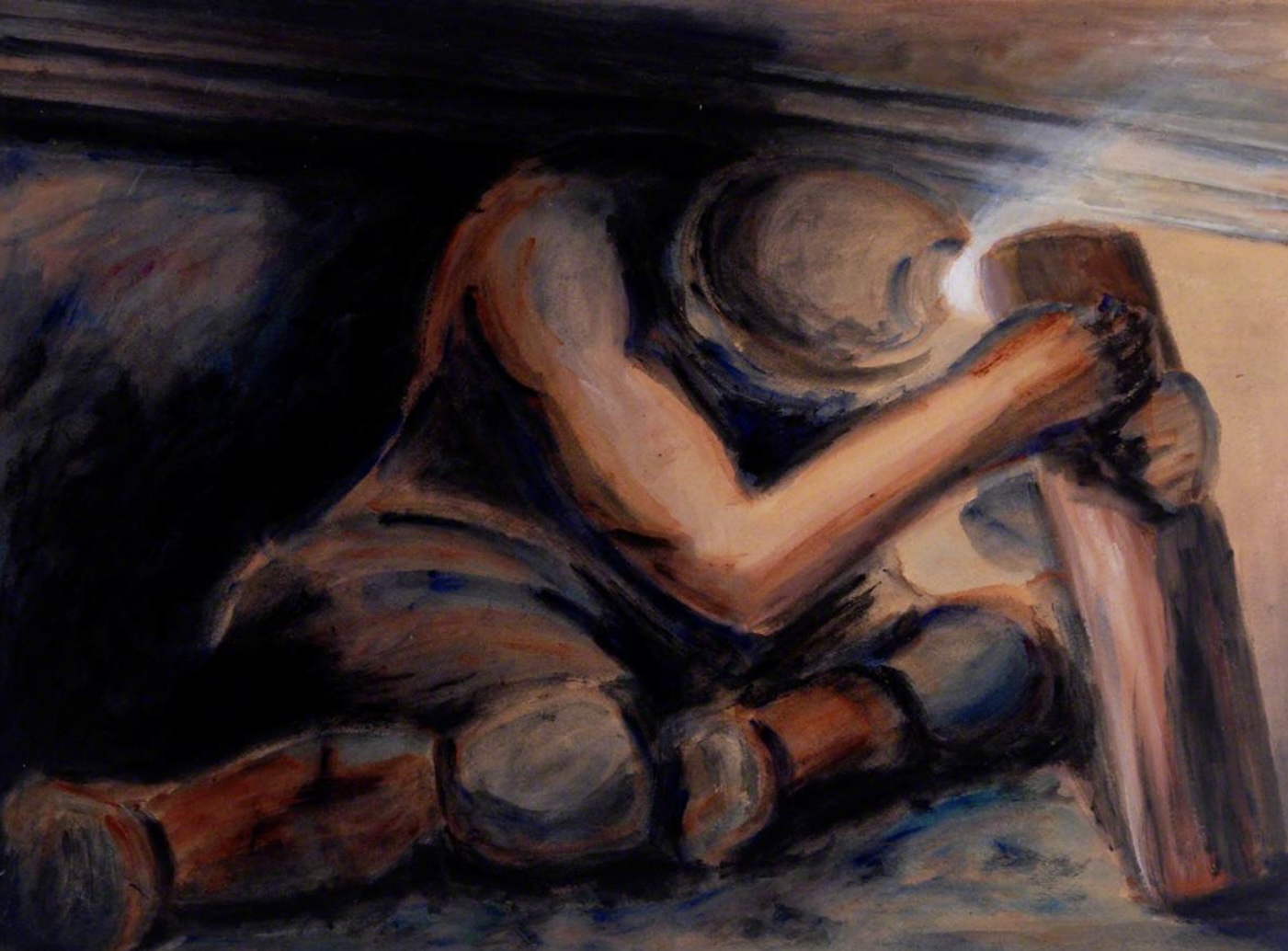
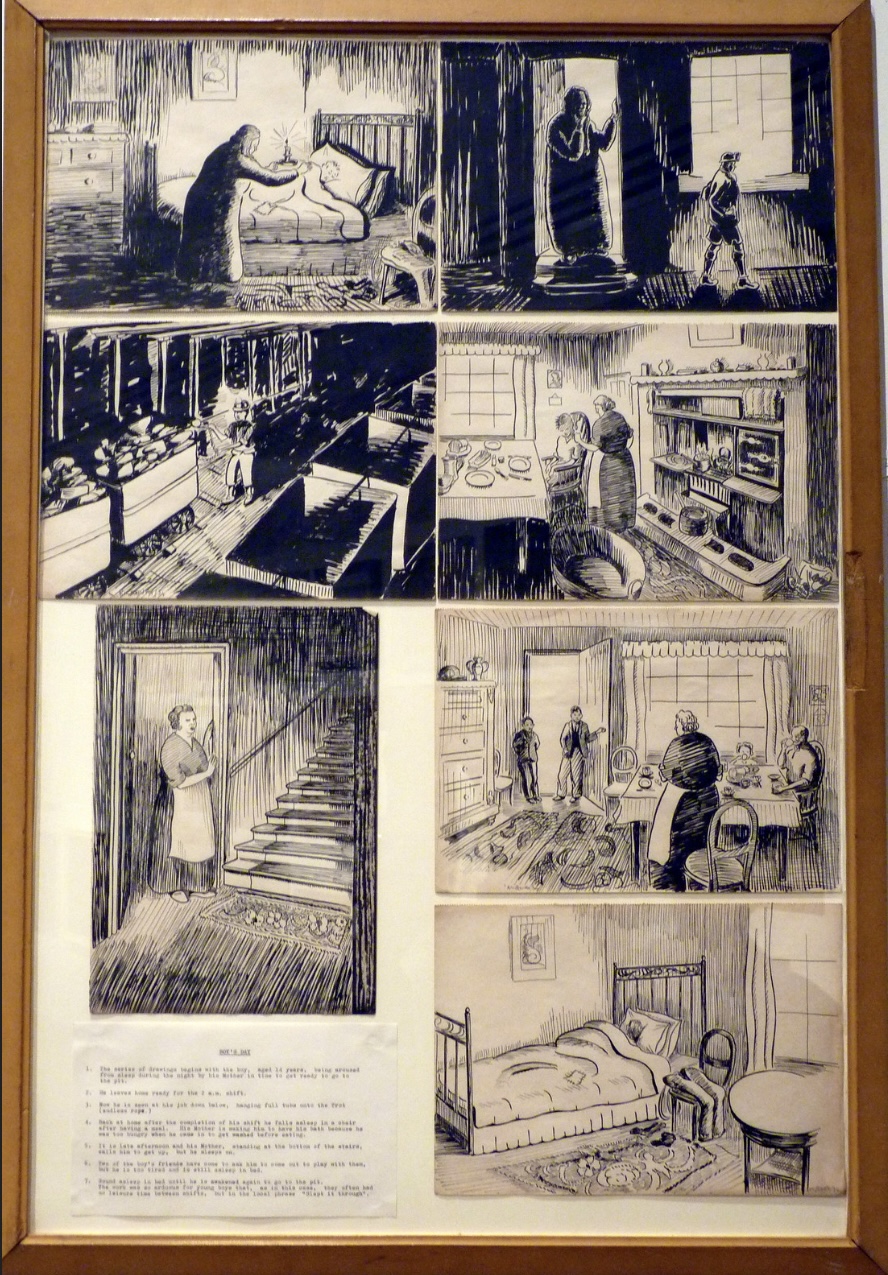
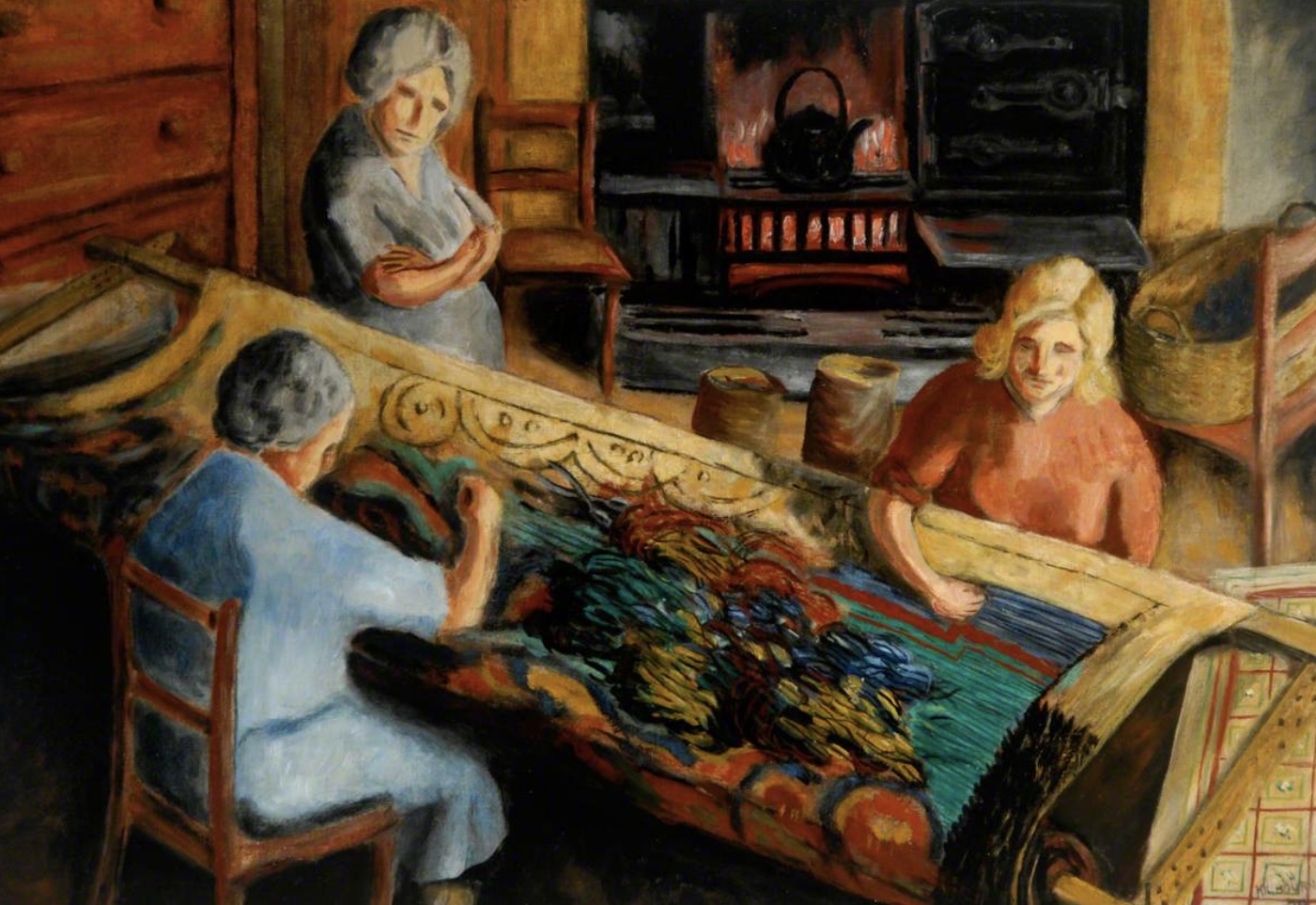
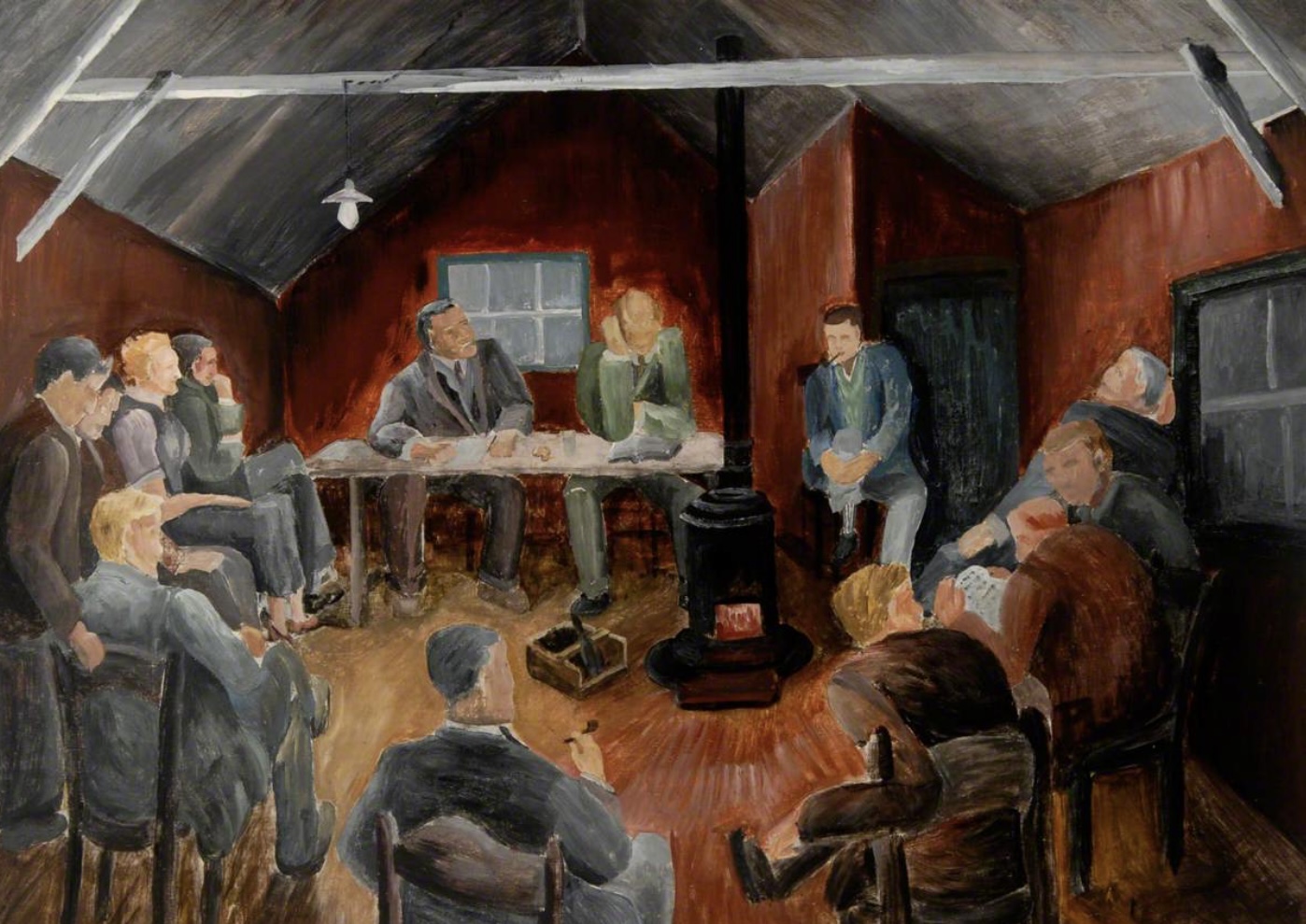
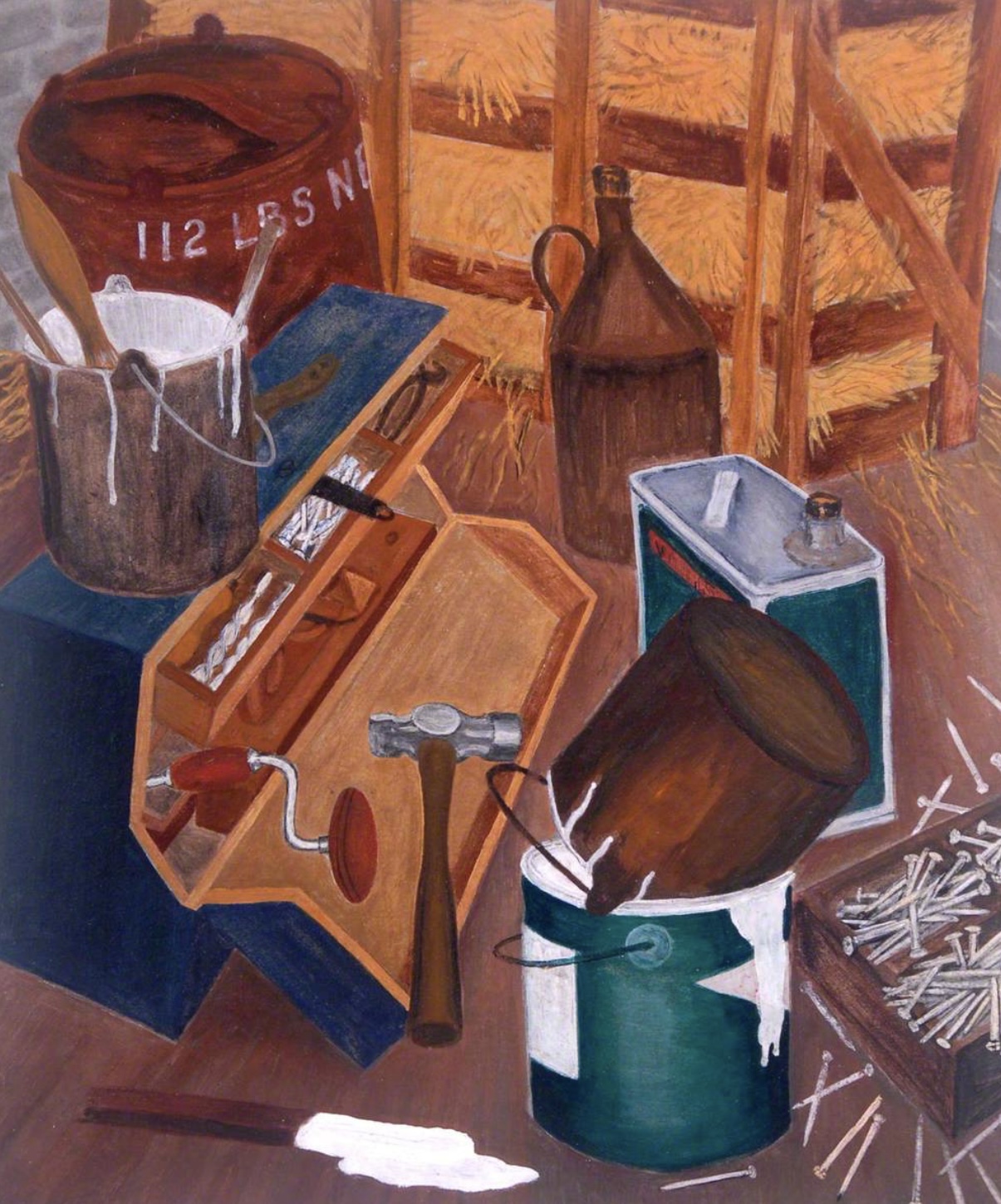
And so to the Pitmen Painters. In 1934 a group of miners, having finished one WEA course, began another on art appreciation under their tutor, Robert Lyon from Armstrong College, Newcastle. (Is that the Cragside and Bamburgh Castle Armstrong?) Lyon considered that his students would learn to appreciate art more effectively by doing it themselves – and so an art group was established in Ashington. They met regularly for fifty years and painted together – mostly scenes from their lives. Their materials were what they could afford, and initially it was Walpamur decorating paint on plywood. I felt rather mean as I reflected that their skills had not developed markedly over the years, but actually I was misreading their work. It was art rooted in their community, from a communal age and a particularly close-knit industry. I had a fleeting sense of recognition as I looked at the paintings – something that took me back to my grandparents – and an awareness of their rootedness. Which I suppose is another word for authenticity.

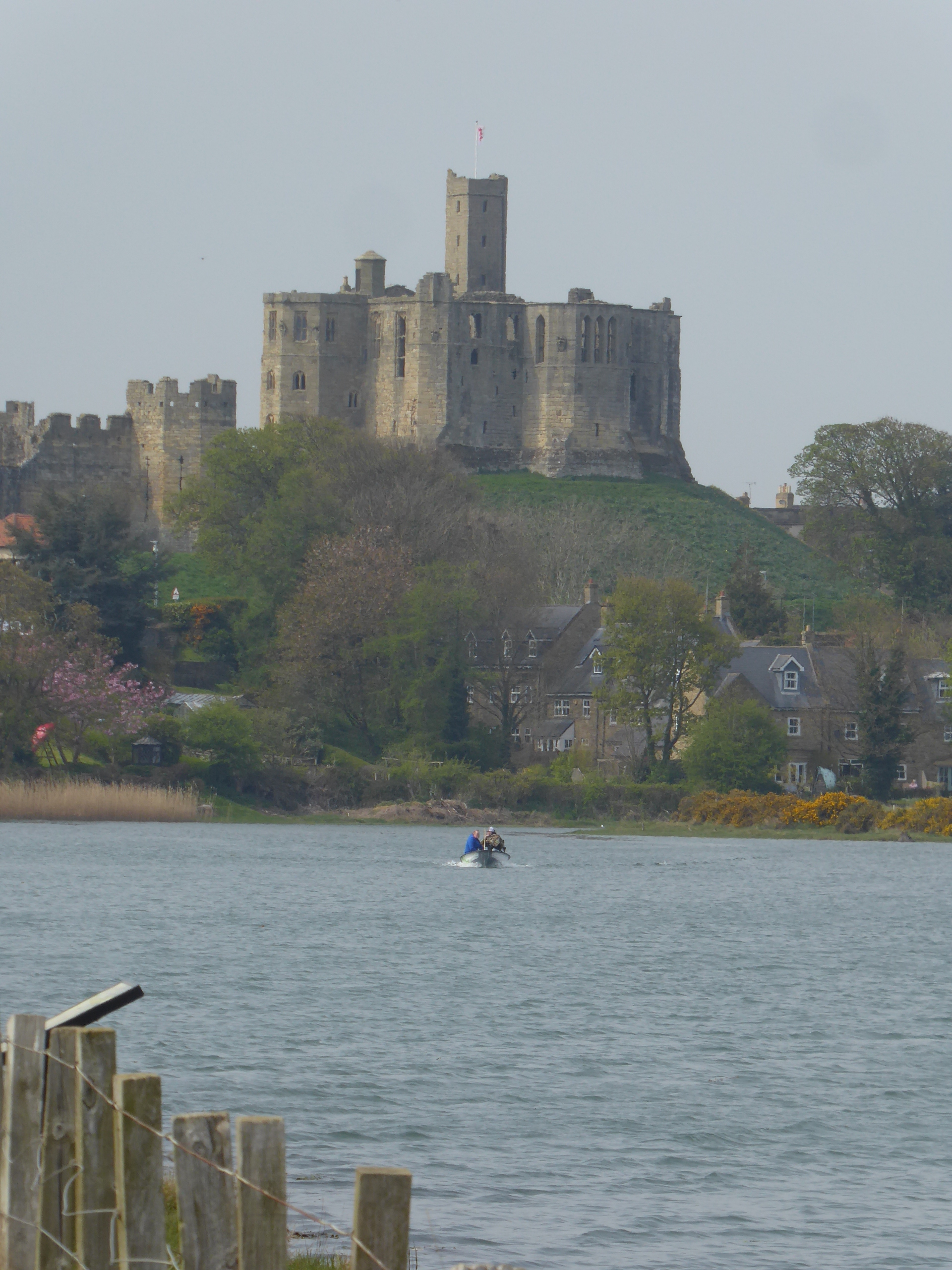
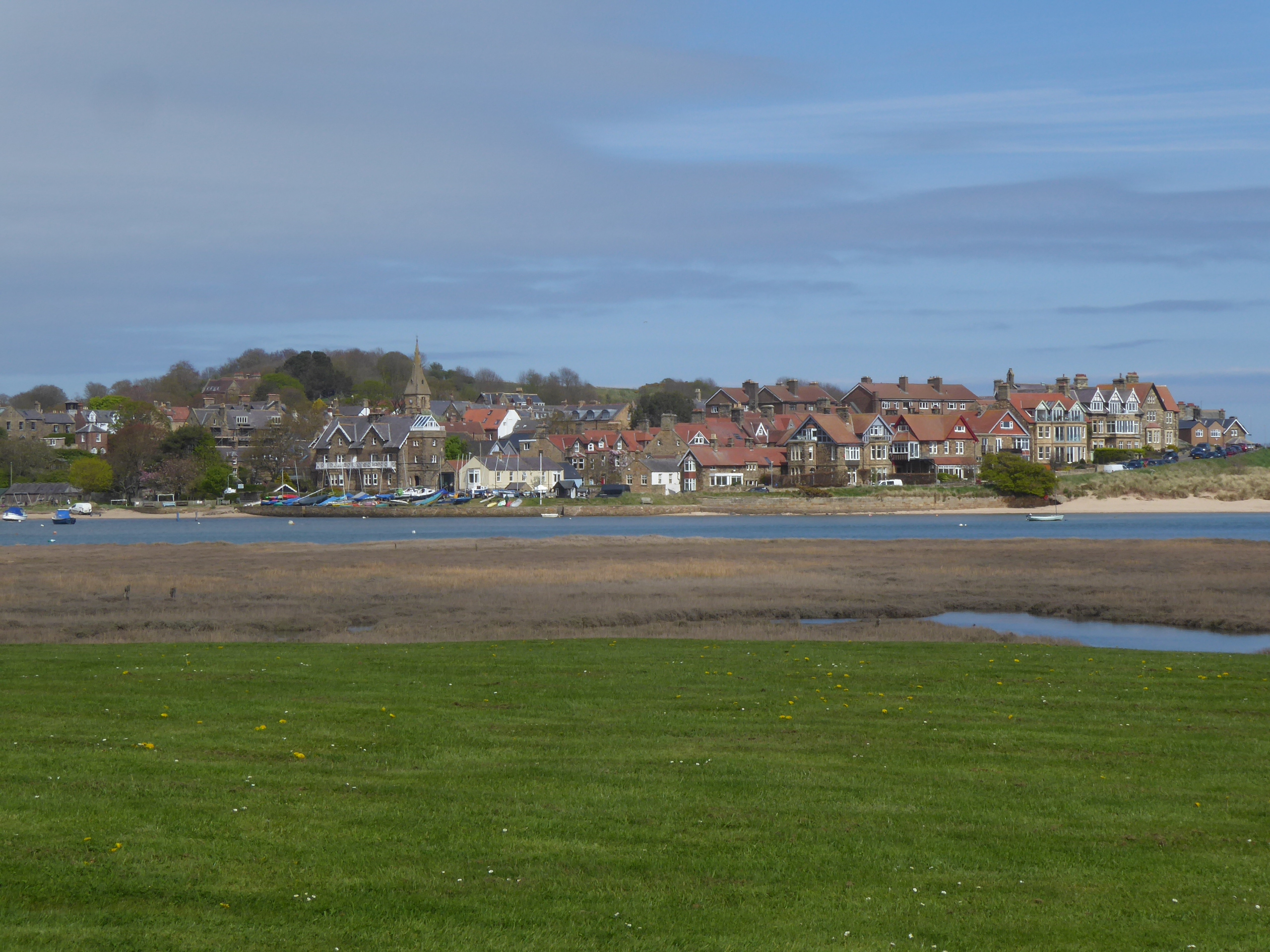
I had decided that I would have a little ride and return to Ashington railway station; the barrier of the River Wansbeck made a ride south look unattractive, so I decided on a little ride north – just a few miles and then turn round. Only the wind was at my back, the weather was so pleasant and the road so quiet that I just kept pedalling, past Druridge Bay, past Amble, past Warkworth Castle . . . until I ended up at Alnmouth once again. I haven’t been there for over twenty years – and now I’ve been there twice in two days.