Paterson (2016)

Director Jim Jarmusch with Adam Driver and Golshifteh Farahani

One of those films where practically nothing happens. (The one potentially dramatic incident is over in seconds and was not as life-threatening as it seemed at first.) It’s a week in the life of a bus driver called Paterson living in the town of Paterson – one of many mirrorings/twinnings in the film. He drives the same route every day, overhears conversations, writes poetry in a notebook and admires William Carlos Williams – who also wrote an epic poem, “Paterson”, about the city.

The film is a kind of poetic depiction of ordinary life as experienced by kindly, gentle people. They have their pleasures, their interests and their dreams which may never be fulfilled but are nonetheless fulfilling. The camera moves slowly and I had to rein in any impatience. Paterson’s (unimpressive) poems are an essential part of him – just as painting everything black and white is important to his wife. Theirs is a very loving, gentle relationship; her ambitions are a bit flaky (cup cake queen or country and western singer? . . . decisions, decisions), but she is not unsuccessful. The dog (who deserves his own Oscar) destroys Paterson’s notebook of poems, and for a while there is a sense of loss – until a chance encounter sets him back on his path.

In many ways it’s a film that transcends the quotidian life it depicts – like Perfect Days or Nomadland. Unlike some films – I’m thinking of Jeanne Dielman – there seemed to be no underlying ideology/political message. It wasn’t a Ken Loach film about a bus driver. It was about ordinary people and their relationships with other ordinary people and the world around them.

One Fine Day by Mollie Panter-Downes (1946)

As I read this novel I thought of “A Canterbury Tale” and the way the present and the past mingle in the depiction of the landscape. I could also hear another Mollie’s voice – the songs of Molly Drake and their evocation of the English countryside with an undertone of melancholy. And yet what remains here is not melancholy but a sense of good-nature and hopefulness.

There is much for the characters to be melancholy about. The setting is somewhere around the South Downs in the first year after the war. Peace has returned but the upheavals of war are everywhere. Not just the rusting coils of barbed wire among the sorrel but also in rationing, bereavement, disorientation, social upheaval. If I were feeling caustic I could sum up the novel as a middle-class couple having to come to terms with the post-war “servant problem” (diddums). But it’s beautifully and perceptively written from a viewpoint that is sympathetic to all sides.

Pre-war Laura and Stephen lived in a large house with servants who ensured their domestic life ran on well-oiled rollers. Garden, kitchen, child – all looked after without any effort on their part. Perfect roses and vegetables grown for them, dinners served to them by lamplight, daughter presented to them bathed and ready for bed. Now they have a slapdash daily and an ageing occasional gardener and not much money and they must do everything else themselves. The house has become a tyrant rather than a retreat, but they – or, at least, Stephen – try to maintain their former way of life.

Poor Stephen, thought Laura . . . He hated the way they scraped along, scrambled and muddled along, though he said nothing. He took off his coat after dinner, hung it over a chair, and pitched into the washing up. Wretched victims of their class, they still had dinner. Without the slaves, they still cherished the useless lamp. Left alone, Laura would have settled and clung somewhere like that butterfly, sipping without ceremony, perfectly happy. While Stephen was away she had snatched her meals anywhere. But now there was a man in the house again, they faced each other over polished wood, branching candlelight, the small ivory electric bell which was nothing but a joke.

The novel follows mostly Laura over the course of one beautiful summer’s day: her thoughts, her chores, her short journeys, her interactions with other people. Nothing much happens, but perhaps this one day is to be a turning point in her personal life. Every little detail tells you something about the changed state of the country. The beautiful widow in the village shop is going to marry repulsive Mr Rudge the builder – someone who knows how to look after Number One and is doing well in the post-war world. But whereas Evelyn Waugh in “Brideshead Revisited“ gave us Hooper whom he obviously loathed, Mollie Panter-Downes is not hostile to the new world. In fact I wondered if the likely puppies of Stuffy’s fling with the gypsy’s greyhounds were a closing symbol of the post-war world.

I can see why she wrote so little fiction and concentrated on journalism. She sticks to what she observes and doesn’t stray beyond that; the characters and their situations in this novel are very similar to her wartime short stories and presented in the same sympathetic, expansive manner. It really was a pleasure to read it.

Afterword

I read “My Husband Simon” a few weeks later – published in 1931. My goodness, how different the tone towards the lower orders! There is no mercy for the negligent cleaner here – unlike the latitude in the portrayal of the careless Mrs Prout in “One Fine Day”. Panter-Downes seemed to unlearn her earlier snobbishness.


Vlaardingen

Tonight’s view

Practically all the way across the Netherlands today: train from Arnhem to Dordrecht, waterbus to Rotterdam and cycling to Vlaardingen, where we are right beside the river. (I’ve given up trying to distinguish between the Maas, the Lek and the Waal. Oh, and the Scheur.) Completely different backdrop to previous riverside stays: Emmerich has only green fields on the other side whereas Vlaardingen has oil refineries. But watching barges float by is the same restful occupation.

The end of the holiday. I suppose I ought to have seen enough to offer a few insights, but I’m not sure they’re worth anything.

There are staff shortages: every shop, every back of loo door, every van invites you to come and work for them. Hotel room cleaning during a multi-day stay is unusual. The hotel in Meppen used a robot vacuum cleaner, which politely stopped to let us pass in the corridor.

I may as well use machines to buy train tickets: I can’t make a worse job than trained staff. The tickets I bought in the ticket office for today’s train journey were the wrong kind. Fortunately the guard let us off: it was obviously an unwitting mistake. (He wasn’t so sympathetic to the young brown man who was attempting to travel on yesterday’s ticket and turfed him off at the next station. I wondered how to interpret this. Ageing white people are seen as making honest mistakes but young brown migrants are seen as trying to pull a fast one?)

I’m fitter now than a fortnight ago, but mounting and dismounting my bicycle is not as effortless as it once was (sigh).

Emmerich am Rhein to Arnhem

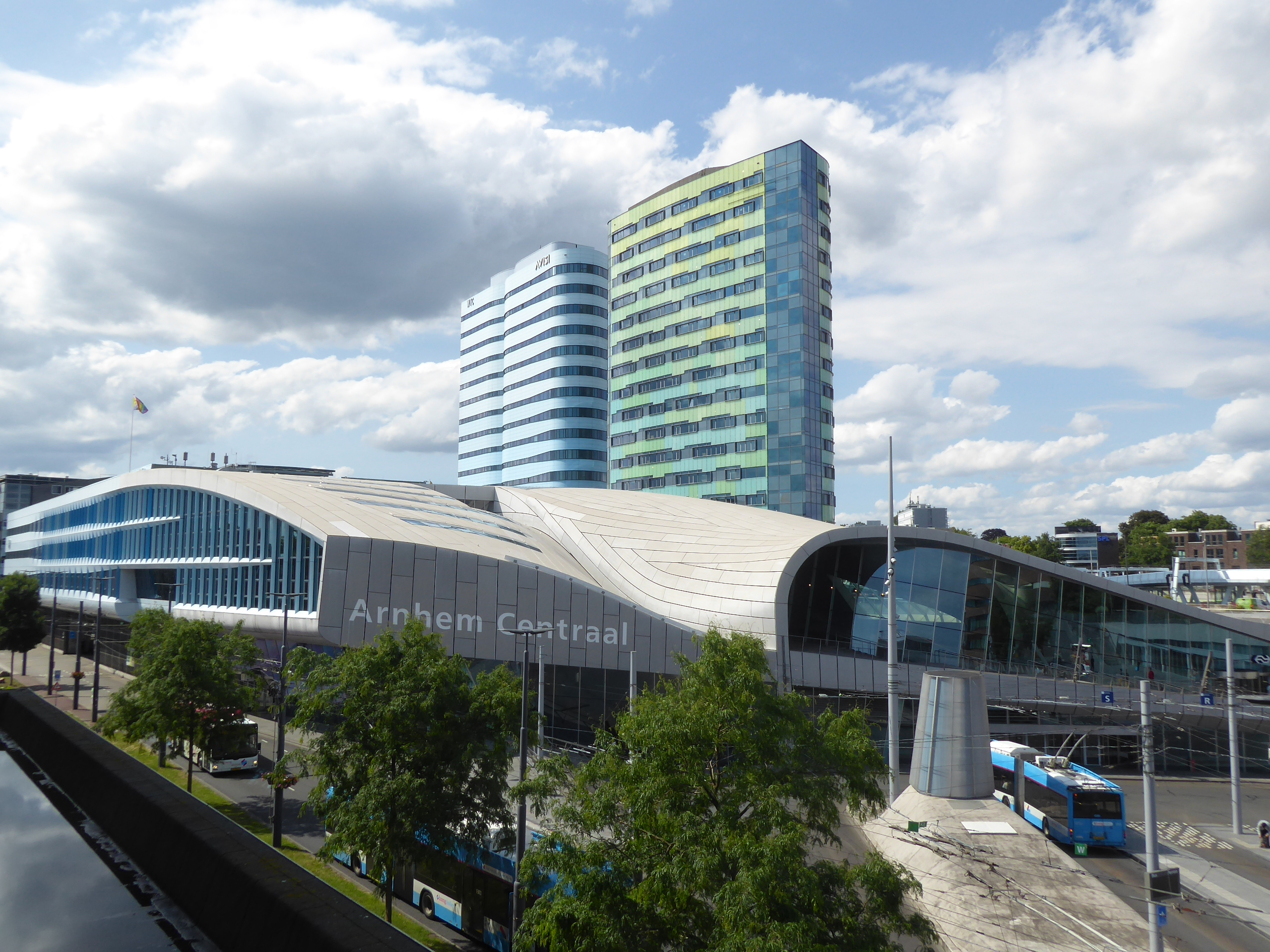
Instead of ending a holiday as usual with Emmerich to Nijmegen into a headwind, today we did Emmerich to Arnhem into a headwind. With some rain. It was pleasant beside the river and, once the weather changed, an easy ride into the centre of Arnhem. Like Utrecht, Arnhem has direct cycle routes that are heavily used: the roundabout at Airborneplein was particularly hectic. Quite fun to watch, but less fun to be part of. My kind of pootling is really not suited to Dutch city cycling, and it was a bit of a shock to find myself part of it again.

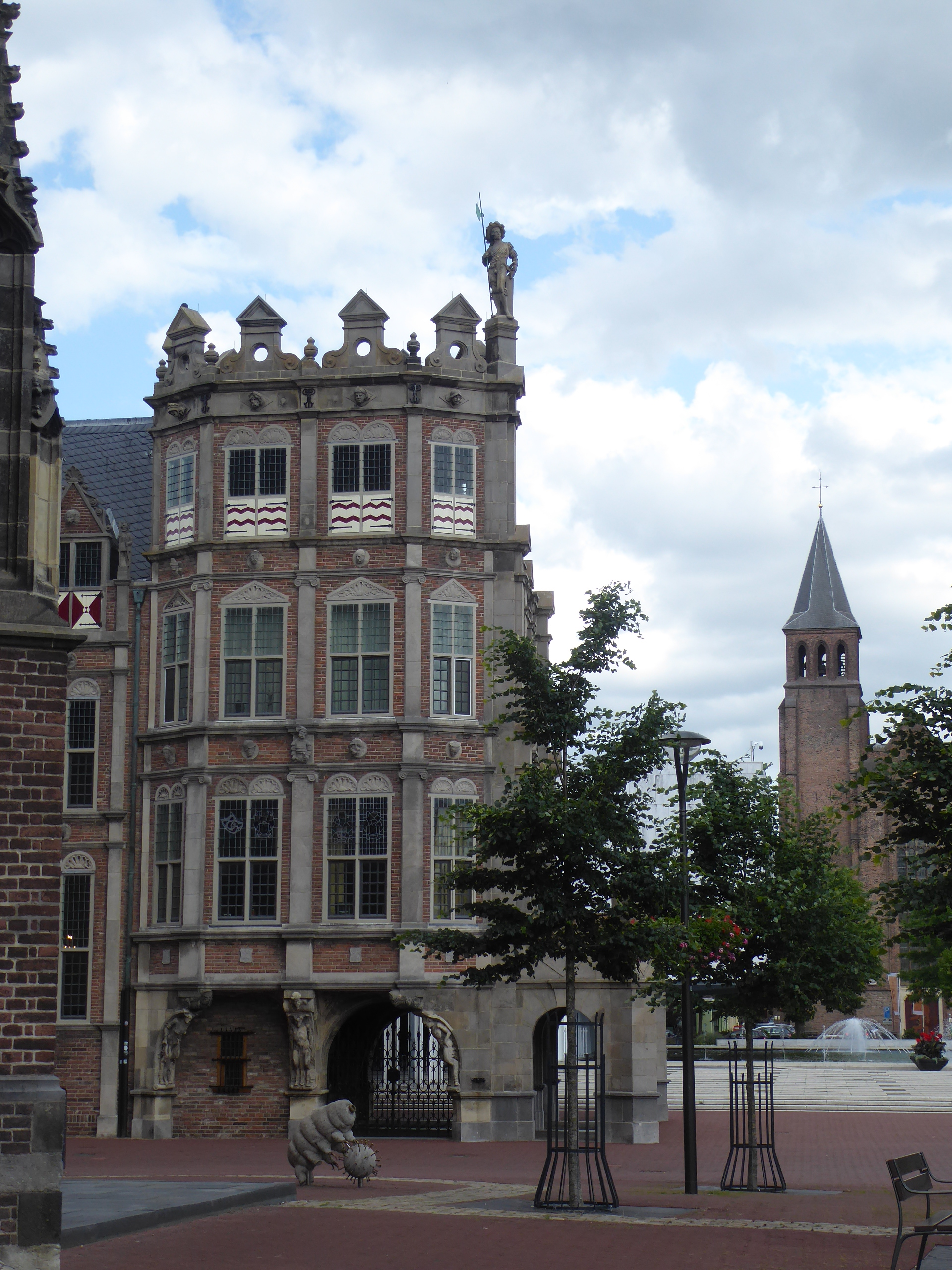
Despite Arnhem’s importance during WWII, the centre looks largely undestroyed. I had time to wander around once we had checked in, but without a map or any idea of what to see. Still enjoyable though. And they have trolley busses.

Heek to Winterswijk

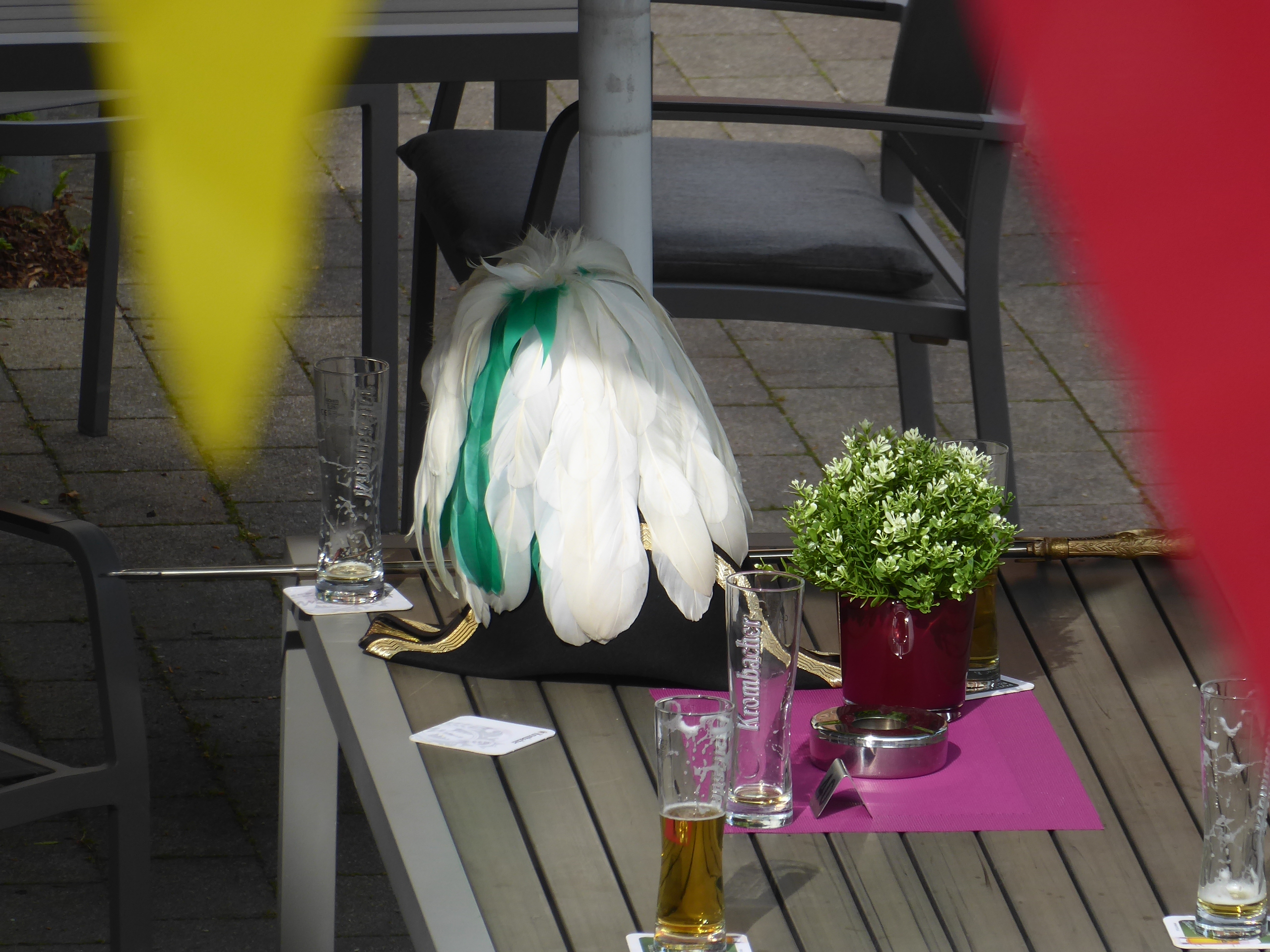
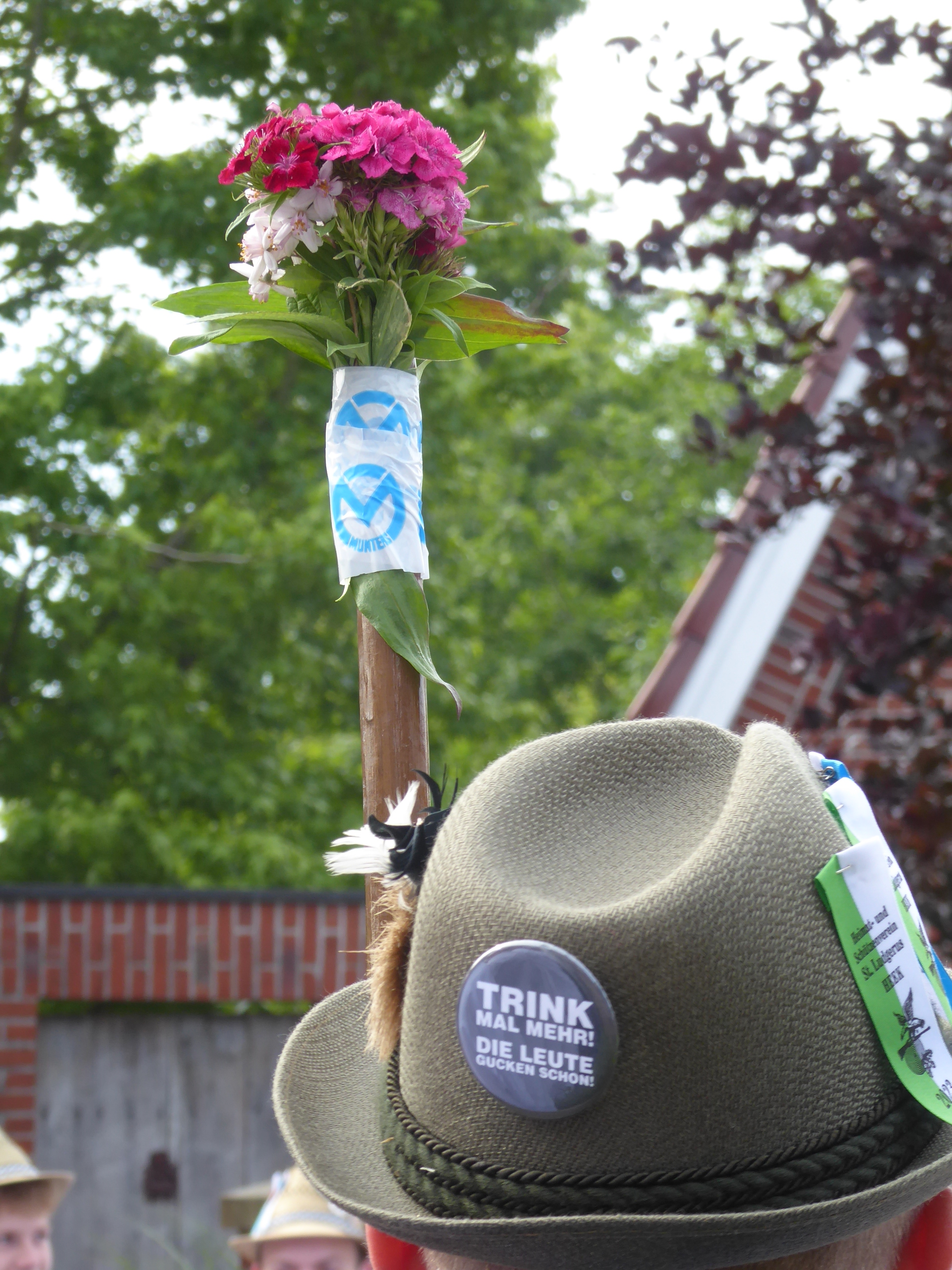
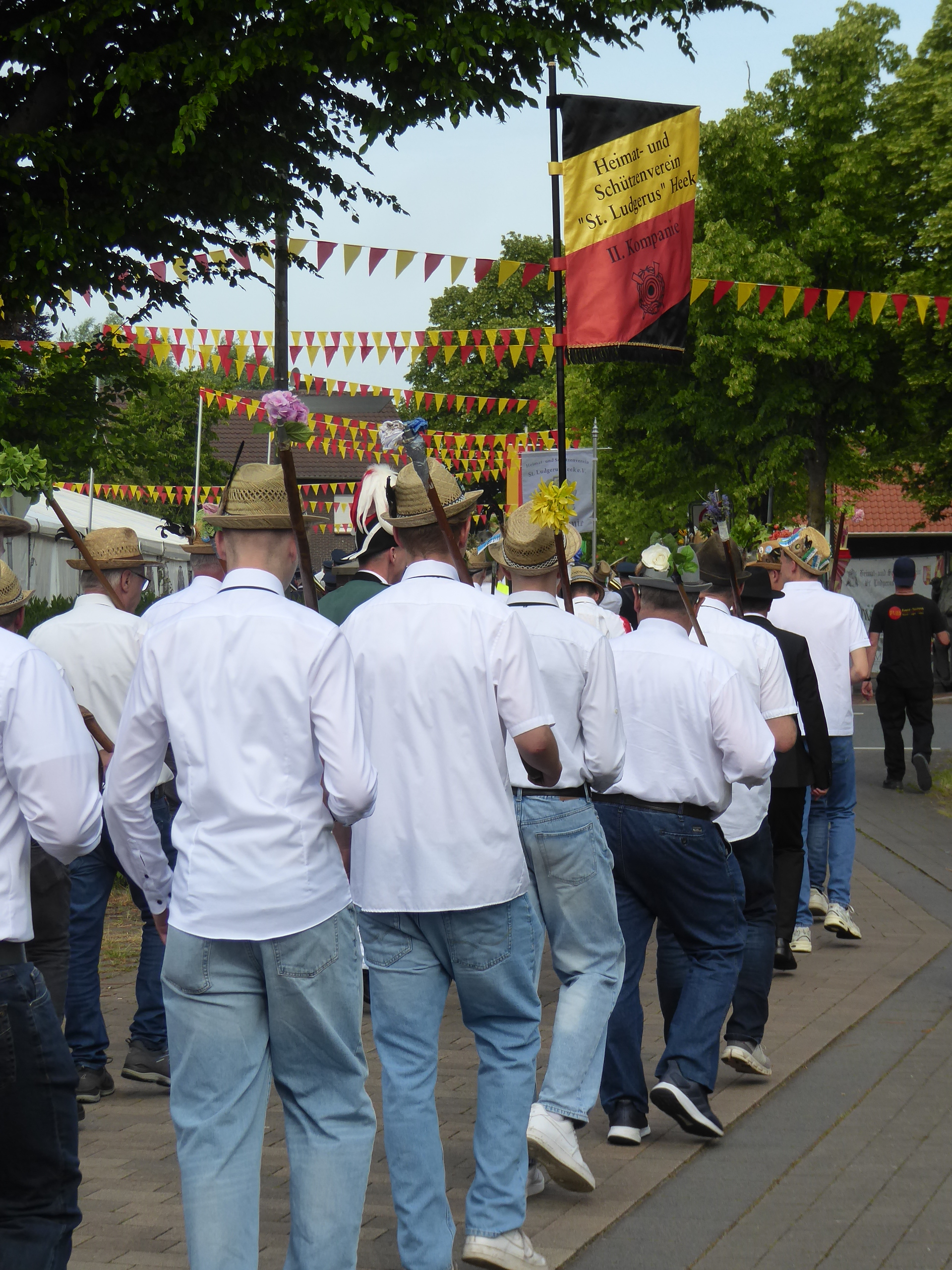
Well, Schützenfesters certainly know how to party. They didn’t keep me awake, but when I opened the window at 1.30 a.m. the marquee down the road was still jiving. The church clock struck at 5.30 a.m. and I swear I could hear the brass band playing somewhere. As I dressed, somebody was singing alleluia several times over to the accompaniment of the band outside the church. Our breakfast was slightly delayed by the waitress having to serve a few beers . . . and the first parade of the day started just as we were leaving. I really don’t know what to make of it: history, community spirit, unsettling vibes under the cheerful booziness, the self-deprecating silliness of carrying wooden sticks (representing rifles?) topped with flowers so that they looked like a morris-dancing local militia. Had I lived in the town during the Thirty Years War, I might have been glad if a group of trained men were ready to defend it – and perhaps there were similar groups in Ukraine until three years ago.

The rest of the day was a return ride unto the Netherlands in hot sunshine and a gentle headwind. Piet Mondrian lived in Winterswijk for a time, but that is as much as I know.

Papenburg to Heek

Back to a boring maximum speed of about 22 kph, so to do this distance we needed the assistance of the train from Papenburg to Rheine. The usual anxiety about getting our bikes on the train, so I checked with the ticket office beforehand. (A ticket office: there’s luxury.) Question: where was the bike space? Answer: each carriage has bike spaces front and back. Total number of bikes conveyed: 24. (More in the summer holiday season.) This seemed like riches indeed – but the reality is that if a train has 24 bike spaces, there will be 23 bicycles on it – particularly if it’s the day after Himmelfahrt. We had no problem at Papenburg, but the train quickly filled up.

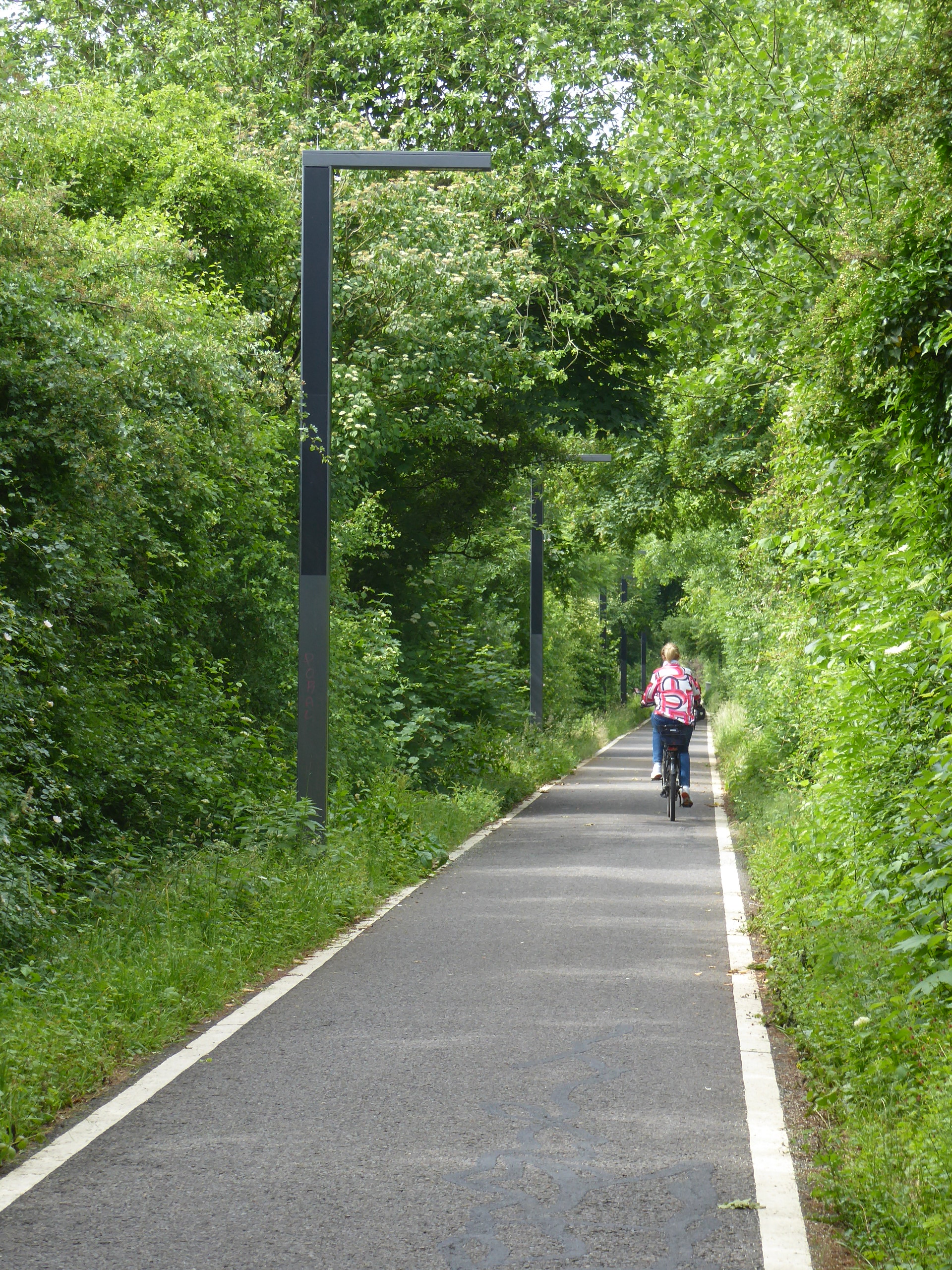
We cycled the same route out of Rheine as a week ago along the easy-peasy disused railway, but this time into a sunny headwind. Heek is en fête – nice for Heek but not for anyone hoping for an early night. It’s the town’s Schützenfest – a concept I have difficulty in getting my head around. Schützen means to protect, but this kind of thing is all about guns and shooting. I suppose I should think of it as a celebration of the historical tradition of local self-protection – an early kind of Home Guard perhaps? – and target-shooting is part of it. Also included is parading in green jackets and dark green ties behind a local band – and lots of drinking.

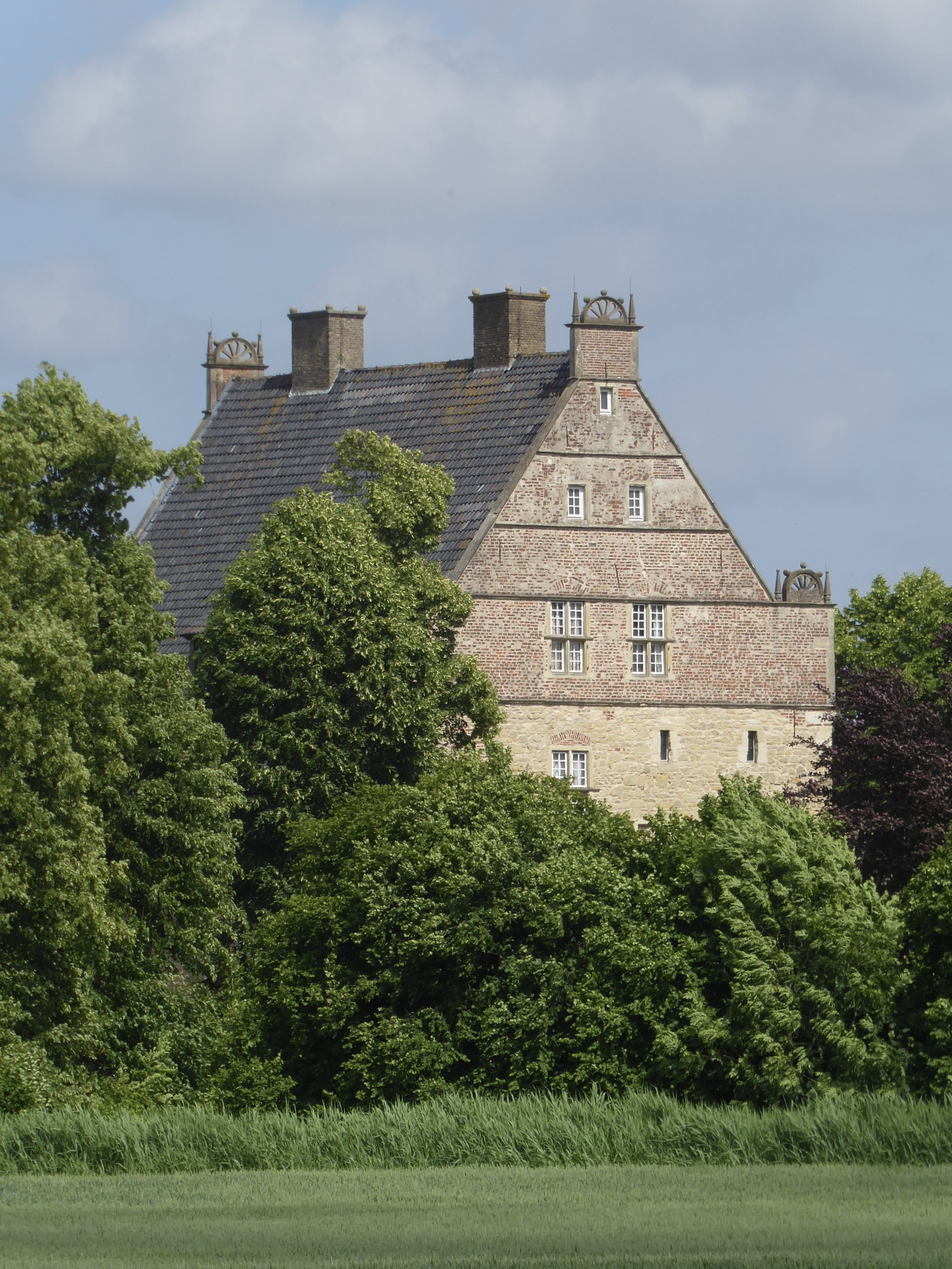
We arrived in Heek in good time so headed off in nostalgic mood along the 100 Schlösser Route to see Burg Nienborg. How many have we ticked off now?