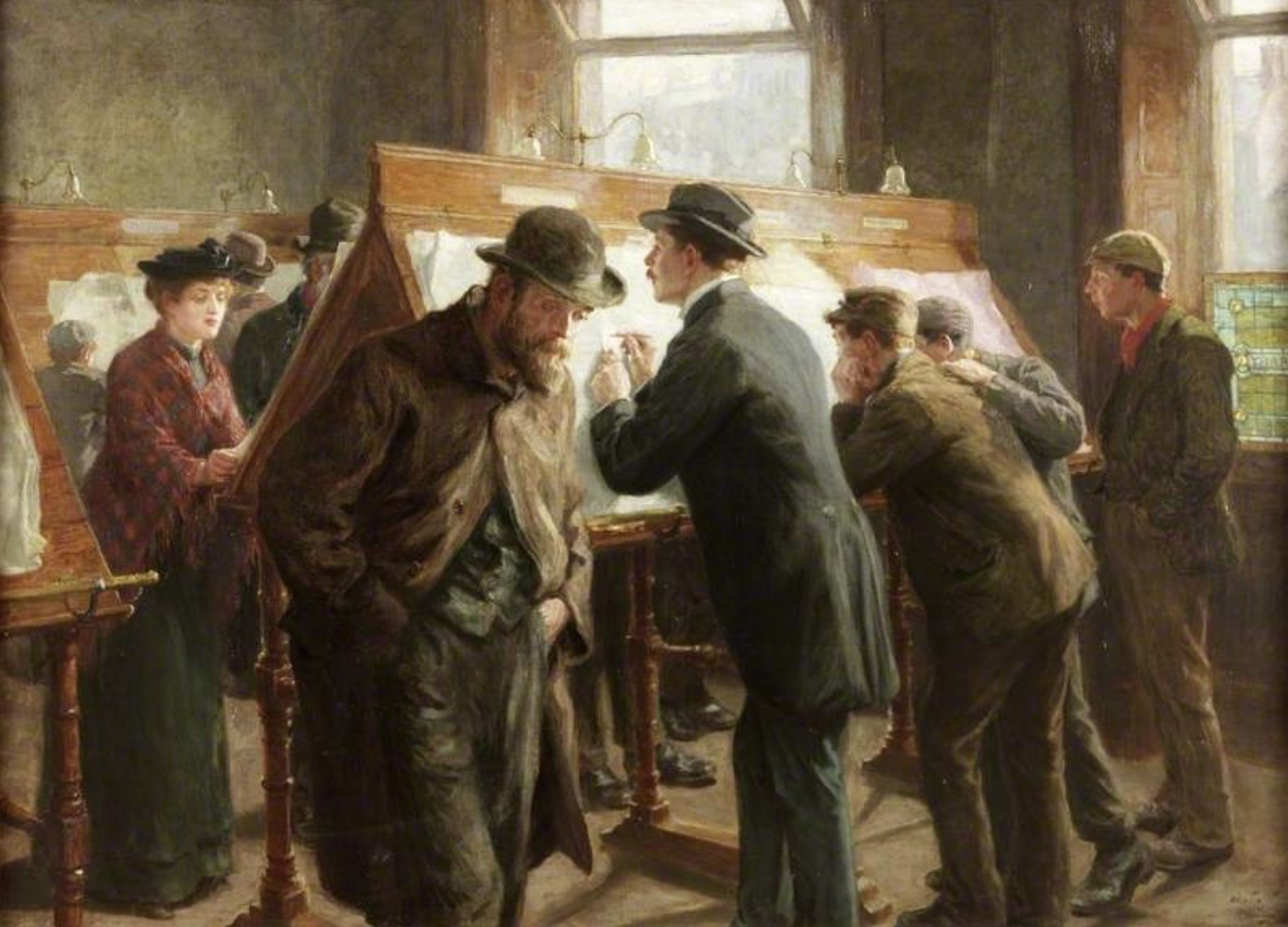
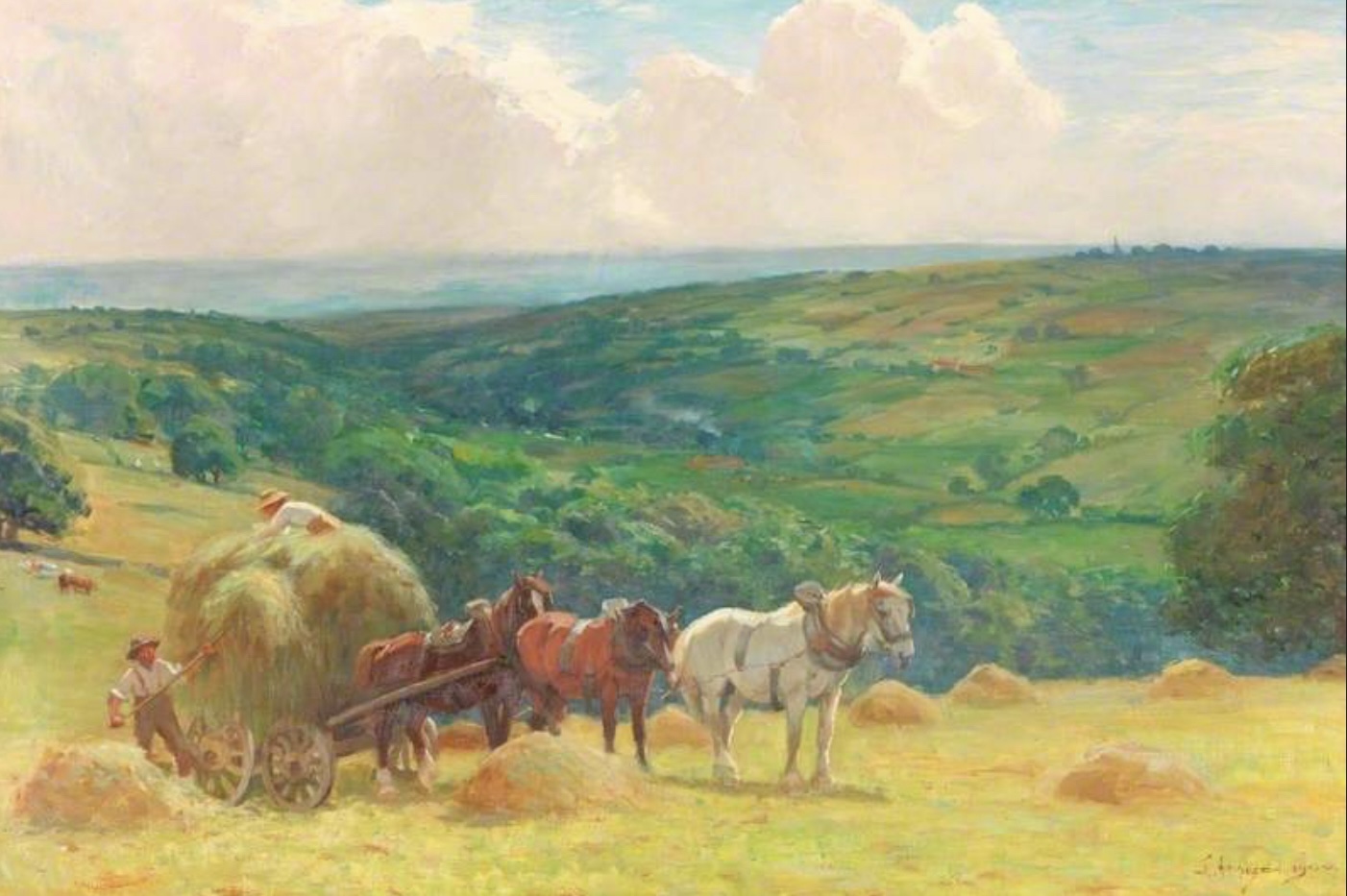
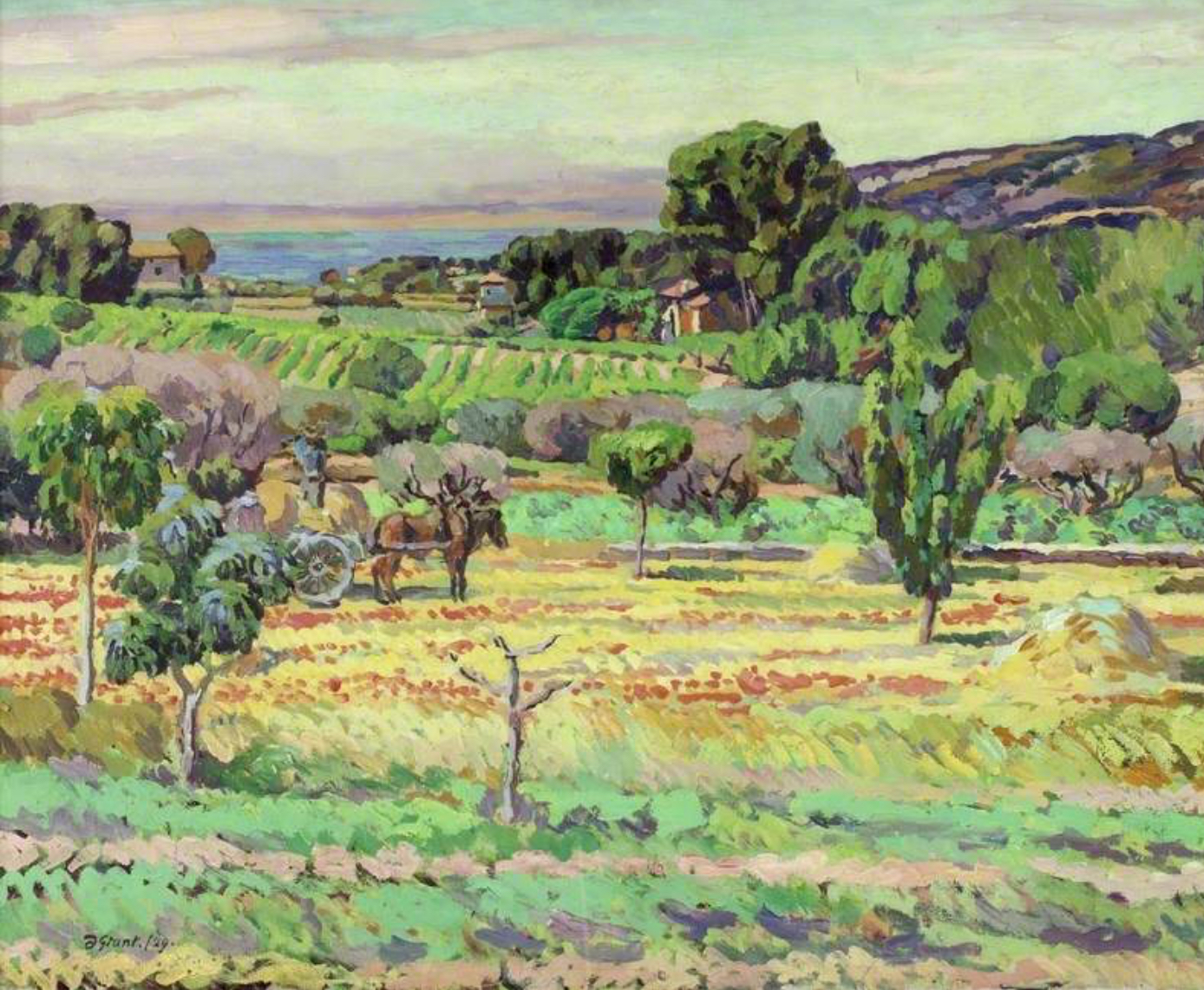
I always like going to the Laing art gallery. Today I wandered again around the “Northern Spirit” gallery, focussing on the glassworks (Sowerby, Davidson’s) which grew up around the Skinnerburn and Ouseburn, and Maling Pottery. I noticed that J Atkinson Grimshaw’s children also became painters. I looked more closely at Ralph Henley’s paintings – some are a bit twee, but something like “Seeking Situations” is worth thinking about. And I compared two landscapes: one by John Atkinson and the other by Duncan Grant.
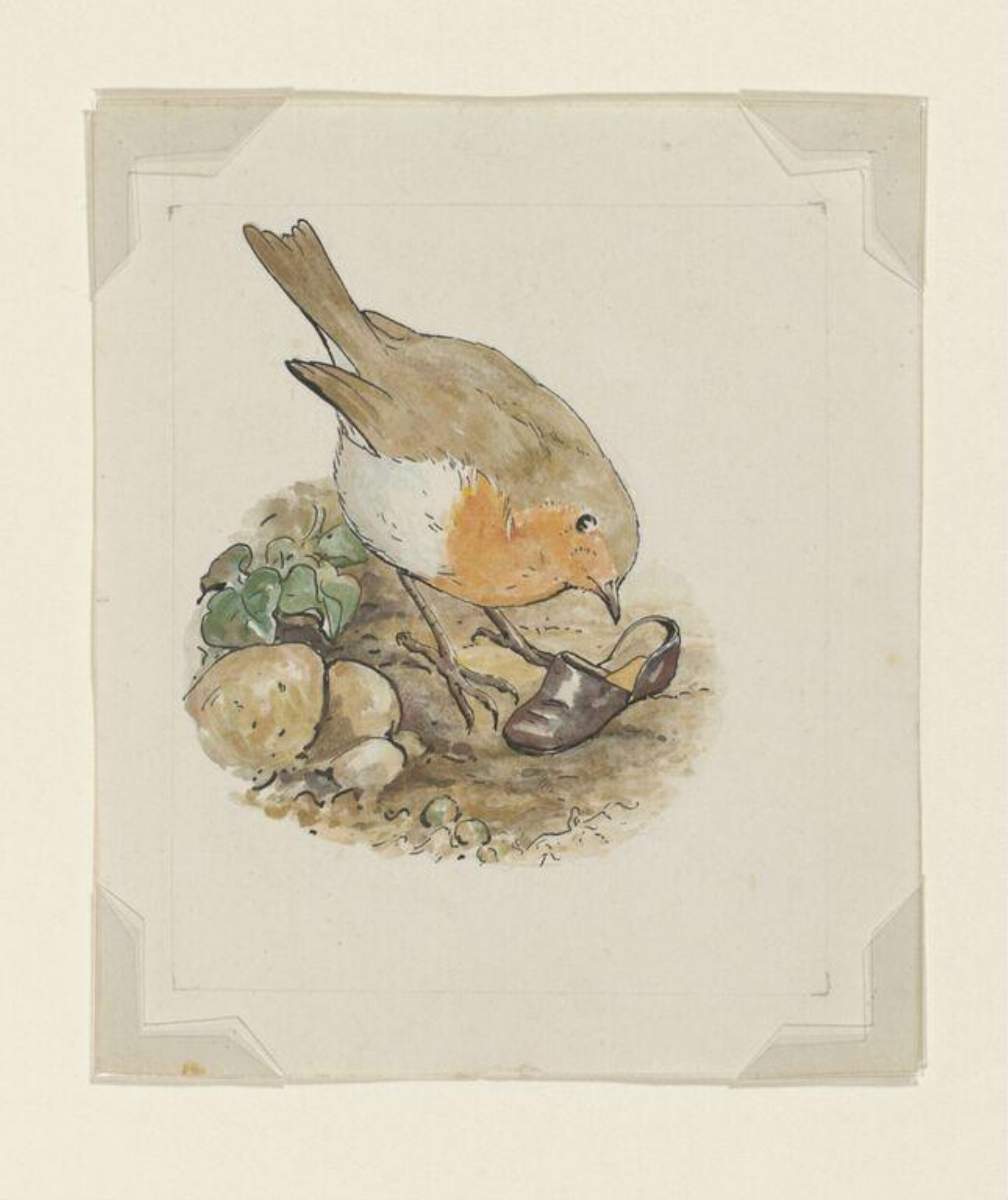
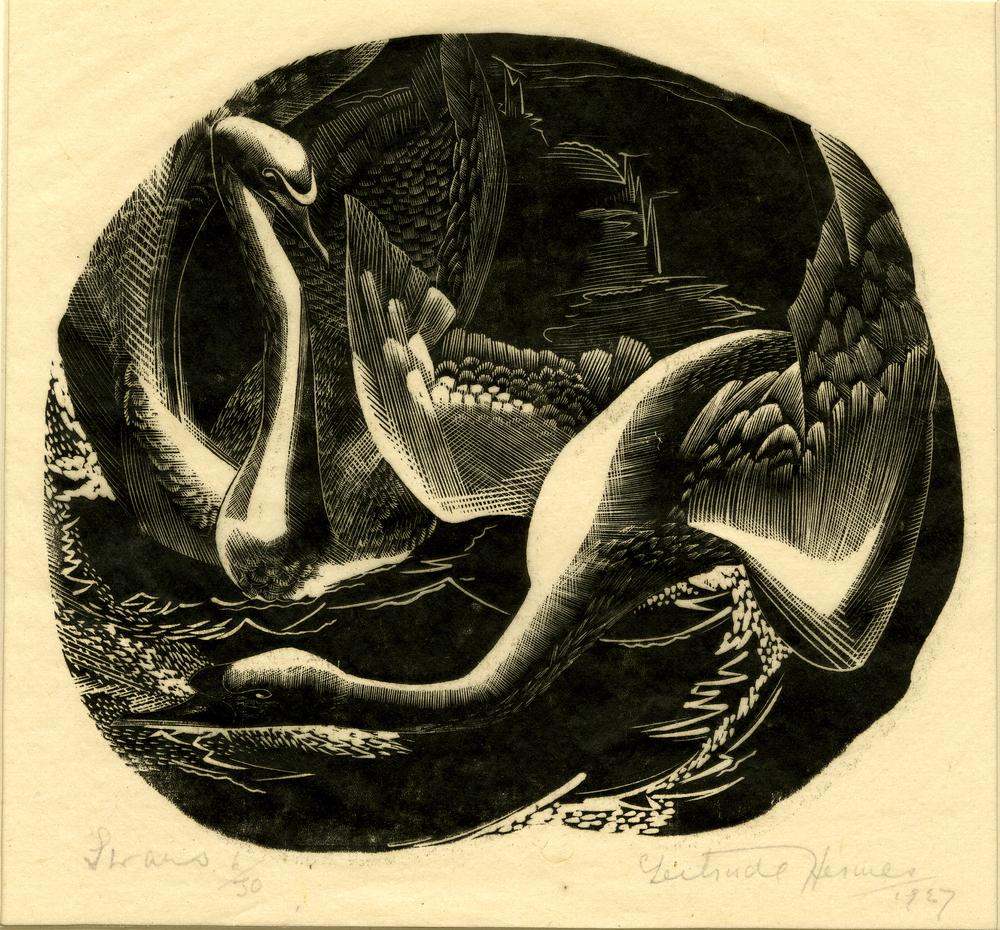
An exhibition where magnifying glasses were supplied. It started, of course, with Thomas Bewick and his tiny, intricate wood engravings. (I recall Jane Eyre’s delight in his illustrations.) Beatrix Potter, Eric Ravilious, Gertrude Hermes stood out. Not a blockbuster exhibition, but I don’t mean to damn it with faint praise when I say that what I enjoyed most was re-reading Peter Rabbit for the first time in almost 60 years.
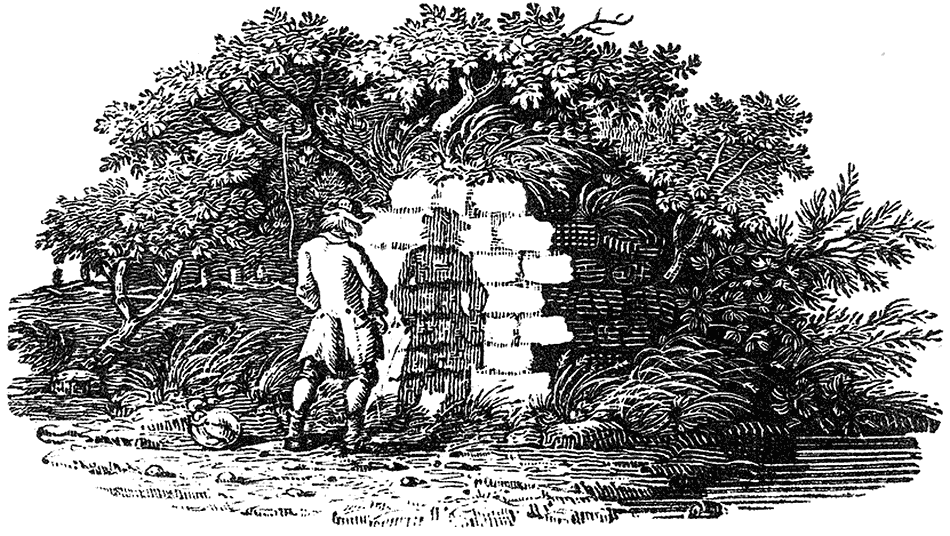
The Bewick illustration is a little crude, but it reminded me of some of my thoughts as I walked beside Hadrian’s Wall yesterday – wondering if people in the inbetween centuries just thought of it as a bit of ruined wall.
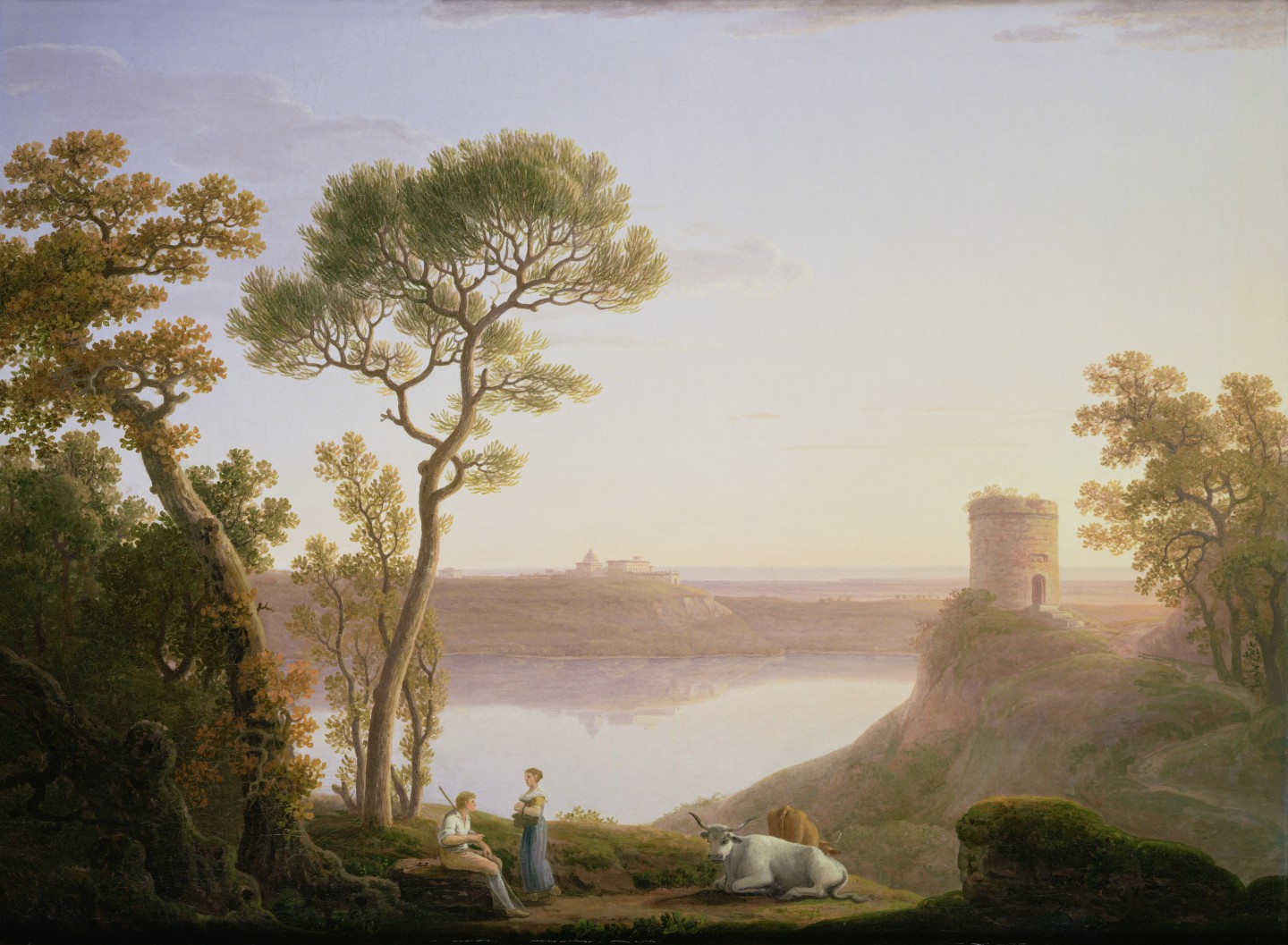
Perhaps not the most exciting exhibition – over 200 years of landscape painting in the north of England and Scotland – but it gave me the chance to see more of the Fleming Collection (which I’d been introduced to at Abbot Hall). It begins with romantic landscapes – just oozing “sublime” – and then moves to less dramatic scenes. “Real” people begin to appear; there is an awareness of the changes in the landscape as the north industrialises or forces/draws people away from the land.
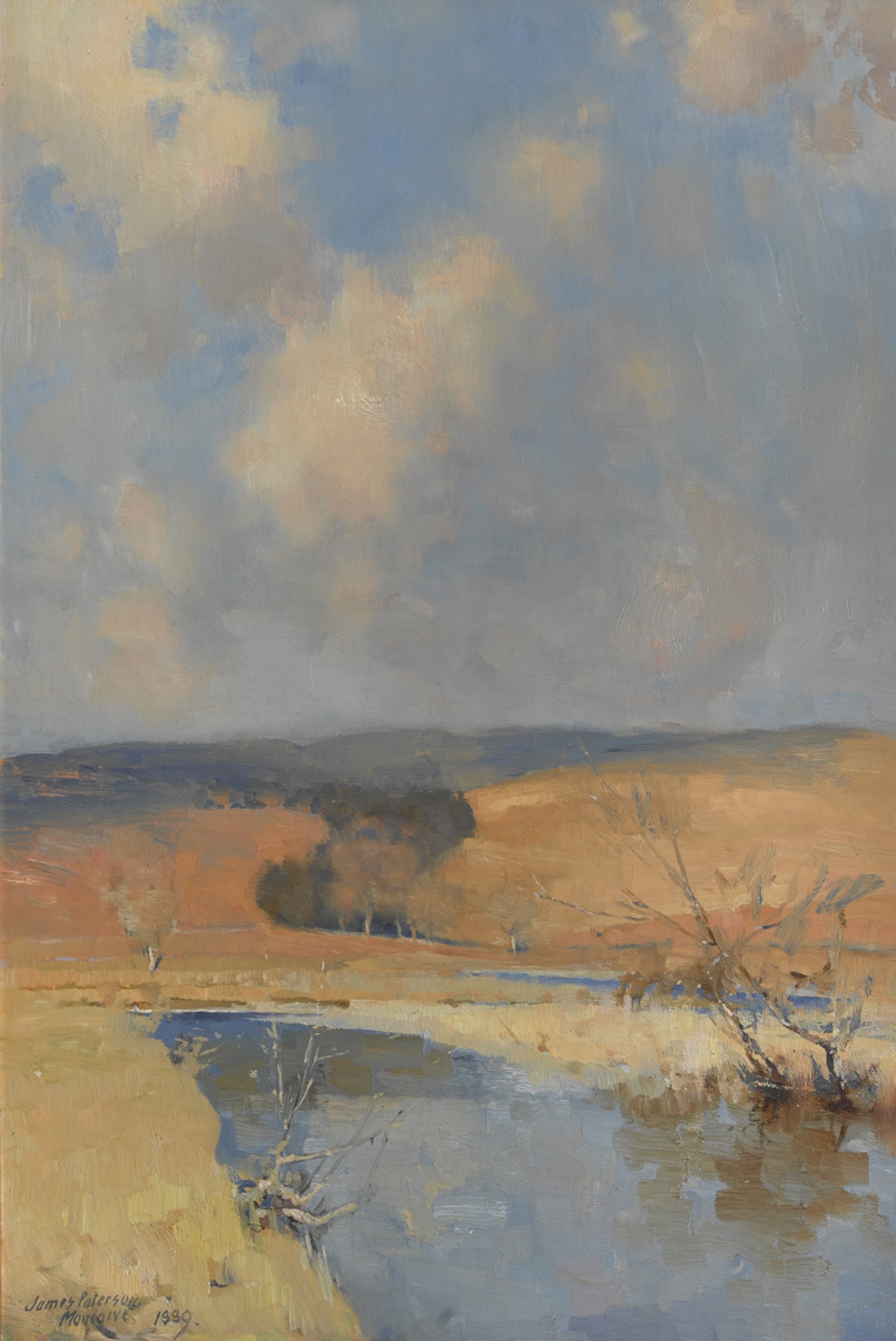
My steal was Ferguson’s “Winter Sunshine, Moniaive” – so simple and so lovely (Moniaive again) – and there was plenty in the exhibition to keep me thinking and comparing.
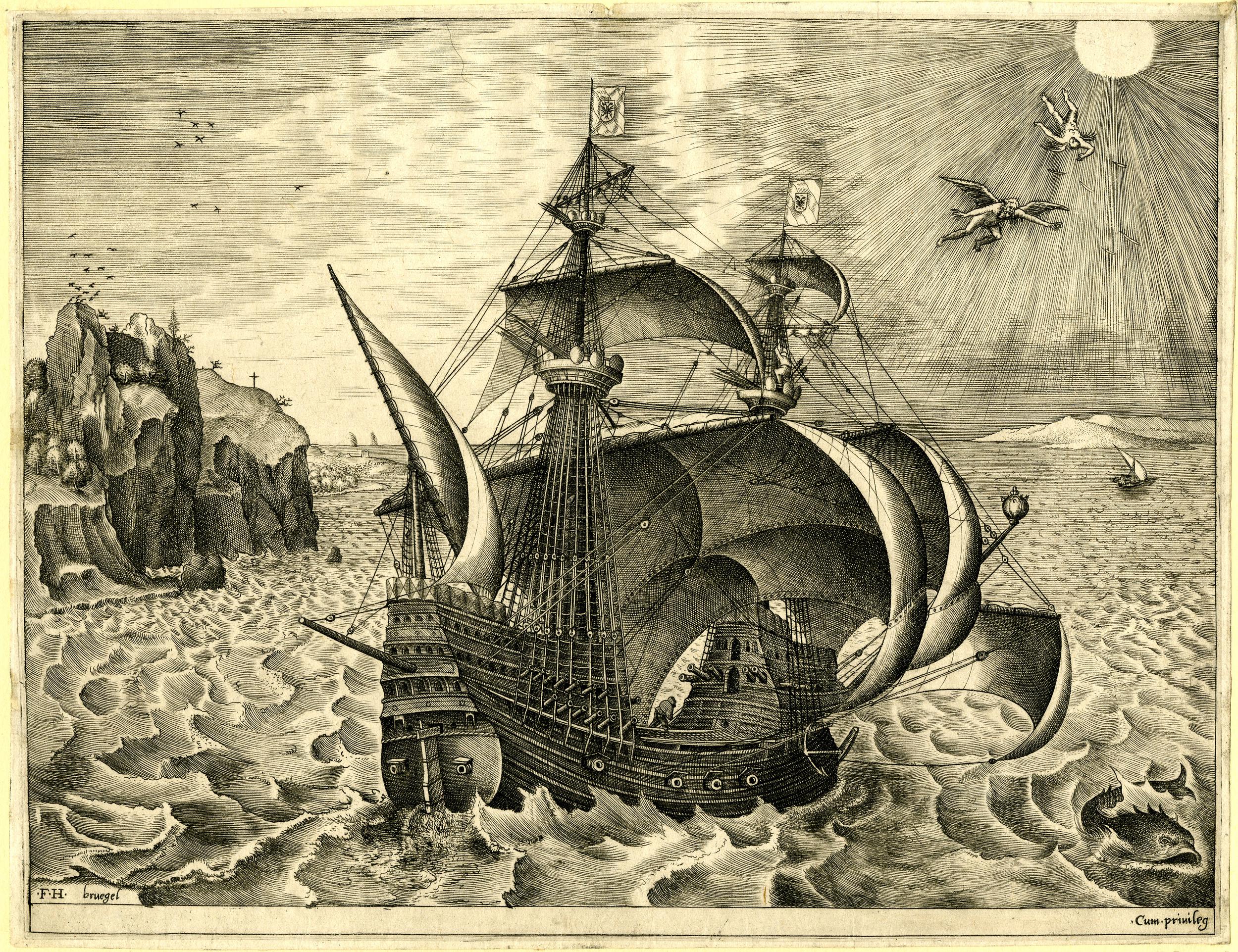
The Bruegel engraving – that may be the Bass Rock in the background, and there is Icarus falling again. North Berwick meets Brussels in my memory.
Apparently Jacob More used a “Claude glass” to “reduce and simplify the colour and tonal range to give a painterly quality”. Named after Claude Lorrain, it was a small tinted mirror; the painter turned his back on the scene and viewed the reflection.
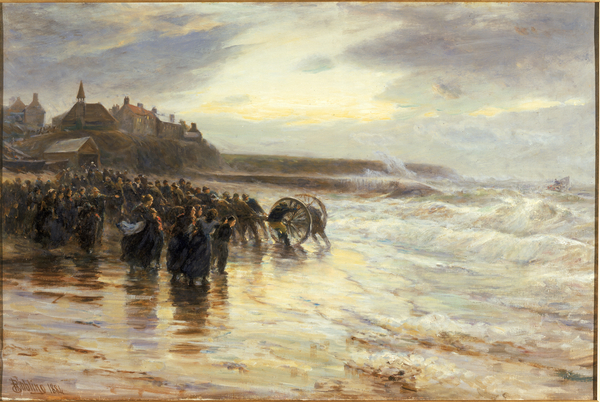
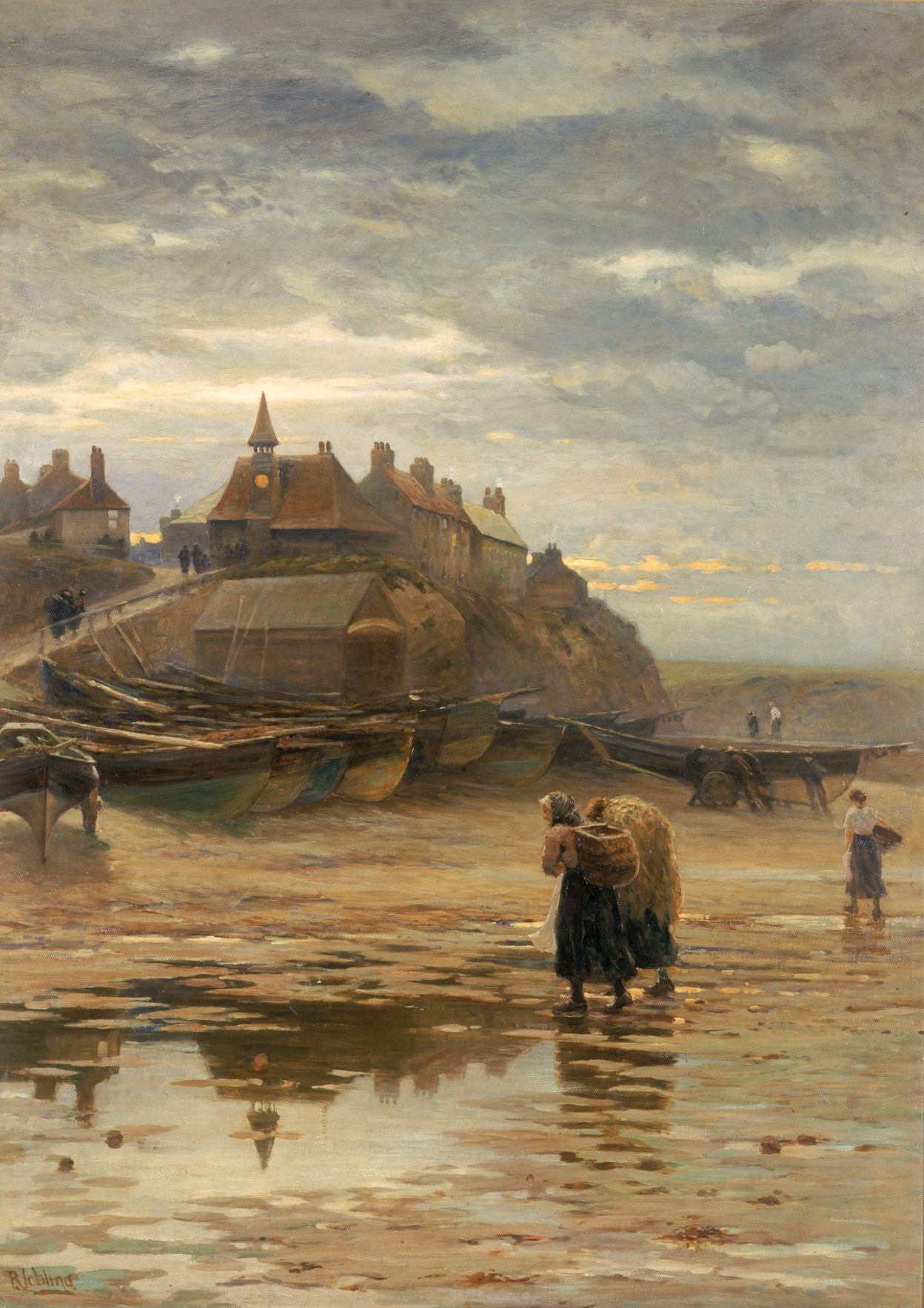
Robert Jopling and the north-east coast: great reflections in the wet sand – and as soon as I left the exhibition and moved into the main galleries, there was that same view and those same reflections again.
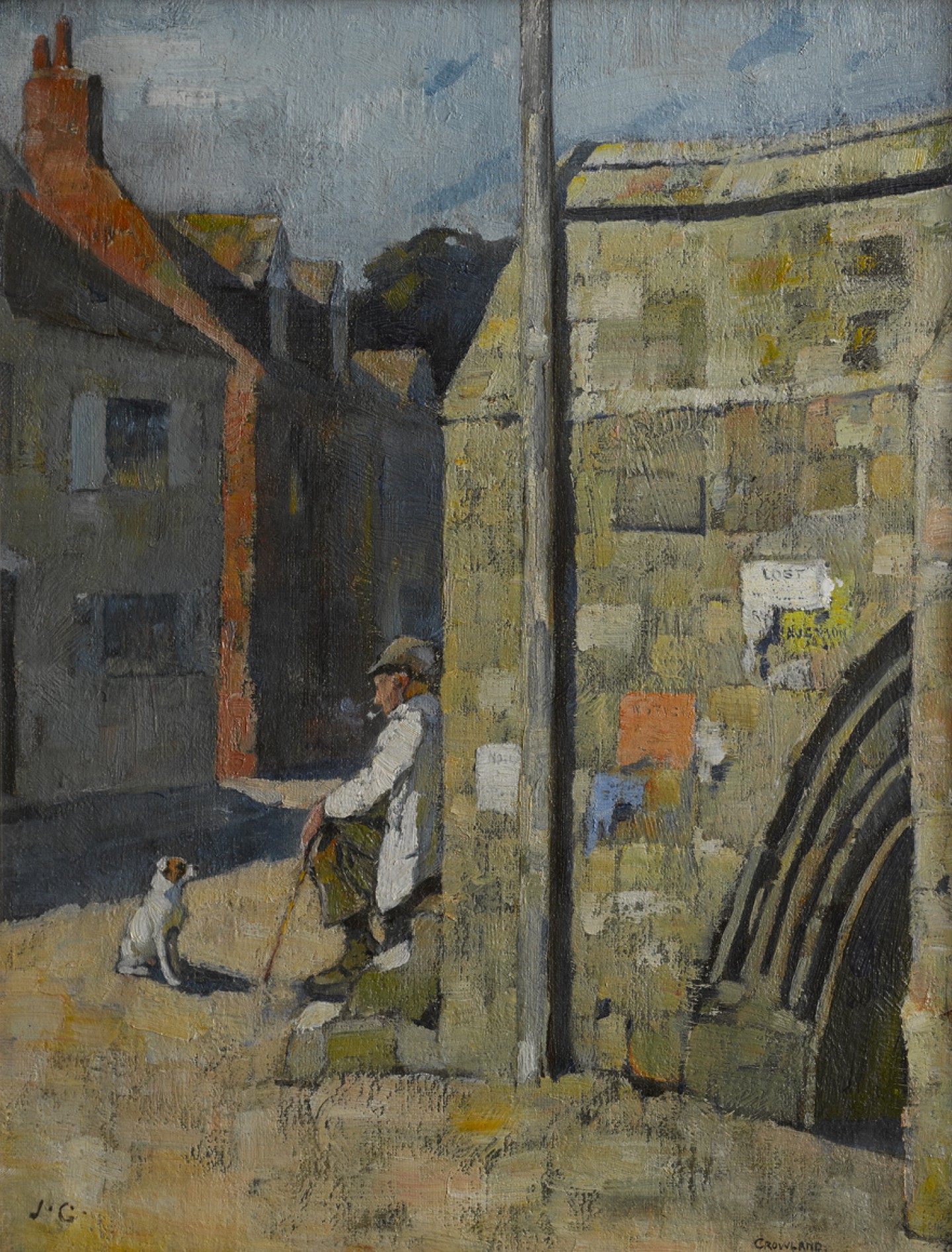
I liked the patchwork quality in Guthrie’s painting – apparently he used a square brush.
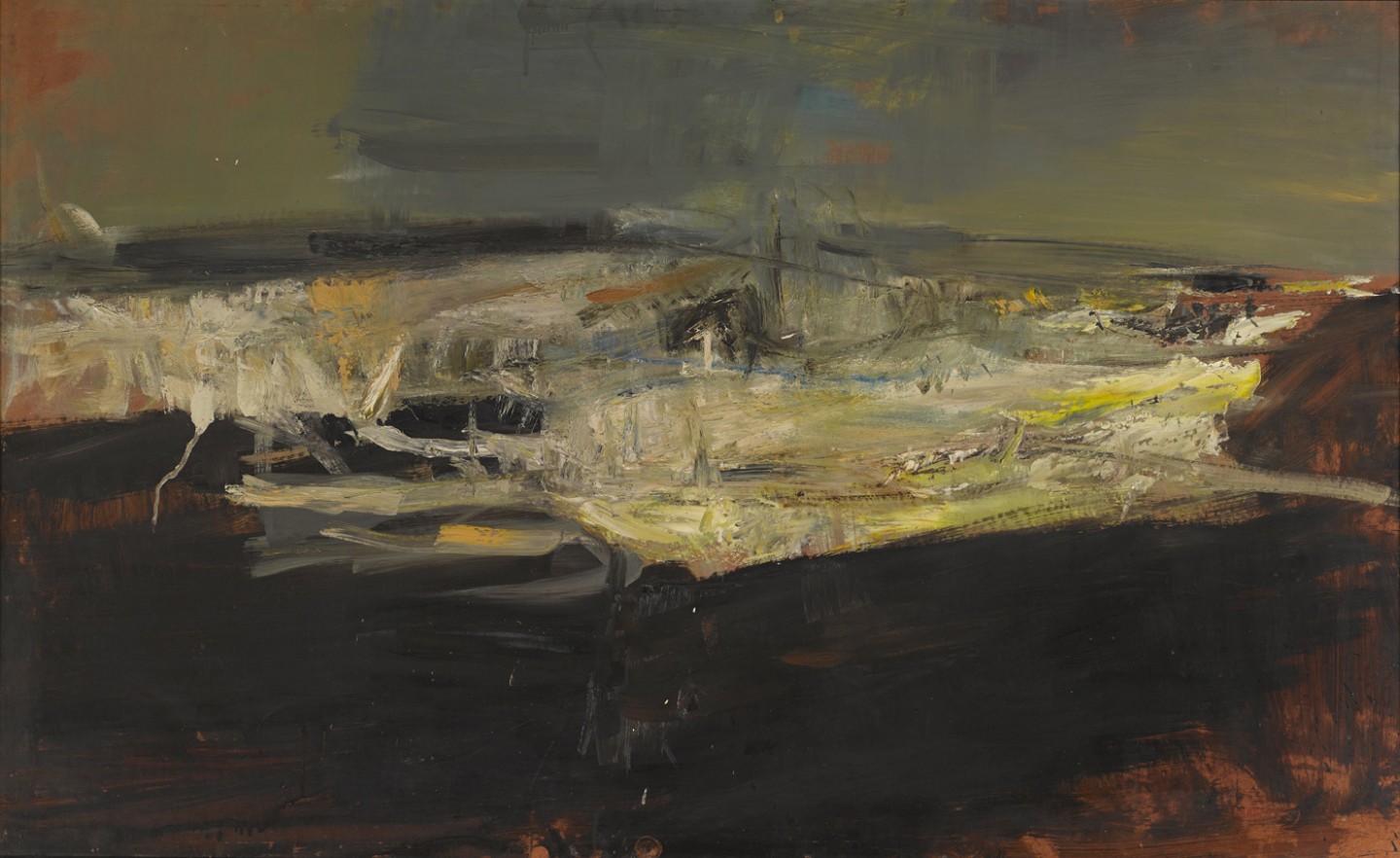
Joan Eardley has an alchemical gift with paint. It’s just splodges on canvas with drips where it’s been rained on or splashed by the salt spray – and somehow you really experience the sea.
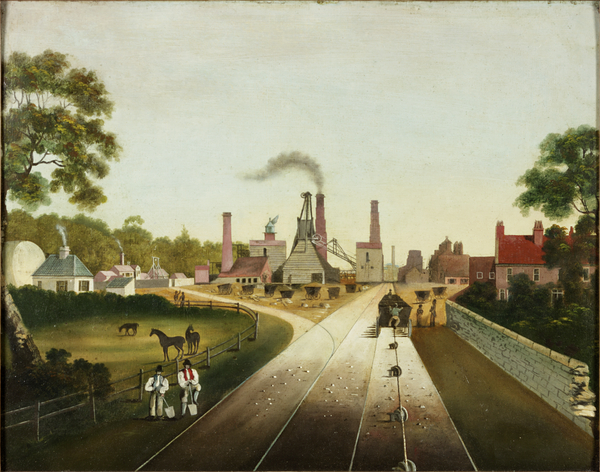
The pit painting was by an unknown artist, but I thought it was so particular and strange that it could have been painted a surrealist such as Tristram Hillier. Or perhaps Douanier Rousseau might have been pleased with it.
Newcastle really is a handsome city – it announces the fact from the moment you cross the river and curve into the station. Sunshine helps, of course. It’s looking a bit pinched in other ways, but that’s another matter.
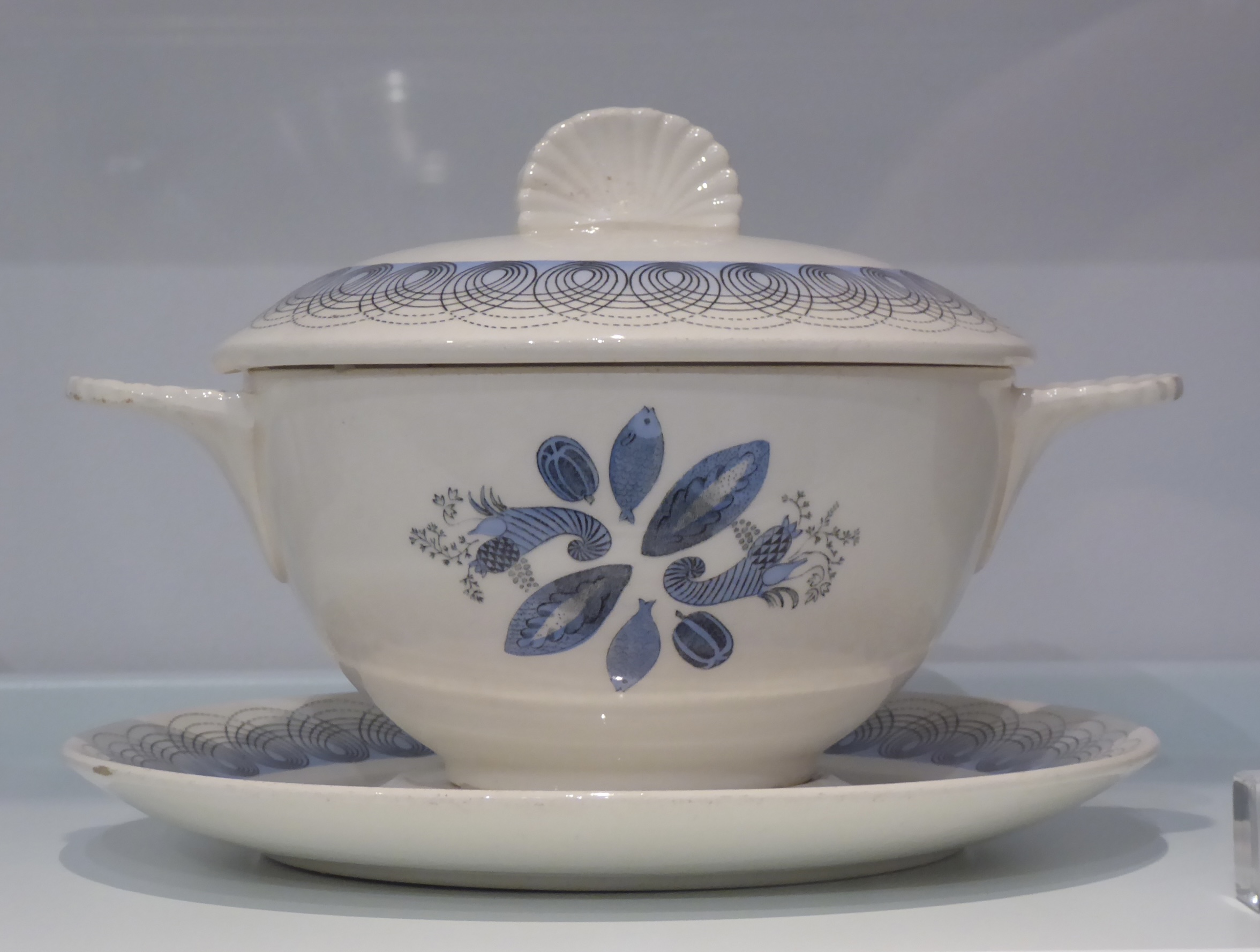
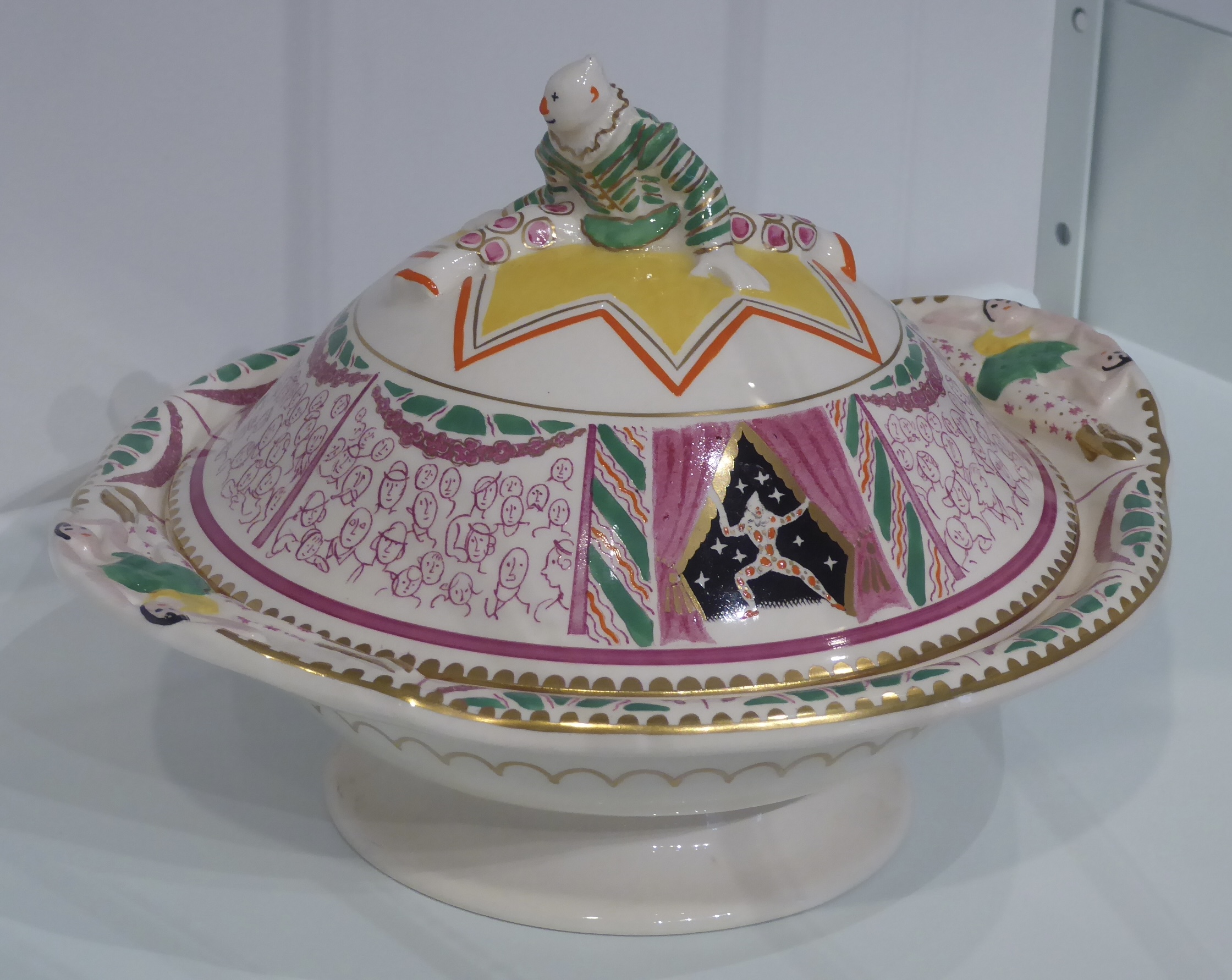
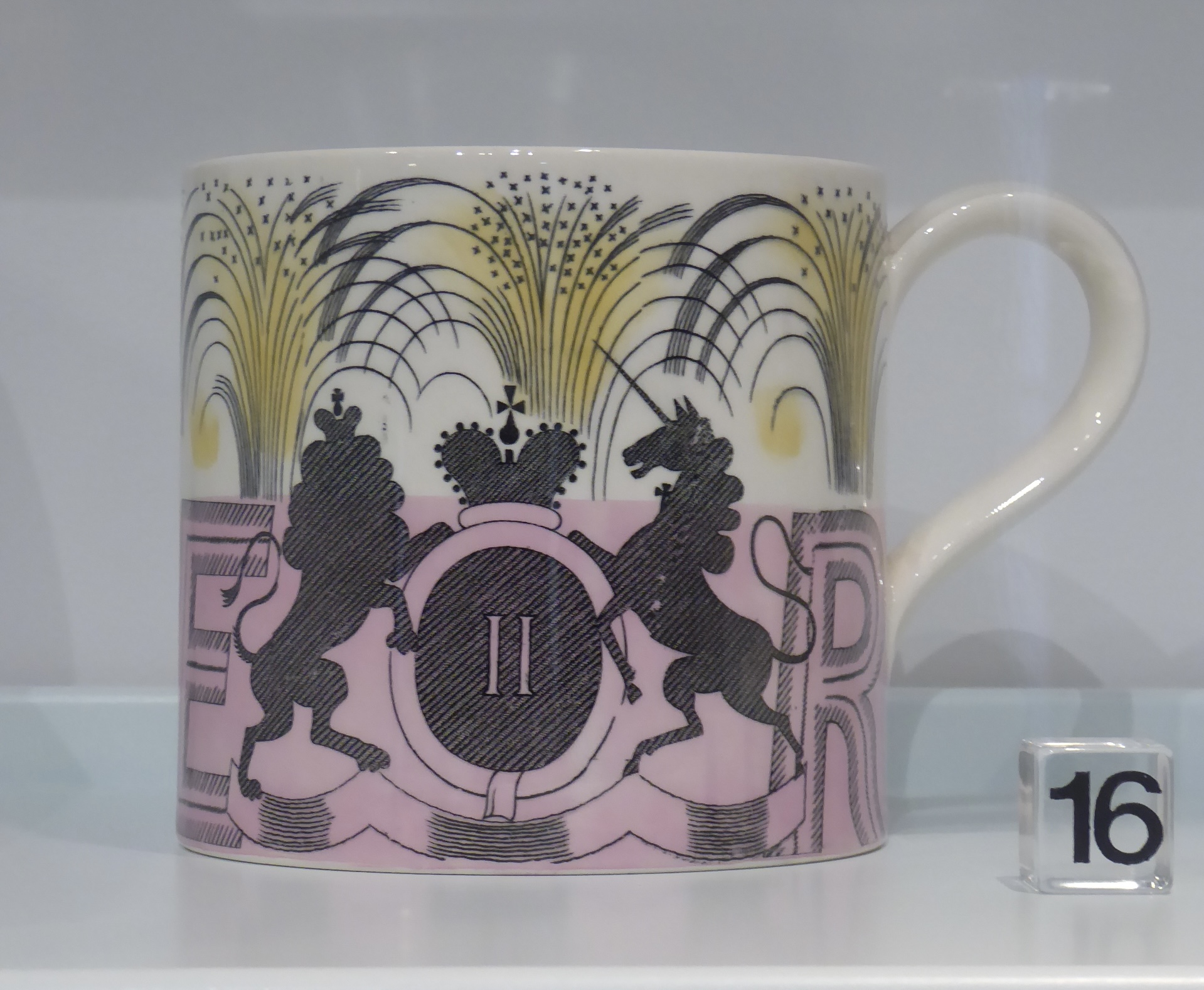
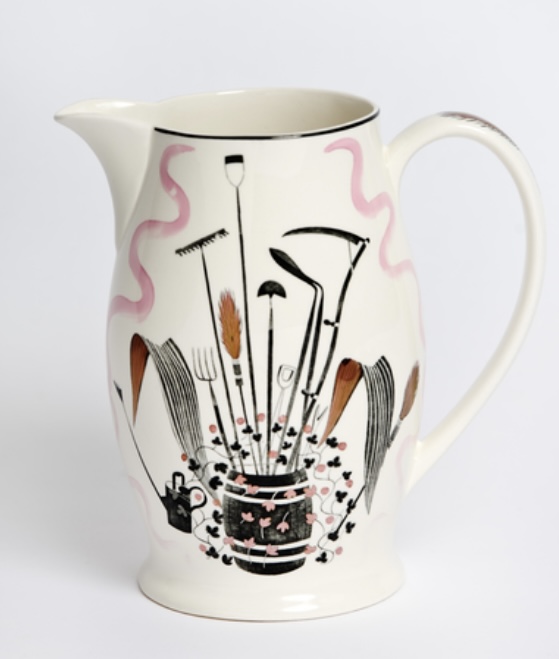
Straight to the Laing and the café, but before I had my coffee I was sidetracked by the corridor display of domestic items: a teapot by Christopher Dresser plus crockery by Laura Knight and Eric Ravilious. His little tureen was a delight.
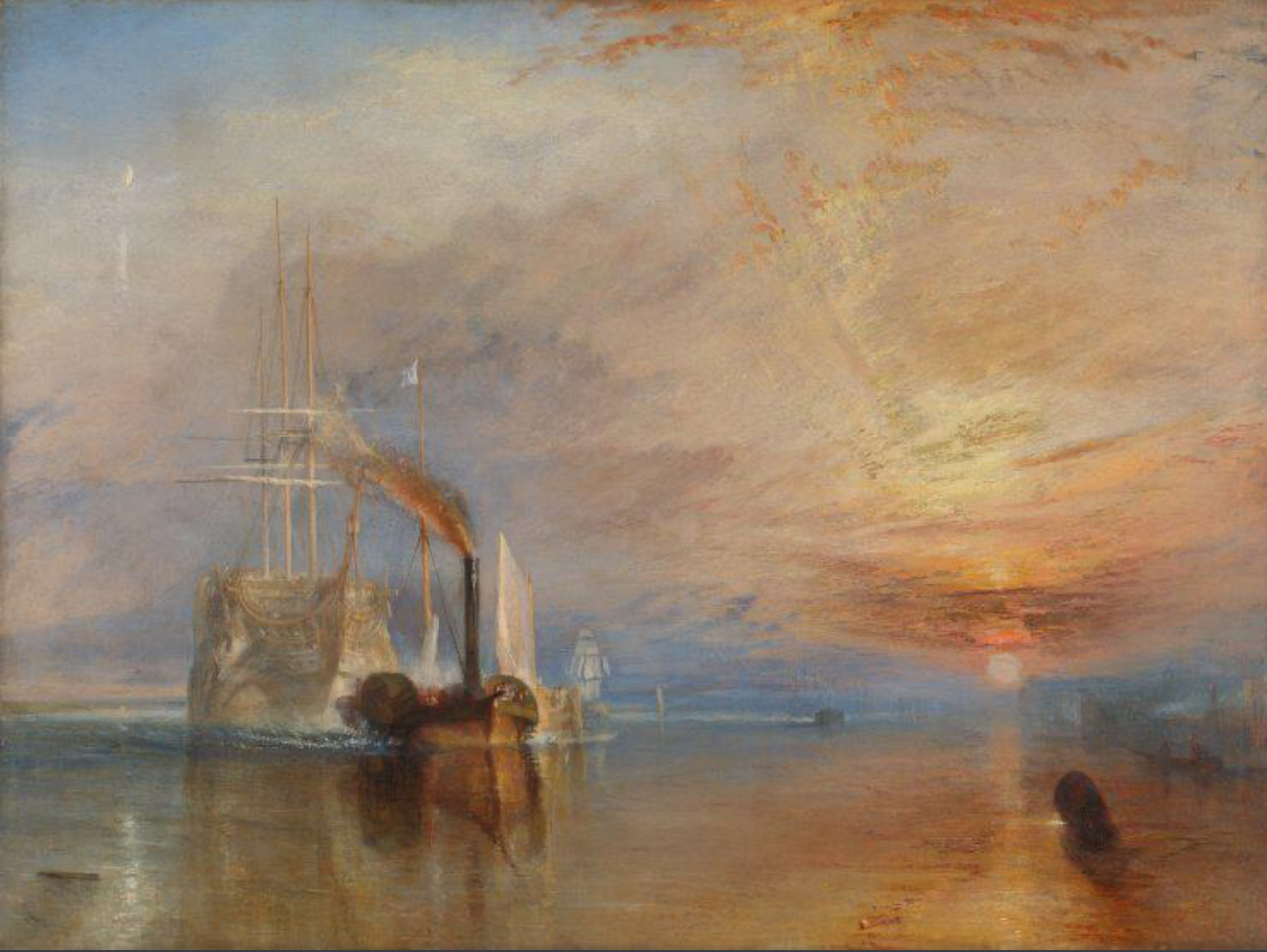
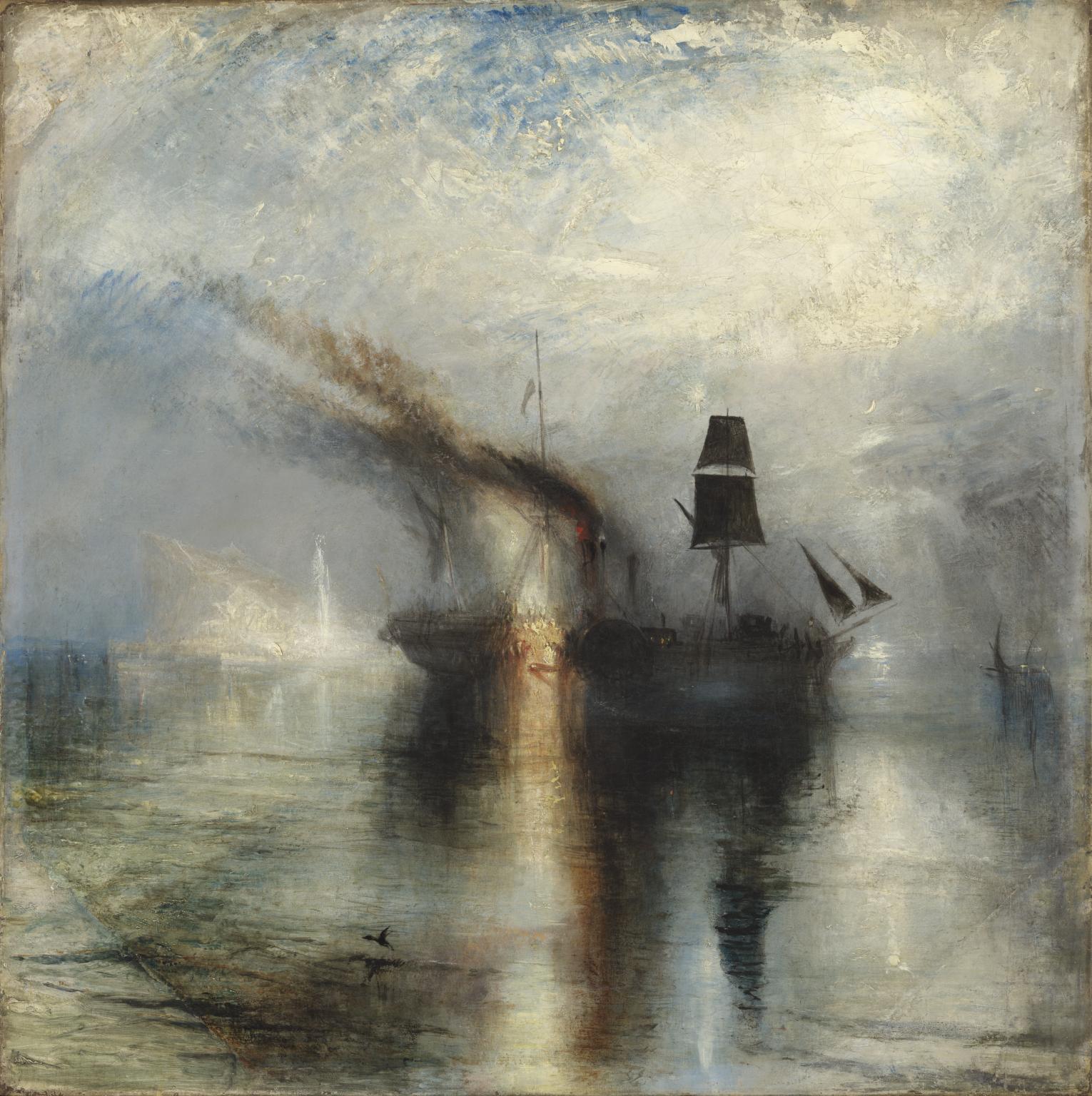
But I wasn’t there for household items. No, I was there to see Turner’s “Fighting Temeraire”, which is on loan from the National Gallery, and the exhibition surrounding it. As I walked round I felt a small surge of horrified interest in how a battle would have been fought by sailing ships atop a wooden crate riddled with gun holes. Lots of Turner’s watercolours, which – since I know one of the scenes he painted – included a great deal of artistic licence. Sometimes his painting are too undefined and blurry for my taste, and I wasn’t expecting that much of the Temeraire. Well, I was wrong. In the flesh, it is amazing. It blazes and shimmers and is utterly beautiful. Lots of artistic licence here too, but there is still pathos in the old ship that helped to defend Britain from Bonaparte’s forces being led to her death by a new-fangled steam tug. “Burial at Sea” next to it was equally breathtaking. It just glowed.
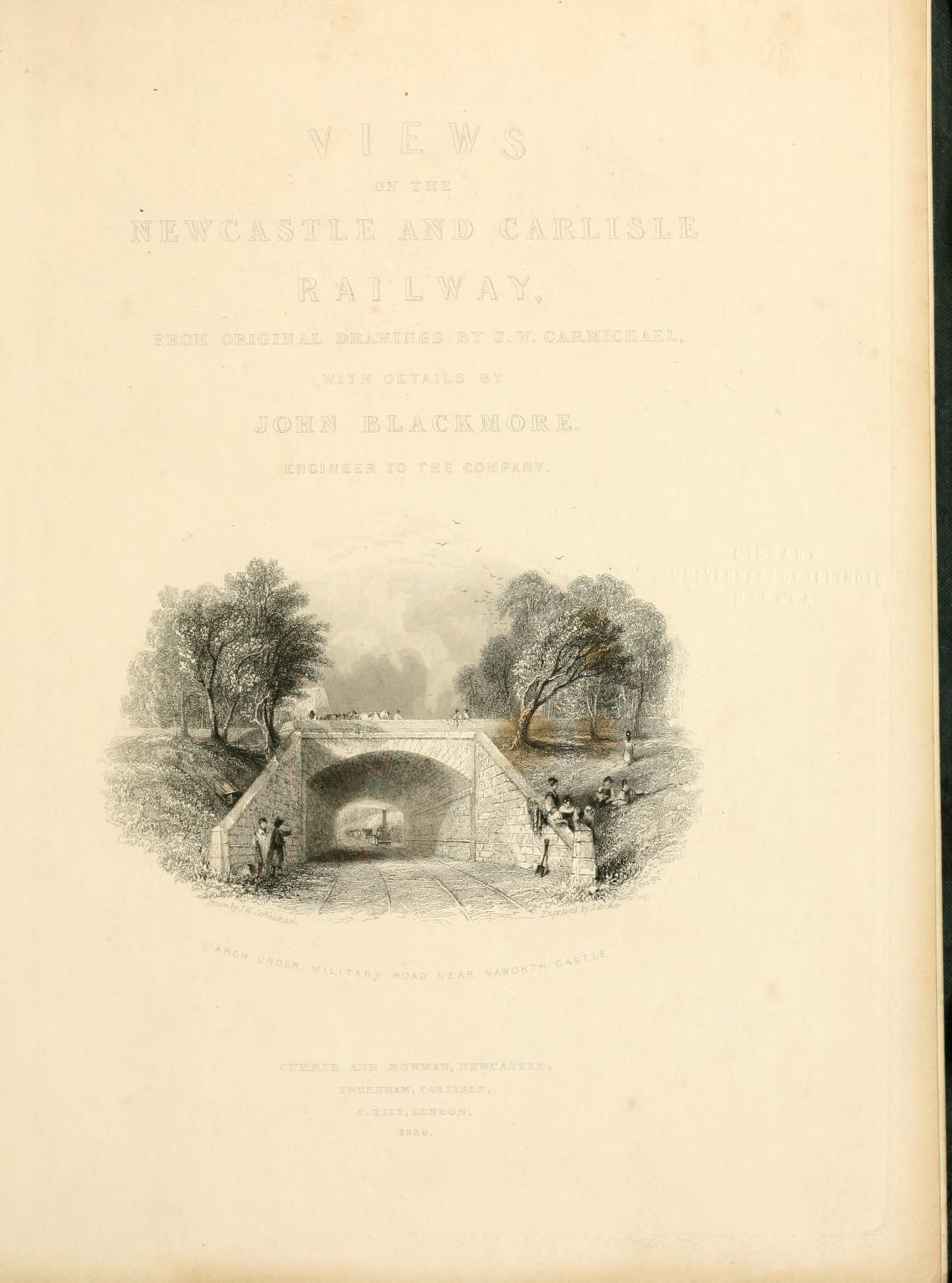
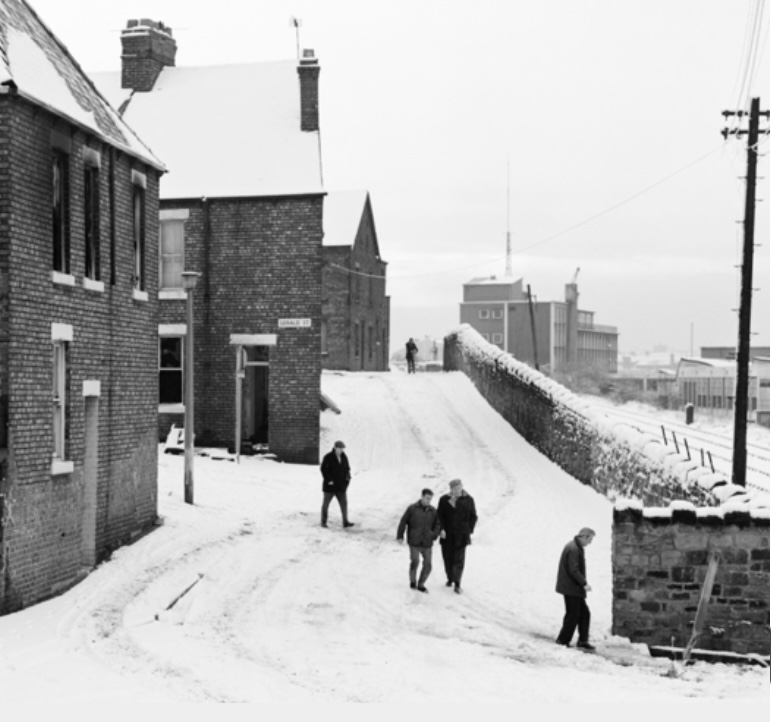
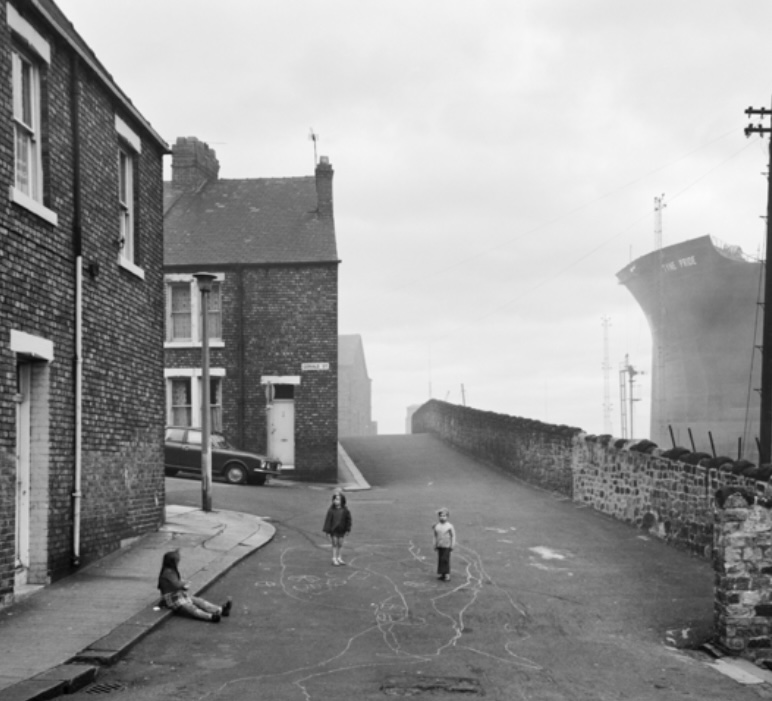
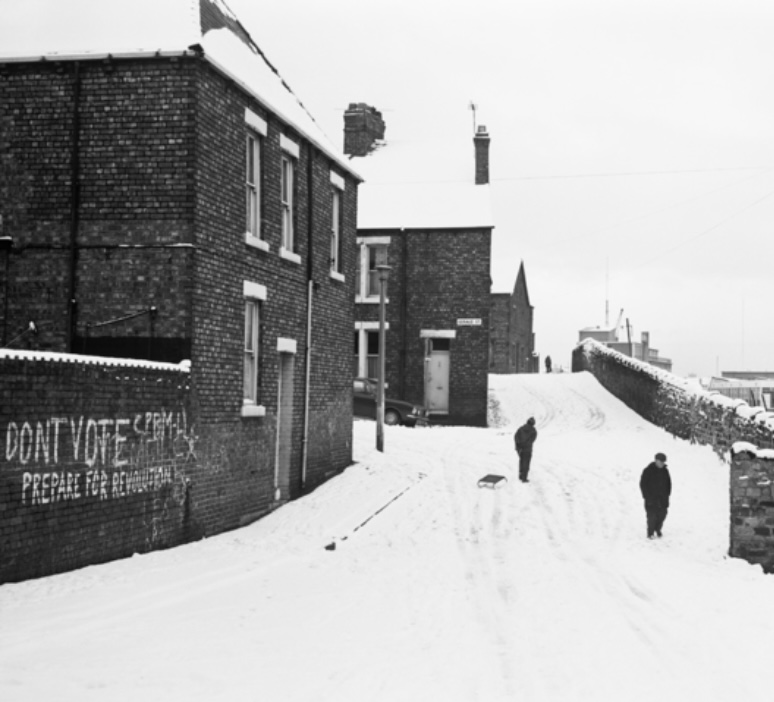
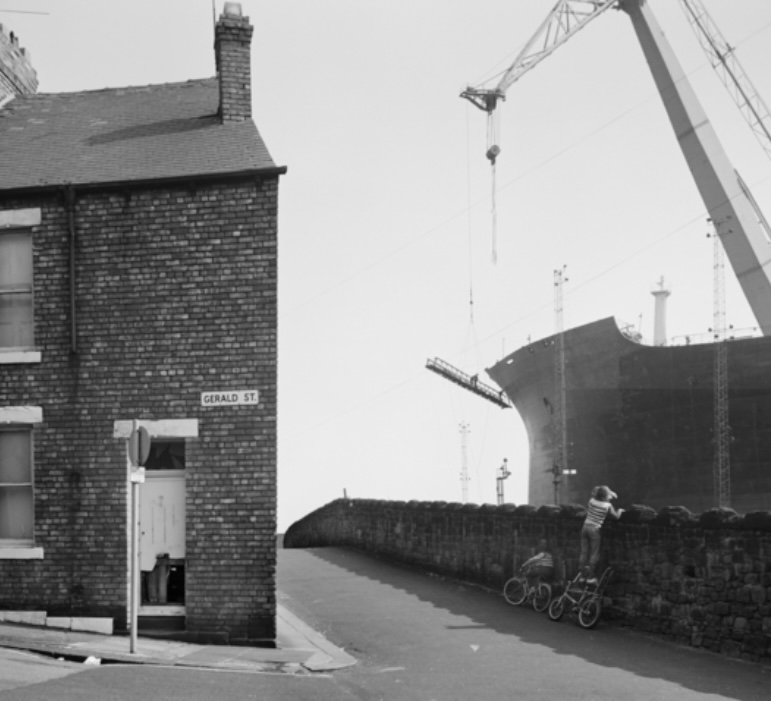
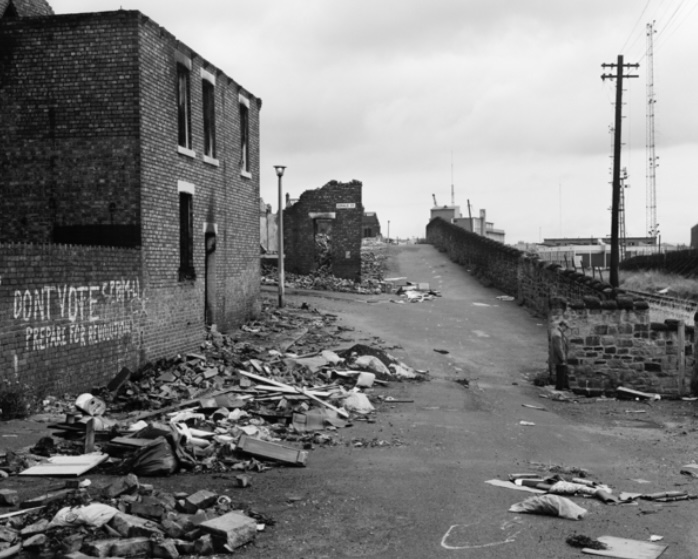
There was more about shipbuilding and industry on the Tyne, including one photograph by Chris Killip. Afterwards I went into his exhibition of “The Last Ships”. His eye is perfect, but it is perhaps the time he spent on the people and the area that was his invisible power. These photographs of the same street over the course of a couple of years in the mid-1970s:
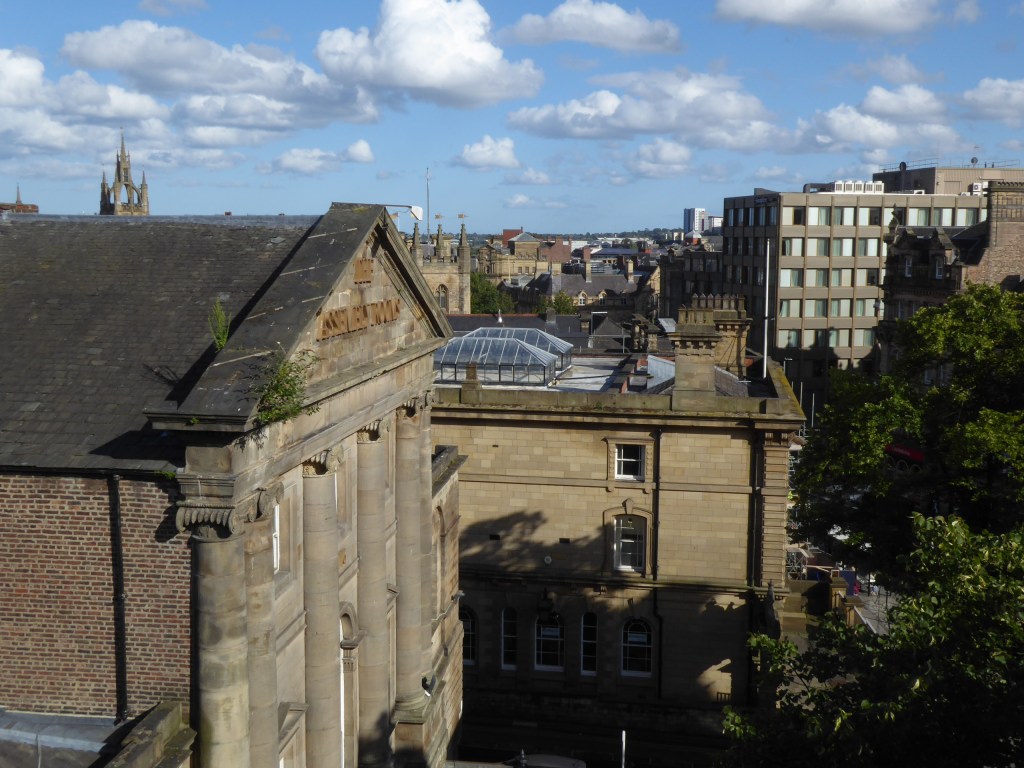
My room is on the fourth floor and I have a perfect view of the Ionic capitals of the old Assembly Rooms. And of the buddleia sprouting from its masonry.


 Old Shoe Box