Euston underground tunnels

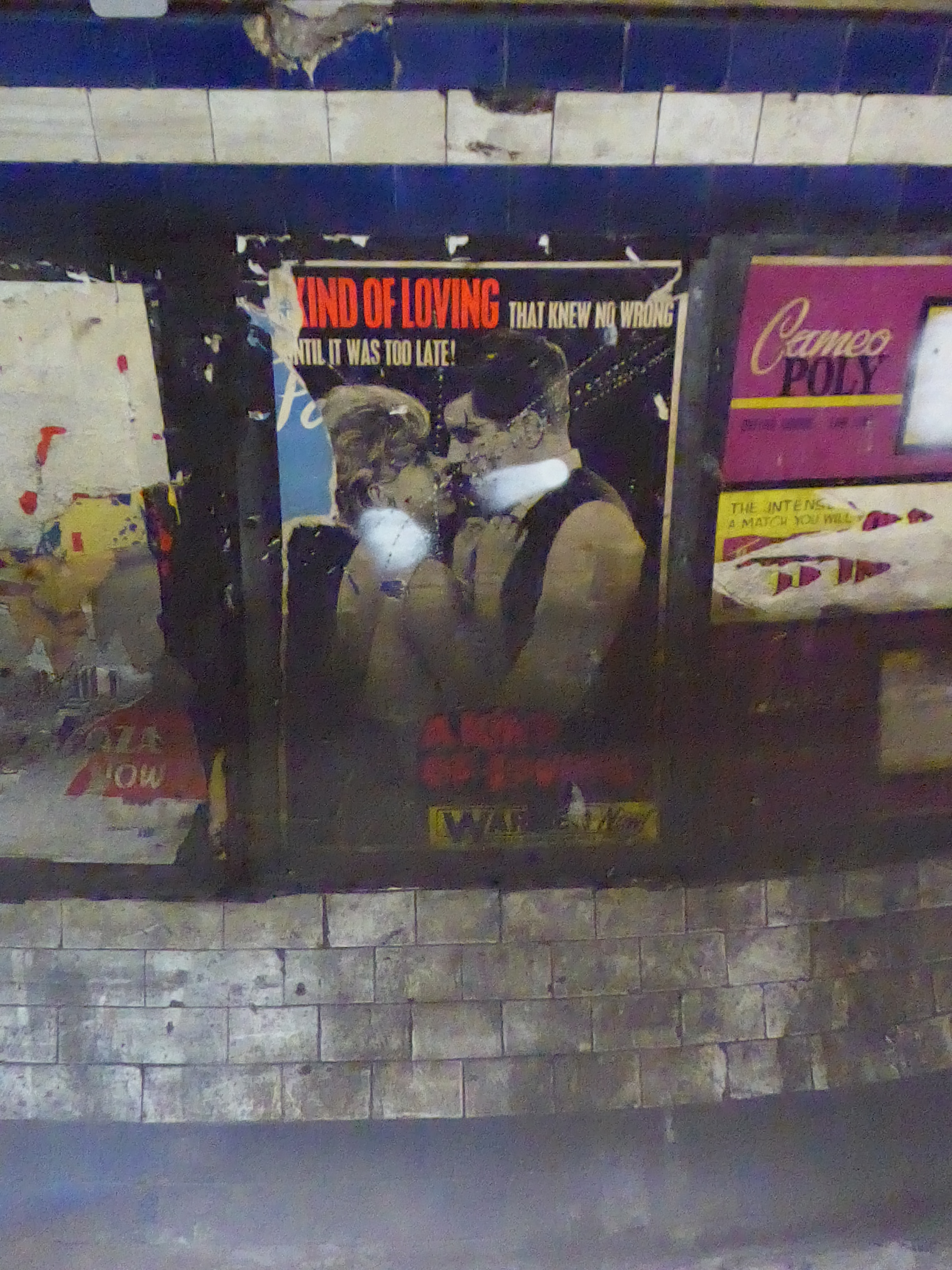
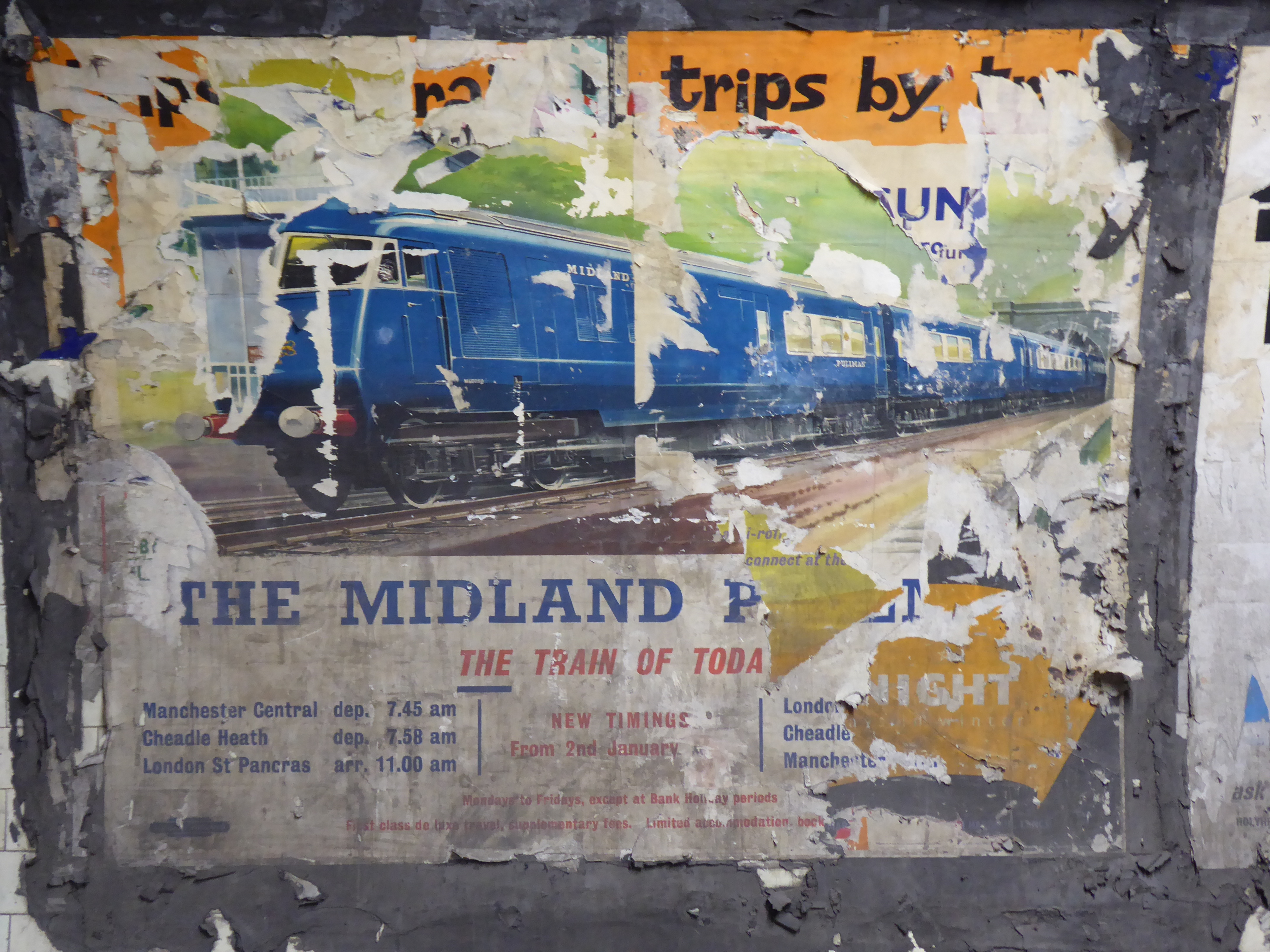
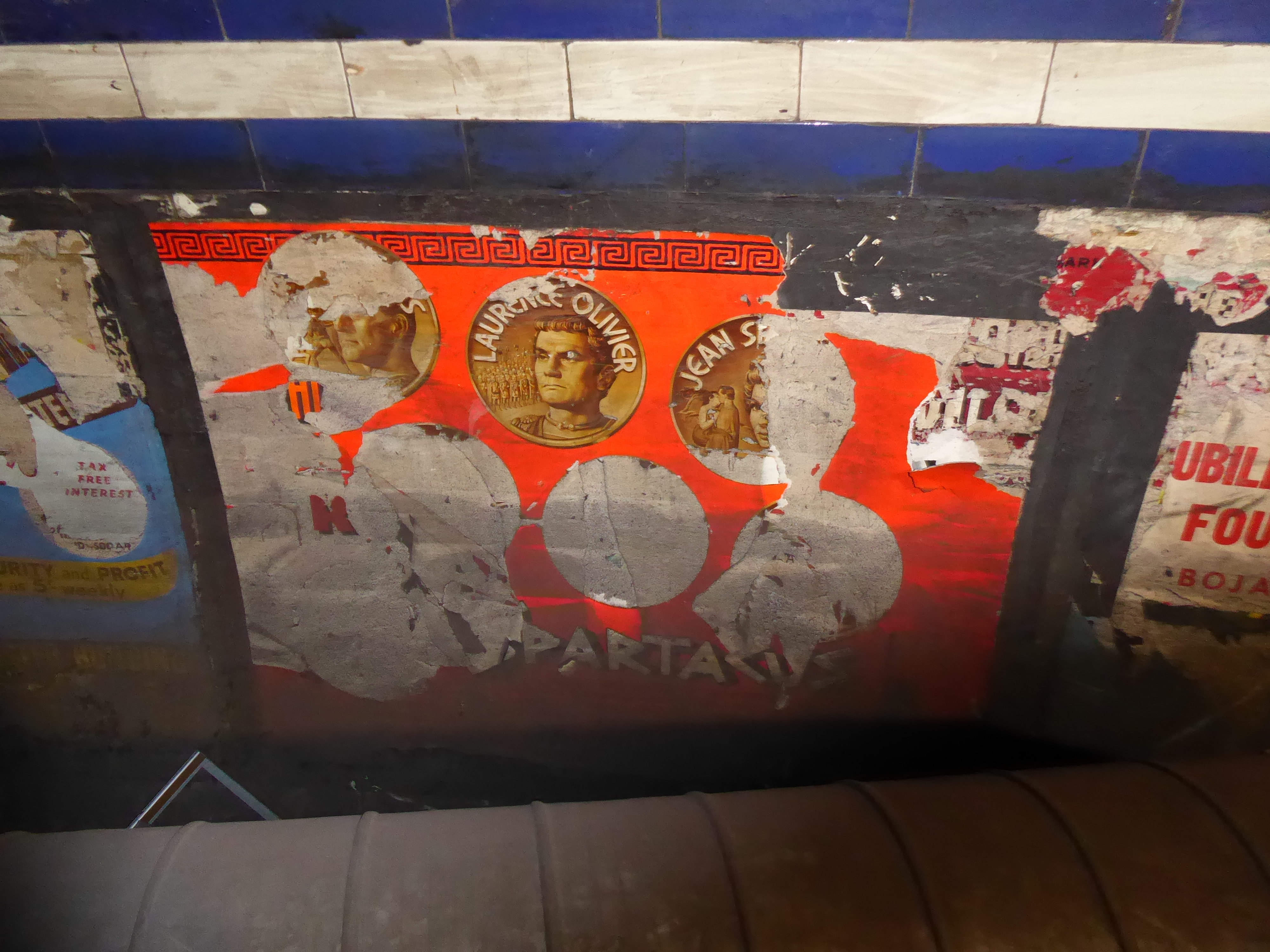
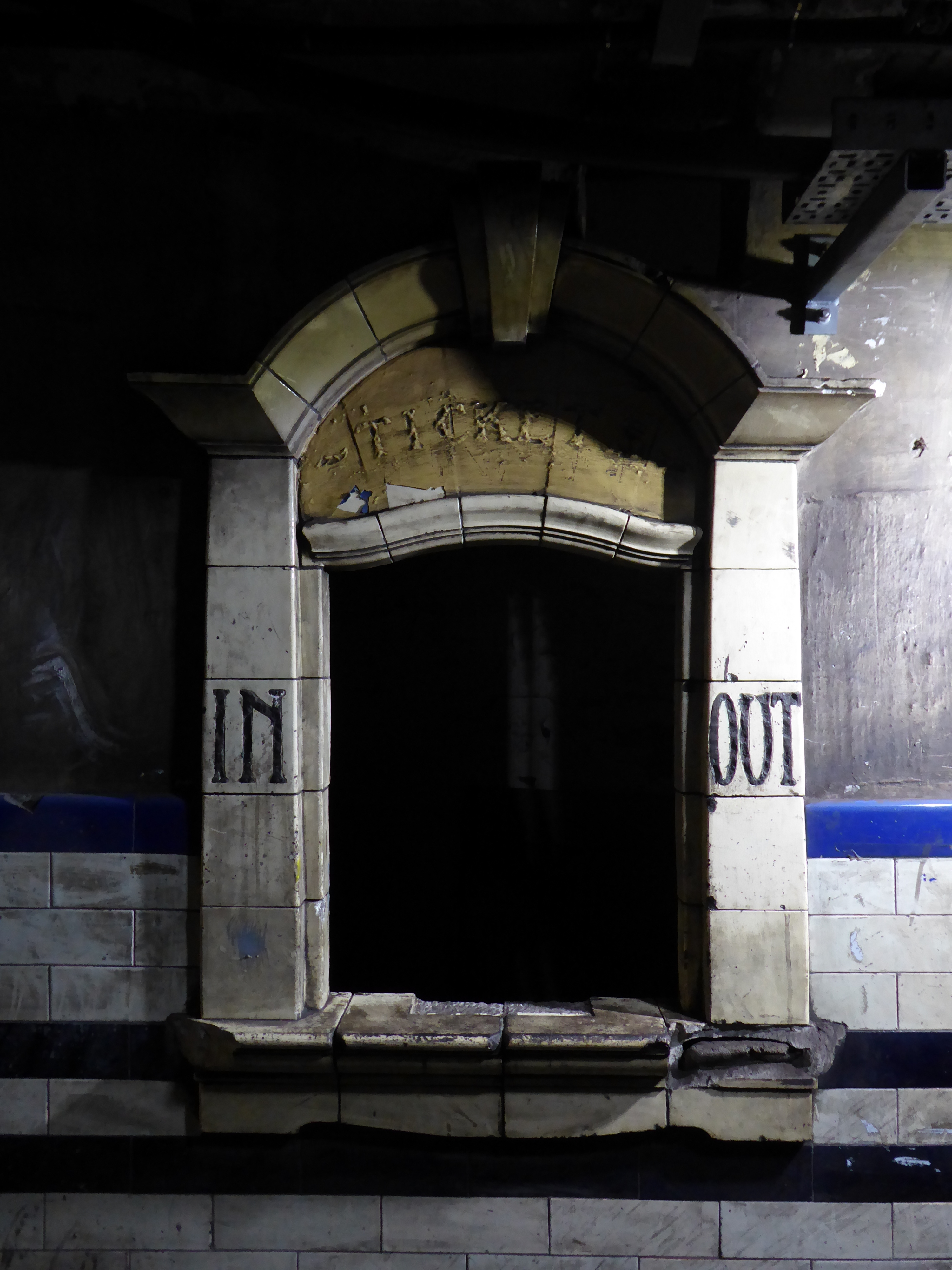
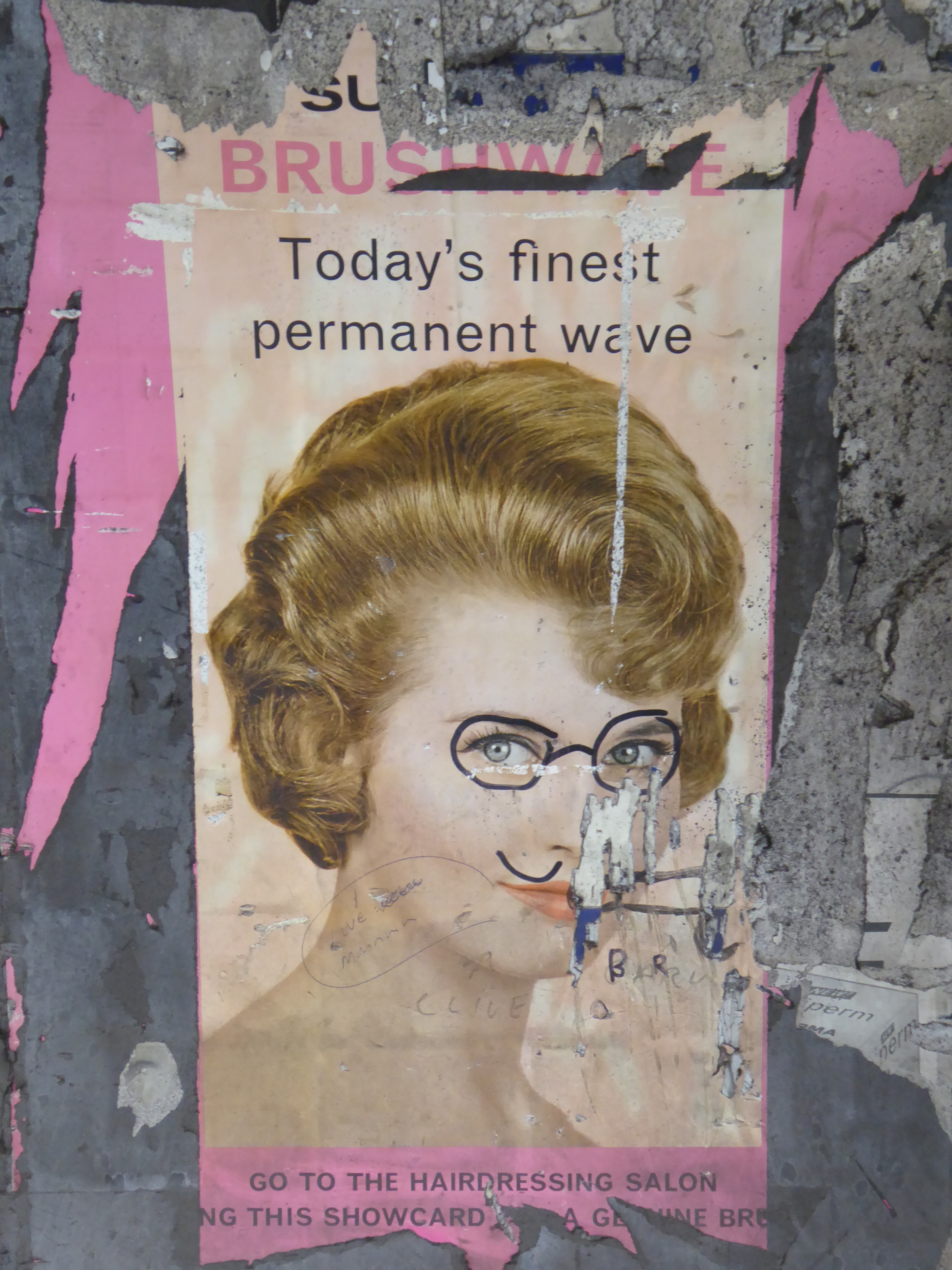
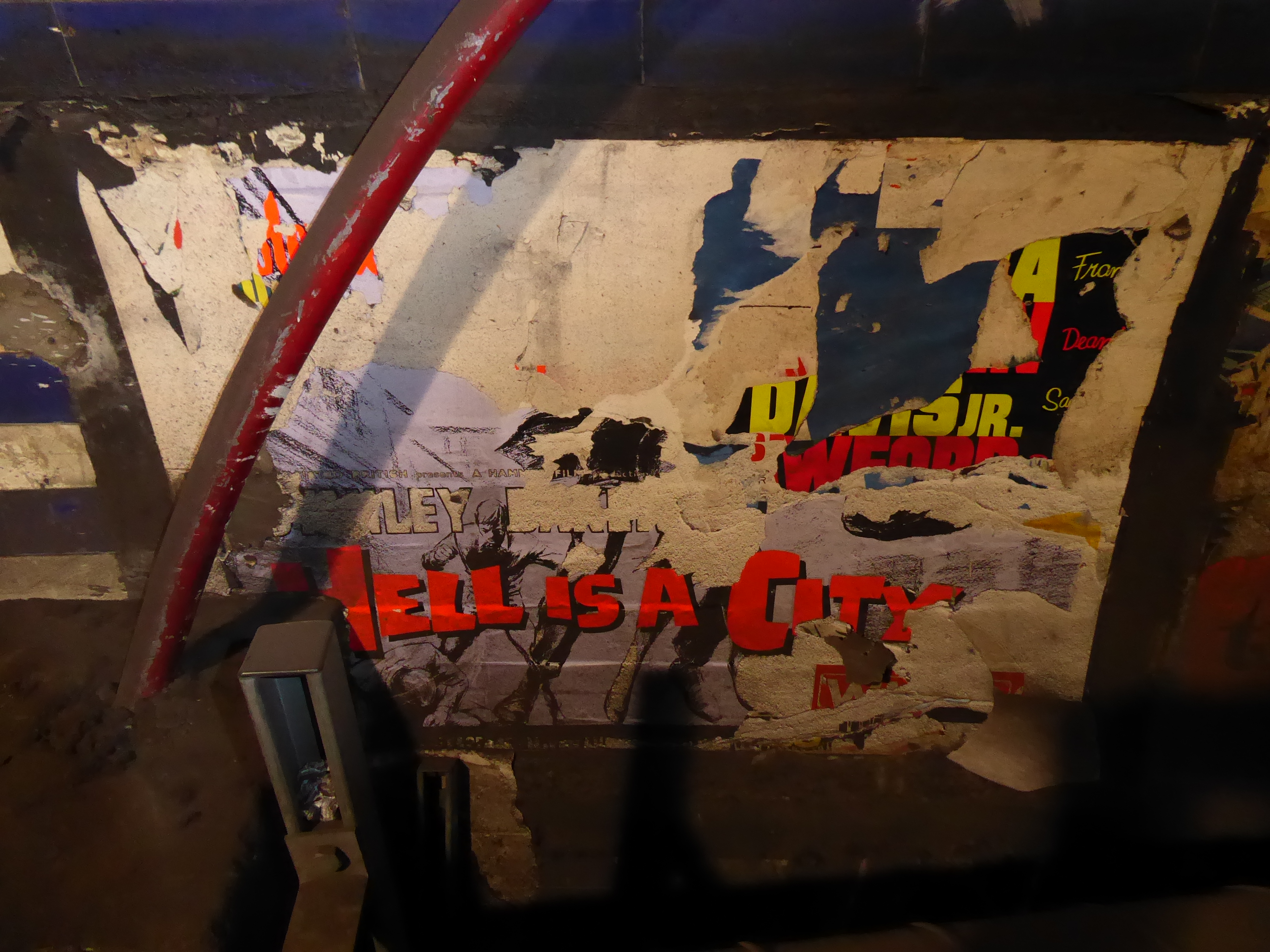
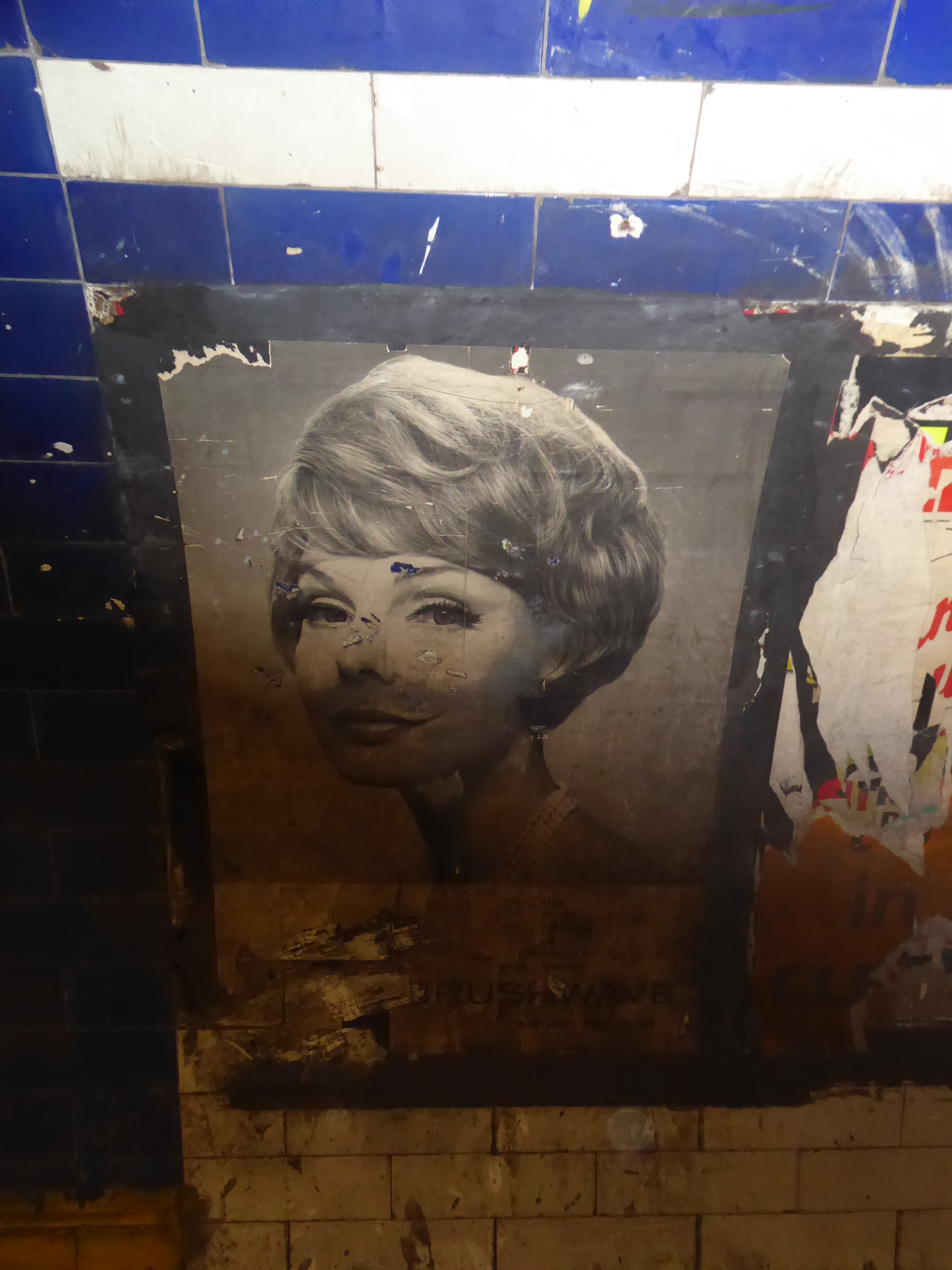
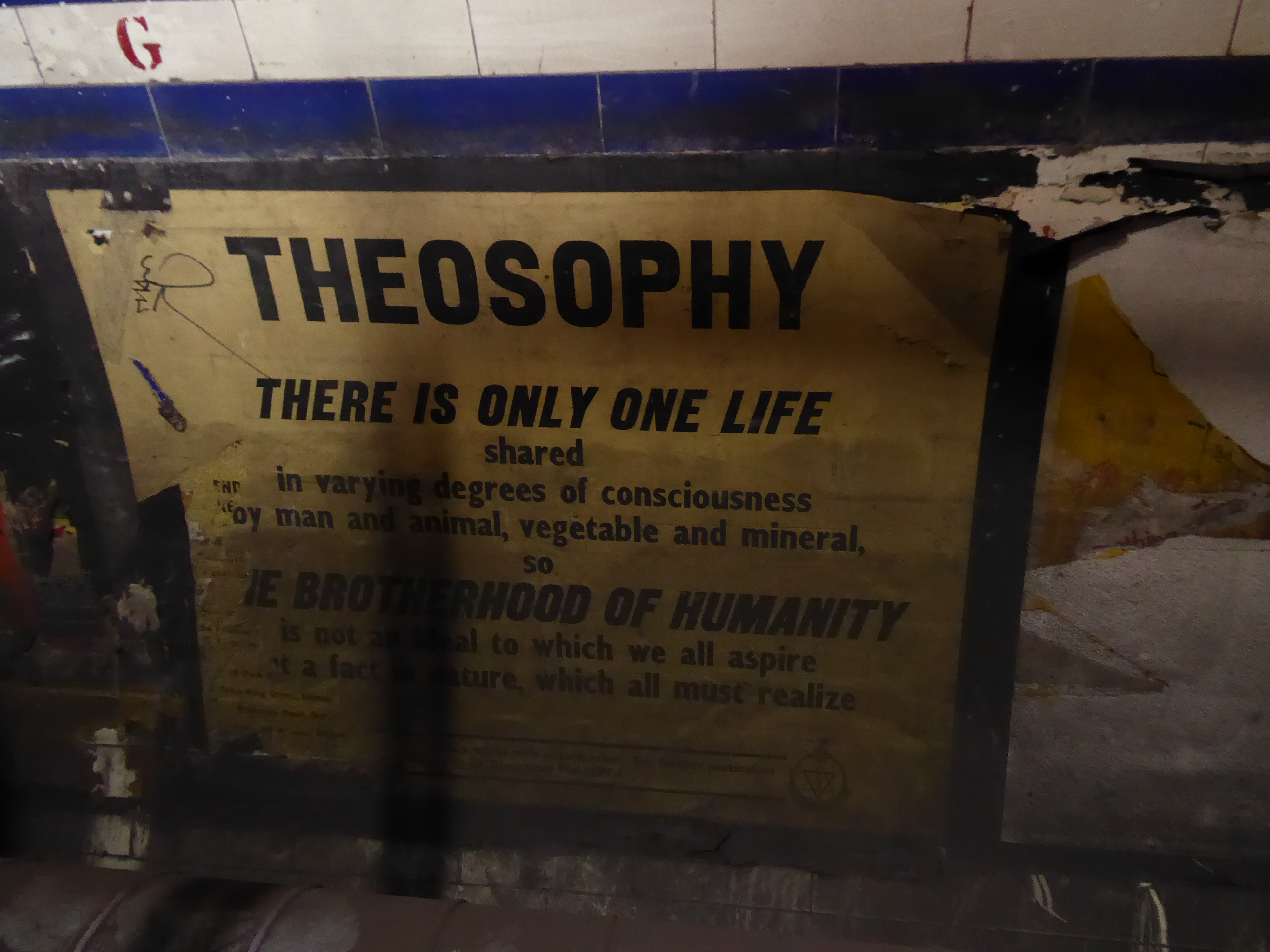
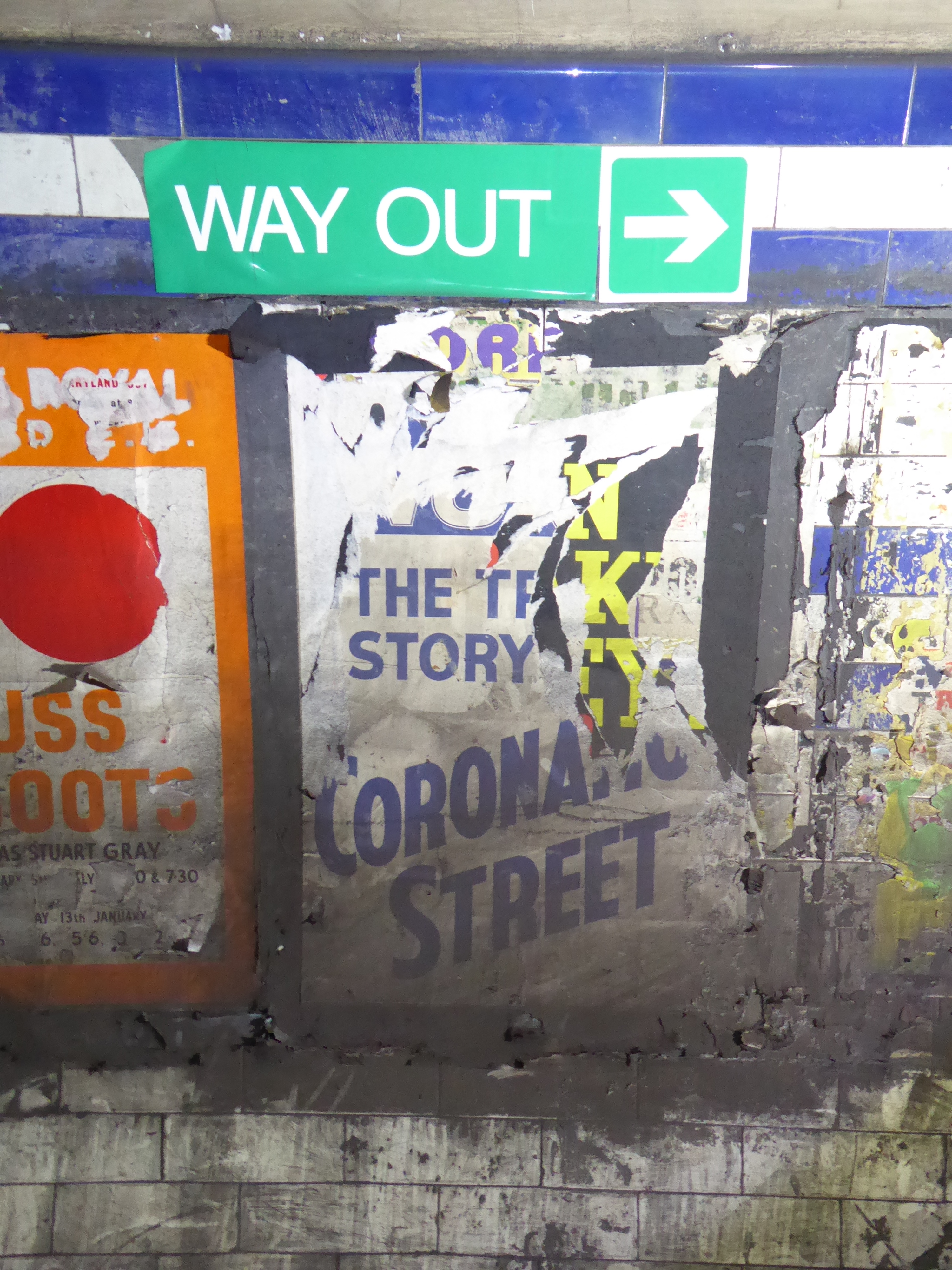
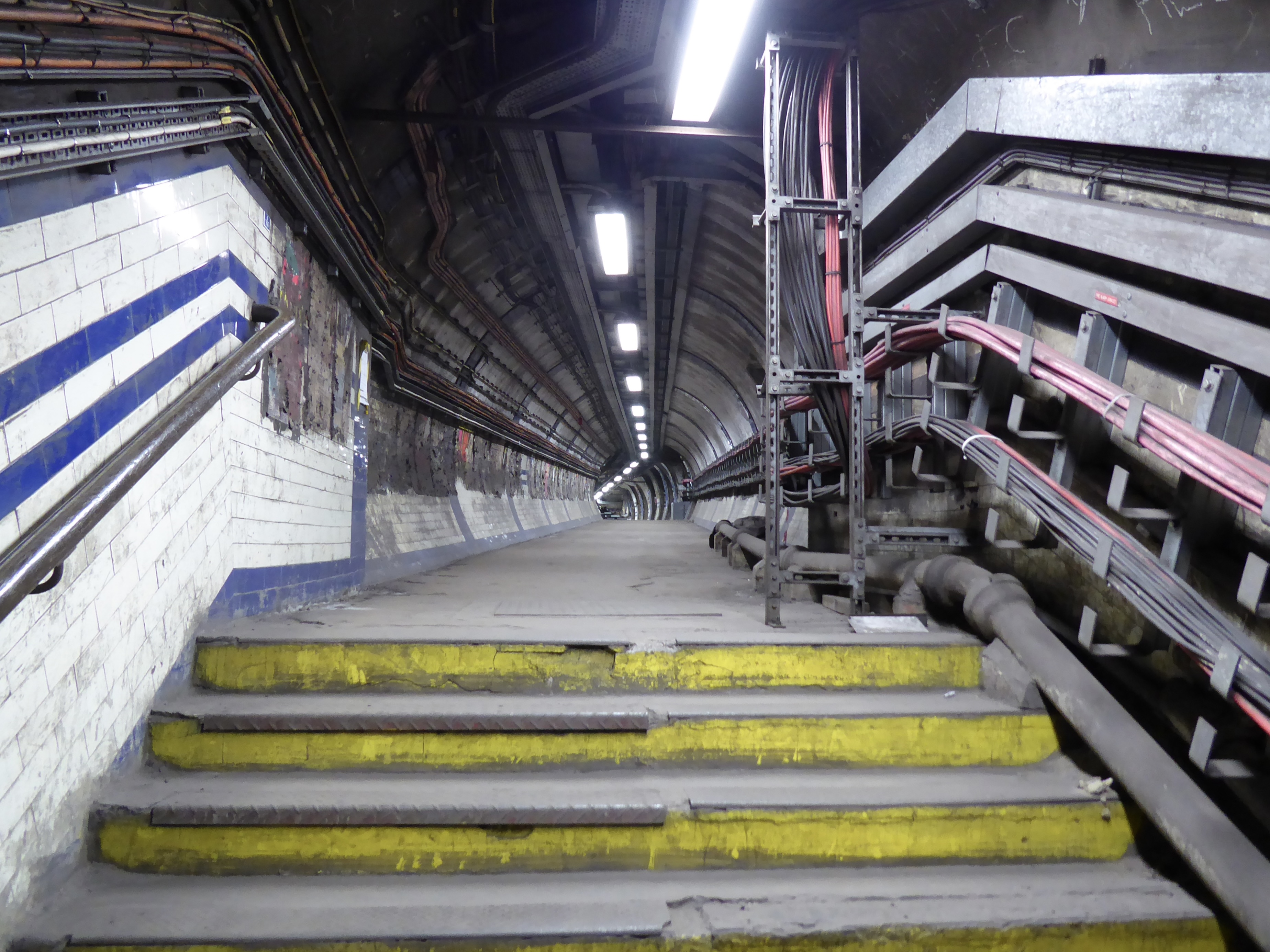
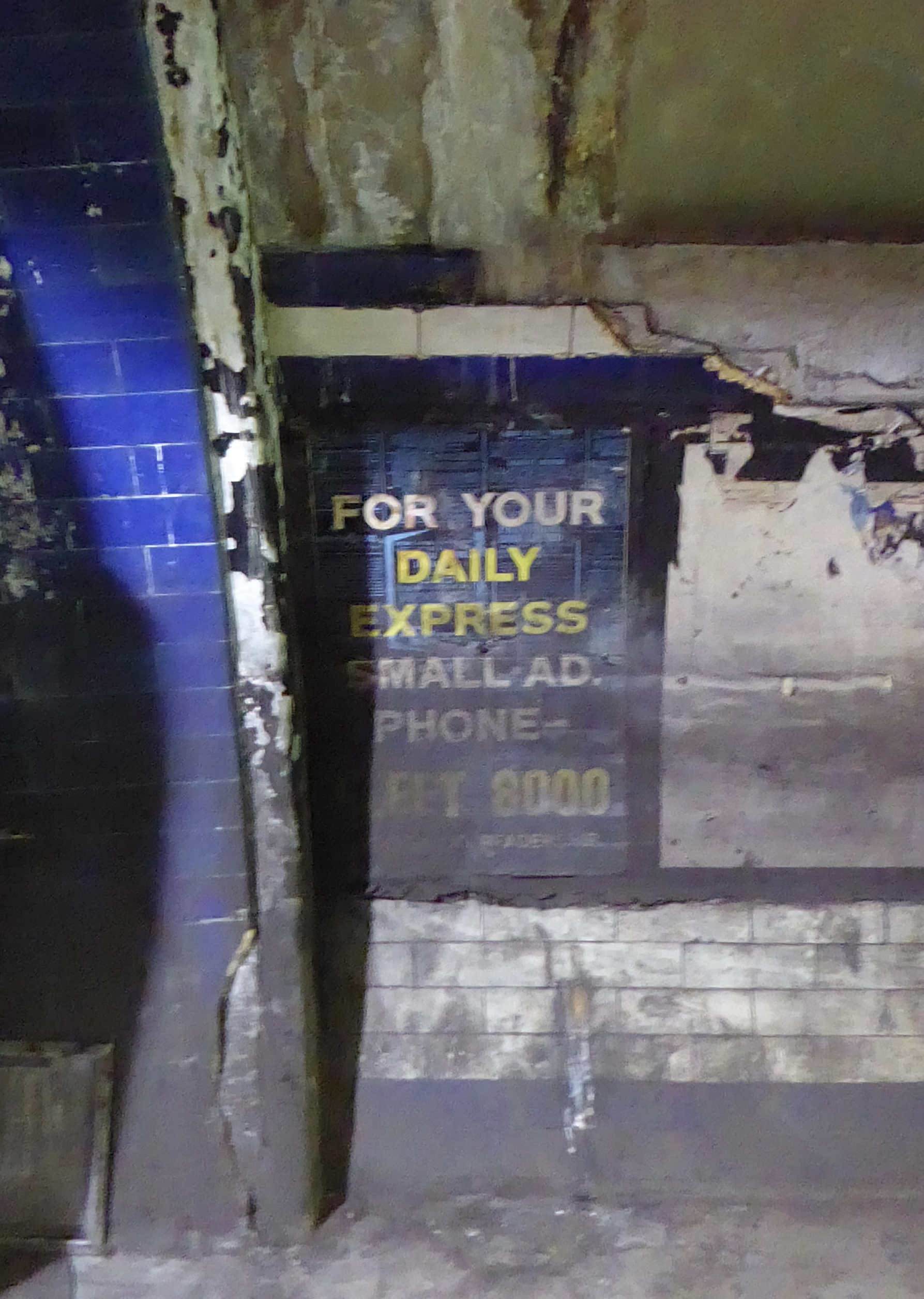
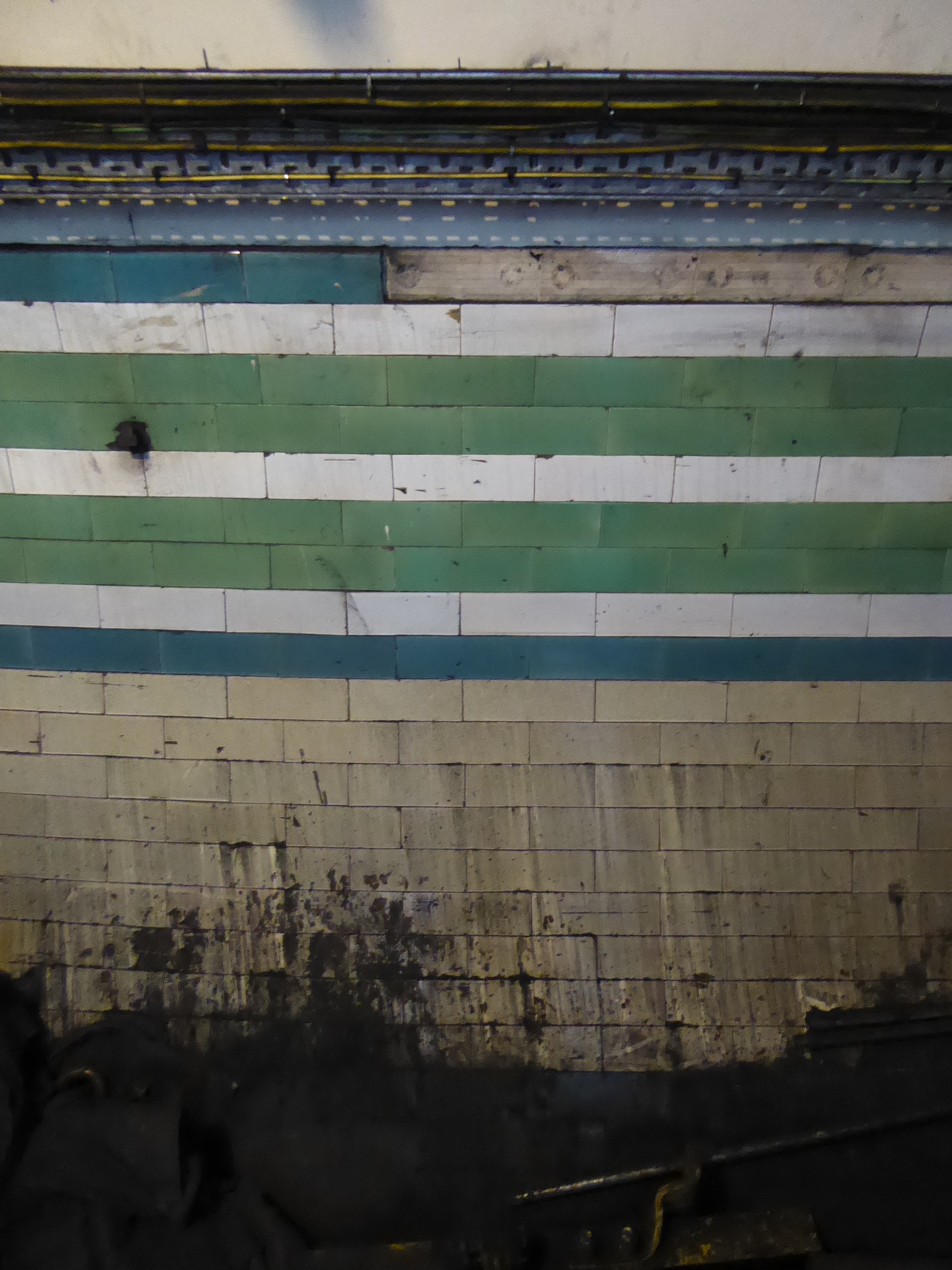
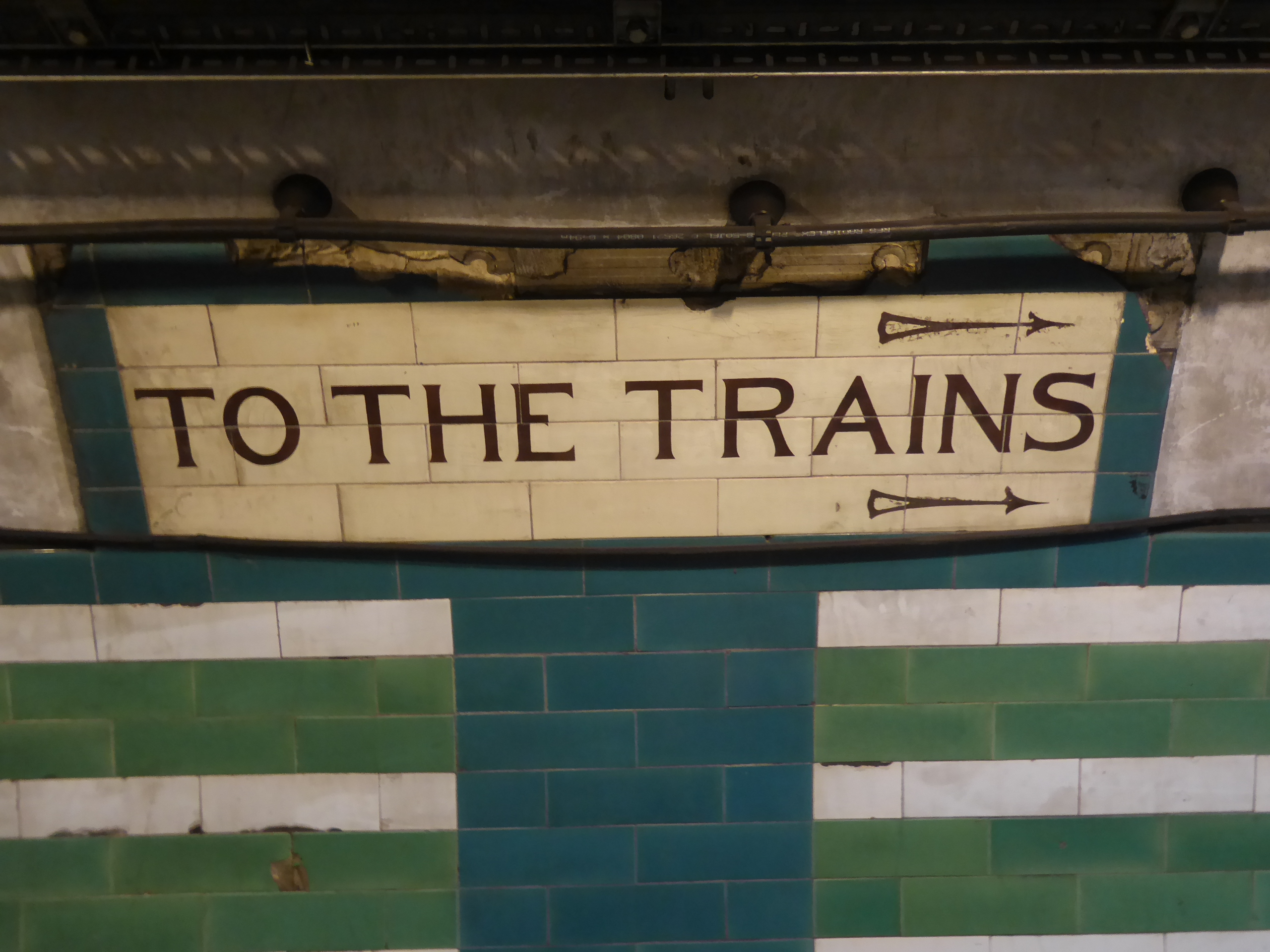
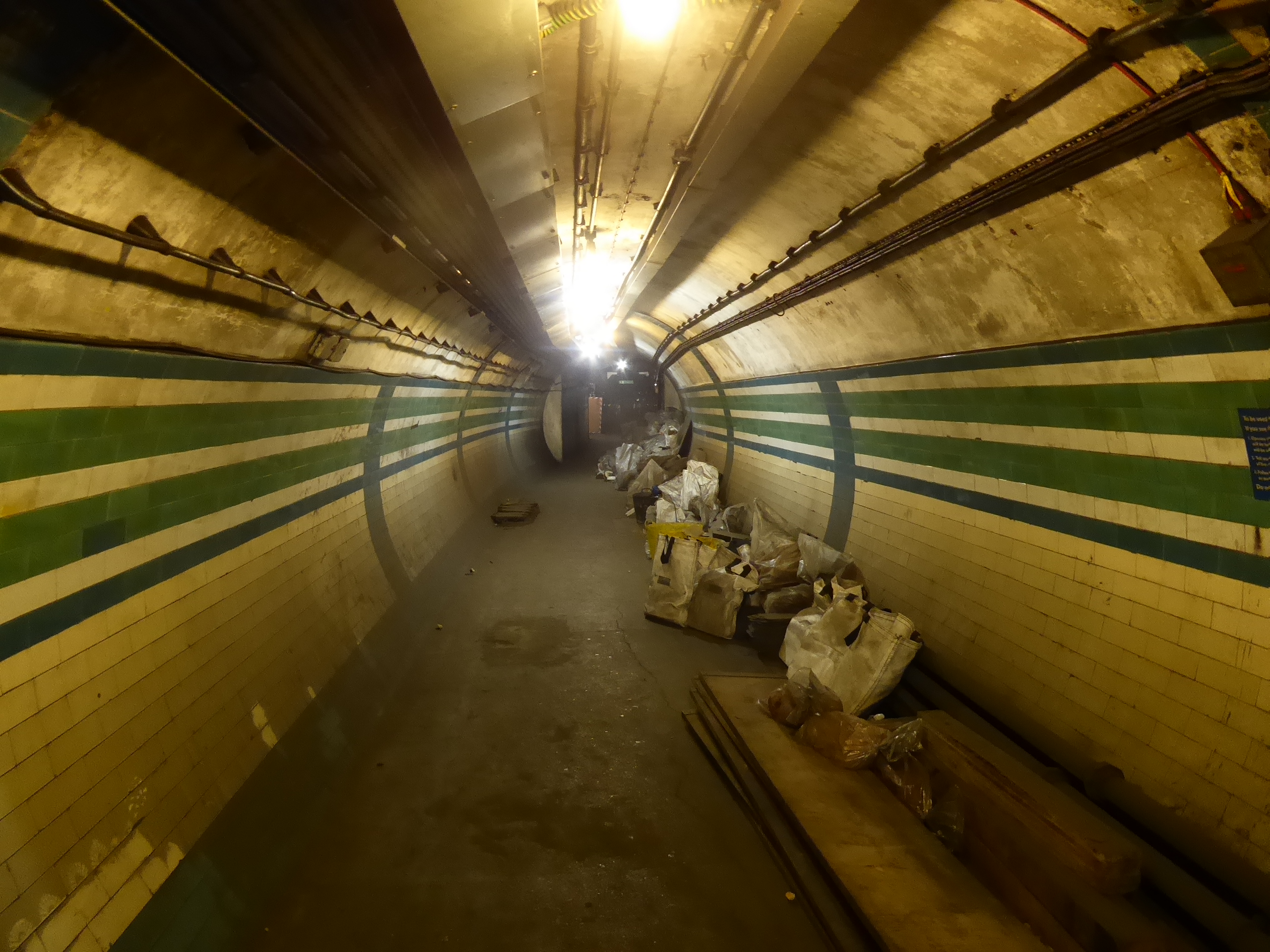
Another Hidden London tour – this time under Euston. I can still feel the dust in my nose. We looked at a former tube tunnel that was taken out of service when the island platform between two tube lines became too narrow for safety. Then the old tunnel linking two rival underground lines (whose separate entrances were either side of the mainline station) where there was a shared underground ticket hall. This tunnel was closed in 1962 and the walls are still layered with advertising posters from then. They have decayed but – given the lack of light – they are still vibrant.
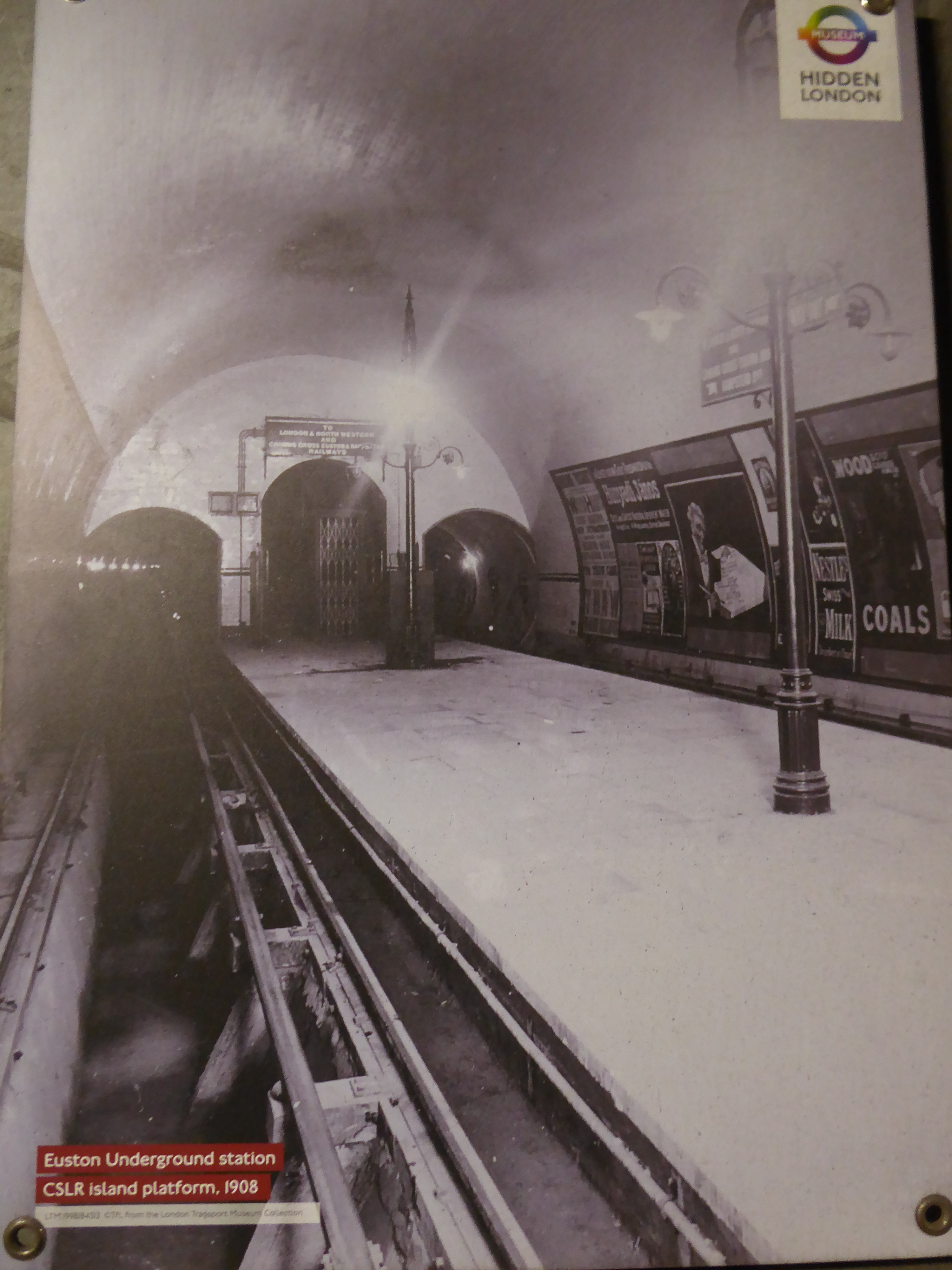
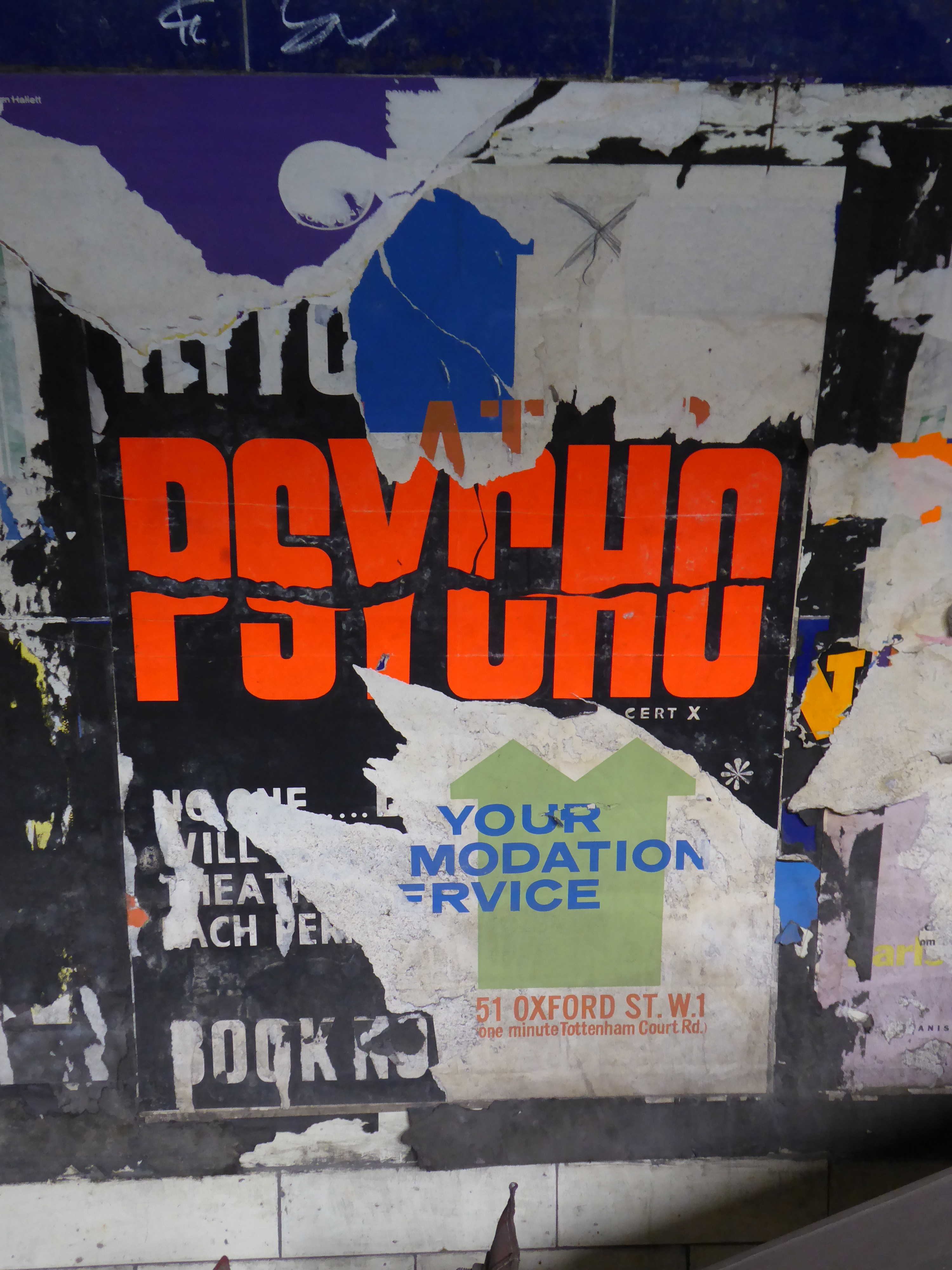
The tour was full of interesting little things – e.g. making it easy for people to change trains by having platforms adjacent for popular connections is hazardous when the trains don’t arrive and depart in tandem. It’s actually safer to manage hordes of passengers by making them walk some distance to make their connection. I learned that the Luftwaffe bombing of Guernica in 1937 prompted the British government to prepare for the possibility of air raids; there was a control room just off the tunnel, and air raid warden service was established that year.

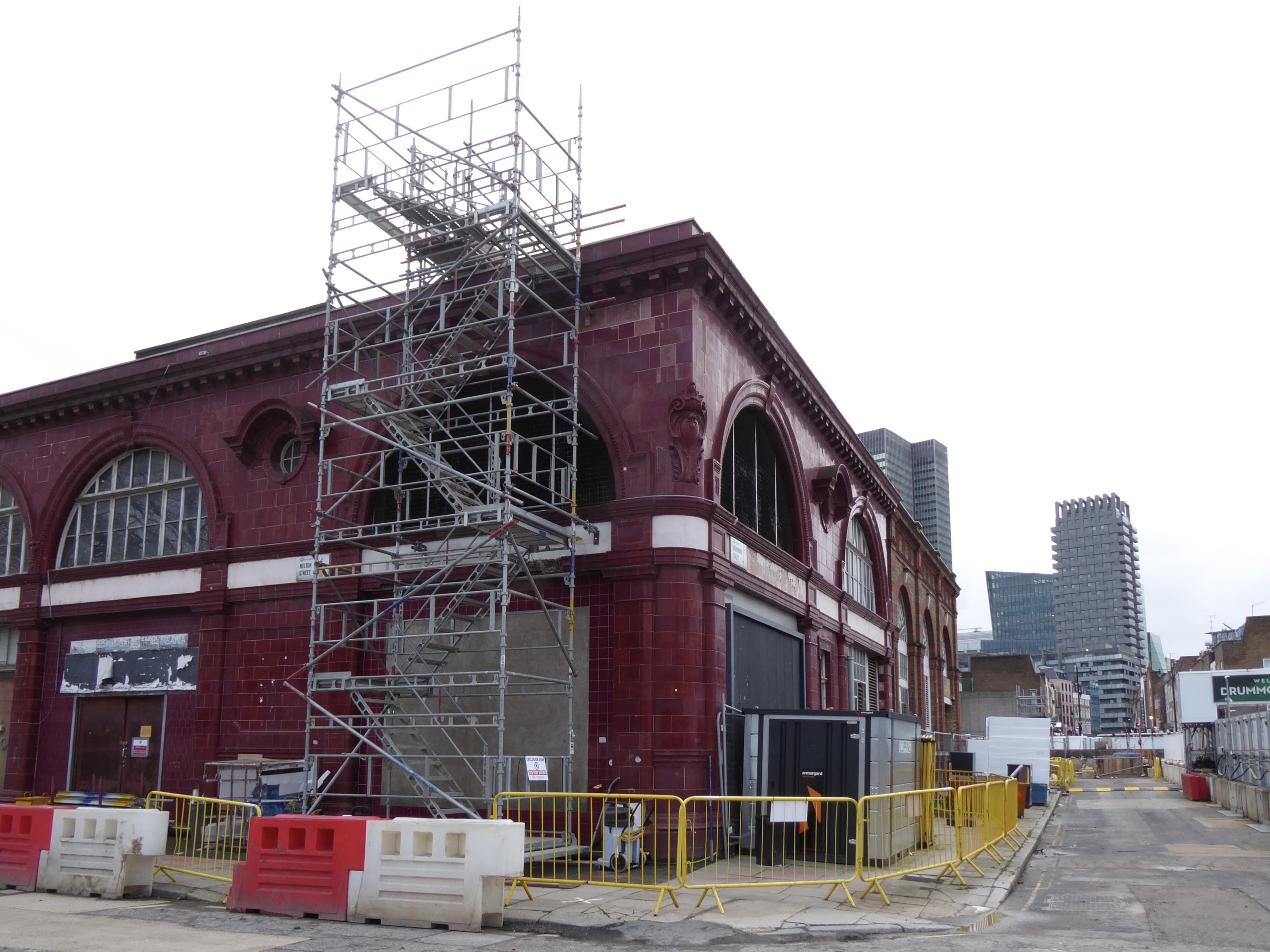
I also discovered that the oxblood-red building at the end of Drummond Street I’d noticed before was the station for the Charing Cross, Euston & Hampstead railway from 1907-14. Designed by Leslie Green, it has been used as a ventilation shaft ever since, but it is soon to be demolished to make way for HS2. I shall have to take a photograph before I leave.
Piccadilly Circus

London in the upper twenties is fairly horrible, but nobody forced me to come so I shan’t complain.

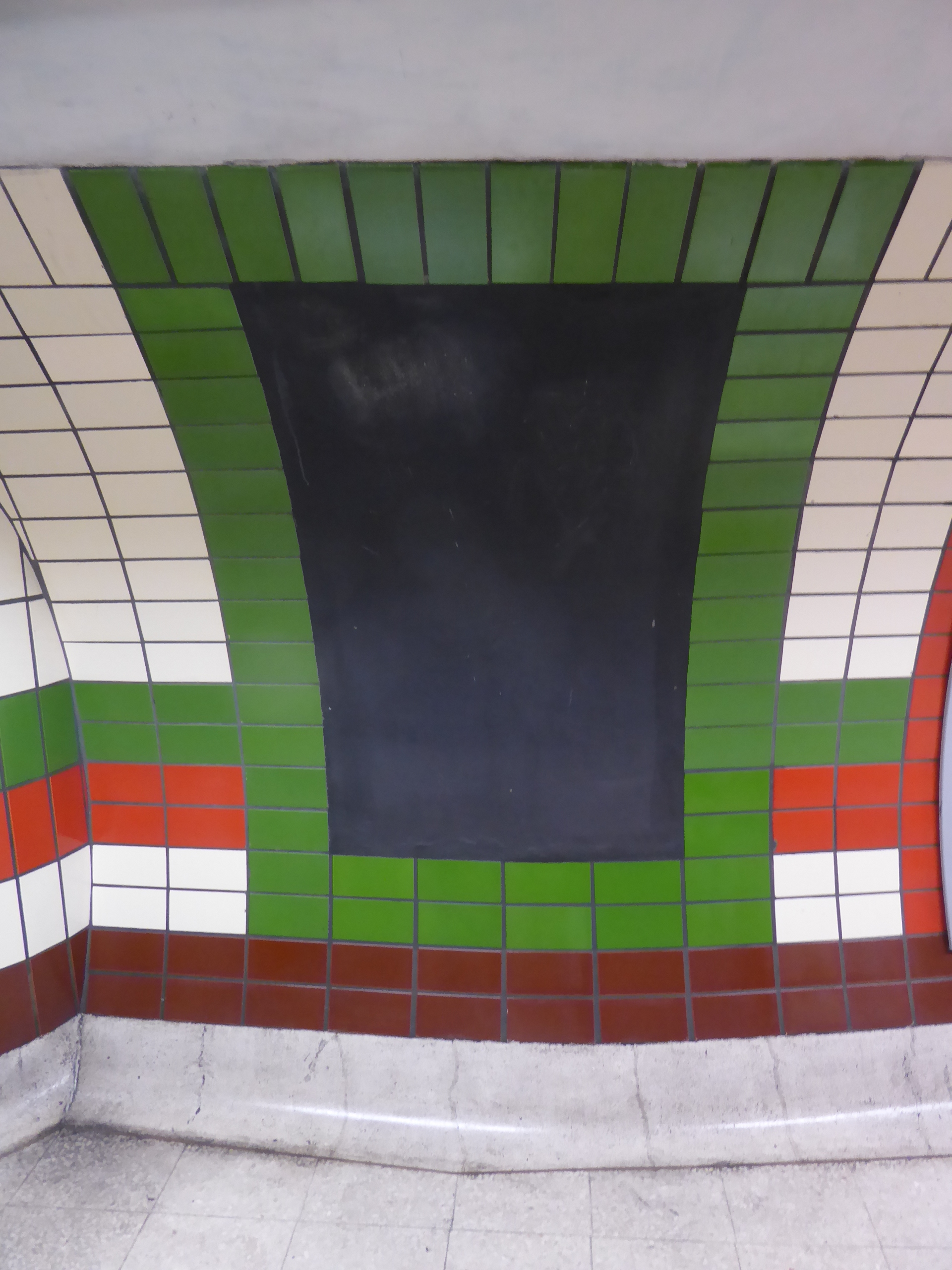
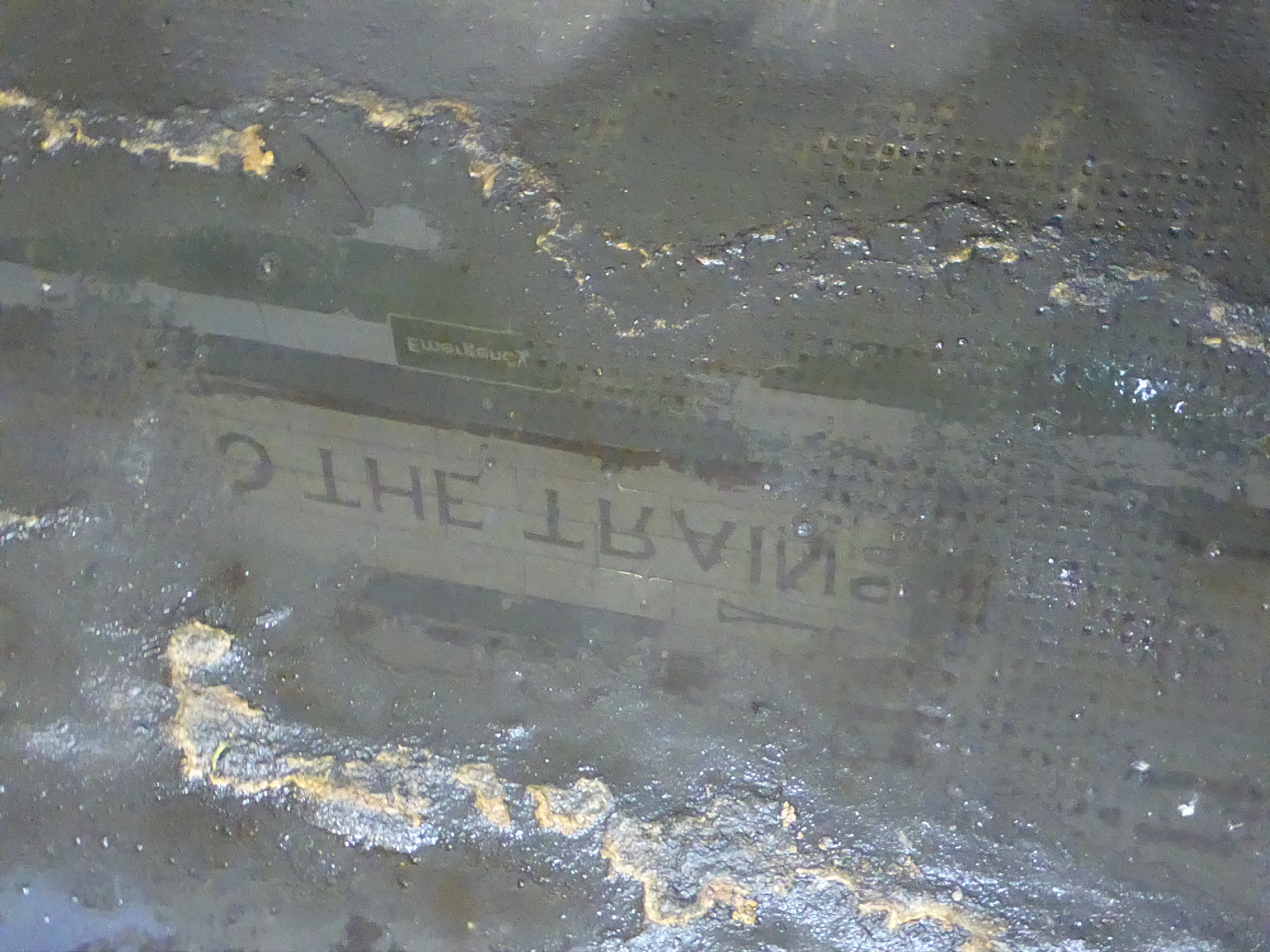
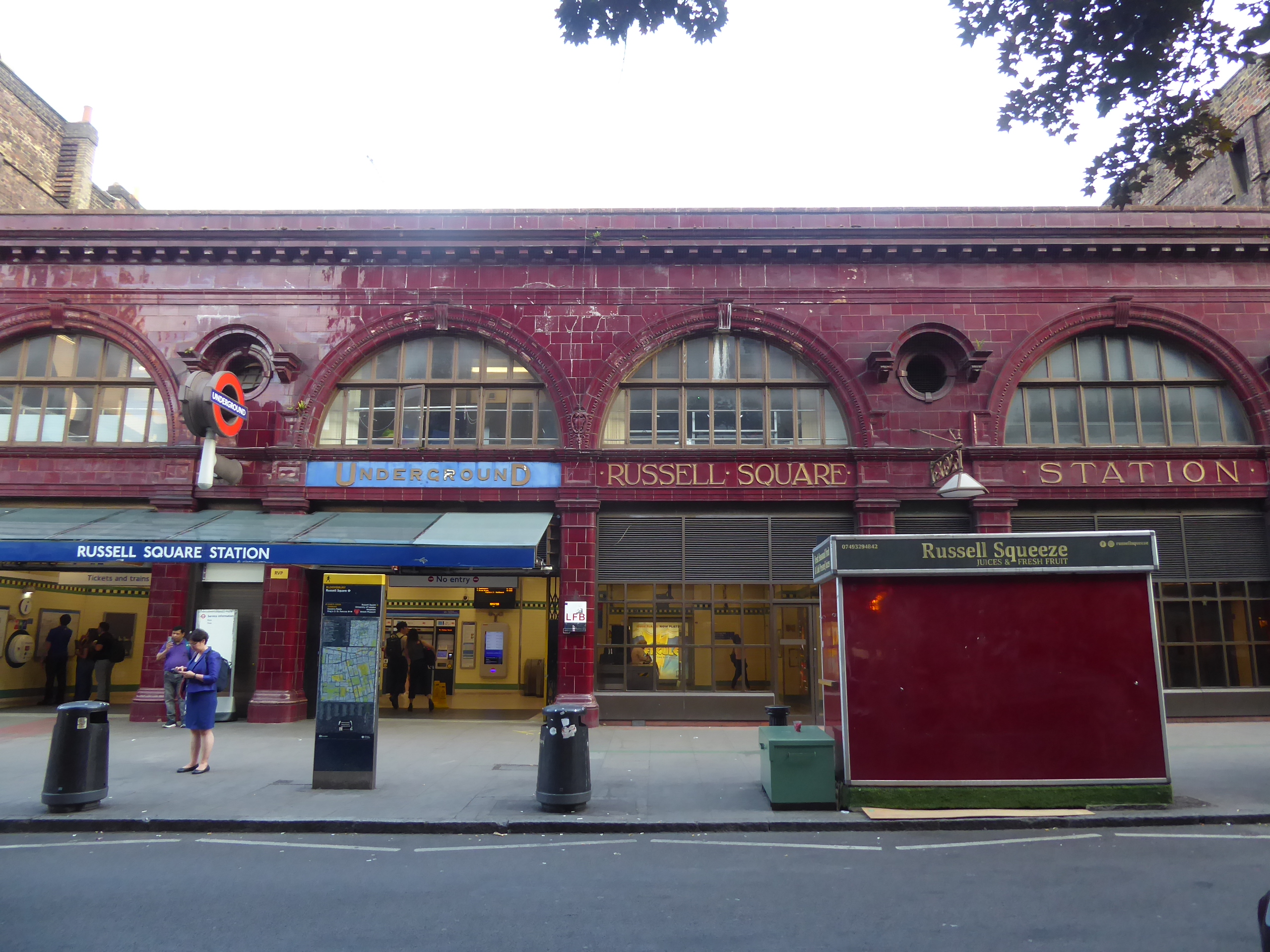
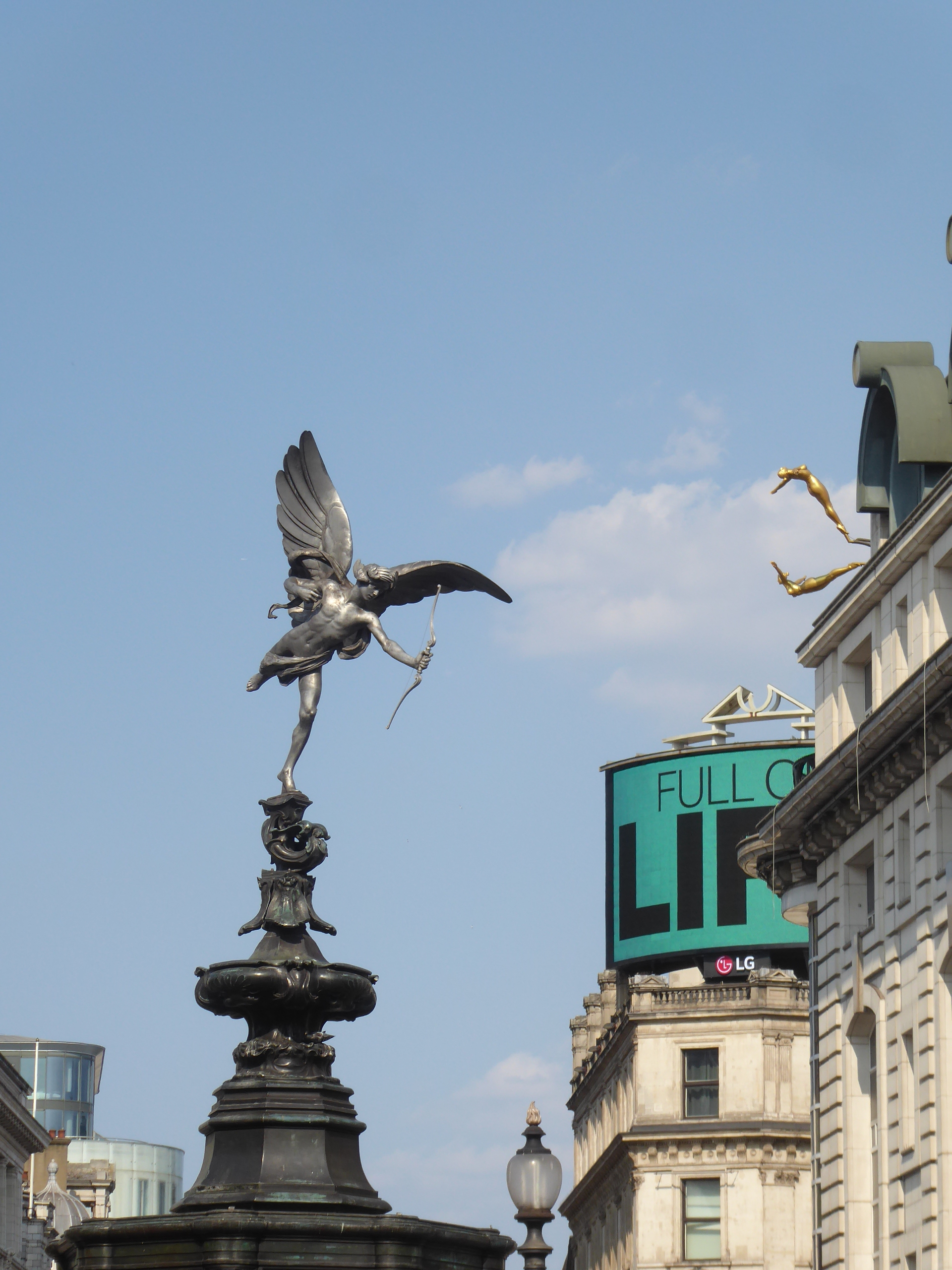
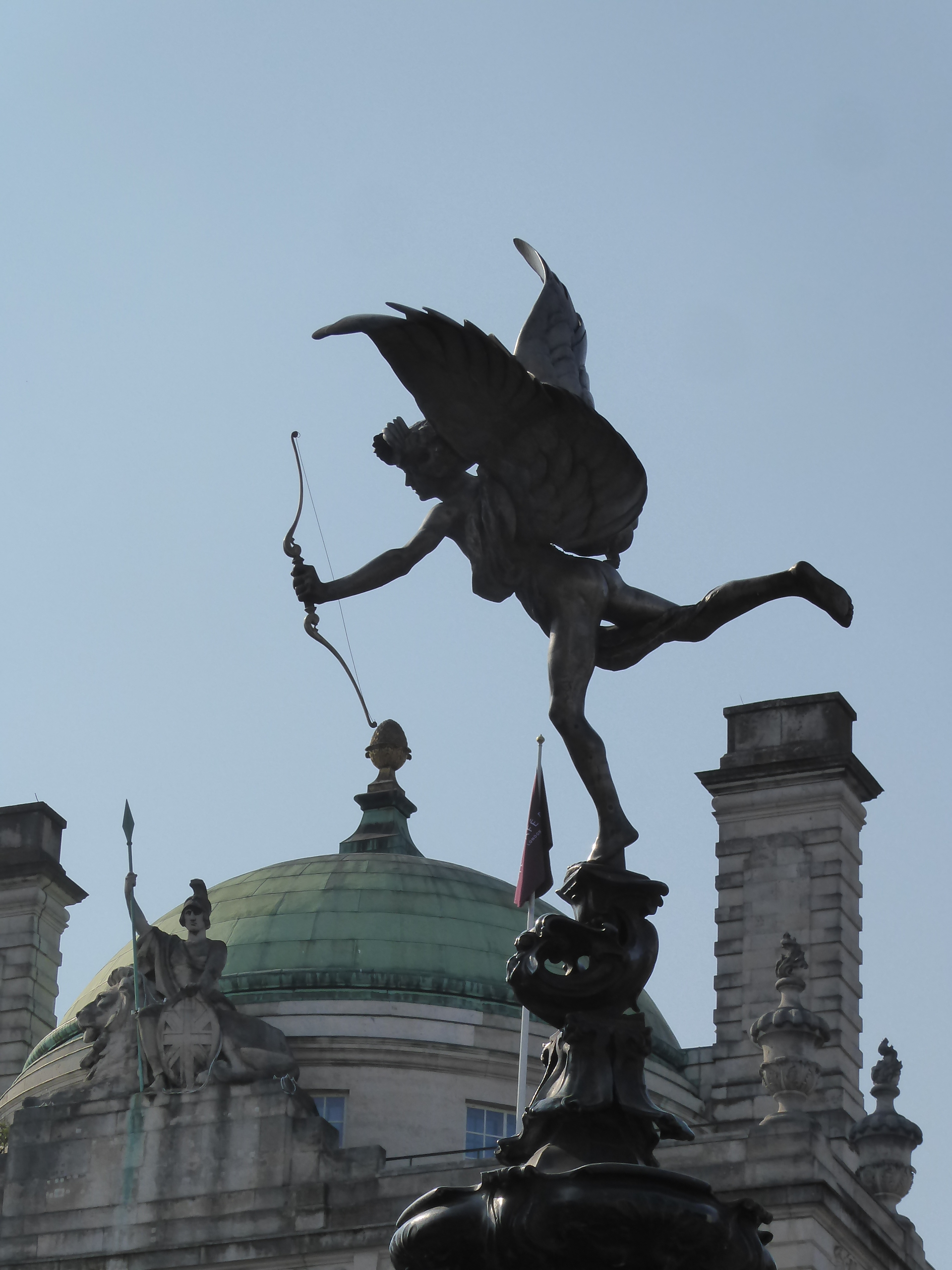
One of the things I decided to do while I am here was take a Hidden London tour of Piccadilly Circus. It wasn’t quite what I expected: I wanted more about the architects and the design and less about the Underground being used as a wartime bomb shelter. However the guides were very good and informative and it gave me the push to find out more. Basically, Piccadilly Circus tube station was designed by Leslie Green – he of the oxblood-red glazed tiles – and opened in 1906. It was served by 8 lifts, but it was quickly discovered they could not cope with the increasing number of people using the station so it was redesigned to accommodate escalators. Charles Holden was commissioned by Frank Pick; the new station opened in 1928. The circular booking hall was below a vast steel roof that took the weight of all the traffic above. No expense had been spared: Travertine marble and scagliola columns. Despite the closure of so many of the little shops in the hall and modern changes, it’s still impressive.

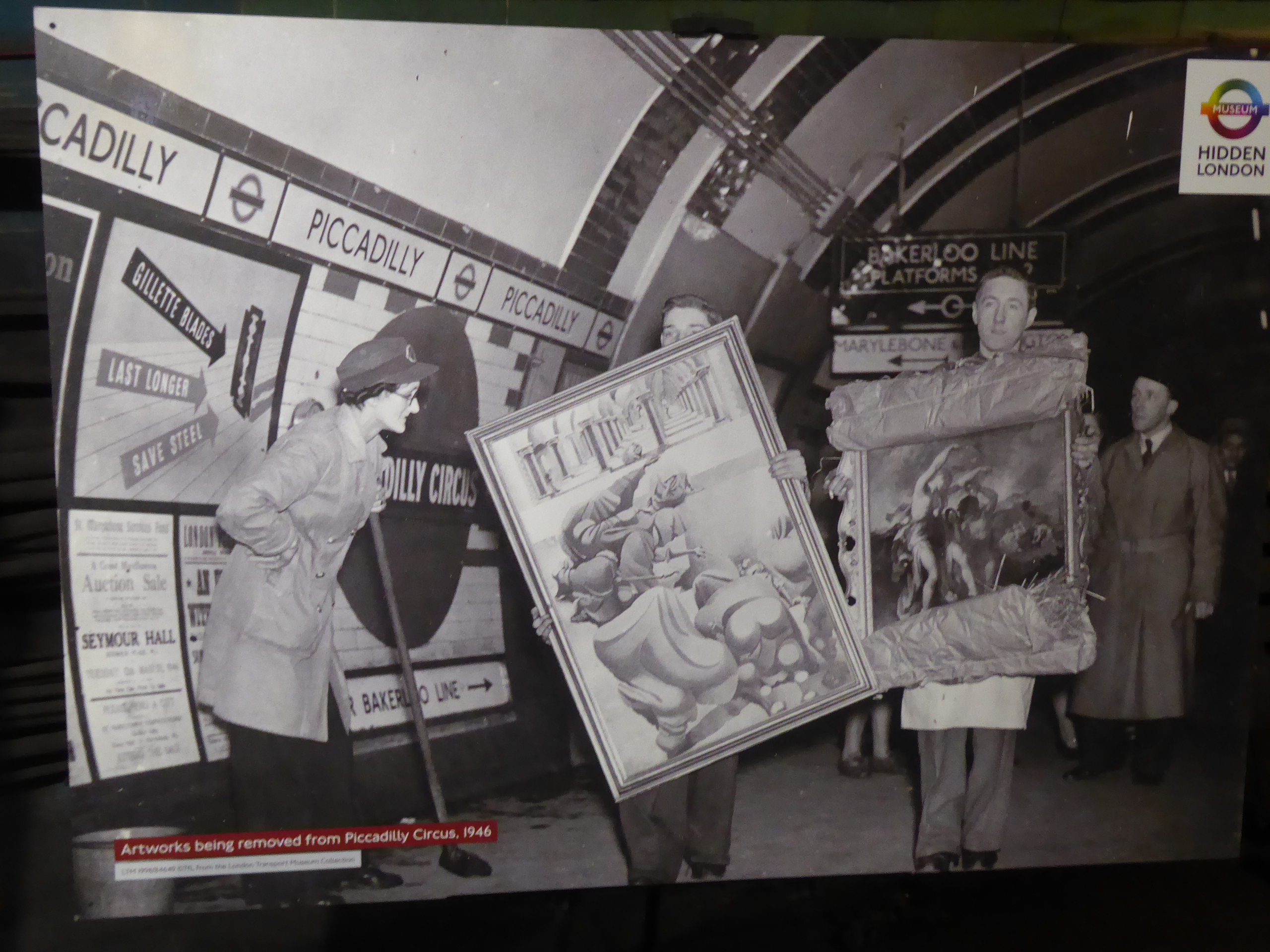
We were taken through disused tunnels serving the defunct lift shafts – authentic and dirty, with traces of Green’s original tiles and signs. The gentle shades made the modern tiling look horribly garish. The thought of crowded humanity sheltering in the tunnels during wartime nights was chastening. Artworks were also stored in the tunnels: one of the paintings in the photograph of artworks being taken out of storage was by Edward Burra; I was thinking of going to see the current exhibition of his work.

On my way back, I stopped at another of Green’s stations: Russell Square.