Susanna

I may transfer my loyalty from the Grand in Leeds to the Theatre Royal in Newcastle. My first visit, and I was so pleased to have a clear view of the orchestra (including theorbo) from the dress circle.

This was a collaboration between Opera North and the Phoenix Dance Theatre: contemporary dance meets Handel’s oratorio. Sometimes it worked – dancers expressing the latent sensuality of the libretto. On the whole, though, it didn’t gel for me – and I’m willing to admit the deficiency is probably in me rather than the production. It crowded the stage, particularly with the chorus present. BSL was also included – partly in occasional gestures of the chorus, but most obviously through the presence on stage of a BSL interpreter, who made me think of someone who’d wandered on from the wings and decided to stay. I reminded myself – once again – that if I can swallow traditional opera with all its absurdities, I can’t baulk at innovation.
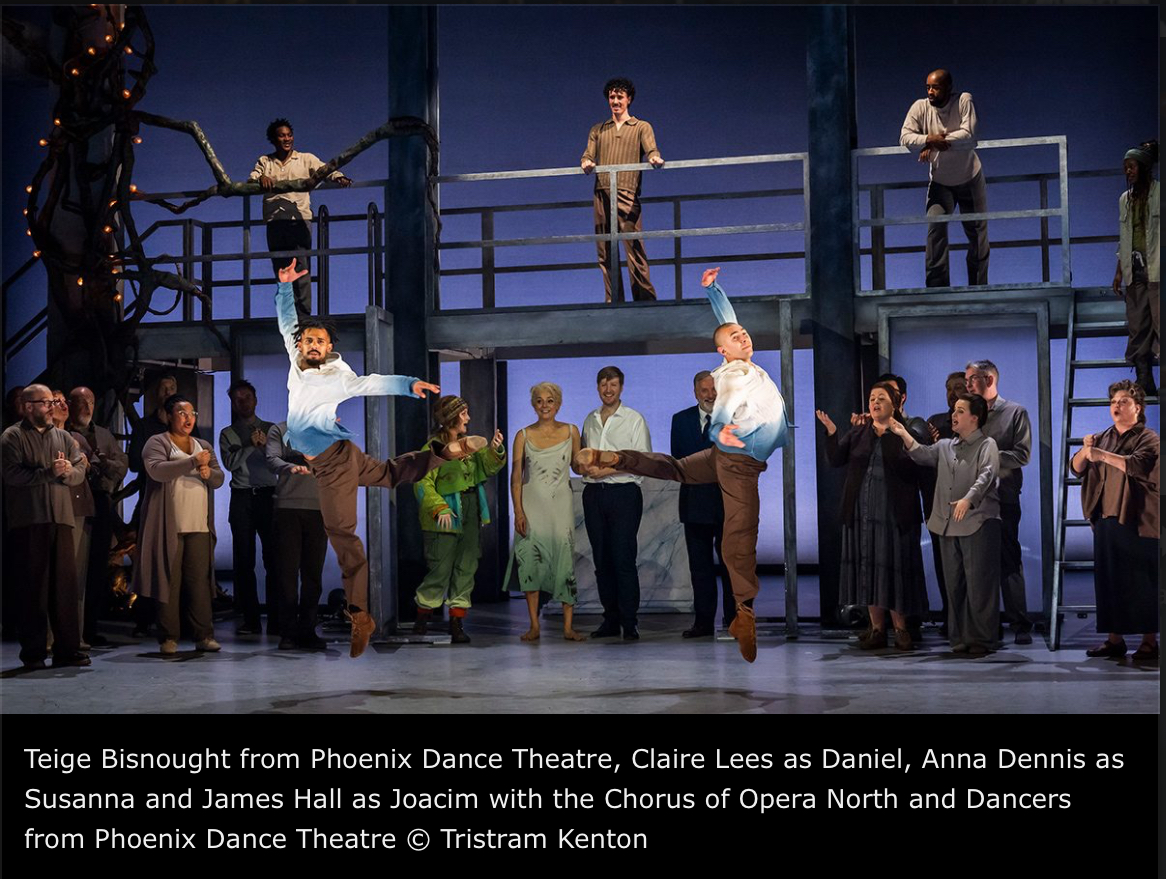
The singing and acting were wonderful. The moment the chorus began their lament for their exile in Babylon, I could feel a lump in my throat. Susanna and Joacim (a counter-tenor) were brilliant, as was the production.
The Magic Flute


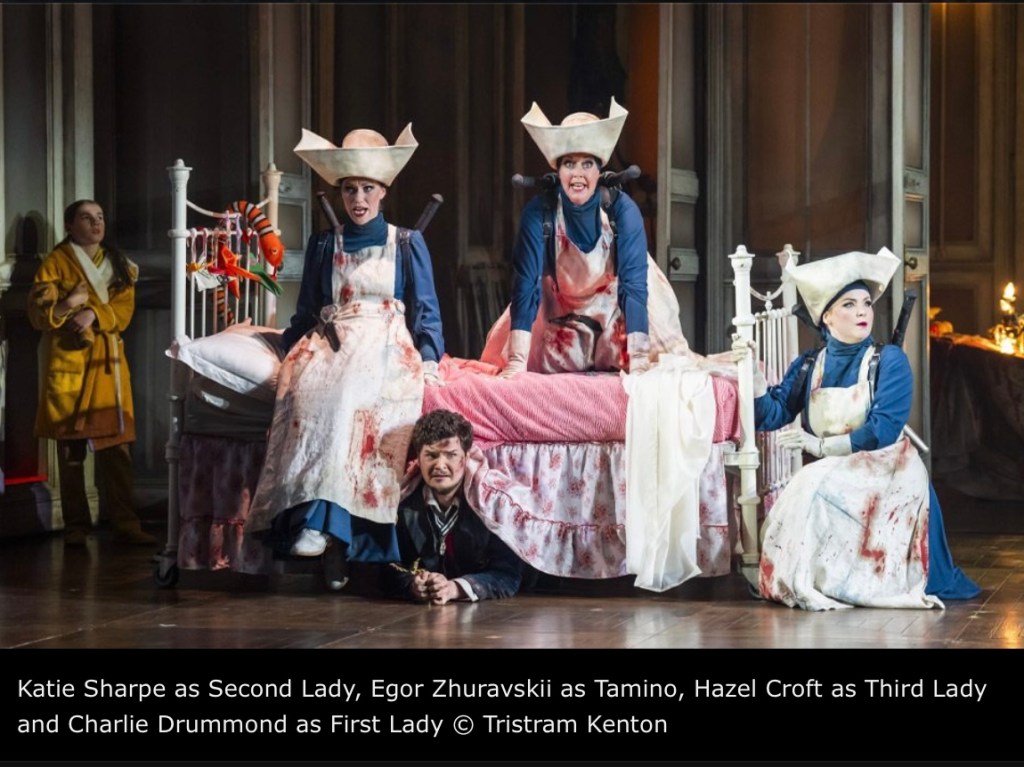
The second time I’ve seen this production and it’s still marvellous. Everything about it is wonderful – including the framing and staging, which undermines what might otherwise jar: that women = superstition and falsehood and men = rationality and truth.

  • Tamino – Trystan Llyr-Griffiths
  • Papageno – Emyr Wyn Jones
  • Queen of the Night – Nazan Fikret
  • Pamina – Soraya Mafi

The Flying Dutchman

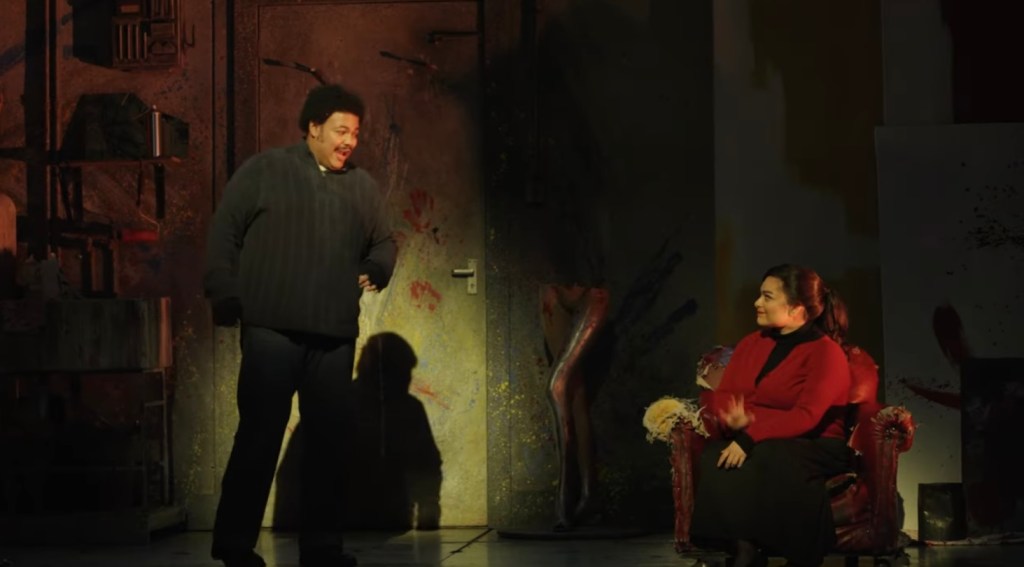
My first Wagner opera; I gather the Dutchman is entry-level stuff. At the interval the woman in the next seat turned to me and commented on how bonkers a production this was. (She was a Wagner regular.) My word would have been “incoherent”.

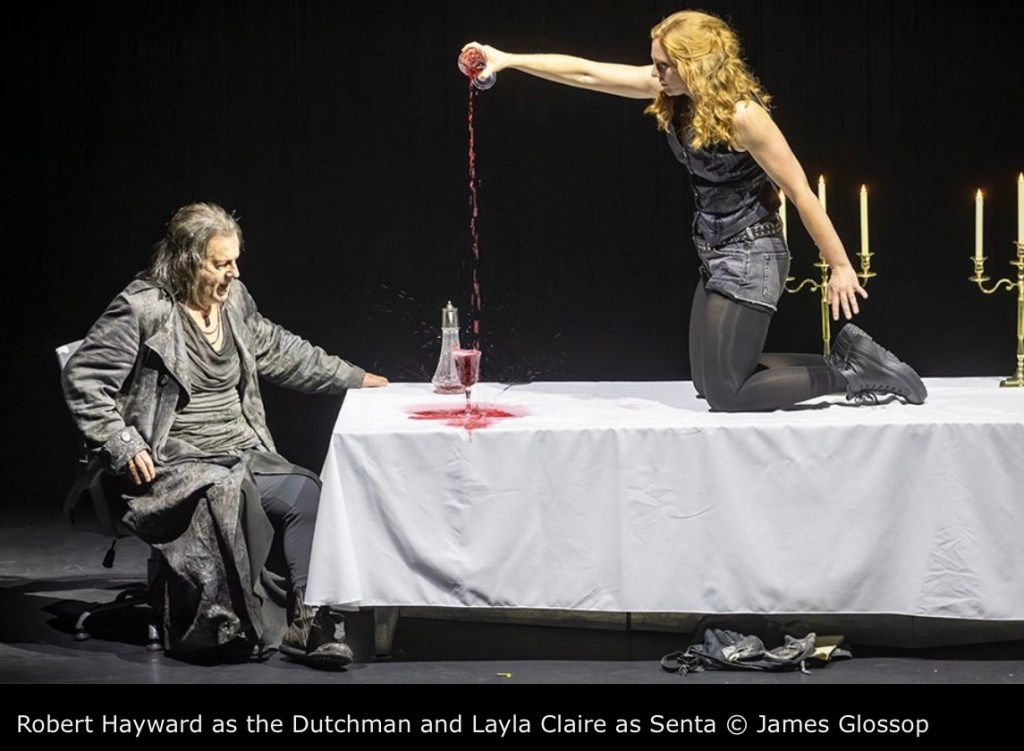
In this production Opera North adds the parallel stories of the lives of refugees in Leeds, who – like the Dutchman – were fleeing and doomed to roam until they could be saved. That adds relevance and empathy – but it ends up confusing. Daland’s ship is the Home Office, staffed by besuited bureaucrats; the metaphor is the ship of state, but that sinks beneath the waves as Wagner’s plot develops. The characters of Erik and the Steuermann are conflated, which means that one man is simultaneously at the helm of the ship and looking after Daland’s daughter on land. As for Senta – well, she was Wagner’s creation and he wrote the libretto, but even by opera standards she’s flaky.

The set design was occasionally fussy and off-putting: things appeared without clear reasons. The costumes were distractingly ugly: even with wearying ages at sea, why was the Dutchman dressed as a bag lady? The mirroring of clothes and movement between the Dutchman and Senta was clever – but what did it add? Ditto Senta as a Christ-like figure as she crawls around the table pouring wine.

Carping over. Maybe I need to do some reading. The music was wonderful and the singing excellent – although my neighbour and I commented on the Dutchman’s excessive vibrato.

Love Life

Well I certainly didn’t expect to find a link between The Travelling Players and this exuberant musical, but I did: Brechtian devices.

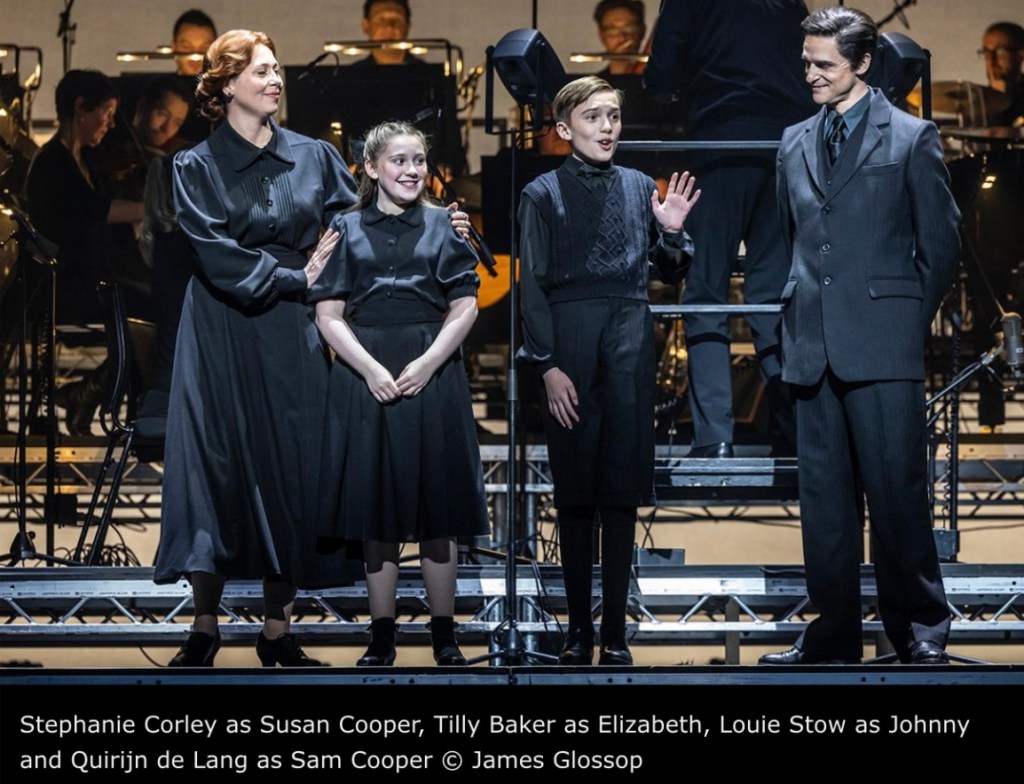
Music is by Kurt Weill, lyrics by Alan Jay Lerner. It’s a “concept musical” – no plot to speak of, but a theme runs through it. The theme here was marriage: a single marriage stretched across a century and a half, seen against the economic and social forces of the time. In 1791 everything seems simple and homespun: love, a home, a livelihood, neighbours. Perhaps there is a sense that life could be “more”, but circumstances make it implausible until industrialised progress arrives. Then come factories, taking the husband out of the house for long periods each day. Then come railways, taking him away for long periods each year. Then all the opportunities of the twentieth century . . . to become a hustler, a consumer, a self-fulfilment machine. And what about her? Always at home or demanding a vote and a career? And when the career is really just a job that tires you out by the time you return home – what then?

The musical was framed in a vaudeville show, with each act as a kind of Zeitgeisty Greek chorus. It also ensured that it was great fun. How can you not warm to a male octet singing jauntily about progress or a male quartet on economics? Had the audience known the words, they would surely have joined in with the Women’s Club Blues! The orchestra was up on stage as the backdrop, and I began to think of the conductor as a big band leader.

Ruddigore

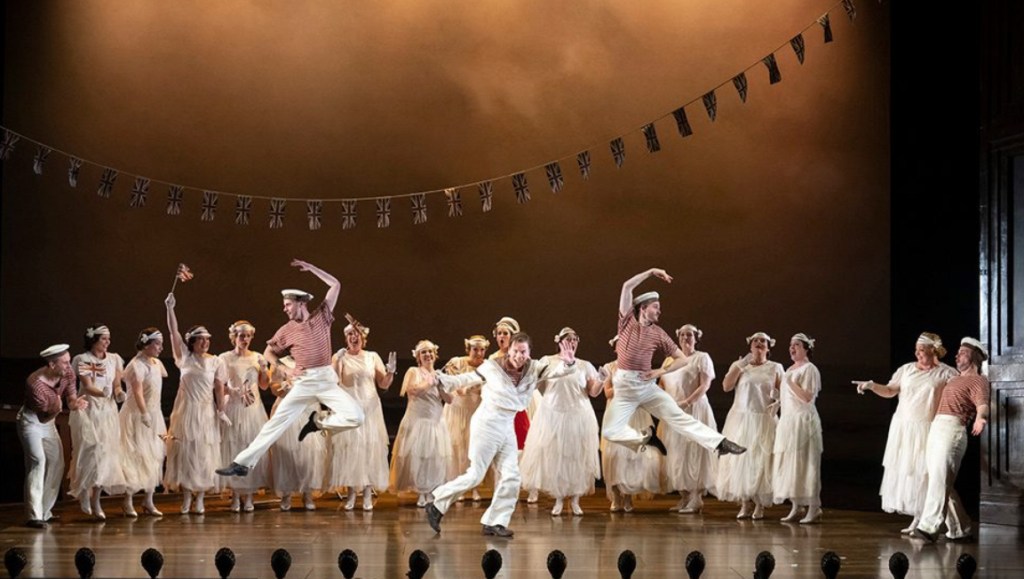
I’ve never seen a Gilbert & Sullivan opera before. Great fun and brilliantly staged. I managed to get to the pre-show talk this time, where I learned that it satirised “transpontine melodrama” – and, here, the bridge was the one over the Thames. So “south of the river” has a long reputation for being infra dig.

Even by the standards of opera, the characters were caricatures. The only moment of real feeling (besides mirth) was in a pretty, sentimental duet – “There grew a little flower” – between an elderly maiden and a ghost. I came out still humming the bridesmaids’ song.

  • Sir Ruthven – Dominic Sedgwick
  • Rose Maybud – Amy Freston
  • Richard Dauntless – Xavier Hetherington

A Midsummer’s Night Dream

I mistimed this one. I knew nothing about the opera before I went – not even the composer (Britten) – and was going to rely on the pre-show talk to fill me in. So I prepared to set off for the 6 p.m. start of the talk . . . and discovered that it had started at 5 p.m. The opera itself started at 6 p.m.

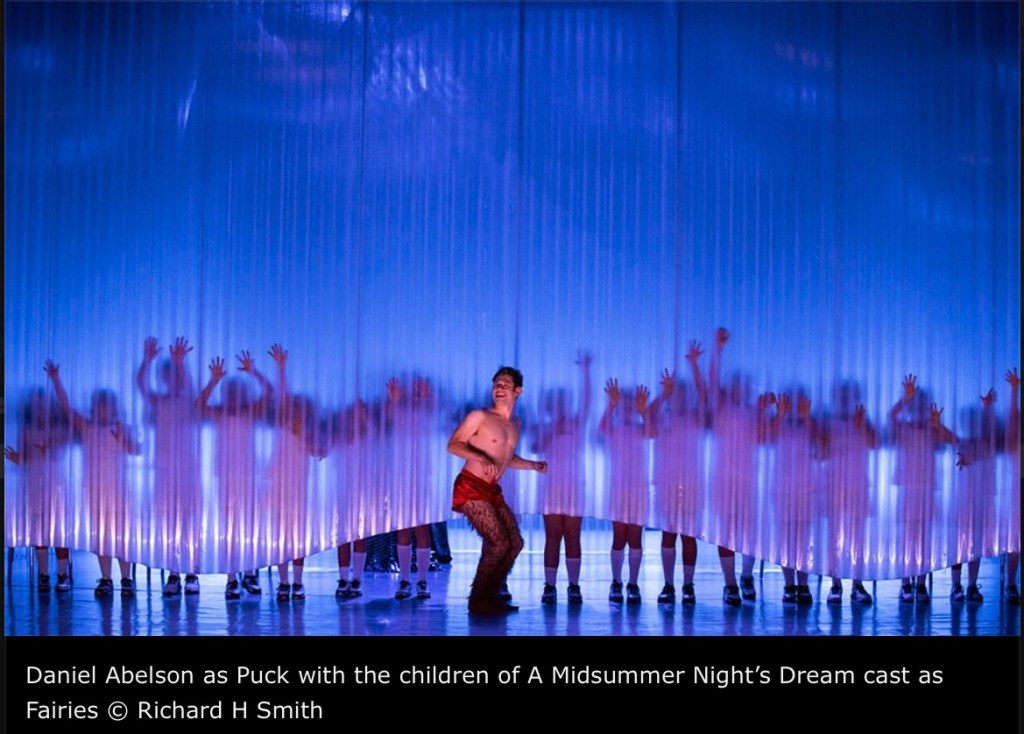
So I went in unprepared. Not that it mattered – and, besides, we’d “done” the play in school (O-level perhaps) and some lines, memorised for exams, called back to me across the decades. The early start, I’m guessing, was for the sake of the slightly creepy fairies – average age 10, working hard on a school night.

It was good. Unusual choices (Oberon was written for a counter-tenor, the wood was represented by sheets of perspex) and a sixties setting. The music introduced me to tone painting and started eerily. Non-singing Puck was very good – shades of Gollum or even Mutley – but somehow the sense of the physical world reflecting fairy discord was lacking.

I liked the thought that its premier was in the Jubilee Hall, Aldeburgh. La Scala, eat your heart out.

  • Oberon – James Laing
  • Tytania – Daisy Brown